Conscience Is Not a Party Label: Faith, Free Speech, and an Informed Vote

Conscience is not something we borrow from a political party. It is formed through conviction, experience, responsibility, and the willingness to tell the truth even when that truth is inconvenient. Faith, free speech, and an informed vote ask something of us: to weigh the facts and make our own judgments. As New Yorkers approach the November 3 election, I believe the responsibility to examine our choices belongs to each of us. A campaign sign cannot do that work. Neither can a party label.
On the October 30, 2026 edition of The Next Steps Show, I was joined by Michael Hennessy, Executive Director of Youth for Christ Rochester and host of Good News Talk, alongside Bob Savage. What began with a social-media comment about a church and a political candidate became a broader conversation about faith, the First Amendment, political speech, public service, and the obligation to think critically before voting. The broadcast was not the prepared election outline read into a microphone. It was a live conversation shaped by questions, disagreements, and callers.
Faith Has a Voice in Public Life
Hennessy argued that pastors should not treat political controversy as a reason to remain silent about moral concerns. That is a serious question for churches and ministries. When a law or public policy affects children, families, religious freedom, or the vulnerable, faith leaders naturally have convictions about it. Citizens with religious beliefs do not surrender those beliefs when they enter the public square.
Yet there is an important distinction between speaking about public issues and making an official candidate endorsement on behalf of a tax-exempt organization. The broadcast raised the Johnson Amendment, and that subject deserves precision. The federal campaign-intervention restriction was enacted by Congress in 1954 as part of the tax code; it was not merely an executive order. The IRS describes the restriction as applying to organizations recognized under Section 501(c)(3), while allowing properly nonpartisan voter education and participation efforts.
The New York Attorney General's guidance, updated in March 2026, likewise distinguishes prohibited organizational campaigning from permissible nonpartisan civic engagement. In April, the Treasury Department announced plans for further guidance on religious organizations and the Johnson Amendment. Those developments show that the debate continues; they do not justify treating every on-air legal interpretation as a settled court ruling.
Some Americans believe the restrictions place an unfair burden on religious expression. Others believe tax-exempt institutions should remain separate from campaign operations. Both concerns deserve to be addressed honestly. And a comment mentioning a church and a candidate is not enough, by itself, to establish that any particular organization violated the law. Responsible commentary should ask questions before declaring a verdict.
A Party Label Is Not a Character Reference
Hennessy and I also discussed the relationship between faith, political platforms, and individual candidates. We expressed strong opinions, as talk radio should make room to do. But an opinion stated confidently does not automatically become an established fact. Listeners deserve to know when a speaker is offering a moral judgment, a political preference, or a verifiable claim.
Here is the standard I would ask every voter to apply: Look beyond the label. What has the candidate actually done? What promises are specific enough to measure? How would the proposed policies affect parents, schools, safe neighborhoods, local employers, public spending, and the people whose lives are shaped by those decisions? And when a candidate invokes faith or family, do personal conduct and public decisions reflect those professed values?
Conscience does not require pretending that all candidates are identical. It requires taking disagreements seriously without outsourcing judgment to an organization, a slogan, or a social-media personality. The freedom to reach a conclusion carries the responsibility to examine the evidence that supports it.
The Internet Gives Us Information, Not Discernment
Caller Keith helped push the discussion beyond politicians and into the habits of citizens. Reflecting on the Internet, he acknowledged that information travels faster than ever but urged people to check what they read instead of treating an online page as automatic proof. That is a useful challenge to every one of us, regardless of political affiliation.
A headline is not a complete argument. A clipped video is not necessarily the whole conversation. A widely shared accusation is not proof. Read the original material when possible, compare reputable sources, identify whose claim is being repeated, and be willing to correct a mistake. Democracy cannot depend on a population that knows how to share a post but has forgotten how to examine one.
Local Leadership Is Where Principles Meet Reality
Our conversation also returned to the elections that receive less attention: school boards, town and village offices, county government, and other positions that shape daily life. These are not minor contests to the families living with their consequences. Decisions about classroom standards, public safety, budgets, services, and accountability frequently begin close to home.
We can debate national personalities all afternoon. Meanwhile, someone is making decisions about the school our children attend, the taxes our neighbors pay, and the services on which our communities depend. A serious voter must be willing to ask as many questions in a local race as in a national one.
The Next Step Is Personal Responsibility
Hennessy described his work and Good News Talk as an effort to connect faith with life beyond the walls of a church, including the marketplace. Whether listeners share his theology or not, the broader civic lesson remains worth considering: values have meaning when they shape conduct, decisions, and service to others.
So learn the issues. Listen to people with whom you disagree. Read beyond the headline. Pray if that is part of your life. Cast your vote according to an informed conscience, not a borrowed label. Then keep asking questions after Election Day. Public accountability does not end when the ballots are counted.
Listen to the original October 30 broadcast: Michael Hennessy: Faith, Voting and Public Accountability. More from The Next Steps Show is available at NextStepsShow.com.
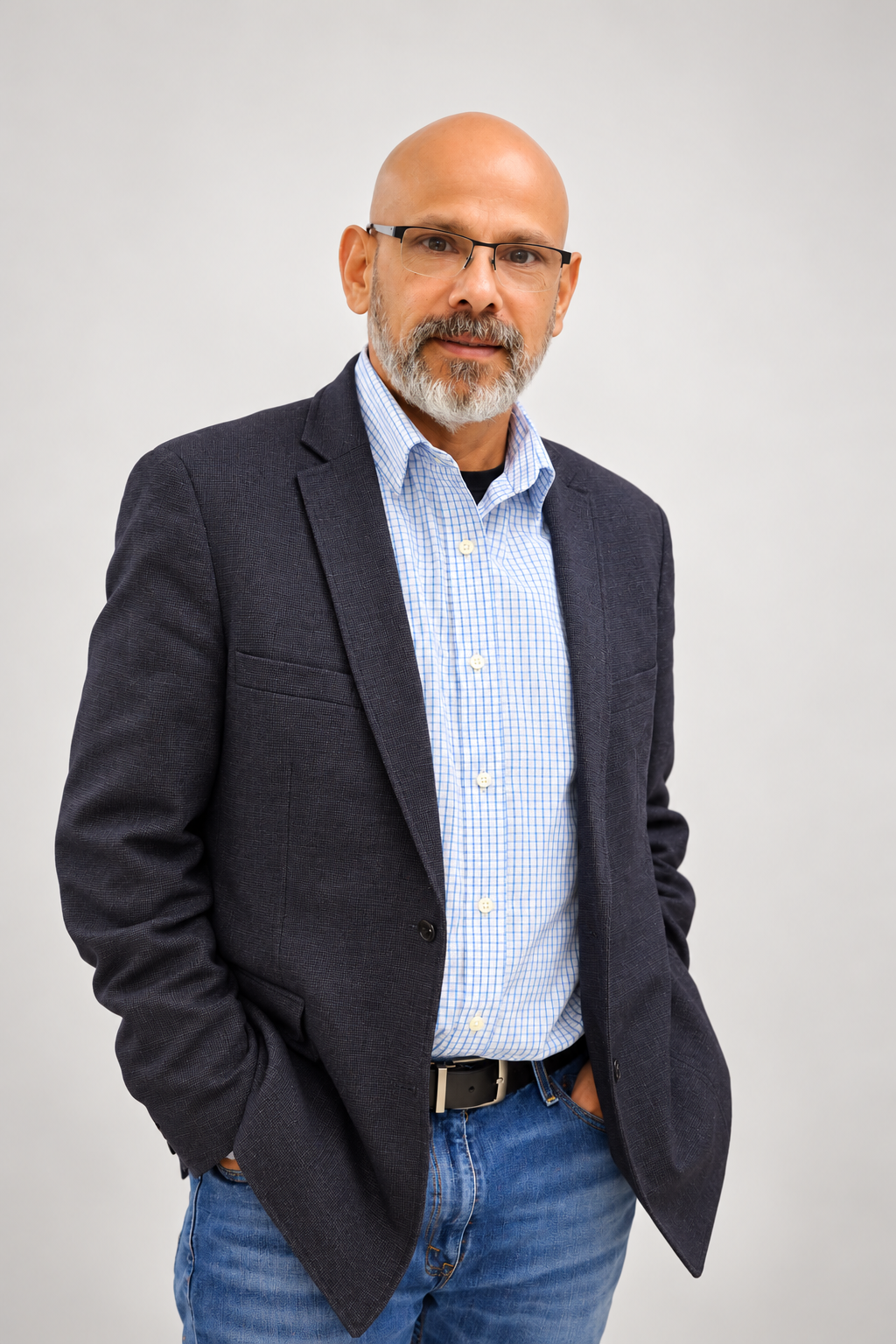
Host & Producer, The Next Steps Show
Peter Vazquez is the host and producer of The Next Steps Show, airing live weekdays on WYSL and WLEA. Born and raised in Rochester, New York, he brings experience as a U.S. Army veteran, business owner, and former nonprofit executive to conversations about faith, politics, entrepreneurship, and everyday life.
Peter's approach is grounded in direct questions, careful attention to the public record, and a belief that decisions must be judged by their results. He welcomes elected officials, community leaders, authors, entrepreneurs, and voices with differing perspectives. The show's guiding mission is simple: Putting People First.
Listen live weekdays from noon to 1:00 p.m. Eastern or explore full episodes, video conversations, guest profiles, and original commentary at NextStepsShow.com.
Public Safety Is on the Ballot. So Is Accountability.