Ballot Delays and the Burden of Public Trust

Public confidence is not built by demanding that people stop asking questions. It is built when public officials answer those questions clearly, admit what went wrong, and show the public what they intend to do about it.
That principle guided our October 28, 2026 conversation on The Next Steps Show with Peter D. Elder, Republican Commissioner of Elections for Monroe County and chairman of the Monroe County Republican Committee. With New Yorkers weighing important choices in a consequential election, we discussed delayed mailed ballots, public concerns about election administration, and a question that reaches beyond party lines: What does accountability look like when the government asks people to trust the process?
Our broadcast also featured conversations with Chili Town Supervisor Dave Dunning and State Assembly District 136 candidate Cleanda Florent about local leadership, schools, families, and community priorities. Those discussions were a reminder that good government begins close to home.
The Difference Between an Error and a Cover-Up
A delayed ballot is not a trivial inconvenience to someone who expects government to complete a basic administrative responsibility. It deserves a prompt, factual explanation. At the same time, an administrative failure is not, by itself, proof of a deliberate effort to manipulate an election.
That distinction matters. On the broadcast, Elder addressed concerns about mailed-ballot delays and said the Board of Elections had provided its information to the vendor on schedule. He attributed the disruption to a vendor-related mailing problem and discussed reviewing the vendor relationship. Those are his statements, not the findings of an independent investigation.
There is outside reporting consistent with a vendor issue. In an October 22 report from Spectrum News, Elder described an envelope problem that slowed the mailing of ballots, and the report noted that the state Board of Elections was investigating complaints about late arrivals.
That information helps explain the concern. It does not close every question. How was the delay detected? Who was responsible for monitoring the vendor? What did officials communicate when they knew there was a problem? How will they evaluate the contract and prevent a repeat? Clear answers are not an attack on election administration. They are part of responsible administration.
Trust Requires More Than Reassurance
Some Americans approach an election with strong confidence in the institutions handling it. Others have serious doubts. Neither position is strengthened by treating legitimate questions as a personal insult. The right response is to distinguish documented problems from rumors, provide records when appropriate, and correct mistakes without partisan theater.
Monroe County's Board of Elections operates under a bipartisan structure. That matters because public oversight should not depend on one party assuring the other that everything is fine. Bipartisan administration creates opportunities for shared responsibility and scrutiny, but the arrangement alone is not a substitute for competent execution.
On our program, callers raised concerns about early voting, ballot security, and how reported problems are addressed. Elder explained the Board's approach from his perspective as an election commissioner. I believe the better standard for every public office is simple: State what you know, state what remains under review, and do not claim certainty where there is none.
There is an important difference between asking officials to account for their work and declaring an outcome illegitimate without evidence. We should defend the right to question government while retaining the discipline to follow the facts wherever they lead.
The Statue of Liberty and the Responsibility of Citizenship
The October 28 broadcast coincided with the 140th anniversary of the Statue of Liberty's dedication in 1886. It was an appropriate moment to consider what liberty asks of a self-governing people.
Liberty is not sustained by monuments alone. It requires citizens willing to learn, listen, scrutinize those in power, and participate in the civic life of their communities. It also requires public servants who remember that authority comes with duties, limits, and an obligation to explain their decisions.
Election confidence is one application of that larger principle. Responsible citizenship means resisting two equally unhelpful habits: unquestioning confidence in official declarations and the reflex to believe every alarming claim that circulates online. Neither habit honors the truth. Evidence, due process, transparency, and civic responsibility do.
Local Leadership Is Where Promises Meet Consequences
Later, our conversations with Dunning and Florent shifted attention to the everyday decisions that shape neighborhoods and families. Schools, local services, government priorities, and the future of communities do not disappear when a campaign ends.
We should ask candidates for more than declarations of concern. What have they done? Which policies are they proposing? How would those decisions affect families and taxpayers? What would they measure to show whether an idea worked? These are fair questions for Republicans, Democrats, independents, and anyone else seeking public trust.
A candidate may have a compelling biography, a respected title, or the endorsement of influential people. None of those is a substitute for a practical plan. Experience should invite scrutiny of results, not exempt someone from it.
What Accountability Should Look Like
Whether the issue is a ballot-mailing delay, a government contract, or a local policy dispute, the public deserves a common standard:
- A clear explanation: Identify the problem accurately, including what is still unknown.
- Documented responsibility: Explain which office, vendor, or process was responsible without guessing at motives.
- Independent scrutiny: Welcome appropriate review and distinguish verified findings from campaign claims.
- Corrective action: Say what will change, who is responsible, and how the result will be measured.
- Follow-through: Return to the public with the outcome, not just another announcement.
Public officials do not earn lasting trust by insisting that everything is perfect. They earn it by being truthful about imperfections and showing that they are willing and able to fix them.
Keep Asking. Keep Listening. Keep the Standard Consistent.
New Yorkers are entitled to a serious conversation about election administration and leadership. They are also entitled to evidence instead of sensational accusations, and to constructive answers instead of political excuses.
My standard is not complicated: Respect the voters. Tell the truth. Own the problem. Show the remedy. Then let the public judge the result.
Hear the full conversation: Peter D. Elder: Ballot Delays and the Public Trust — our October 28 broadcast with Peter D. Elder, Dave Dunning, Cleanda Florent, and listener calls.
The Next Steps Show with Peter Vazquez airs live weekdays from noon to 1 p.m. Eastern on WYSL and WLEA. Putting People First.
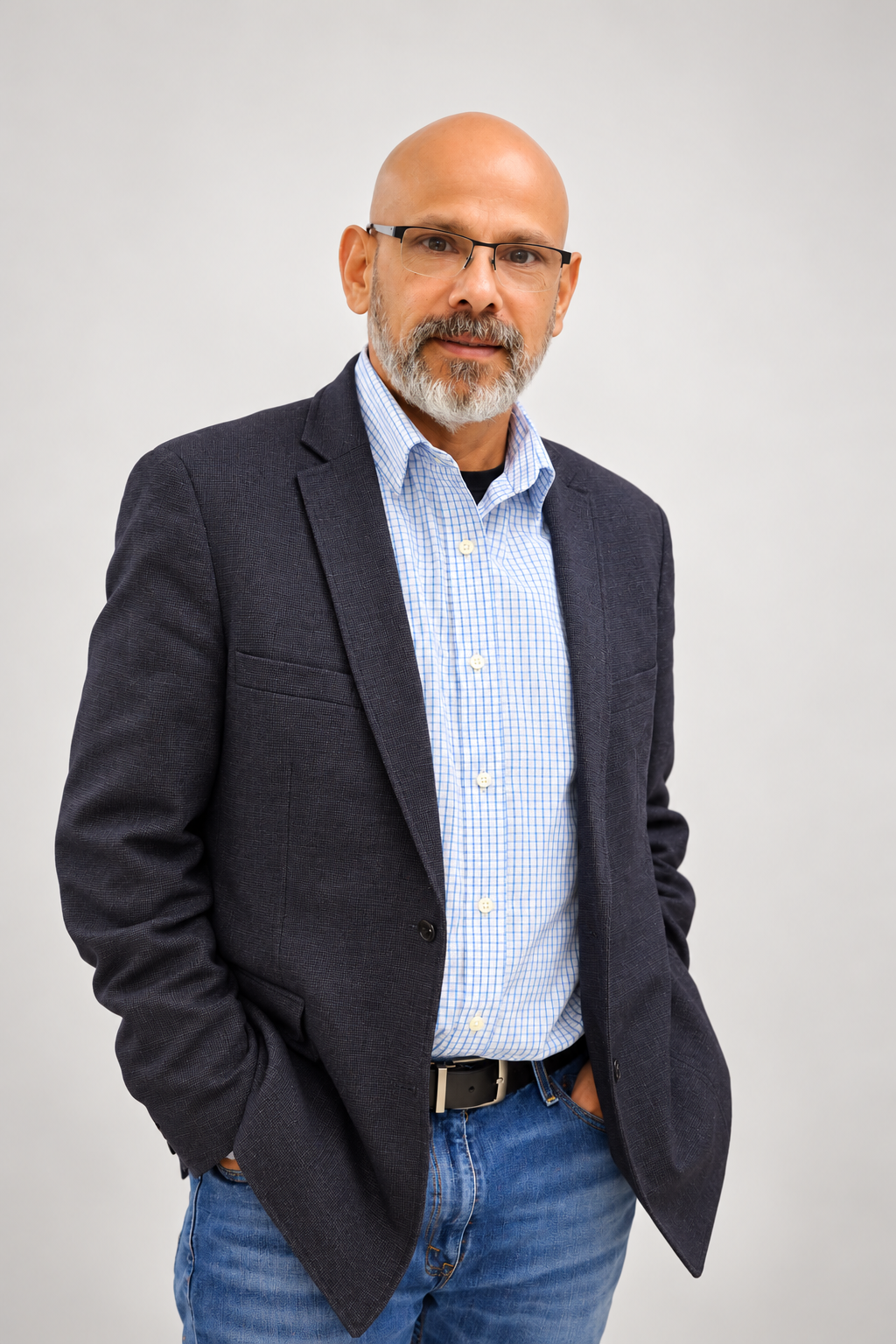
Host & Producer, The Next Steps Show
Peter Vazquez is the host and producer of The Next Steps Show, airing live weekdays on WYSL and WLEA. Born and raised in Rochester, New York, he brings experience as a U.S. Army veteran, business owner, and former nonprofit executive to conversations about faith, politics, entrepreneurship, and everyday life.
Peter's approach is grounded in direct questions, careful attention to the public record, and a belief that decisions must be judged by their results. He welcomes elected officials, community leaders, authors, entrepreneurs, and voices with differing perspectives. The show's guiding mission is simple: Putting People First.
Listen live weekdays from noon to 1:00 p.m. Eastern or explore full episodes, video conversations, guest profiles, and original commentary at NextStepsShow.com.
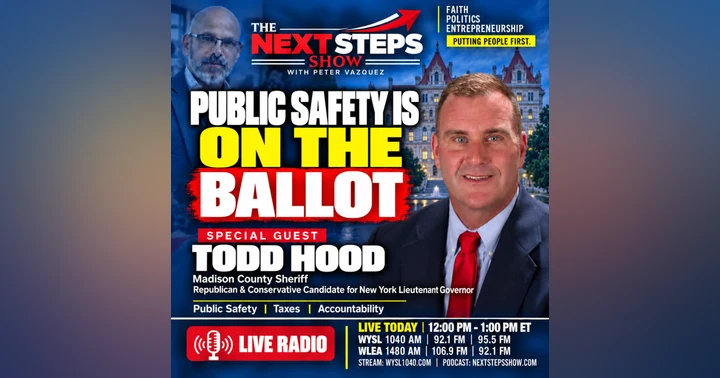
Public Safety Is on the Ballot. So Is Accountability.