

 iHeartRadio
 Apple Podcasts
 Spotify
 TuneIn
 Podchaser
 Castro
 Amazon Music
 PlayerFM
 RSS Feed
 Truth Does Not Stay Buried

Truth Buried sits at the center of this broadcast as host Peter Vazquez brings together two separate conversations tied by one hard theme: what happens when a nation, a city, or a family refuses to face what is broken.
Benjamin “Ben” Buckley opens the hour with a story reaching back to Gettysburg. After discovering 52 Civil War letters written by his ancestor Henry Christopher Binns Kendrick, Buckley did what the modern age almost never does: he listened to the dead and wrote back. His book, Remember Me: How Letters from My Civil War Uncle Helped Me Confront My Childhood CIA Attacker, turns family memory into a confrontation with trauma, secrecy, MKUltra shadows, and the long ache of being remembered.
Then Marcus C. Williams, GOP Chair of the City of Rochester Republican Committee, joins the conversation to bring the fight home. Rochester’s problems are not theoretical. They live in crime, failing schools, broken leadership, fear, silence, and political decay. Williams challenges the narrative that conservative values have no place in the city, arguing instead for truth, public safety, faith, family, and traditional American principles.
The show also confronts Alexandria Ocasio-Cortez’s claim that billionaires cannot earn their wealth, exposing the politics of resentment that tells struggling people whom to blame but not how to build. From Civil War memory to Rochester’s streets, from MKUltra to AOC’s class-war gospel, this broadcast asks one question: will we tell the truth before the wound becomes the country?
Truth Buried. Some stories begin with breaking news. Others begin with something older, quieter, and more dangerous to a forgetful age: a letter.
Host Peter Vazquez opened the microphone and followed a thread through two very different conversations, one stretching back to Gettysburg and the other landing hard in the streets of Rochester. The common wound was not geography. It was memory. It was truth. It was the cost of silence.
Benjamin “Ben” Buckley came with a story that sounded almost impossible in a disposable world: 52 Civil War letters, written by his ancestor Henry Christopher Binns Kendrick, a Confederate soldier who died at Gettysburg on July 2, 1863. The letters had no replies. No second voice. No comforting closure. Just one-man writing home from the furnace of war, asking to be remembered.
So Buckley answered him. Across 164 years, he wrote back.
That act was not nostalgia. It was not costume history. It was a man reaching into the past and finding that history was still breathing. His book, Remember Me: How Letters from My Civil War Uncle Helped Me Confront My Childhood CIA Attacker, pulls the listener into a place where family memory, war, abuse, secrecy, and survival collide. The Civil War becomes more than a chapter in a schoolbook. It becomes a mirror. A warning. A wound that never fully closed because America keeps trying to erase what it has not yet honestly faced.
Then came the darker question: what happens when institutions hide behind secrecy, when power claims patriotism while leaving human damage behind? Buckley’s account moved into the shadow of MKUltra, mind control, and abuse connected to intelligence-world darkness. It was not clean. Real testimony rarely is. It was unsettling, incomplete, and human, which is exactly why it mattered.
Truth is not always tidy enough for public consumption. That does not make silence holy.
Then the conversation shifted from buried family history to the buried failures of a city.
Marcus C. Williams, GOP Chair of the City of Rochester Republican Committee, brought the fight home. Rochester is not suffering from a shortage of speeches. It is suffering from the long rot of leadership that tells people the darkness is not real while families live inside it. Crime, drugs, prostitution, human trafficking, failing schools, fear, silence, and political intimidation are not theories. They are what residents whisper about when the press conference ends.
Williams spoke as a Black Republican in a city where conservative voices are often told to sit down, shut up, and accept the narrative. He refused. He named the fear. He named the failure. He named the need for a political home rooted in traditional American values, conservative principles, and courage.
Then came Alexandria Ocasio-Cortez’s words: “You can’t earn a billion dollars.”
There it was, the polished sermon of resentment. The idea that success is suspicious, wealth is myth, business is exploitation, and working people need government to explain whom they should hate. But Rochester does not need more class warfare dressed as compassion. It needs safer streets, literate children, functioning families, small businesses, real ownership, and leaders who understand that envy cannot build a neighborhood.
This is the Vanbōōlzalness Crisis in full view: buried truth, managed language, false compassion, broken systems, and citizens trained to confuse silence with peace.
One guest looked backward and found a letter still waiting for an answer. One guest looked around Rochester and named the decay too many leaders excuse.
Different stories. Same demand. Tell the truth before the wound becomes the country.
Two guests, one wound: truth buried by time, power, and politics. Peter Vazquez confronts Civil War memory, MKUltra shadows, Rochester’s decay, AOC’s resentment gospel, and the Vanbōōlzalness Crisis. Silence is not peace. It is surrender.
Promote your brand on the Next Steps Show, airing on WYSL1040.com's AM 1040, FM 92.1, and FM 95.5 West stations. Discover more at nextstepsroc.com/advertise-with-us or dial (585) 346-3000 to get in touch with the WYSL team.
Have you ever dreamt of sharing your unique voice, stories, or expertise with the world through a podcast? Perhaps you're bubbling with ideas but uncertain about where to begin? The journey from idea to launch can be daunting, but that's where we come in. Dive Into the World of Podcasting with Next Steps Radio PODCAST Network! Visit NextStepsRoc.com or call Peter at (585) 880-7580.

Opening Sponsor
This podcast is brought to you by Open Door Mission, restoring hope and changing lives. OpenDoorMission.com.
Opening
Peter Vazquez:
Look to the left, look to the right. What do you see? Where are you? In a world that seems to change daily, what will you do next?
Welcome to The Next Steps Show with Peter Vazquez, a starting point for discussion and a little bit of direction.
Ladies and gentlemen, you know it is Monday afternoon here with Peter Vazquez. When all of a sudden you hear some Spanish coming through, it can only mean one thing: you are listening to Next Steps.
I hope you had a great week. I hope you had time on Sunday to sit back, look at your mother, and say, “Mom, I love you.” Women truly embody compassion in a way that teaches you and holds you accountable. At least my mother did. They are the nurturers.
But today, let us talk about something different.
I have a guest whose story begins with 52 Civil War letters. No replies. No second half of the conversation. Just one voice preserved in time, waiting 164 years for someone to answer. And when he found those letters, he did what our disposable age almost never does. He slowed down, listened to the dead, and wrote back.
Ladies and gentlemen, in a country where institutions too often hide behind politics, or worse, behind what we call the Vanbōōlzalness Crisis, it is my honor to introduce our guest.
Sir, welcome to The Next Steps Show.
Interview One: Benjamin “Ben” Buckley
Benjamin Buckley:
Thanks a lot, Peter Vazquez. It is great to hear you talk. You did a really good introduction there. I was surprised by the way you described this. I appreciate that.
Peter Vazquez:
Sir, why do we start by telling our listeners who you are?
Benjamin Buckley:
My name is Benjamin Buckley. I have lived in Florida most of my life. I was raised in the Washington, D.C. area. About five or six years ago, I retired. I am 72 now.
About five years ago, I discovered these letters that my great-grandfather’s brother wrote from the Civil War back home to his family in Georgia. There were 52 of them.
Peter Vazquez:
He was a Confederate soldier, correct?
Benjamin Buckley:
Yes, he was. There were seven young men, five brothers and two brothers-in-law, who all joined the Confederate Army. They were from Talbot County, Georgia.
His name was Chris Kendrick. He died at the Battle of Gettysburg on July 2, 1863.
Peter Vazquez:
The family he wrote these letters to, who were they?
Benjamin Buckley:
They were relatives of mine. He wrote some of the letters to my great-grandfather, Thomas Kendrick. He also wrote letters to his father, Benjamin Kendrick. My name is Benjamin Kendrick Buckley, so there are a lot of Benjamins in the family.
He wrote letters to his sister, his other brothers, and other family members. I believe I only have the letters he wrote to the family because my grandfather was entrusted with them. He was a professor at the University of North Carolina, and he gave the letters to the university back in the 1930s.
Peter Vazquez:
You wrote a book titled Remember Me: How Letters from My Civil War Uncle Helped Me Confront My Childhood CIA Attacker. In this book, you bring up things like MKUltra. When you say you replied to these letters across 164 years, explain that to us.
Benjamin Buckley:
I did not know the letters were at the University of North Carolina. I stumbled onto them in their internet files.
The letters are only the letters Chris Kendrick wrote back home. I titled the book Remember Me because in his letters, it seemed very important to him that everyone remember him. He would say, “Remember me.” A lot of soldiers wrote that in their letters because they were on the front lines and afraid they would be forgotten.
That is why I named the book Remember Me. Those are his words.
I wanted to write a book about my life, so I answered his letters with my letters to him. It gave me an opportunity to talk about MKUltra and other things in my life.
Peter Vazquez:
These letters were in the possession of the University of North Carolina. Had they ever been published?
Benjamin Buckley:
I do not know if they were published anywhere. I had never heard of them being published. I later met a man who had transcribed them after I had transcribed them myself. The letters were all original. They were faded and not in order, so I had to put them in order. It was a lot of work.
Peter Vazquez:
We live in a time where the Confederacy and everything connected to it is often frowned upon. There are discussions about removing statues and other remembrances. We are not trying to romanticize it, but I think this conversation is important because we have to confront ancestry honestly.
How do you feel about what society and politicians are trying to do in erasing that time frame? Is there anything in those letters that counters what is happening now?
Benjamin Buckley:
That is interesting. After more than 150 years, there still seems to be no resolution to the Civil War. We are still engaged in that war in a way. Things are unresolved.
Look at January 6. Some people who went to the Capitol were carrying Confederate flags. We have not resolved this. It was a tremendous war. More than 600,000 Americans were killed. Many were injured, and there was massive property damage.
One good thing was that the slaves were freed. Of course, they did not get all their rights immediately. So we are still fighting this war in a way.
A lot of people in this country seem to want to re-engage or start another war. There is a lot of red and blue talk. I think it would be good for people to read the letters in this book and understand what a tragedy that war was.
Peter Vazquez:
Ladies and gentlemen, the voice you are hearing is author Benjamin “Ben” Buckley. Sir, can you hang on for a couple more minutes?
Benjamin Buckley:
Yes.
Peter Vazquez:
We will be right back, right here on The Next Steps Show with Peter Vazquez and the Voice of Liberty.
Break
If you are looking for an electrician to help with projects around your home, office, or business, call TriStar Electric. They are your friendly neighborhood electricians. They can help replace an electrical outlet, install a ceiling fan, or replace your whole electrical service. They are also the preferred professionals for Tesla EV chargers and Generac generators. Veteran and family-owned. Call TriStar Electric today at 585-880-0529 or book an appointment at try-star-electric.com.
The youth of our city are in a new crisis. Criminal justice reform has created consequences of no consequences and generated a new generation of 12- to 17-year-old kids committing serious crimes. Never before have we had this level of youthful offenders. But 90 percent of these kids are just trying to do the right thing and need a safe sanctuary. That is Rochester Youth for Christ. You can be part of the solution by giving generously and regularly at yfcrochester.org/donate.
Benjamin Buckley Continued: MKUltra
Peter Vazquez:
I appreciate you joining us today. I wanted to spend a few minutes talking about MKUltra because you mentioned it, and it is a significant part of your book.
We have had guests on this show who have also confirmed MKUltra, the CIA program involving mind control and research. According to you, you were a victim of that. Can you share some of that story?
Benjamin Buckley:
I do not know everything about the circumstances surrounding what happened to me.
During the Second World War, we were fighting the Germans, the Nazis. At the end of the war, our government had the OSS, and we brought about 1,500 high-ranking German scientists and others into this country. We adopted a lot of the programs they had been working on, like the jet rocket program.
One of the programs, I believe, was MKUltra. That involved mind control. The Germans were trying to develop ways to control people’s minds through different methods. I believe the CIA was given the task of taking over the MKUltra program in 1953.
There were experiments on various people around the world, including American citizens, to learn how to control someone’s mind.
Peter Vazquez:
I think it was also used to explore how to build super soldiers and change cultures and minds. But were you a victim of that?
Benjamin Buckley:
I was assaulted by a high-ranking CIA official. I do not know exactly what was going on. Perhaps this person had been working on the project and decided to experiment on his own. I do not know all the answers.
Peter Vazquez:
Because part of this is mind control, why would you remember all of it? Is that a valid question?
Benjamin Buckley:
That is right. I probably will never know exactly what happened.
Peter Vazquez:
Ladies and gentlemen, this is Benjamin “Ben” Buckley, author of Remember Me: How Letters from My Civil War Uncle Helped Me Confront My Childhood CIA Attacker. Benjamin, where can someone find your book or learn more?
Benjamin Buckley:
It is available on the internet. A lot of bookstores carry it. Trine Day is the publisher, based in Oregon. I believe the website is trineday.com. Search for the title online and you should be able to buy it.
Peter Vazquez:
The book is titled Remember Me. Benjamin “Ben” Buckley, I appreciate your time. May God continue to bless you and the work you do.
Benjamin Buckley:
Thank you, Peter. Good talking with you. Thanks for the fine introduction.
Host Commentary and Listener Call
Peter Vazquez:
History matters, ladies and gentlemen. Let us open up the lines at 585-346-3000. I have another guest coming on after the break, but between now and then, tell me what you think.
History is important. I am sure many of you have questions after hearing Benjamin speak. Let us take questions about what the Civil War was all about.
What attracted me to his story was that I thought he was a victim of MKUltra. We may never know. As he was talking, I started thinking: if part of this is mind control, how would someone know afterward that he was a victim of mind control? Is that not a valid question?
Bob:
There are a lot of valid questions.
Peter Vazquez:
You can get the book. It is available online. I do want to mention Trine Day because they have books that are interesting to read. I believe I had the publisher on a few months ago, and he described many of his authors as writers whose books others will not publish.
Bob:
That is what is called vanity publishing. You give them money, they print your books, and help with cover art.
It reminds me of old record companies where a young garage band would pay to record and press copies. The company would mail the record to radio stations with an introductory letter, and you would feel like you were on the verge of stardom. What they did not tell people was that is not usually how records get promoted or played.
Peter Vazquez:
When I was running for office, I paid for an email blast because someone sold me on the idea that it would go out to hundreds of thousands of prospective voters. Later, I learned that the value was almost nothing. Those blasts come from nowhere. They do not automatically turn into votes.
Bob:
There are a lot of self-publishing organizations. Someone writes a book about a pet or personal story, pays to package it, then asks for help promoting it.
Peter Vazquez:
I see it as content. Everyone should have an opportunity to speak.
Larry, what is up?
Caller Larry:
According to Tom Petty, that is exactly how Tom Petty and the Heartbreakers were discovered. Their records went to radio stations, nobody played it until one day Boston played it, and the rest is history.
Bob:
If he was on a major label, that kind of thing did happen. Back in the day, radio stations had music days when record people came in and played new releases. Sometimes a program director heard something, put it on the air, and it took off.
Caller Larry:
That is what happened. I cannot remember the label, but according to him it sat there until Boston played it.
Bob:
There was also a big hit for The Zombies called “Time of the Season.” It sat on the shelf for years before becoming a hit.
Peter Vazquez:
Larry, where are you calling from?
Caller Larry:
I am at the main post office.
Peter Vazquez:
Go ahead and keep working. We do not want to delay the United States mail. Thanks, Larry.
I love Trump, and I want to reaffirm that. He does things like the Right to Try Act. There are people who almost died because they could not try medicines that doctors would not allow. The Right to Try Act helps stop that.
We will be right back on The Next Steps Show.
Transition to Interview Two
Peter Vazquez:
We are back on The Next Steps Show on the Voice of Liberty.
Bob, maybe our next guest can tell us more about the Civil War.
Bob:
I am still confused about what was going on there.
Peter Vazquez:
You make me chuckle more often than not, and in a day where everything seems doom and gloom, it is good to chuckle. It is also good to know the truth.
The Civil War. What was it about? We know it was one of the worst things for this nation.
My next guest said, “Right now there is no leadership.” He said this when discussing his run for Rochester City Council at-large. He said, “I believe we need new leadership to make a difference.”
Let us tie that to the Civil War, because that war was about new leadership and a new way of life.
Ladies and gentlemen, I have Marcus C. Williams, chairman of the Rochester City Republican Committee. Welcome to The Next Steps Show.
Interview Two: Marcus C. Williams
Marcus C. Williams:
Hello, everybody. Thank you for having me today.
Peter Vazquez:
I appreciate you. You are a history buff. Your history skills put me to shame.
Tell me everything I need to know in about 30 seconds about the Civil War.
Marcus C. Williams:
The Civil War started as a states’ rights issue, but really what we had was a divide between Republicans and Democrats. Democrats wanted to keep slavery. Republicans wanted to abolish it.
It came from the new territories and how they would be integrated into the country. At the end of that, we saw brother against brother. It was a huge, terrible fight over what boiled down not simply to states’ rights, but to the right to keep slaves.
After the war, there was a period before Reconstruction when Black Americans were getting into office, including Congress, in numbers we do not see today. They were building schools and other institutions. Then during Reconstruction, Democrats wiped much of that away.
Bob:
That was the origin of Jim Crow.
Peter Vazquez:
The Confederacy. What does that mean to you as the chair of the Rochester City Republican Committee, as a Black man in Rochester, New York?
Rochester City School District’s graduation rate was 60 percent as of August 2025. Its dropout rate remained 17 percent. Black and Latino students in Rochester still struggle with reading comprehension. You are a product of this city, like me.
What does the Confederacy mean to a Black man in Rochester?
Marcus C. Williams:
It is not the worst thing in the world, but it is definitely a sordid time in our country’s history.
If we are looking at the Confederacy as states that pulled away from the United States, that was a problem. They tried to rip apart the nation for self-righteous oppression over other human beings, and that was wrong.
But I am not for tearing down statues or erasing history. If we erase that history, eventually it gets watered down more and more until people say it never happened. That is dangerous.
Let every Confederate monument and piece remain in place because it reminds us that this happened. Maybe it is not contextualized the way people want, but it shows us the reality. When monuments are taken down, the narrative shifts, and the conversation drifts.
They are pushing reparations in New York State now, using Black people as totems, but saying reparations should go to groups that were not directly connected to slavery in the same way. This has happened in California too.
Bob:
California did not even exist as a state during slavery. This rewriting of history has been happening for generations, thanks to government schools and pop culture.
Peter Vazquez:
Every leader in Rochester who claims to be here for Black and Brown people would say that people like Marcus and me are like Oreos. Are you an Oreo?
Marcus C. Williams:
I know the cookie. I am Black on both sides. I am Blackity Black. That does not change.
Peter Vazquez:
Some may wonder why I said that. When you shift from “I am American, I believe in God, country, and family” and start believing in nonsense like AOC, that is where we get into trouble.
Let us play the first clip.
AOC Clip One
Audio Clip:
When you have these systems, when you have corporations, when you have an economic elite, there is a certain level of wealth and accumulation that is unearned, right? You cannot earn a billion dollars. That is right. You just cannot earn that. That is exactly correct.
You can get market power. You can break rules. You can abuse labor laws. You can pay people less than what they are worth. But you cannot earn that, right? And so you have to create a myth that since you did not earn that, you have to create a myth of earning it.
Peter Vazquez:
A myth.
I do not know what bothered me more: AOC’s comments or the host, Ilana Glazer, a comedian worth millions of dollars.
Bob:
AOC was being interviewed by a comedian?
Peter Vazquez:
On a show called It’s Open. Marcus C. Williams, when we come back from break, I need you to help me analyze what AOC just said.
Marcus C. Williams:
Certainly.
Break
Does your motorcycle need a new home? Arcport Cycles is looking to buy good used motorcycles, ATVs, and side-by-sides. Bring them to Arcport Cycles at 7611 Industrial Park Road in Hornell for a free, no-obligation evaluation.
The youth of our city are in crisis. Criminal justice reform has created consequences of no consequences and generated a generation of young offenders. But 90 percent of these kids are trying to do the right thing and need a safe sanctuary. That is Rochester Youth for Christ. Give generously and regularly at yfcrochester.org/donate.
Marcus Williams Analyzes AOC
Peter Vazquez:
We are back on The Next Steps Show on the Voice of Liberty.
You cannot earn a billion dollars. According to the left, you just cannot earn that kind of money.
AOC is not someone to ignore. She is out there with people promoting major socialist ideas in New York City, Seattle, Dearborn, Michigan, and elsewhere.
America has a history, and that history made us who we are.
Marcus C. Williams lives in Rochester in an area where appointed officials have said people like him are just people we throw money at to stop robbing the rest of us.
Marcus, what do you think about AOC’s statement that you cannot earn a billion dollars?
Marcus C. Williams:
Let us start with the most notable example: Michael Jordan. He did magnificent things, and now he is a billionaire.
You have people like Robert F. Smith and David Steward. Look them up. These are Black entrepreneurs who show Black excellence and American exceptionalism.
The fact that Ocasio-Cortez said that shows she does not believe in American exceptionalism. She does not believe in Americans’ ability to succeed and thrive, even in conditions others may see as adversity.
But that has been the history of our nation. We were born and founded in adversity, and we have always risen forward. May we continue lifting ourselves up, our communities up, and our nation up. May we go ever forward.
Peter Vazquez:
Vanbōōlzalness Crisis, ladies and gentlemen, fully on display.
If you are making minimum wage at Walmart, if you are making seven dollars an hour, with gas prices it costs you seven dollars to go to work, according to these people on the left.
Let us play cut two.
AOC Clip Two
Audio Clip:
If you are making minimum wage at a Walmart and you are making seven bucks an hour, with these gas prices it takes you seven bucks to get to work.
As a result, we have internalized this moralized system. The people at the top are smarter, better, more sophisticated, and therefore the people at the bottom are uneducated, lazy, et cetera.
If you have internalized that code, you need somebody under you because you feel like you are good. But if you have internalized that, you need someone to point to who has broken the rules, someone who is lazy, because in a way, someone else has got to be locked up so that you are not.
It is like a mental coping mechanism because you actually are on the brink of losing your house.
Reaction to Clip Two
Peter Vazquez:
Which one of them is dumber? This is why alcoholism exists in America, because trying to decipher this stuff is exhausting.
According to the left’s mantra, only white people have the ability to succeed, and everybody else does not. Did I understand what she said?
Bob:
Something resembling that. Basically, it is divide and conquer at all costs. Divide us into oppressors and victims, with government as the only scorekeeper.
She said it is a mental coping mechanism because you are on the brink of losing your home. That was spoken by a millionaire comedian interviewing a congresswoman with presidential ambitions. Can you imagine someone like that as chief executive of the country?
Peter Vazquez:
Bob, she is one of the lower-net-worth individuals in Congress. Everything I found shows she has very little net worth.
Marcus, weigh in here. Give us your thoughts.
Marcus C. Williams:
It is ridiculous.
Americans are under threat by ridiculous ideas like this that push victimization and the erosion of business stability by promoting higher wages while saying any company that cannot pay them should close its doors. Then what? All their people are unemployed.
Look at the tens of thousands who lost jobs in California because of ridiculous conceptual policies being implemented. This is where we are now.
Bob:
AOC chased away thousands of top-paying jobs from an Amazon project in her district, for a rationale that made no sense. It was class-warfare doctrine. Those were people who could have afforded mortgages, cars, and supported local businesses, but those jobs are gone.
Peter Vazquez:
Marcus, you are Black, Republican, and you live in Rochester. Are you lonely?
Bob:
He is the chair of the Republican City Committee. He represents the actual Republican committee.
Peter Vazquez:
Marcus, what is the state of Rochester from your perspective as a Black Republican living in a city struggling with violence?
Marcus C. Williams:
It is a terrible, pitiful state. We have people living through this every day, and it is an abomination.
Our elected officials currently play in our face. They tell us the crime is not real. They tell us the drugs are not real. They say the human trafficking and prostitution are not real. They say everything is fine.
Just because you say things are sunny does not mean there is no darkness. They do not address the darkness we live through every day.
A lot of Republicans in the city are scared to stand up and say, “I am Republican,” or, “I am conservative. I have these values.”
I do not want people to fear that. I want people to know that the Rochester City Republican Committee is a place they can call home. We will stand on traditional American values and conservative principles, and we will continue to fight for them.
Peter Vazquez:
Marcus, there are Black Republican female candidates running, which is significant because it counters the left’s narrative. One of them has been on the show and is tied to the history of Rochester and the making of the Black community in the city. Talk to us about support for those candidates.
Marcus C. Williams:
One candidate is running outside the city, in the suburbs. The other, Clianda Florence, is running in the city. She covers part of the city, and I have had an extensive history with her. She has done great work, including her Get Lit program to help children read.
Peter Vazquez:
She is the endorsed candidate for the county committee?
Marcus C. Williams:
Yes.
Peter Vazquez:
What about the other candidate?
Marcus C. Williams:
She is running in Pittsford. This is people’s chance to ask questions and see that they have a candidate running out there.
Peter Vazquez:
Marcus, I appreciate your time today. I truly do. May God bless you and the work you continue to do.
Marcus C. Williams:
Thank you. Bless you.
Closing
Peter Vazquez:
Ladies and gentlemen, as always, learn. Be a leader. Be a leader. Be a leader.
God bless these United States of America. And do not let one second go by where you are not a voice for liberty.
[Music outro]
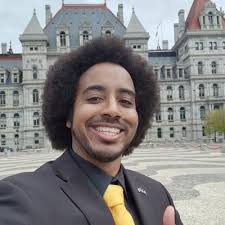
Local Policy Reformer and Community Advocate
Marcus C. Williams is a Rochester native and community advocate who does not wait for permission to defend his neighbors. Grounded in the belief that government exists to protect rights, not manage people, he has emerged as a leading local voice on public safety, civil liberties, and accountable governance.
Known for doing the work most people only talk about, Marcus drafted and submitted the Rochester Sovereignty Biometric Privacy and Cash Access Act, a proposal designed to curb warrantless surveillance, protect personal data, preserve cash as legal tender, and restore constitutional guardrails at the municipal level. His advocacy focuses on results, not rhetoric.
Marcus champions public safety by demanding both effective policing and real consequences for crime, while rejecting fear-based narratives that divide communities. On education, he supports expanding opportunity through vocational training, charter schools, and on-the-job pathways that prepare young people for real work, not permanent dependency. He is equally committed to economic growth, pushing for job creation, entrepreneurship, and policies that allow small businesses to thrive.
At the heart of his work is housing. Marcus confronts rising rents and collapsing neighborhoods by advocating for affordability, pathways to homeownership, and revitalization that serves residents rather than displacing them.
Marcus C. Williams stands for a simple principle: a city works best when its people are seen, heard, and empowered to shape their own future.
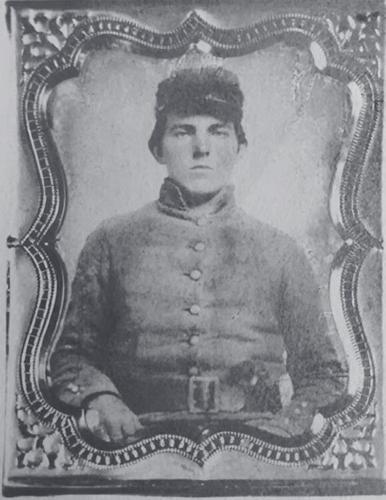
Author
Benjamin Buckley is not simply an author telling an old family story. He is a man who followed a trail of blood, memory, war, and secrecy back through the American past and found that history was not finished speaking.
Born and raised in the Washington, D.C. area, Buckley is a descendant of Henry Christopher Binns Kendrick, a Confederate soldier who died at the Battle of Gettysburg. His professional life in construction took him onto government sites connected to national security work, giving him a firsthand view of the machinery, ambition, and secrecy surrounding America’s pursuit of power.
But the deeper excavation came after retirement, when Buckley discovered 52 Civil War letters written by his great-uncle. These were not museum pieces. They were dispatches from a man facing death, duty, fear, and remembrance. Across 164 years, Buckley found an emotional and philosophical kinship with a soldier whose words became more than history. They became a mirror.
Those letters helped Buckley confront the darkest chapters of his own life: war, abuse, buried memory, and the shadow cast by U.S. intelligence projects, including the CIA’s MKUltra. His story forces a hard question into the open: what happens when personal trauma, family history, and government secrecy all meet in the same soul?
Benjamin Buckley brings a rare testimony of ancestry, survival, moral reckoning, and the courage to answer what silence tried to bury.