


A City Arguing With Itself captures a street-level dialogue between Peter Vazquez and Alex White as they confront poverty, policing, housing, energy, transportation, and political power. Callers challenge assumptions, faith anchors values, and policy is measured by outcomes, not intentions. This conversation exposes how ideology fractures cities and asks whether honest dialogue can still repair what politics has broken.


A city at a crossroads does not whisper. It argues. It grinds. It forces uncomfortable conversations at street level and kitchen tables alike.
This conversation crossed ideological lines without flinching. Peter Vazquez ‘sat across’ from Alex White, small business owner, Green Party activist, and former Rochester mayoral candidate, to do something rare in modern America: disagree honestly without dehumanizing.
Poverty, policing, housing, energy, transportation, public trust, Israel and Palestine, body cameras, minimum wage, cars versus communities, and the moral weight of policy decisions were all placed on the table, not as talking points, but as lived realities.
Listeners heard how decades of one-party control shaped Rochester’s outcomes, why good intentions still produce broken systems, and how ideology often collapses when confronted by math, incentives, and human nature.
From the cost of electricity to the limits of public housing, from crime driven by no consequences to compassion distorted into chaos, this was not a debate for applause lines. It was a test of whether adults can still talk.
Callers challenged assumptions. Scripture anchored values. Experience exposed gaps between theory and reality. No one walked away crowned a hero, but truth surfaced where slogans failed.
This episode is a reminder that a nation does not heal through silence or screaming, but through courageous dialogue grounded in accountability, humility, and a refusal to lie to ourselves.
If the country is going to find its footing again, these are the conversations that must happen.
Promote your brand on the Next Steps Show, airing on WYSL1040.com's AM 1040, FM 92.1, and FM 95.5 West stations. Discover more at nextstepsroc.com/advertise-with-us or dial (585) 346-3000 to get in touch with the WYSL team.
Have you ever dreamt of sharing your unique voice, stories, or expertise with the world through a podcast? Perhaps you're bubbling with ideas but uncertain about where to begin? The journey from idea to launch can be daunting, but that's where we come in. Dive Into the World of Podcasting with Next Steps Radio PODCAST Network! Visit NextStepsRoc.com or call Peter at (585) 880-7580.

A City Arguing With Itself – Transcript
Peter Vazquez (Host):
In a world that seems to change daily, what will you do next? This is The Next Steps Show. This program exists to create real conversation, not shouting matches, not echo chambers. Dialogue requires perspective, and perspective requires listening.
Today’s discussion matters because it comes from lived experience, not theory. Street level. Kitchen table level. Faith, future, and policy level.
I invited today’s guest because he can disagree without collapsing into caricature. That matters. We do not grow by preaching only to ourselves.
My guest is Alex White, a small business owner and former three-time candidate for mayor of Rochester.
Alex White:
Thank you for having me. I believe we need more polite, educated dialogue between people who disagree. We agree on far more than we admit. We disagree mostly on how to get there.
Peter Vazquez:
That is exactly why you are here. Leadership is not about purity of ideology. It is about whether families are safer and better off tomorrow.
You are a business owner. Tell people who you are.
Alex White:
I have owned a game store on Monroe Avenue for about thirty years. Before that, I was a teacher. I became politically active because I disagreed with how the City of Rochester treated small businesses. I am affiliated with the Green Party and believe strongly in environmental protection and cooperative economic activity.
I ran for mayor three times because I believed the city needed to address basic issues: infrastructure, contracting, utilities, and accountability.
Peter Vazquez:
You remain active, especially around police body cameras.
Alex White:
Yes. I have worked on dashboards tracking camera activation rates. Transparency improves behavior for everyone involved.
Peter Vazquez:
I support accountability, but I worry about selective enforcement and second-guessing split-second decisions.
That brings us to policy. Rochester has not improved. Poverty remains near 30 percent. Crime is up. Families are not better off.
You argue income inequality is the driver.
Alex White:
International data shows societies with greater income inequality experience higher crime, worse health outcomes, lower life expectancy, and greater instability, even when poverty rates are similar.
Opportunity exists, but not everyone has the same margin for failure. When people fail, they fall further behind.
Peter Vazquez:
I struggle with that framing. America is built on opportunity, but policy often discourages access or responsibility.
Callers joined the discussion, arguing that decades of Democrat control created Rochester’s outcomes. Others argued politics has become a hustle rather than public service.
Peter Vazquez:
We see greed, self-dealing, and moral confusion in leadership. That erodes trust.
Let us talk energy. You oppose liquefied natural gas.
Alex White:
It is dangerous to store and transport. Hydro is the cheapest and most reliable where available. Solar can help, but distribution costs are massive. Electricity transport is extremely expensive, and consumers feel it on their bills.
Peter Vazquez:
I have seen affordable housing projects fail because tenants cannot afford electric bills driven by distribution fees, not usage.
Transportation is another fault line. You have said cities should be designed for people, not cars.
Alex White:
Cars solved old problems but created new ones: asthma, pollution, fuel dependency. Public transportation once connected this region efficiently. We abandoned it. A functional system would help workers, students, and businesses.
Peter Vazquez:
As a business owner, I worry about access and parking becoming political targets.
Alex White:
I have always supported parking. This is not about banning cars. It is about balance and resilience.
Housing followed.
You have said housing is a human right. Is eviction ever moral?
Alex White:
Homelessness hurts everyone, including businesses. The market does not produce enough housing affordable to the lowest earners. The median rent exceeds what full-time minimum wage workers can pay. Public housing or public involvement is necessary. Constant eviction destabilizes families and schools.
Peter Vazquez:
Rural communities are suffering as well. Wages, part-time incentives, and regulatory costs are crushing people everywhere.
Foreign policy closed the discussion.
Peter Vazquez:
Israel and Palestine. Where do you stand?
Alex White:
I oppose genocide. Hamas committed atrocities. Israel’s response has been disproportionate and will likely create more extremism long-term.
Peter Vazquez:
Final question. Minimum wage. Are you paying your workers fairly?
Alex White:
We operate as a cooperative with profit sharing. Compensation reflects that model.
Peter Vazquez:
Thank you for showing up and standing in your convictions.
This conversation proves something important. We can disagree without hating each other. We can argue without lying. And we can still anchor ourselves in truth, accountability, and love of neighbor before ideology.
Be a leader. Do not let a second go by where you are silent in the face of reality.
God bless the United States of America.
Street-Level Dialogue: Why Honest Disagreement Matters
Peter Vazquez opens the discussion by rejecting political theater in favor of real conversation. He explains that progress requires perspective, lived experience, and the willingness to engage across ideological lines without hostility.
Who Is Alex White: Small Business, Green Party, and City Politics
Alex White introduces himself as a long-time Rochester small business owner, former teacher, and three-time mayoral candidate. He outlines his Green Party affiliation and explains why city policies pushed him into public engagement.
Rochester Poverty and Crime: Policy Outcomes vs Intentions
The conversation turns to Rochester’s persistent poverty rate, rising crime, and lack of measurable improvement. Alex argues income inequality drives instability, while Peter challenges whether policy design discourages responsibility and access to opportunity.
Policing, Body Cameras, and Public Trust
Alex explains his work monitoring police body camera activation rates and argues transparency benefits everyone. Peter agrees on accountability but warns against politicized enforcement and hindsight discipline that undermines policing.
Political Power, Greed, and Leadership Failure
Callers weigh in, criticizing decades of one-party control and accusing local leadership of self-interest. Peter frames leadership as service, not hustle, and stresses that corruption erodes public trust across parties.
Energy Policy, Electric Bills, and Distribution Costs
Alex discusses hydro, solar, and natural gas, emphasizing safety and long-term costs. Peter highlights how distribution fees, not usage, drive electric bills and make affordable housing unsustainable for working families.
Transportation, Cars, and Designing Cities for People
Alex argues that car-centric planning has harmed public health and mobility, while Peter raises concerns about business access and parking. Both agree that balance, not ideology, should guide transportation policy.
Housing as a Human Right and the Morality of Eviction
The discussion explores rent inflation, wage stagnation, and housing shortages. Alex argues public involvement is necessary to stabilize families. Peter highlights how eviction cycles damage schools, neighborhoods, and local economies.
Rural Poverty and the Cost of Living Crisis
Peter expands the conversation beyond cities, noting rural communities face even fewer options. Alex agrees that low wages, part-time incentives, and regulatory burdens hurt both urban and rural America.
Israel, Palestine, and Moral Responsibility in Foreign Policy
Alex states opposition to genocide and criticizes disproportionate military responses. Peter presses for clarity and accountability, reflecting broader public tension over U.S. foreign policy.
Wages, Cooperative Business Models, and Fair Pay
Alex explains his cooperative business structure and profit-sharing model. The exchange highlights alternative approaches to compensation without government mandates.
Closing Reflection: Faith, Accountability, and Civic Responsibility
Peter concludes by grounding the conversation in moral clarity, emphasizing truth, humility, and leadership rooted in responsibility rather than ideology.
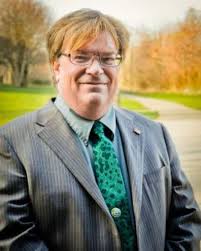
Small Business Owner and Community Advocate
Alex White is a Rochester native and longtime small business owner, best known for managing Boldo’s Armory, a game store on Monroe Avenue, for the past two decades. He earned a BA in History and Mathematics from St. John Fisher University and an MA in History from SUNY Brockport, with additional graduate study at SUNY Binghamton. A former secondary educator and civic organizer, White has been active in Rochester community efforts focused on public safety, employment, neighborhood revitalization, and small business advocacy. He has run for Rochester mayor three times and remains a frequent presence at City Council meetings. White lives in the South Wedge, is a member of Saint Boniface Church, and has rehabilitated multiple vacant homes in city neighborhoods.