

 iHeartRadio
 Apple Podcasts
 Spotify
 TuneIn
 Podchaser
 Castro
 Amazon Music
 PlayerFM
 RSS Feed
 Trained to Depend, Called to Lead

Silent Majority Leadership stands at the center of this hard-hitting conversation with Peter Vazquez, John deVerteuil and Terris Todd. DeVerteuil, author of We Are America: A Voice from the Silent Majority and CEO of Nation-Building Advisory Group, warns that nations weaken when leadership fails, corruption spreads and citizens remain quiet. Todd, Project 21 Director of Coalitions and Outreach, brings the discussion home through Bob Woodson’s legacy, calling communities back to faith, fatherhood, family, education and responsibility. This is a call to stop drifting and start rebuilding.
Silent Majority Leadership. A nation does not lose itself in a single afternoon. It is trained.
Not by one speech, not by one election, not by one crisis flashing across a screen before the next commercial break. It is trained slowly, patiently, deliberately, until people begin repeating words that no longer mean what they used to mean.
Disorder becomes compassion. Debt becomes leadership. Silence becomes unity. Confusion becomes progress. Dependency becomes justice. Corruption becomes procedure. Cowardice becomes tolerance. And the citizen, standing somewhere between the grocery bill and the evening news, begins to feel the weight of it before he can even name it.
That is where Peter Vazquez begins. Not with panic. Not with performance. With a warning.
Because the crisis in America is not only at the border, though the border tells the truth. It is not only in Congress, though Congress keeps proving the point with almost artistic incompetence. It is not only in bureaucracy, though bureaucracy has learned how to hide failure behind forms, programs, studies, and words so polished they barely resemble reality.
The crisis is deeper. It is in the way a people are taught to forget who they are.
John deVerteuil knows what weakened nations look like before the collapse becomes obvious. He has seen it where the roads turn dangerous, where institutions lose nerve, where corruption becomes the language of survival, where citizens stop trusting the people who claim to govern them.
With thirty-three years in uniform, more than twenty-five years in Special Forces, and experience across Colombia, Iraq, Afghanistan, and Africa, he does not speak from theory. He speaks from ground that has shaken under real consequences.
His message lands hard because it is simple: America’s greatest threats are not always overseas. Sometimes they sit behind polished desks. Sometimes they wear the respectable clothing of policy. Sometimes they hide inside agencies. Sometimes they arrive as promises of free things, soft dependency, and leaders who insist they are saving the people while quietly making them weaker.
In his book, We Are America: A Voice from the Silent Majority, John deVerteuil points back to the citizen, the ordinary American who still works, still believes, still pays, still serves, still raises children, still honors the flag, still senses that something has gone badly wrong.
But sensing it is not enough.
Silence may feel safe, but silence has never rebuilt a republic.
Then the conversation moves from national security to the soul of the nation, where Terris Todd of Project 21 carries the torch of Bob Woodson’s legacy. If John deVerteuil shows what happens when nations lose structure, Terris Todd shows what happens when communities lose foundation.
Bob Woodson understood what the political class still pretends not to know: people are not restored by grievance. Families are not rebuilt by checks. Children are not rescued by slogans. Communities do not rise because bureaucrats discover another acronym and hold another press conference under fluorescent lights.
Communities rise when fathers return to their place. When mothers are honored. When churches stop apologizing for truth. When schools teach children to love what is good, not resent what came before them. When men and women stop waiting for permission to lead.
When people closest to the pain are trusted to become closest to the solution.
Terris Todd speaks to that wound with the clarity of a man who has lived in classrooms, government, politics, ministry, and the conservative movement. He reminds us that the battle is not only political. It is spiritual. It is intellectual. It is generational. It is a battle for the souls of children who are being told to hate their country, doubt their worth, revise their faith, and sell their future to people who profit from confusion.
This is the Vanbōōlzalness Crisis in full view.
A border weakened. A Congress asleep at the wheel. A bureaucracy swollen with waste. Cities seduced by socialism. Communities purchased instead of empowered. Children taught resentment instead of responsibility. Faith mocked, bent, and repackaged into political fashion. Families treated as optional. Fathers treated as replaceable. Citizens trained to depend instead of lead.
Yet the answer is not despair.
The answer is not retreat.
The answer is not to stare at the wreckage and call it analysis.
The answer is leadership.
The answer is truth spoken plainly. Faith lived boldly. Families rebuilt patiently. Borders guarded seriously. Corruption punished honestly. Communities restored locally. Citizens awakened from the long sleep of managed decline.
Peter Vazquez brings this conversation to the table because the country does not need another dose of comfortable noise. It needs a reckoning. It needs men and women willing to say what others only whisper. It needs Americans who understand that liberty is not inherited forever. It must be guarded, taught, practiced, and defended.
A nation can be trained to forget itself. But it can also be called back.
Listen now. Share it. Be a leader. Rebuild what still matters.
Keep the conversation going: More episodes · Watch videos · Read commentary · Send a voice message. Live weekdays at noon Eastern on WYSL and WLEA.
Sponsor:
This podcast is brought to you by Open Door Mission, restoring hope and changing lives. OpenDoorMission.com.
Announcer:
Mira la izquierda, mira la derecha, ¿qué ves? In a world that seems to change daily, what will you do next? Welcome to The Next Steps Show with Peter Vazquez, a starting point for discussion and a bit of direction.
Peter Vazquez:
Ladies and gentlemen, it has been a little while since I have shared some homegrown words of wisdom. Let me try that this afternoon.
When a nation calls disorder compassion, debt leadership, silence unity, and confusion progress, it is not merely drifting. It is being trained to forget the difference between liberty and managed collapse.
And that downside is being instilled in us artificially, because Americans do not traditionally think this way. When you hear that negative energy coming your way, think China and the left.
And I cannot just say the Democrat Party, because some people all around understand that power is what they want, and confusion is what keeps control.
I realized that growing up, I fell for a lot of this. I bought into the culture control and the mind control. I say this all the time: the national security issue is not always abroad. It is right here in our backyard. It is the poison coming out of the mouths of people we elected.
This next half hour, we are going to have a powerful conversation. My guest has thirty-three years in uniform, more than twenty-five years in Special Forces, and experience across Colombia, Iraq, Afghanistan, and Africa. He has seen what happens when institutions lose nerve and lose the truth.
Author of We Are America: A Voice from the Silent Majority, it is my honor to welcome John deVerteuil, CEO of Nation-Building Advisory Group.
John, I am going to ask you to pronounce your last name.
John deVerteuil:
It is deVerteuil.
Peter Vazquez:
Wonderful. I tend to mess up names, and I did not want to mess up yours.
John deVerteuil:
That is an easy one to mess up, I guarantee you.
Peter Vazquez:
I will definitely work not to do that. Thank you again for joining me today. Before we get into some of the topics we are going to discuss, tell our listeners who you are and what Nation-Building Advisory Group is.
John deVerteuil:
Like you said earlier, I went into the military at seventeen. I signed up and did thirty-three years. I pretty much did everything.
When I retired, General Don Bolduc was retiring me. He said that in Special Forces, people usually get tied into one specific task. He said he had never really run into anybody who had done it all until he met John.
He was right. I did a lot of counter-narcotics work in Colombia in the 1990s, and that started my nation-building learning experience. We did Plan Colombia down there. Plan Colombia was to combat counter-narcotics, but Colombia did not really have a narcotics problem. They had a guerrilla group trying to overthrow the country problem.
That is how I looked at it. When I went down there to work with the Colombians, I focused on that issue.
As far as I am concerned, the drug problem is the United States’ problem, Europe’s problem, and Russia’s problem, not Colombia’s or Mexico’s. They have a violence problem because of our drug addiction.
So I look at things differently than others, and you have to when you are nation-building. You have to look at it from the perspective of the people on the ground in that country. Whether it is Colombia, the United States, Africa, or Afghanistan, I look at what is best for the people who live there. Generally, if we stabilize that country or region, then it is good for the United States.
Peter Vazquez:
Is that the concept behind America being the world police, or America fighting wars abroad? It is not necessarily just protecting our border. It is protecting a way of life, not just here, but there, so that others can enjoy freedom, liberty, and hopefully God, country, and family.
John deVerteuil:
That really started after World War II. Before World War II, we mostly stuck to our own territory and region. After World War II, we had the Bretton Woods agreements.
In order to stabilize the rest of the world, because Europe and Japan had just demolished themselves, and to keep the communists at bay, the United States had to become the de facto police of the world. We had to keep the Straits of Hormuz, the Panama Canal, the South China Sea, and all of these logistics lines and choke points in play.
In doing so, we also became the currency for oil through the dollar. We took on a lot of responsibility.
Fast forward to the end of the Cold War in 1991. Communism said, “We are done.” When Gorbachev said, “Okay, we are done, we are going to get rid of communism,” we did not have a plan.
When governments suddenly collapse, such as what we may see in Cuba, what we saw in Afghanistan, what we saw in Russia and Venezuela, there is a huge vacuum of power. When you have a vacuum of power, bad actors show up and steal everything. It is not good for the country. You have to have a step-by-step program, and that is where nation-building comes in.
Peter Vazquez:
Thank you for sharing that. First of all, thank you for your service. I also joined the military at seventeen, and I remember making that decision. Thank you for your thirty-three years and beyond of service to this nation. It is totally worth protecting.
You mentioned guerrilla war in places like Latin America. We do not see guerrilla war in our streets the way people might picture it, but when you see what is happening in politics, and even in our faith-based communities, that is a guerrilla war. I do not know how else to describe it. It is a civilized guerrilla war.
John deVerteuil:
It is asymmetric warfare. It has not become guerrilla war with quotation marks yet. Guerrilla war is guns in the wood line. That is the next step.
The first step is what is going on now.
If I want to overthrow the United States or any other country, I have to show the people that the government does not have control. So I create disruption in the streets. I cause crime. I cause issues for the people. I decrease their ability to get basic products such as food and gas.
That is what I want to do. Now the people are angry because they believe the government cannot control it. Once I have that going, I have sentiment on my side. Then I come in and say, “I have the solution. We are going to overthrow this current government and create this utopia.”
What people do not realize is that all these academics and popular people, including movie stars, may support the overthrow. But once I take over, who is the first person I need to get rid of? The voice. The voice that changed people’s minds.
Because when they realize what I am really doing, that voice will go against me. So what do I do with those people? I imprison them. I assassinate them. I get rid of them. Period. This happens every time.
Peter Vazquez:
You described what we have called here on The Next Steps Show on WYSL and WLEA the cultural confusion crisis. Not bamboozled like buying a used car, but something deeper that we came up with to catch people’s attention.
The national security issue I see is the mind control. It is the constant feeding of our young people, and some older people, with the message that they are worthless and need government.
We have people like Mamdani in New York City trying to convince New Yorkers and people across America that socialism is the way to go.
Before we go to break, I want to ask you this because you have the experience. What do you see in America today that ordinary citizens may feel but cannot quite put their finger on? We know something is not right, but what is it?
John deVerteuil:
The biggest problem we have in the United States is a lack of leadership, period.
I am not talking only about the White House. I think Trump is doing a pretty good job. There are some issues where I would advise him differently, but once he makes that decision, we walk out the door lockstep.
I am talking about Congress. Congress is the problem.
If you look at the past decades, we have seen more and more executive orders coming out of the White House. Why? Because Congress is not acting. Congress is not doing its job.
Take illegal immigration, for example. If you look historically at what Democrats and Republicans have said about how to solve this problem, it is almost identical. They can solve this problem. What they do not want to do is solve it.
Peter Vazquez:
Ladies and gentlemen, the voice you hear on the telephone is John deVerteuil, CEO of Nation-Building Advisory Group. Soy yo, Peter Vazquez. Do not change that dial. Send me a message online or send me a text. We will be right back here on the Voice of Liberty, WYSL and WLEA.
Commercial:
If you are looking for an electrician to help with projects around your home, office, or business, call TriStar Electric. They are your friendly neighborhood electricians, and they can help you replace an electrical outlet, install a ceiling fan, or replace your whole electrical service. They are also the preferred professionals for Tesla EV chargers and Generac generators. Veteran and family owned. Call TriStar Electric today at 585-880-0529 or book an appointment at Tri-Star-Electric.com.
Commercial:
The youth of our city are in a new crisis. Criminal justice reform has created the consequences of no consequences and generated a whole new generation of twelve-to-seventeen-year-old kids committing serious crimes. Never before have we had this level of youthful offenders, but ninety percent of these kids are just trying to do the right thing and need a safe sanctuary to retreat to. That is Rochester Youth for Christ. You can be part of this solution by giving generously and regularly at YFCRochester.org/donate.
Commercial:
Here is a reason to celebrate. Turnbull Heating and Air turns sixty years old in 2026. Instead of blowing out candles, Turnbull is rolling out a great sixty-year anniversary diamond deal. Get sixty dollars off HVAC cleaning and maintenance or seven hundred fifty dollars off any newly installed heating or cooling system, furnace, boiler, or heat pump. Sixty years of experience. Now, as always, turn to Turnbull.
Announcer:
Peter Vazquez and The Next Steps Show on the WYSL stations.
Bob Savage:
Peter, I agree with our guest John, and I want to pass along some good news about Congress.
Peter Vazquez:
Is there such a thing?
Bob Savage:
Absolutely. Check this. The next Congress of the United States will not have Al Green, Jasmine Crockett, Dan Crenshaw, Eric Swalwell, Mitch McConnell, Nancy Pelosi, Don Bacon, Jerry Nadler, Bill Cassidy, Thomas Massie, John Cornyn, or Marjorie Taylor Greene.
Is that not exciting news? We will be talking about that in the second half hour.
Peter Vazquez:
I am buying the first round here.
Bob Savage:
Absolutely.
Peter Vazquez:
I will take you up on that. Ladies and gentlemen, there is a lot to celebrate when you hear things like that. The next best news I could hear is that Ilhan Omar was taken out in handcuffs and deported because she committed fraud from the beginning when she came into this country. I am just saying that would be kind of cool.
Bob Savage:
We can all wish for things. Pony under the Christmas tree.
Peter Vazquez:
John deVerteuil, CEO of Nation-Building Advisory Group, is with us. Bob Savage is the king of the castle, the Voice of Liberty. He has been around for a while. I do not want to say one hundred years. That would be mean.
Bob Savage:
Not quite that. Maybe ninety.
Peter Vazquez:
Ninety years. There you go.
John, those names you just heard Bob read, those people who lost their primaries, and the fact that the current leadership in the White House helped some of those races, what do you think about that? Does that strengthen our national security?
John deVerteuil:
Everybody talks about term limits, and I completely agree. The problem is that it is a constitutional change, which requires a two-thirds majority in Congress and ratification by the states.
Can it pass? Yes, I think it can. We just need to get rid of the egos in there and the people who do not really want to solve the problem.
I am happy to see a long list of people leaving, particularly Pelosi and Mitch McConnell. Those people need to go. Mitch McConnell was clueless, which means his staff was running everything, just like when Biden was in office. Who was running the White House? It was not Biden.
With Trump, I think he has been one hundred percent right on the support he has given candidates. I hope that wave continues through the midterms and that Republicans win the midterm again.
I think what they are trying to do is good for the country. I think a lot of the rhetoric coming out on both sides is unnecessary, and all it does is muddy the waters.
In my book, I do not play politics. I say, here is the problem, here are some facts, and here is a conclusion. My conclusions are sustainable.
Look at Plan Colombia. President Clinton and President Pastrana of Colombia signed that plan. It was three billion dollars. Some Colombians thought we were buying them to make them a territory or state. I was explaining to people in the jungles that it would bankrupt the United States to get Colombia to our standards. We were not buying them.
Those are the stories that people tell when they want to stir the pot.
Eighty-five percent of that three billion went to security, which is phase one of nation-building. Security is not just military or law enforcement. Security’s number one priority is decreased corruption.
If you look across the United States, we have not had a decrease in corruption. We have had a massive increase in corruption, and we have to end that. I am not talking about simply turning off the money spigot. I am talking about throwing people in jail.
When you talk about deporting Omar, I completely agree. Anyone else who is a migrant or has TPS status and committed fraud should be removed.
Peter Vazquez:
Vice President Vance is saying that in his efforts to root out fraud, hundreds of billions of dollars have already been saved, and they have been at it for about two months.
John deVerteuil:
I think they will find a lot more.
I was just talking to a friend of mine this weekend about the DOGE efforts. We were talking about the Department of Health, the National Institutes of Health, getting fish drunk to see how they react, training programs for Chinese prostitutes, and things like that.
The reason we spend money on this is that at the end of the year in the military, we have what is called a spend exercise. We just have to spend the budget. We have to get rid of it every year.
Any other business on the planet that does that will not last very long.
If we cut every department by thirty percent on discretionary funding, then we would not be getting fish drunk. We would not be talking to Chinese prostitutes.
I would say one hundred percent of your listeners do not care about that. Those people are in China. Focus on America. Get our infrastructure right. Get our cost of living down. Get people employed, and by people, I mean Americans.
I go up and farm in Minnesota every year. I work with three Brazilians there, and there are South Africans in the area trying to get out of South Africa. They are working through the visa process. It is a three-year work visa.
There are programs out there. We just have to expedite them and get rid of red tape and corruption.
Peter Vazquez:
The corruption is sick. It is embedded like bad malware, six, seven, eight layers deep in some program.
USAID has largely been defunded, not entirely. They are still working on that. But that permeated almost every charitable organization in the country, directly or indirectly.
John deVerteuil, CEO of Nation-Building Advisory Group, is with us.
I want to bring this local for our listeners and look at national security from a bird’s-eye view in New York State, because it impacts the rest of the nation. We see it in California, Maine, Colorado, and other left-leaning states.
We even have the pope entering the political arena and shaping culture. But places like New York have people like Mamdani who promote free stuff or reparations. What does that mean, especially when they start targeting race, for national security and unity as a nation? Your book says We Are America.
John deVerteuil:
I am actually going to change that title. I am going to scratch out the word “silent” because we need to quit being silent.
If you look at the South, I was born and raised here. During the Jim Crow era, the majority of people in the South were not racist, but they were silent. They did not step up and say, “You are wrong.” They did not call people out because if you called them out, you faced retribution too.
What Mamdani, Gavin Newsom, Karen Bass, Brandon Johnson in Chicago, and others are doing by giving away free stuff, that is how Rome fell. People started voting for free stuff because everybody wants something free. Period.
It is bread and circuses.
If I am handing out Timex watches, even if you have a Rolex, you may still grab the Timex because it is free, even if you do not need it.
Instead of giving free stuff, how about creating jobs? Stop chasing the money out of New York City. If you chase the money out, if someone like Ken Griffin or Citadel leaves, you lose jobs. You get vacant buildings. The only people left are the ones who cannot afford to leave.
Peter Vazquez:
Imagine if all these billboards saying buy lottery tickets or buy marijuana instead said, “You can do it. Write a book.”
Real quick, what is your website?
John deVerteuil:
I do not have one yet. I am not a big social media guy. You can find the book on Amazon. I am in the process of building my nation-building website, and I will post a lot of my writings there.
We work not just with governments, but also with companies. I am working with one company now and building a retirement community.
Peter Vazquez:
John, I have to go to break and pay some bills. John deVerteuil, ladies and gentlemen. We will be right back here on The Next Steps Show with Peter Vazquez, WYSL and WLEA, the Voice of Liberty.
Announcer:
Peter Vazquez and The Next Steps Show on the Voice of Liberty.
Peter Vazquez:
Pass it along to friends, family, acquaintances, and co-workers. Great local talk on WYSL and WLEA.
NextStepsShow.com is a great website to visit. There you can sign up to be a guest. You can also say, “I want to sponsor The Next Steps Show.” You can reach us online through Facebook, and you can send us a text because dialogue is too important.
I like to talk about faith. I like to talk about the cultural confusion crisis. I like to talk about things that impact us at the micro level, because that is where I come from.
When I was young, I fell into the trap of thinking what was in front of me was all I had and that I was not worth anything more than what was in front of me.
When you look out your window and all you see is people like Mamdani, when you go to school and hear that God is optional, when you turn on the TV and hear elected officials saying God or Jesus is probably non-binary, that messes with you.
Faith, family, education, and public life are not separate battles. They are the foundation of whether communities rise or fall.
When I say things like race, I am talking about the cultural confusion, the things people are trying to put in our heads.
Our next guest has worked in classrooms, government, politics, ministry, and the conservative movement, carrying Bob Woodson’s lesson that communities are restored through responsibility, courage, and people who keep showing up regardless of skin color.
It is my honor to introduce Terris Todd, Project 21 Director of Coalitions and Outreach.
Terris Todd:
Bless you, sir. It is Terris, but we are working on it. It is a blessing to be with you guys.
Peter Vazquez:
It is because of the “i.” In Spanish, the “i” is pronounced “ee.” In Spanish, every letter is enunciated.
Terris Todd:
It is like Ferris wheel, but with a T. No harm, no foul. I just thought I would pick with you today because I remember we talked about this before. I understand. When I worked in the public school district as one of the principals, I was the adviser for the Hispanic community at the school for four or five years. I completely understand. I just thought I would joke around with my brother in Christ. No harm, no foul.
Peter Vazquez:
I appreciate it, and I apologize that I forgot. I am going to write it on the blackboard fifty times: Terris, Terris, Terris.
Terris Todd:
I heard you mention Bob Woodson. He was truly a man of God and a true conservative patriot. That is what we love about him. He was a true leader.
You never really heard him raise his voice. He always stayed level. Even when he was excited about certain things, you did not see him get out of control or too far into his emotions.
What we loved about Dr. Bob Woodson was that he could go into the C-suite of a corporation or he could be found in the neighborhood, and he was the same person with the same message in both places.
He made it clear that your skin color does not define your destiny.
Peter Vazquez:
Terris, why does Dr. Bob Woodson’s model threaten political movements built around permanent grievances?
Terris Todd:
He had a certain way of addressing those things because he understood that if we continue living in the past, especially those of us who did not actually live in that past, then we will have a lifetime of pain and discouragement.
He worked to pull us out of these grievances. Clearly, we know things have changed for the better in this great country by the grace of God.
He was a mastermind at using certain words and approaches to help us see things for what they truly are, not what people want us to think.
He gave us the freedom to think how we want to think, but he also gave us the facts of where we truly are.
He lived during times when people had every right to have grievances, but he was saying that by the grace of God, he had come out of that era and sees a brighter day ahead.
That is what I loved about him. He did not tolerate excuses, especially from those who did not live through those times.
There is no reason to have grievances now. We are intertwined. We are marrying. We are living among each other. We are going to school together. We can drink from the same water fountain. We can fly on the same plane. We can sit on the same bus.
Dr. Woodson understood that and said to cut out all this nonsense because we are far from the times he lived in.
Peter Vazquez:
I am glad you mentioned that, Terris, because I run into young people and even people in their thirties who are stuck in victimhood mentality.
One of your counterparts, P. Rae Easley, was on yesterday, and we talked about one of Dr. Woodson’s favorite quotes: “Wake up and get to work.” There is a beautiful simplicity to that. I think that defines everything from God, country, and family to the American dream.
Right now, in the midterm elections, there are candidates using the language of Christianity to defend progressive positions. For example, there is a claim that God is non-binary and that Scripture supports that. Have you heard that claim?
Terris Todd:
I have heard it maybe once from someone in the LGBT community, but we all know it is nonsense. It is an anti-Christ, anti-God kind of thing. It launches missiles at our Lord and Savior and discredits Him for who He really is.
Yesterday, I was at an event at the Heritage Foundation. The entire event addressed how young men in their twenties and thirties are turning back to religion, specifically the Christian faith, and some to Roman Catholicism.
A lot of young men are turning back to faith because they are searching for something solid, something that teaches them the way of Christ and true manhood. They like structure. They like having purpose and meaning in life. They want to get married.
I had a really good time. I was smiling the whole time. I am glad you are talking about this because we are seeing a trend of young men turning back to religion, and that is a good thing.
Peter Vazquez:
Terris Todd, Project 21 Director of Coalitions and Outreach. The cure begins where the crisis begins. We will be right back here on The Next Steps Show on WYSL and WLEA.
Commercial:
Do you have a motorcycle taking up space in your garage? Does that ATV need to find a new home? Artport Cycles is looking to buy good used motorcycles, ATVs, and side-by-sides. Or maybe you just want to get rid of that monthly payment. Now is the time to bring it to Artport Cycles at 7611 Industrial Park Road in Hornell for a free, no-obligation evaluation. Or maybe it is time for an upgrade. We are getting new vehicles every day. Head into Artport Cycles today. We are your one-stop fun shop.
Announcer:
Peter Vazquez and The Next Steps Show on the Voice of Liberty.
Peter Vazquez:
It is great when an organization like YFC Rochester can go into a community where elected and appointed people have basically said, “We are just going to throw money at you so you do not rob the rest of us.” These are the communities we are serving here.
Terris, that statement may sound a little racy, but am I wrong?
Terris Todd:
No, you are not.
What is even more sad is what Bob Woodson would say. Seventy percent of the funding that goes to many organizations that are supposed to help people in need goes to those servicing them, while only about thirty percent goes to the people who actually need service.
That is why you see the continuation of many of these ills. They think money is the source. They think they can buy people off for a period of time. But money runs out.
It is really an issue of the heart. It is about being grounded in Christ again. It is making faith a priority again. It is putting families back together and making sure the father is in his position, the mother is in her position, and the children are in their position.
Together as a family, they partner with the local church, the schools, and so on. That is how you restore hope and community health.
They think so little of many of our communities that they believe they can just buy us off and we will be okay. But we all know money runs out, and people will be coming back for more.
Unfortunately, that has been happening with some organizations that have been highly funded to do different things.
You saw with SPLC that they found it was so corrupt it started funding hate. The hate it was supposed to fight, it was funding. And then who came to its aid? The NAACP.
Why would they come to its aid? Why are they not coming to the aid of families who are struggling? Why are they not trying to put families back together and create environments conducive to raising families?
They came to SPLC’s aid because they know they might be next. They may be under investigation next.
Some are just flashing money around because they know people are desperate.
Peter Vazquez:
We have to live among that. We also have to live among statements they push into our children.
It is not just what we see on the periphery. I have confirmed that in grade schools, teachers are teaching this. Children are writing publicly about how much they hate America or how America has done them wrong. These are inner-city public schools that are sixty to seventy percent Black and Hispanic.
Let me share a quote from someone trying to be elected, a Democrat. He said God is both masculine and feminine. Talk about confusing children at the core. He said God is both masculine and feminine and everything in between. God is non-binary.
This candidate is James Talarico out of Texas. Remember, Obama said they were going to turn Texas blue. This is the attack.
This is why these statements matter. The war is not bombs dropping yet, at least not in Washington. It is intercultural. It is at the soul level.
Terris Todd:
Absolutely. If they can get the soul of the person, that is what they are after.
When you have statements in the Black American community from NAACP and others saying, “Take your souls to the polls,” you can take that as the soles of your shoes, but also your soul, because they are selling it to the government. They are selling it to an agenda pushing exactly what you described.
It is intellectual. It is spiritual. The battle is truly for the souls of humanity. That is how the enemy is attacking us from within, within our own being and within our own nation, to turn us against each other.
It is truly an anti-Christ agenda. It is anti-God and anti-humanity.
Someone like Talarico can say something like that, and people who do not know Scripture or do not have a relationship with Christ and the Word of God may take it at face value because he sounds intelligent.
That is unfortunate. We cannot allow that to happen as people of God.
Peter Vazquez:
Terris Todd, Project 21 Director of Coalitions and Outreach.
Congressman Al Green represented the Black community in Texas for a long time. South Carolina is looking at redistricting, and many people there are saying that it will disenfranchise the Black and brown community.
Real Black representation matters, but some people would say we should stop talking about race or voting because of skin color. The problem is that the left has turned race into its nuclear bomb. But I do believe that is changing.
If the left comes at us with racism, then I believe we should turn around and say it is their racism keeping Black and brown people under the thumb, not of whites or Blacks, but of a political class that believes it is superior.
Terris Todd:
One hundred percent.
The partisan political piece of the left has become their altar. It has literally become their golden calf, and they want all of us to worship the same thing.
Look at what is happening now with organizations like the NAACP. They are so desperate that they are telling Black athletes and their families to avoid attending colleges that are giving them scholarships, putting their lives on hold for political expediency.
These are people who do not show up when a loved one dies, when someone gets shot in the street, when a family gets evicted, or when someone loses a home to property tax. They are nowhere to be found.
But now suddenly they want people to listen to them and reject opportunities that could change the trajectory of their family and community. That is a once-in-a-lifetime opportunity, and they want them to forgo it. Absolutely not.
That is why things are turning. People realize these organizations have caused great pain and harm for years.
Look at cities like Detroit. Detroit is about eighty percent Black, and they have no Black representation in Congress. Their representation includes Rashida Tlaib, Shri Thanedar, and Debbie Dingell. They do not have one Black representative in Congress right now.
According to the left, that is all Black because they all subscribe to the same ideology. But Black is no longer treated as culture. It has become political ideology.
Peter Vazquez:
I asked someone once because he said he was African American. I said, “What part of Africa are you from?” He was not from Africa. His heritage was Haiti or somewhere else. I asked why he called himself African American, and he said, “Because I am Black.” I said that would be like me calling myself Mexican.
Nothing wrong with that, obviously.
I want to ask a tough question. Many on the left might say, “Terris, you look at Detroit and there is no Black representation, but as it refers to skin color, what makes President Trump bad is that he does not promote Black excellence.”
Then I started looking at places like New York, California, Colorado, Maine, and other states, and comparing them to red states. How many people with darker skin actually have roles of leadership?
When you look at the organization you represent, the National Center for Public Policy Research, the leadership is largely white too. That fits the left’s mantra that Black people are left out or guided by white people. Help us understand that.
Terris Todd:
My response is that it is sad to frame it that way because Horace Cooper is our chairman, and I am here as well. We have over four hundred ambassadors in the Project 21 Black Leadership Network.
These same white people saw a need for Black conservative voices to be elevated in media. Since 1992, they launched a Black leadership network so Black Americans could have a voice in that space.
I do not see anything wrong with that. That is the nature of where we are.
Look at Wesley Hunt. He serves in a predominantly white district. John James in Michigan serves in a predominantly white district. Byron Donalds, Burgess Owens in Utah, and before him Mia Love, a Black woman in a predominantly white area. The list goes on.
What you do not see is how they did not come out for the lieutenant governor of Michigan, Garland Gilchrist, who was next in line for the governorship. Instead, they advanced the current secretary of state, a white woman, to be the next governor, and told Gilchrist to run for secretary of state.
The same thing happened in Virginia. There was a Black man, the former mayor of Richmond, who was talked about as a candidate for governor, but they pushed Abigail Spanberger instead.
Peter Vazquez:
It is God, country, and family. The reason the left has a habit of using Christianity as a tool is because they know people in America love God, country, and family. That is what made us.
The teaching of our kids is important. When children are told to hate the country they live in, they are essentially being told to hate themselves. I believe they go to the extent of teaching children to hate themselves because of the way they look.
Project21.org. Terris Todd, may God bless you and the work you continue to do.
Terris Todd:
Bless you. Thanks for having me. Good to see you.
Peter Vazquez:
Ladies and gentlemen, check out Isaiah 58:12. Be a leader, be a leader, be a leader. God bless these United States of America. Do not forget to listen to the Voice of Liberty every day at noon.

Director of Coalitions and Outreach for Project 21
Terris E. Todd is the Director of Coalitions and Outreach for Project 21, a national network of Black conservatives offering policy insight, cultural analysis, and principled leadership rooted in faith, family, responsibility, and opportunity.
Terris brings a deep and varied background in public policy, education, ministry, and conservative coalition-building. He previously served as Advisor for Coalitions Engagement at The Heritage Foundation and as Executive Director of the White House Initiative on Educational Excellence for African Americans, where he worked to elevate the needs of students, families, and educators across the country.
A former Vice Chair of the Michigan Republican Party, Terris has also served as a teacher, school administrator, and college instructor, giving him firsthand experience with the challenges facing students, parents, and communities. His work reflects a lifelong commitment to educational excellence, strong families, civic responsibility, and the restoration of opportunity through local leadership.
Terris is an ordained pastor, author, podcast host, and board member for several national organizations. Through his leadership and outreach, he continues to champion faith, fatherhood, education, and conservative values as essential foundations for rebuilding communities and strengthening the nation.
He lives in Virginia with his wife and their three daughters.
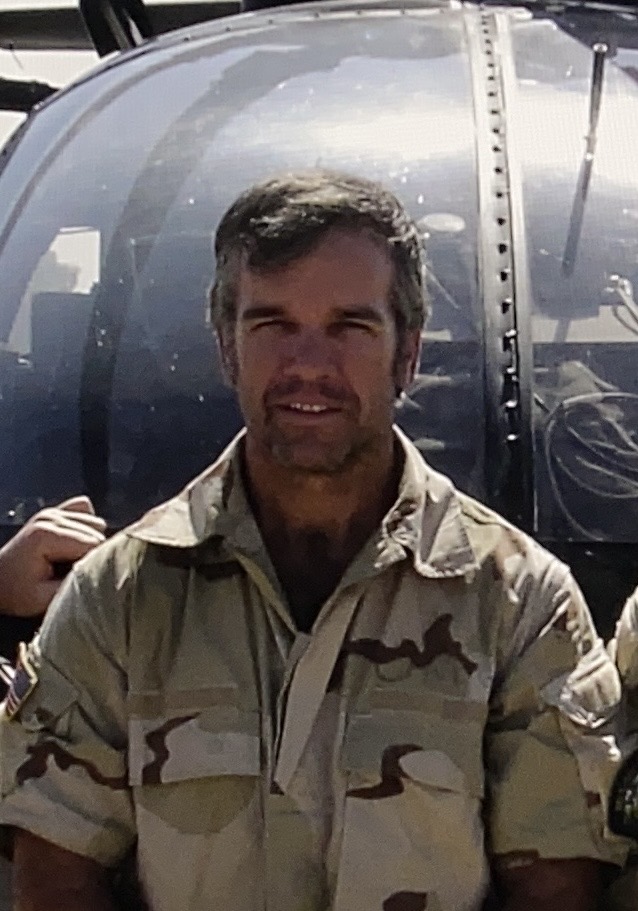
CEO Nation-Building Advisory Group
John deVerteuil is a retired Green Beret Sergeant Major whose life and career have been forged in service, sacrifice, and hard-earned national security experience. After 33 years in uniform, he brings the perspective of a soldier who has operated where theory ends and consequence begins.
A master’s graduate in National Security, John spent five years in and out of Colombia during the 1990s, completed 10 tours in Iraq, three tours in Afghanistan, and served two and a half years as an advisor in Africa. His work has placed him at the center of irregular warfare, counterinsurgency, nation-building, and the complex realities of unstable regions.
John is an irregular warfare expert who also conducted a study on anthrax to help determine treatment for injuries in biologically contaminated environments. His military record includes two Bronze Stars for valor, six Bronze Stars for service, combat HALO infiltration, the Combat Infantryman Badge, and the Combat Medical Badge.
Through his experience across multiple theaters of conflict, John brings a sobering understanding of what happens when institutions lose control, corruption spreads, and leadership fails. His voice is rooted in duty, discipline, and the belief that America must recover courage, accountability, and moral clarity before weakness becomes policy.