

 iHeartRadio
 Apple Podcasts
 Spotify
 TuneIn
 Podchaser
 Castro
 Amazon Music
 PlayerFM
 RSS Feed
Public Trust Crisis defines this episode as Peter Vazquez opens with Ian Trottier on High Stakes Treason, John Brennan, CIA power, and intelligence accountability.
The conversation then turns to Schumer’s meatpacking push, rising grocery costs, family farms, New York’s Scaffold Law, Kyra’s Law, Robert De Niro’s conditional patriotism, and Monroe County early voting. Through every issue, one warning rises: when power hides, truth bends, prices rise, and citizens stay home, the bill always comes due.
Public Trust Crisis. There is a moment when a country stops arguing about policy and starts asking a deeper question: who is this system really serving?
That question moved through today’s conversation like a warning bell. It began in the shadows of intelligence power, where Peter Vazquez spoke with author, investigator, and Discussions of Truth host Ian Trottier about High Stakes Treason and the allegations surrounding John Brennan, counterterror authority, secrecy, and the machinery built after 9/11.
The issue was never merely one man or one agency. It was the old and dangerous temptation of power: build something in the name of protection, hide it behind classified language, fund it with billions, and then ask ordinary citizens to trust what they are not allowed to see.
That is where public trust begins to rot. When Americans hear that trust in the federal government has not risen above 30% since 2007, and that the CIA’s positive job rating fell to 30% in 2025, they are not reacting to one headline. They are reacting to years of being told that institutions are above question while those same institutions grow larger, richer, and less accountable. The intelligence budget alone tells the story in numbers too large to ignore: $73.3 billion appropriated for the FY2025 National Intelligence Program, with the FY2026 request rising to $81.9 billion, while military intelligence requested another $33.6 billion. That is more than money. That is power with a locked door.
Then the conversation came home, because the same disease has local symptoms. It shows up in the grocery aisle, where families stare at meat prices and wonder why every trip to the store feels like a quiet punishment. Washington says monopoly. Farmers say regulation.
Callers say family farms are being squeezed out, swallowed by scale, compliance, foreign ownership, processing bottlenecks, and a food system that makes the people closest to the land feel farthest from control.
When four companies dominate much of the meatpacking market and families are told the answer is another federal fix, the question becomes unavoidable: how many government solutions have already been folded into the price of dinner?
The issue is not whether consolidation matters. It does. The issue is whether politicians are brave enough to name the full cost stack: taxes, fuel, insurance, labor rules, imports, energy, compliance, litigation, and the slow death of local control.
A small farm is not just an economic unit. It is inheritance. It is memory. It is a father teaching a son before sunrise, a mother keeping books at the kitchen table, a family holding land against the pressure to sell. Lose enough of that, and America does not just lose farms. It loses rootedness.
That same hidden cost appears in New York’s Scaffold Law, where the price of building becomes another invisible tax on every homeowner, business owner, renter, and taxpayer. When construction insurance costs are estimated to run hundreds of percent higher than nearby states, the bill does not vanish. It moves. It lands in rent. It lands in housing. It lands in maintenance. It lands in the family trying to fix a roof, the business trying to expand, the tower crew that will not even take the job because the risk is too high. New York does not merely tax earnings. It taxes effort. It taxes repair. It taxes the courage to build.
And then came Kyra’s Law, the part of the conversation that should stop every argument cold. A two-year-old child killed during court-ordered unsupervised visitation. A mother who warned. A system that did not listen. A decade-long fight to force family courts to treat child safety not as a footnote, but as the floor beneath the entire decision. There are policies that affect wallets, and there are policies that touch the grave. This one does both, because when government fails to protect children, every claim of compassion becomes suspect.
The show moved from there into culture, where Robert De Niro’s words became more than celebrity outrage. They became a portrait of conditional patriotism: love of country suspended until the correct people are in charge.
That is not dissent. Dissent argues because it loves what can still be saved. Conditional patriotism withdraws love as punishment. It mistakes political disappointment for moral superiority. America is not lovable because Washington behaves. America is lovable because mothers still pack lunches, fathers still go to work, veterans still carry scars, farmers still fight the soil, churches still open their doors, and citizens still have the right to speak even when their words are foolish enough to need a helmet.
And finally, the ballot box. Monroe County’s early voting numbers became the mirror no one gets to dodge. Three days, 3,223 early votes. Democrats at 3,098. Republicans at 124. Women outpacing men. Older voters carrying the civic weight. Younger voters barely visible.
Whatever the reason, the lesson is blunt: if citizens do not show up, they surrender the field to those who do. Complaining is not civic action. Posting is not civic action. Waiting for someone else to carry the republic is not civic action. Liberty does not defend itself by osmosis, though judging by turnout habits, some people seem determined to test that theory.
Through it all, the Vanbōōlzalness Crisis was not an abstract phrase. It was the thread tying secrecy to cost, cost to control, control to cultural contempt, and contempt to civic decay. When power hides, prices rise. When courts fail children, trust dies. When elites mock the country that gave them freedom, gratitude withers. When citizens stay home, the machine keeps running without them.
The bill always comes due. The only question is whether the people still have the discipline to read it, the courage to challenge it, and the will to change what comes next.
Promote your brand on the Next Steps Show, airing on WYSL1040.com's AM 1040, FM 92.1, and FM 95.5 West stations. Discover more at nextstepsroc.com/advertise-with-us or dial (585) 346-3000 to get in touch with the WYSL team.
Have you ever dreamt of sharing your unique voice, stories, or expertise with the world through a podcast? Perhaps you're bubbling with ideas but uncertain about where to begin? The journey from idea to launch can be daunting, but that's where we come in. Dive Into the World of Podcasting with Next Steps Radio PODCAST Network! Visit NextStepsRoc.com or call Peter at (585) 880-7580.

Peter Vazquez:
When power hides, prices rise. Children suffer, truth bends, and citizens stay home. And guess what? The bill always comes due in society, in one form or another, especially at the kitchen table.
We are going to talk for the next segment about a story, but not some spy novel. This is a warning about whether America’s intelligence institutions still serve the people, or whether pieces of that machinery have learned to serve themselves.
Our guest for the next segment is an author, investigator, and host of Discussions of Truth. He is joining us from Las Vegas at the Freedom Fighter Summit at the Ahern Hotel.
Ian, how is Las Vegas these days? Is it still as crazy as it was back when we were young?
Ian Trottier:
I am sure it has only amplified tenfold, maybe a hundredfold. And it is hot. The weather is hot. But Las Vegas is great, Peter. It is a wonderful town.
Peter Vazquez:
Absolutely, it is. I agree.
Sir, we are going to discuss for the next few minutes a book you wrote, High Stakes Treason. I believe it came out last year. In it, you allege that John Brennan used counterterror power for profit, politics, and control. You even bring up the Dominion machines in there, sir.
Ian Trottier Interview
Ian Trottier:
Yes. In this edition, Peter, I do not speak about the voter fraud. That will be in a second edition that I am working on.
The book came out last July, the 22nd of July, the same day that President Trump called former President Barack Obama out for treason. He said it in the Oval Office when he was hosting the president of the Philippines.
That day, Peter, I was on War Room with Steve Bannon, where he called it the most exquisitely timed release of a book in the history of publishing. Roger Stone wrote the foreword, and Roger Stone has called it one of the most important and shocking books he has read in his 50 years in politics.
Peter Vazquez:
Interesting.
Let me share a stat with you, and I would like your opinion on this. Pew reported that Americans’ trust in the federal government has not risen above 30 percent since 2007, and Gallup found that the CIA’s positive job rating fell to 30 percent in September of 2025.
But I think Trump changed those numbers a little bit. Am I off? Am I wrong?
Ian Trottier:
I do not know what has happened under Trump. What I will tell you is that a lot of folks this book rings true with are people who have questioned who may have been behind the JFK assassination.
This gives people a perspective of just how corrupt the CIA has been and for just how long.
What we are finding here is that back in 2009, where my research has revealed that the man who became director of the CIA under Barack Obama had created himself a nasty monopoly. He had manipulated national intelligence, jeopardizing American lives and putting them at risk so that he could enrich himself financially.
I refer to it in my book as a CT, or counterterrorism intelligence monopoly. This is what John Brennan had created for himself.
The contents of the book lay down the groundwork for his involvement in orchestrating the Russian collusion hoax, which is something I am going to get into in a second edition, along with the Dominion servers.
The reason you mentioned Dominion servers with the connection to John Brennan is because the founder and former CEO of Overstock.com, Patrick Byrne, a CIA asset himself back in 2006, has stated that John Brennan built a data center in Belgrade, Serbia, with the Chinese company Huawei, where he rigged the Dominion servers, flipping the results of the 2020 election.
That was John Brennan allegedly involved in the election fraud of the 2020 election for a U.S. president.
Peter Vazquez:
Can we go a little further into that? Because in 2020, the joint election security statement said there was no evidence that any voting system deleted or lost any votes. People have been sued from all sorts of different jobs in reporting on that Dominion issue.
Ian Trottier:
What I will say is this: I am simply quoting Patrick Byrne and putting credibility behind his resume, his experience, and his connection to being an insider on what he was exposed to in the CIA. That is where my comments come from. They are essentially echoing his.
I will also say this: Tina Peters is actually at this event here in Las Vegas. She was recently let out of prison on parole.
With Maduro sitting in a Brooklyn jail cell, even though some of this fraud that has been revealed has been rejected, what we see is groundwork that can certainly come to light to expose that fraud is not necessarily fraud.
Maduro could be key to that. I am not saying he is, because I do not know that information. But I will say that the Dominion servers were running off the backbone of the software of something called Smartmatic, which was created out of Venezuela.
Peter Vazquez:
I do not think anyone listening, including myself, disagrees with you. I am glad you are doing the work you are doing, because that truth needs to come out.
Your book synopsis says that SEC documents allegedly show Brennan’s stock increasing from approximately $50,000 to $4.8 million as Congress increased counterterrorism funding. A lot of that has to do with what Bush did way back when with the Patriot Act. Can you talk a little bit about that?
Ian Trottier:
That is right.
What Brennan was involved in was something called The Analysis Corporation. Brennan was the president of that. It was created in 1990 after the Soviets withdrew from Afghanistan. The creation of The Analysis Corporation was basically a database that tracked those Mujahideen terrorist activists globally.
He integrated that into the Bush-era Terrorist Threat Integration Center, which gave way to what is now known as the National Counterterrorism Center, the NCTC.
Brennan was the brainchild. He integrated The Analysis Corporation into that and used what are called code-word compartments. This was technology created back in the 1970s that Brennan was using out of the NSA.
Through code-word compartments, he was able to sequester, meaning hide, vital national intelligence regarding terror activity. Because he had integrated The Analysis Corporation into the NCTC, he could prohibit truthful, law-abiding, and stalwart members of the communities, such as the FBI and CIA, from doing their jobs because that information was funneled right into his arms and placed into covered compartments.
That is how he was able to allow the illegally held stocks, as I describe in the book, to increase as successful terror attacks happened on U.S. and NATO allies.
Peter Vazquez:
We are getting close to the end. There is a question I think you can answer pretty well.
Did America build a counterterrorism system strong enough to protect its citizens? I think it did initially, or at least that was the intent, but it seems to have become pretty insulated and more of a political tool than anything else.
Ian Trottier:
Peter, you probably hit it on the head there.
Unfortunately, yes, as a country, we have done everything we needed to do to protect ourselves. However, what we have not done is successfully vetted and accounted for criminality with people in the upper echelons of power, in the halls of power, and held them accountable for being truthful to us.
We do have a mechanism in place that keeps us safe. However, what we have not done up to this date, and what I am doing, is holding crimes accountable. This is my effort. We have allowed a loophole too large for a misuse of power.
Peter Vazquez:
Absolutely. It seems to me that fear kind of expands power.
The intelligence budget remains enormous. It was $73 billion in 2025, I believe. But check this out: for FY2026, the National Intelligence Program requested $81.9 billion, while the Military Intelligence Program requested $33.6 billion. That is like $115 billion, but no one really knows what that is used for.
Is that making us safer?
Ian Trottier:
Those are numbers I have not heard before, Peter, and they do not surprise me.
On a forensic level, essentially all I have done in regard to John Brennan and his ability to manipulate the power at the CIA, The Analysis Corporation, and what is called the National Counterterrorism Center, is hold him accountable.
I do not know those numbers. What I do know is that my numbers add up to him enriching himself to just shy of $5 million with these illegally held stock gains at the jeopardization of our national security and national intelligence.
Something else that would be interesting is that Edward Snowden blew the whistle in 2013 on surveillance. All of that supports the documentation in my book. If Edward Snowden were to be pardoned and brought in for testimony, he supports the case I make in my book.
Peter Vazquez:
Absolutely.
Ladies and gentlemen, that leaves us with the question: who are the people who benefit when fear never ends?
Ian Trottier, sir, I appreciate your time. Where can someone buy your book?
Ian Trottier:
They can buy it from me directly. I will send them an autographed copy. Venmo $35. If they want Audible, they can go to Amazon. They can get it on Amazon, Kindle, or paperback. But I recommend ordering a copy from me directly. Send me a Venmo for $35, Ian Trottier, and your address, and I will get you out a copy of the book.
Peter Vazquez:
Thank you so much for your time, sir. Be safe out in Las Vegas and in your travels.
Ladies and gentlemen, author, investigator, and host of Discussions of Truth, Ian Trottier.
We will be right back here on The Next Steps Show on the Voice of Liberty. Lines are open. I want to hear from you. 585-346-3000. WYSL, WLEA, the Voice of Liberty.
Segment Two: Grocery Prices, Schumer, Farms, and the Cost of Control
Peter Vazquez:
America is surely being squeezed. It is being squeezed by two kinds of power.
Bob:
Really? And do not call me Shirley.
Peter Vazquez:
Is that not “late for dinner” or something like that?
Bob:
Something like that. Actually, it is a line from the movie Airplane, but go ahead.
Peter Vazquez:
Two kinds of power: loud power and quiet power. I think those two truly define the Vanbōōlzalness Crisis in plain sight.
I was watching the news, Bob, and sometimes I wonder why I do, because all I end up doing is shaking my head. I do not throw anything at the TV because I am not a violent guy.
But when I hear people like Chuck Schumer, who is part of that vise grip squeezing the rest of us, come in like some champion, or at least try to be one, I have to talk about it.
He stood in Walworth and framed grocery pain as a meatpacking monopoly crisis. I think Tops was behind it, and some other people were there.
He said four companies control 85 percent of the beef market, 87 percent of the pork market, and 60 percent of the chicken market. He called for the Family Grocery and Farmer Relief Act to force major meatpackers to choose a line of business and empower the FTC to target foreign-controlled conglomerates.
Bob:
Let us stop something right now. Here is how you know the alarm is going off, even if you cannot quite hear it.
Anytime government says it is going to control prices or control the market in some way, get ready to pay more.
Peter Vazquez:
Yes. If you look even closer, you will see that these are all seriously just political nonsense.
Bob:
Once again, the Democratic Party has institutionalized envy and greed.
What they want you to believe is that you are being unfairly treated because of the free market system and that government is going to be the corrective force of choice.
Peter Vazquez:
Schumer goes on to say that in New York, these are issues based in congressional districts. In the 24th District, the monthly grocery bill rose from $710 to $1,080.
Bob:
That is over a 10-year period, Peter. What has happened in the last 10 years? We had COVID, which was a government-instigated fake crisis. Then we had the false presidency of Joe Biden, which ran up massive inflation and the cost of everything, including meat.
Peter Vazquez:
Let me ask you, Bob. If 88.2 cents of the food dollar lives after the farm gate, why does Washington pretend that one bill aimed at meatpackers is the whole cure when the real problem is the regulations, shipping, taxes, and all the other nonsense placed on farmers?
Bob:
How do we know they are all coming from overseas?
Peter Vazquez:
Chuck Schumer says we have a monopoly here. But the point is this: meat prices are not up because of foreign interference alone. The market has been distorted by government interference in this country.
Bob:
Exactly. Chuck Schumer’s career is pretty much over, and he is trying to grandstand and blame somebody in the current administration for the fact that meat prices are up.
Peter Vazquez:
So we are on the same page.
Ladies and gentlemen, 585-346-3000. Bail me out here. Obviously, I talked farms and probably should be talking about how to make sense of something Chuck Schumer is saying, which is not advisable.
Our farmers in the United States are being squeezed by government, period. I talked to a few farmers when I worked in the rural areas of this great state. They would tell me their biggest competition, their biggest issue, is the government. Not drought, not bugs, not the weather. Their biggest issue is regulation.
And now Schumer wants to add another regulation to it.
How about another Democrat-pushed regulation like the Scaffold Law? Spectrum reported that this adds, again, up to a 500 percent increase in insurance costs for construction companies.
Bob:
The Scaffold Act? I am very aware of it. That is what runs up workers’ compensation insurance to an unaffordable level. It is basically a freebie tossed to plaintiff’s lawyers.
By the way, we are the only state in the nation that has that. So if you try to hire someone to do construction, you pay through the nose.
I know firsthand because we have tower maintenance done in this state. Most tower maintenance companies will not work in New York.
Peter Vazquez:
Because of the requirement to go up there and the cost of insurance?
Bob:
They cannot afford the insurance. Many tower maintenance companies are interstate companies. They are in Indiana, Kentucky, Georgia. You call and say, “I would like you to come and change the light bulbs on my tower,” and they say, “Not New York.”
Or they say, “I will quote the job, but you will not pay it.”
Peter Vazquez:
This law dates back over 100 years. I bring these things up because it is an election year. I see Governor Kathy Hochul talking about how great her new budget is and how great things are going forward. She minimizes the cost behind these things.
I have run for office a few times. This law, and changing it, has been part of every single election, yet very few elected officials or candidates ever talk about it.
Bob:
They talk about it all the time, but Democrats will not move it. It is like trying to talk to them about criminal justice reform and keeping criminals in jail instead of letting them loose on the street.
Talk to Sheriff Todd Baxter. He has been to Albany many times trying to talk sense into legislators and the Hochul administration. It is like talking to the hand. They have no interest in making any change.
Same deal with the Scaffold Law because you have a very powerful lobby, the attorneys’ lobby, and they want it in place.
Peter Vazquez:
New York State Trial Lawyers Association President Andrew Finkelstein said construction workers perform some of the most dangerous jobs in America. When workers are seriously injured, someone pays.
But this is why it is worth mentioning. It is an election cycle. This is a law that should be watched because, Bob, like you said, if someone goes up on scaffolding to do work for you and does not follow the rules, and they fall off, that falls on you, correct?
Bob:
That is strict liability. If you own a radio station, for example, and you hire a tower contractor, and he is not careful climbing the tower, does not use the right equipment, or does not follow the rules, and he falls or gets injured, we pay because we own the tower.
Peter Vazquez:
Bad, good, or indifferent?
Bob:
Bad. Terrible.
Peter Vazquez:
And that impacts the regular homeowner too. It is not just you as a business owner. Someone working on your roof, same concept.
Bob:
Correct. The insurance companies and the attorneys are favored by Democrats.
Peter Vazquez:
Let us talk about something else, another law that has been sitting around. We will mention it, then after the break we will get into it.
To me, this is all taking away from mom and dad. Again, it is an election cycle, ladies and gentlemen. These are the things they do not talk about, or at least that you do not hear much about.
Kyra’s Law, K-Y-R-A, passed the Legislature and is now waiting for Governor Hochul’s signature.
585-346-3000. What say you? We will be right back here on The Next Steps Show on the Voice of Liberty.
Caller Segment: Family Farms and Local Food
Peter Vazquez:
Welcome back, ladies and gentlemen. Lines are open: 585-346-3000 or 866-552-1009.
Keith, thank you for calling The Next Steps Show.
Keith:
With the farmers, we have to look at the president under which we lose many of our small farms. These small farmers are having a very tough time keeping up with all the prices it takes just to run their farms. They are being pressured to give up their land for development.
Recently, a group of farmers met with the president. I do not know if, in his talk with them, he patronized them. I did not hear afterward any farm group saying, “We listened to the man, but he still did not really address what we are going through.”
We are in danger of losing the small family farm. The small family farms are in danger of going under, and the country cannot have these large commercial ventures, these large farms, come in and take over the strong American tradition of small family farming going back to our country’s earliest days.
I am concerned that President Trump is not adequately looking at the farmers, who are a strong base of his. He cannot afford to lose them in November. They are hurting. What is the president doing, not just to placate farmers, but to truly help them through these difficult times with high prices and maintaining their land so they will not give up the land or go under?
What do we do with our small farmers and family farms that are not being addressed in our country?
Peter Vazquez:
Keith, what would you think would be an appropriate step for Trump to take to alleviate the distress of family farmers?
Keith:
He should say, “Family farms under my administration are not going to go under.”
Bob:
Keith, what does that mean, to go to the mat for farmers? Forget Congress, because Congress is worthless, as you say. He could issue an executive order. What would that executive order be?
Keith:
He has experts. He has very good secretaries of Interior, Commerce, Agriculture. Whatever they have to do to get together to save the small family farms, they have to get to it. I am not an expert, not even close, but something has to be done to save those family farms.
Bob:
Like Keith, I am not an expert in farming. There are a lot of things that happen economically. Department stores used to be big in this country and they have gone away. Malls are going extinct. Downtown shopping meccas have changed.
Technology has changed tremendously in the past 50 to 60 years. Farming has to be done on a large scale in order to maximally use the technology available. The family farm may be an anachronism these days. It may be going away.
Keith:
Agriculture is our state’s largest business. Hopefully everyone knows agriculture.
I understand where you are coming from, and you are an intelligent man. But it would be a shame if we were to lose small farms. It would be devastating for our country. Small family farms are a mainstay, and we cannot shrug our shoulders and look away.
Bob:
I agree. We have an agrarian historical past that was very big up to about 100 years ago, but that has changed over recent decades. I do not know exactly why. It seems to be an economic force that is kind of inexorable.
Maybe someone in the audience knows. 585-346-3000, if you would like to share your theory.
Just because President Trump is in office and family farms are dying on the vine, as Keith suggests, correlation does not necessarily impose causation.
Peter Vazquez:
There is a trend though, and that is automation. New York State was also big on manufacturing, and now we have automated manufacturing. Agriculture has shifted quite a bit to genetics and cloning as well. New York State has been at the lead of that for some time.
Mike is on the line. What is up?
Mike:
Gentlemen, if I could lend a little clarification with the meat industry.
You have 85 percent of meat production done by only four companies. They are all foreign-owned. So when our cattlemen take their cattle to market, those are the only places they can sell to for processing.
There are congressmen now who want to allow our small farmers to do actual meat processing in their own local area. That would reduce the cost of meat because you are not transporting it as far. You are doing it locally, and you are not under a conglomerate.
What happens is those foreign conglomerates are a monopoly. They control meat prices because they are the only people you can go to. They are starving the cattlemen out as far as prices, and they are importing foreign meat.
Argentina is an example. We gave billions of dollars to Argentina, and we are bringing all this meat in from foreign countries that hurts our own cattle industry here. Our cattle right now are at a 70-year low because we are bringing in foreign meat, and we do not even know the quality of the meat.
Bob:
The question I would have is whether these meat producers, foreign-owned or otherwise, are violating any laws. Are they violating monopoly regulations? In other words, are their operations legal or not?
Mike:
They are paying off politicians. One of them, the biggest pork producer, Smithfield, is owned by a Chinese corporation. The Chinese have been bringing pigs in. People do not realize that a lot of the stuff from Smithfield is foreign pigs.
Bob:
I definitely do not think we should be importing any kind of meat from anywhere, or any kind of produce for that matter. This nation is well endowed with all sorts of animals for consumption.
Peter Vazquez:
Ladies and gentlemen, The Next Steps Show. Mike, thank you for calling. Keith, thank you for calling. We will be right back. 585-346-3000, WYSL, WLEA.
Segment Three: Kyra’s Law, Local Farms, and De Niro’s Conditional Patriotism
Peter Vazquez:
Kyra’s Law here in New York is sitting on the governor’s desk. Believe it or not, that is a liberal piece of legislation that I absolutely think needs to be signed immediately.
Dave, thank you for calling The Next Steps Show.
Dave:
The problem with the American farmer could be a 17-hour show with no interruptions.
I might suggest this to your listeners: do what I do. Go buy your meat from a local farmer. Once a year I buy a quarter steer, butchered, frozen, shrink-wrapped. Once a year we buy about half a hog. Today I am going to my favorite dairy in Churchville and buying a gallon of raw milk, right out of the cow. No homogenization, pasteurization, or anything else. Just real raw milk like grandfather drank.
Peter Vazquez:
Dave, can you share where people go to get a half a cow? How do people even go about that? Most people do not know how.
Dave:
My supplier does not go big-time, but I do know there is a gentleman on Route 19, just north of Le Roy, who advertises. The dairy I go to is New York State licensed and inspected. That is G and G Dairy.
There is also a large place in Steuben County called Wilson Beef Farms. That is in Canaseraga, right down Route 36 south of Dansville.
Peter Vazquez:
So these places do exist.
Dave:
Yes. We bought a chest freezer when the kids were living at home. The chest freezer was plenty. We do the steer at the beginning of the year and the pig at the end of the year. We meter things out, and everything works. It is a lot cheaper and better, and you know where it has been. It has not been to China and back.
Peter Vazquez:
That is buying American at its best and supporting local farms. I agree with that.
Up until about a year ago, I bought a full cow and half a hog, and that would keep us for a while.
Quick funny story, Dave: the freezer I put my last batch in had a breaker go out, and I did not realize it for about a week. I opened the freezer and it looked like we had butchered the cow right inside it.
Dave, I appreciate the call.
585-346-3000. Dave’s line is open.
It may take more effort, but it is possible to get these farm-fresh foods.
Bob:
We have a nursing home down in Hornell that locally sources all of its food, and they advertise it as a major plus. It can be done.
Government has not outlawed all purchases of meat except from foreign-owned monopolies.
Peter Vazquez:
If you live in an urban center like Rochester, or any other urban center, you can buy a cow too and keep that in your house as well. It is not just for people who live in the suburbs or rural areas.
Let us switch topics. We are going to do a complete 180 because I want to talk about America again and what happens when people who have benefited from good old American culture turn around and suddenly say things like, “I cannot love a country led by Donald Trump,” and then start comparing love of America under Trump to an abused spouse loving an abuser.
Cut one, please.
Robert De Niro Audio Cut One:
Regardless of our political affiliation or whether we engage in politics or not, we all love our country. Still with me? Not so fast. The phrase “we all love our country” stuck in my throat because our country is not so lovable right now.
I hate to say it, but loving our country is starting to sound like an abused spouse saying they love their abuser. I cannot love a country that starts stupid and inhumane wars, killing thousands of innocents and indirectly causing the deaths and suffering of millions more.
I cannot love a country that takes health care away from millions of people and uses that money to enrich their pals in the Trump-Epstein class. I cannot love a country that sends out masked militias to shoot citizens in the streets, torture our neighbors, and separate families.
Peter Vazquez:
That would be Robert De Niro.
Bob:
I was wondering if you would be able to guess that one. You can just tell because the stupidity is nine levels thick.
Peter Vazquez:
I used to like him as a character.
Bob:
First of all, he needs to read Laura Ingraham’s book from around 2003, Shut Up and Sing. It was addressed to people like this in the entertainment industry. Nobody appointed them moral arbiters or directors of thought in this country.
They are supposed to entertain us, make us laugh, make us cry, and we are supposed to admire their physical beauty. That is their role. Then, when they get out of their lane and start lecturing us, this is what you get: misinformed, crazy stuff.
Toward the end, I had no idea what he was even talking about.
Peter Vazquez:
He spoke those words at the “Rise Up, Sing Out” First Amendment event. We talked about it yesterday with the guys from MRC because it was anti-Trump counterprogramming. That is what it was.
Cut two, Bob.
Robert De Niro Audio Cut Two:
I cannot love a country that is led by a racist, misogynist, xenophobic tyrant. And let me just say it: I cannot love a country that is led by Donald Trump and his sycophant Congress.
For most of my life, of course I did love this country. The United States of America welcomed my immigrant ancestors. It gave me, my family, and my fellow citizens such rich opportunities and extraordinary freedoms.
I want to love my country again. I want my country back. That is why I stand with the Committee for the First Amendment, and with all of you. Together we rise up, we sing out, we keep organizing, and we fall in love again.
Bob:
And you keep making fools out of yourselves.
Peter Vazquez:
A line meant to sound brave, Bob, but it actually reveals how brittle their worldview is.
What gets me is the hypocrisy. Not the hypocrisy of criticizing the president. Criticism is American. We have the ability to speak.
The hypocrisy is invoking the First Amendment while speaking as if love of country must be suspended when voters choose the wrong leader. I do not remember doing that under the buffoon. I believe Donald Trump was elected twice, and some say three times.
Bob:
That is the left. What can I say? We have heard this.
These are the people who stand in the square in Avon and wave horns and signs at you and scare children and dogs in your cars because the wrong person, in their view, got elected president.
Peter Vazquez:
The old elite bargain, ladies and gentlemen: democracy is sacred until democracy produces results they despise.
The event was organized by the revived Committee for the First Amendment, which included Robert De Niro, Jane Fonda, Bette Midler, and other entertainers. It was all about Trump derangement syndrome.
Bob:
Did you hear the audio from the performances when they are singing some anti-fascist song? It is excruciating, and quite frankly, it is sad.
These people are suffering. I do not mean all Democrats. I know some pretty cool Democrats, like Mercedes, who was running in a primary. But the people propelled by the global left, and De Niro is a good example of that.
Peter Vazquez:
Too many of us are falling for it.
That is the Vanbōōlzalness you need to listen to and say, “Is he making sense?”
Let us talk about voting because we are in the primary right now. It is early voting, Bob, and I have some numbers to share.
Monroe County early voting numbers are a little scary, at least as a conservative. I am worried because I do not think we have gotten the memo yet, or at least the point.
Based on the provided party breakdown, 3,098 early votes, or 96 percent, were Democrats.
Bob:
That is something. That is why Democrats have structured election day into election week or election month. That is the way they can win, by making everything fuzzy, fungible, and confusing.
Peter Vazquez:
Only 124 Republicans have voted, and one Working Families voter.
Females overall voted at 62 percent, compared to 37 percent male. Voters 60 and older made up the bulk, about 70 percent of the early votes. Only 54 Republican women have voted.
Bob:
They tend to show up on Election Day.
Peter Vazquez:
But do they? I am glad you brought that up. When we look at trends and last year’s numbers, even in the general election, turnout was consistent throughout the early voting process. Republicans just did not come out.
Bob:
Peter Elder is doing his best to resuscitate the Monroe County GOP. It is going to be a process. We are nowhere near there yet. That is why you are seeing these numbers.
We also have all these tricks Democrats have imposed on the process, locally, statewide, and nationally, to make it easier to cheat.
Peter Vazquez:
Voters under 50 totaled only 457. The towns varied, but they were all pretty consistent, except for Webster and Brighton, which usually turn out early in Democratic primaries.
Ladies and gentlemen, whether you vote early or on Election Day, you have to vote. I am going to say it plain: if Democrats are doing it, and that is how they beat us, or we think they have an advantage, why are we not voting now?
Be a leader. Be a leader. Be a leader.
Do not let a second go by where you are not a voice for liberty.
God bless these United States of America.
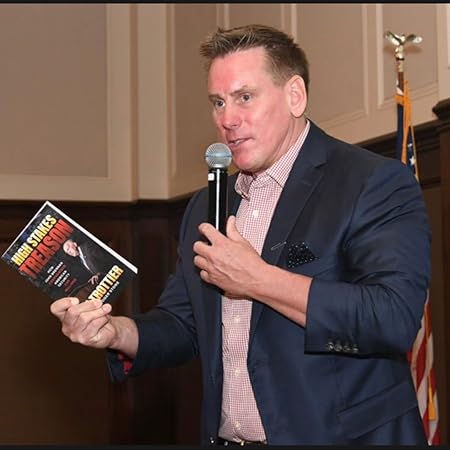
Author, Investigator, and Host of the Discussions of Truth podcast
Ian Trottier is an author, investigator, and host of the Discussions of Truth podcast. Known for his focus on political corruption, intelligence accountability, and institutional transparency, Trottier has built his work around asking difficult questions that many in public life would rather avoid.
He is the author of High Stakes Treason, a provocative investigative work examining former CIA Director John Brennan, America’s counterterror infrastructure, intelligence protocols, financial conflicts, and the broader question of whether powerful institutions still serve the American people or have learned to protect themselves.
Trottier’s research draws from open-source records, public documents, intelligence history, and his broader interest in exposing what he views as hidden abuses of power inside America’s national security apparatus. His work challenges audiences to look beyond official narratives and examine the structures, incentives, and individuals shaping public trust.
Through his podcast, writing, and public commentary, Trottier continues to engage in conversations about truth, accountability, corruption, election integrity, national security, and the future of the republic.