
 iHeartRadio

 Apple Podcasts

 Spotify

 TuneIn

 Podchaser

 Castro

 Amazon Music

 PlayerFM

 RSS Feed
Peter Elder: Who Is Building Power in Monroe County?
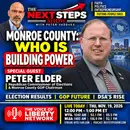
Monroe County GOP chairman and Republican elections commissioner Peter Elder joins Peter Vazquez and Bob Savage to examine the November 2026 election results, Republican victories and losses, voter enrollment, fundraising, candidate recruitment, voter ID and Rochester's DSA. What will it take to rebuild public trust?
Key Takeaways
- Peter Elder examines what successful local Republican campaigns in Pittsford, Parma and Rush did differently after the November 2026 election.
- Voter enrollment, low primary turnout, fundraising, candidate recruitment and party organization shape Monroe County's political future.
- The conversation weighs voter identification, constitutional government and what Rochester's DSA organizing reveals about grassroots participation.
Today, Peter Elder, chairman of the Monroe County Republican Committee and Republican Commissioner of Elections, joins Peter Vazquez and Bob Savage for a direct examination of the November 2026 election results. Republican candidates held their ground in communities such as Pittsford, Parma and Rush even as the party lost ground in familiar strongholds. What did those winning campaigns understand that others did not?
Elder addresses Monroe County's shifting voter enrollment, the rising number of unaffiliated voters, low primary participation, fundraising challenges and the need to earn trust beyond the party's existing base. The hosts question the absence of a Republican candidate in the district attorney race and press Elder on the concrete work required to rebuild a competitive local party.
The conversation also examines early voting, election administration, the proposed lowering of the voting age, and the distinction between confirming a voter's identity and establishing citizenship. Peter and Bob ask how Republicans can defend their principles while communicating effectively with residents who are skeptical of both major parties.
As Rochester's Democratic Socialists of America organize and gain influence, the discussion returns to grassroots engagement. Elder argues that candidates must be genuine, that political values must be clearly articulated, and that constitutional government is worth defending. The challenge for every political organization remains the same: earn public confidence, organize in the community, and deliver results rather than excuses.
Original broadcast: November 19, 2026, at 1:00 PM EST (America/New_York). The Next Steps Show with Peter Vazquez on WYSL/WLEA, Voice of Liberty Network. Putting People First.
Keep the conversation going: More episodes · Watch videos · Read commentary · Send a voice message. Live weekdays at noon Eastern on WYSL and WLEA.
Advertising and sponsorship opportunities.
Frequently Asked Questions
Who is Peter Elder on The Next Steps Show?
Peter Elder is chairman of the Monroe County Republican Committee and the Republican commissioner of the Monroe County Board of Elections. He joined Peter Vazquez and Bob Savage on November 19, 2026.
What does Peter Elder discuss in this episode?
The conversation examines Monroe County's November 2026 election results, local GOP wins and losses, voter enrollment and turnout, party fundraising and recruitment, voting procedures and Rochester's Democratic Socialists of America.
Episode 744 Transcript: Peter Elder – Who Is Building Power in Monroe County?
Original broadcast: Thursday, November 19, 2026
Guest: Peter Elder
Hosts: Peter Vazquez and Bob Savage
This readable transcript was formatted from the supplied automated transcription. It has not been independently certified against the audio. Speaker turns have been combined for readability; some caller and advertisement speakers retain numbered labels. Verify quotations against the original recording.
[00:00:00] Peter Vazquez: World that seems to change daily, what will you do next? Welcome to the next steps show with Peter Vazquez, a starting point for discussion. Hey. Did somebody say the next step show with Peter Vazquez, Cadeti, Meebop?
[00:00:18] Bob Savage: I think it is. None other than Yes.
[00:00:22] Peter Vazquez: Good morning, ladies and gentlemen. Buenas tardes. Welcome, Travis, to another... You know, I'll tell you. I skip a day, and I... It's like, you know, Bob, it's like the the... It was like a void yesterday when I wasn't here.
[00:00:36] Bob Savage: I always say, hey, noon. Noon show without Peter Vazquez was like a fish without a bicycle.
[00:00:41] Peter Vazquez: Hey. Look at that. That's not like a jab.
[00:00:45] Bob Savage: No. You know? Would I do something like that?
[00:00:48] Peter Vazquez: You? No. I mean, I I I...
[00:00:50] Bob Savage: It's not like I pick on your age or
[00:00:51] Peter Vazquez: anything there. Okay.
[00:00:52] Peter Elder: I think it's Alright. Yeah.
[00:00:55] Bob Savage: You you pick on my age, I'll pick on your hair.
[00:00:57] Peter Vazquez: Ah, to share. Ladies and gentlemen, at key in studio, we have the chairman of the Monroe County Republican Committee and the Republican commissioner for the Monroe County Board of Elections, Ed Senor, the honorable Peter Elder, sir.
[00:01:12] Peter Elder: Glad to be back.
[00:01:13] Peter Vazquez: Oh, the pleasure is ours to have you on here. And I... And, you know, I appreciate you coming on because I... You know, I've said this all the time. It takes a lot of courage.
[00:01:21] Peter Elder: Oh, well, you're a nice guy. I'm glad to be here. I know you're a nice... Your audience is great. So
[00:01:25] Peter Vazquez: You know, you're like the the hundredth person to tell me I'm a nice... I think I need to change that.
[00:01:30] Peter Elder: Yeah. Well, I don't know.
[00:01:31] Peter Vazquez: Ladies and gentlemen, I have this guy here.
[00:01:33] Bob Savage: His name is Peter Elder.
[00:01:35] Peter Elder: Call and just give it to him. Alright. Fine. You're not a nice guy. No.
[00:01:39] Peter Vazquez: No, man. I really appreciate you and the work that you're doing, and and I appreciate you coming in. I wanna talk elections. I wanna talk to DSA because it's a it's a growing cancer in this nation, and Rochester has its own chapter. I wanna talk strategy going forward. What's next? What's next for the city of Rochester? I did not know that. All those things, what, cancer?
[00:01:58] Bob Savage: No. What... No. The the chapter for the DSA locally.
[00:02:01] Peter Vazquez: Oh, yeah. No. And it's not just locally like, hey. There's a chapter. And and there are, I think, five or 600 members strong right now with considering that, you know, the county or the, the city only has, what, seven... No. 200 and something thousand in population. Yeah. What? The majority is black and brown.
[00:02:19] Bob Savage: The county has 775,000.
[00:02:22] Peter Vazquez: No. The city.
[00:02:22] Bob Savage: Oh, the city. Oh, I thought you said this. Okay.
[00:02:24] Peter Vazquez: Sorry. In the count... The county, and then I changed it. So all those things, I mean, they pose a big problem. And I was looking at the breakdown, of Peter on on on, you know, registered Democrats, registered Republicans banks, and so on and so forth. And and when I started doing this just a little over ten years ago, I noticed then that the registration numbers for Republicans, at least in the one thirty eight that I was looking at, but Yeah. It it kinda was the same countywide. Right? It seemed to have been a little balanced back then around 2012 time frame when I got into this, between blanks and Republicans. Almost the same amount of registered voters. But the Republican numbers have dropped, blink numbers have increased.
[00:03:07] Peter Elder: Yes.
[00:03:07] Peter Vazquez: Democrats' numbers increased. Why is that?
[00:03:10] Peter Elder: Well, I think there's two reasons. The first is just the the the environment that we're in right now. It's it's people are registering a little bit less Republican. I think it's a reaction in Monroe County, especially against, some of the concerns they've had about the president. I mean, it's what we hear. I I think we have to listen to people. The second the second reason is because I think there's been a nut out... The net outflow population upstate. You can kinda see that. And a lot of those people are Republicans. So you have two things working at the same time. Just so you know, though, the the rate of increase in the Democratic registrations has actually gone down. So there's... So while their registrations creep up, they're only slightly getting higher every year. Used...
[00:03:47] Peter Elder: There was a massive increase around 2016. The rate has gone down since that time. So with the rate, it's... The rate for people who have not enrolled in either party has not stopped. The real the real story is that many people, when they get the opportunity, register in in either party.
[00:04:04] Bob Savage: So nationally, at least in 2024, we saw a trend where, republican registrations were outpacing, democrat registrations and by some pretty significant margins. Are you telling us that that has reversed locally?
[00:04:18] Peter Elder: That actually never happened locally. We never had we never had a we never had a situation locally where Republicans were ahead of Democrats. Our rate did increase, but we already had a lower number. So it only, it didn't really have an effect. Where it had an effect is places like Florida or Pennsylvania Right. Where they were where they were seriously registering a ton of Republicans. And they still have some states where they had, where they've had really positive Republican enrollment advantages. Florida's a a great example.
[00:04:43] Bob Savage: So, so, as far as locally, is the, is it proportional? The... Like, the Republicans and Democrats are increasing by the same rate or a comparable
[00:04:51] Peter Elder: rate? Roughly, that's what's happening. They're roughly increasing at the same rate. Republicans are a little bit under that rate, and then blanks are a little bit over that rate. But, really, there's there's... You know, we're at the point where there's getting to be a a a almost a saturation of, registrations. Most most people that wanna be registered are probably registered.
[00:05:09] Bob Savage: So are the blanks really the the the big growth area?
[00:05:12] Peter Elder: Yes. Yep. Absolutely. You can see it you can see it every single every single time you run the numbers. You can see the the the actual nonenrolled blank voters are... Their numbers are increasing.
[00:05:21] Bob Savage: So what does this portend for the portion. Yeah. What what does this portend for the Monroe GOP now? How how are we gonna, you know,
[00:05:29] Peter Elder: stoke this? I think we have to, I think we have to, obviously, we have to hold our base. That's that's critical. But we also have to expand that base into those voters who are undecided and who are who are not enrolled in any party. I think we also have to send the message out that if you wanna really have an impact on the elections, being an unenrolled, you know, being a part... Being nonenrolled in a party is not the way to do it. But what we see increasingly is that candidates and selections are being made at primary elections. Primary elections are becoming even more important, and the turnouts for those primaries are going even lower. So if you... The story really should be this. If you wanna have an impact on the general election, register in a party, have an impact in the primary.
[00:06:11] Bob Savage: Yeah. Vote... Absolutely vote in the primary because, you know, this is how you get into the, you know, I can't choose between the two major party candidates because the quality... I mean, I don't know. Look. I'm not impugning anybody, but, I mean, the the complaint is that we don't get the candidates that we want. That's what the primary process is for. Yes, Peter.
[00:06:31] Peter Elder: That's exactly right. Because at the end of the day, everyone, here's the... The system is the way it is. And what's gonna happen is you're gonna get a ballot lineup in New York that roughly is going to be a democratic and republican candidate endorsed by the conservative and working families party and those... In in the way they normally do it. So we're usually working families are with democrat, usually conservative as a republican. So if you wanna... That's the system. Now you may not like the system. I'm not saying you have to like the system, but that's the system. Okay? So if in that system you wanna have an impact, the smart thing to do is to be involved at the very beginning of the process. That means getting involved in local committees.
[00:07:06] Peter Elder: Or if you don't wanna do that, which is the best way to do it, is to get involved in the primary system. Make sure you can actually vote, in that primary. The reason it's called the primary is because it means first. It's the first election. You're missing the first election.
[00:07:20] Peter Vazquez: Yeah. You definitely are. The first election at the primary also dictates who's gonna be representing you on those committees. So if you don't wanna be, on the committee yourself, someone in your community does.
[00:07:31] Peter Elder: That's correct.
[00:07:32] Peter Vazquez: And that individual actually gets elected. As a primary. But people don't see those names in Nevada unless it's a... Unless there's a primary specifically for that district.
[00:07:40] Peter Elder: Exactly. They can request it. That's... It's something... All all that if the information on those petitions is, is all foilable and available. So
[00:07:48] Peter Vazquez: I wanna talk a little turnout, but but but I also wanna address the split that I noticed, and I've noticed for almost over a decade. And this just sixty forty split, that we have almost in every single election. I I mean, you can look at the state assembly, at District 130, and and and that's just Monroe County numbers. Right? 54, you know, again, around 60 ish, and and and everything else broke down to 40, but for for zero, that about 40. Andrew Bailey, same thing. Josh Jensen broke down sixty forty. Is is that consistent split around their Yes. Part of of voter turnout, or is it something deeper? I mean, what are we looking at?
[00:08:27] Peter Elder: It's a big part of, it's a big part of two... There's two things working there. One is turnout. Honestly, that's a, when the two parties are are... In some places like you're seeing there, the parties have some roughly equal enrollment. So, obviously, the sixty forty is gonna come in when a turnout happens. But it also happens because of the unequal enrollment. When you have... When the Democrats or the Republicans, depending on the town, have, unequal enrollment, you're still gonna see that sixty forty split. What it really boils down to is that, there's a base level vote for the both parties. Right? And so what you're doing is you're stacking on that base level vote. How do you get in that clue of what that base level vote is? I'll give you a clue.
[00:09:04] Peter Elder: Go to the DA's race where there was no opposition. You can see in the under votes or the... We used to call them blank and voids. They are, there's about 25% of the people that did not... That that's... That did refuse to vote for DA. There's probably your base Republican vote right there.
[00:09:19] Peter Vazquez: Mhmm.
[00:09:20] Peter Elder: Right? Because they just... They won't do it.
[00:09:21] Peter Vazquez: Was that a missed opportunity you think the DA's raised?
[00:09:24] Peter Elder: I would have loved to have run a DA candidate.
[00:09:26] Peter Vazquez: Yeah. Yeah. If I was an attorney, I would have said I'd have run. Really? No. I'm just kidding. Okay. They don't want me as DA. Listen. I'd lock criminals up. I said, sure. You get a second chance, but first, let's make sure you have the tools and the right state of mind before we let you back out.
[00:09:41] Bob Savage: Peter Vazquez, let god stop us. I'm sorry about
[00:09:45] Peter Vazquez: it. Peter Elder, ladies and gentlemen, chairman of the Monroe County Republican Committee. Sir, thank you again for your time. Lines are open. (585) 346-3000. Come on.
[00:09:53] Bob Savage: You guys, you gotta have questions for Peter Elder. I I know you do after what happened two weeks ago. Yeah.
[00:09:58] Peter Vazquez: It is. So so
[00:09:59] Bob Savage: the, the turnout, Peter, overall, was it, like, pretty typical?
[00:10:04] Peter Elder: No. Actually, it was a little bit higher than normal. So a presidential year would probably run around 50%. This was running about 12 to 14 points above that. So it really did act like a mini presidential year. So the the turnout was good. The the party turnouts, the democrats in almost every instance were more energized in their... And they turned out more than republicans did.
[00:10:26] Bob Savage: No kidding.
[00:10:27] Peter Elder: Why? Almost every instance.
[00:10:28] Bob Savage: I thought the other way around.
[00:10:30] Peter Vazquez: I I really hope we get to a point as at least where we have this option of early voting where conservatives, Republicans go out and say, you know, I'm gonna vote. I'm gonna take advantage of this. Because I think it it creates an unplaying, you know, field for us because anything can happen.
[00:10:45] Peter Elder: That's correct.
[00:10:46] Peter Vazquez: It's there. It's not gonna change. I mean, to me, that's like leaving money on the table.
[00:10:50] Bob Savage: So, we we take a look at the distribution of talking about statewide races here. I just want you to comment on this. In the major metropolitan, counties, Erie, Monroe, Onondaga, Albany, Rensselaer, Yonkers, and, of course, the city and the island, it was, you'd see pretty pretty big margins for Hochul over Blakeman, for example. But then outside of all of those counties
[00:11:16] Peter Vazquez: Oh, yeah.
[00:11:16] Bob Savage: You know, like, Erie County, for example, was about fifty five forty two, Hochul. Right? But you go to Niagara County, two county metro in Buffalo, it was the other way around. You flip the script, it's, like, 60 for Blakeman and and 40 for Hochul. Then you get into Allegheny and Wyoming Counties, it's, you know, like, 74% Blakeman, 22% Hochul, and that tracks pretty much on all the smaller counties upstate. Yeah. So that... Does this not, and I asked this question to Andrea Bailey too on her show. This is a governance issue, isn't it?
[00:11:53] Peter Elder: Yeah. It's also... But, again, I... You can't... I mean, I'm a kind of an... My my whole career has basically been to look at a lot of numbers, and so I I always come back to, like, let's look at the numbers here. The the, the urban counties have a preponderance of the Democratic voters. So to me, it's not surprising that urban counties vote more Democrat because that's where most of the... That's where money... Many more of the Democrats are concentrated. If you look at Allegheny County, their enrollment numbers are more Republican, so it makes sense that they vote more Republican. So, it's just... It's... Like I said, sometimes the numbers really do mean something. The question is not how...
[00:12:28] Peter Elder: The question on top of that that numbers issue is, how do you get your message out in the minority party? That's where we have to work. That's where we have to work harder and do better.
[00:12:36] Peter Vazquez: Especially when there's an advantage of over 81,000 registered voters over your party just on the Democrat side, not including blame. But, Peter, on November 3, speaking at the election night, right, you said, the Republican Party Monroe County is still alive and well, and we will keep fighting when we get back. I wanna talk about that because we did win races. We did. We'll be right back right here in the next step show. Ladies and gentlemen, Peter Rauser. Lines are open. (585) 346-3000. (866) 552-1009. WYSL, WLEX.
[00:13:10] Peter Elder: Know it's
[00:13:19] Speaker 4: gonna be. Need a roof? Quality work, competitive pricing, and no pressure, and maybe some flexible financing too. Call Simply Roofs. That's all we do. Roofs. Quality work, competitive pricing, no pressure, flexible financing, Simply Roofs. (585) 270-1135. Simplyroofs.com. Simplyroofs.com. (585) 270-1135. (585) 270-1135. Call today.
[00:13:49] Speaker 5: The youth of our city are in a new crisis. Criminal reform has created the consequences of no consequences and generated a whole new generation of 12 to 17 year old kids committing serious crimes. Never before have we had this level of useful offenders, but ninety percent of these kids are just trying to do the right thing and need a safe sanctuary to retreat to. That's Rochester Youth for Christ. You can be a part of this solution by giving generously and regularly at yfcrochester.org/donate.
[00:14:19] Speaker 6: Peter Vazquez, the next step show
[00:14:21] Peter Vazquez: on the voice of liberty. Yep. Yep. Yep. Tusa Velarde, go check this out. You know, one of the greatest mistakes a political or musician can make is studying defeat without understanding our successes. Would you agree with that statement,
[00:14:40] Peter Elder: please? We have to know not only what we did wrong, but what we did right.
[00:14:43] Peter Vazquez: And we've got a lot of success there. Now the thing is this, some people have have raised an eyebrow and said, well, wait a minute. Well, Republicans lost so clearly nationwide, not just, you know, here, we'd expect to lose worse here. So the fact that we did win some races locally, and I'm talking like supervisor races, I mean, we lost Gates. I can't... I don't think Gates was blue at all in my lifetime, in my fifty four years. But we won, Republican Bill Smith. He he led Max Gordon significantly still within that.
[00:15:12] Peter Elder: Yes.
[00:15:13] Peter Vazquez: We had David
[00:15:16] Peter Elder: Kufio? Kufio. And Kufio? In in in Parma. Yes.
[00:15:20] Peter Vazquez: Yep. You got Frank Tezbars, Stephen Bassy, and, and and our legislative, offices in the county, I believe, stayed intact. Uh-huh. Or were there any up for grabs?
[00:15:31] Speaker 7: They weren't
[00:15:31] Speaker 8: up for grabs this
[00:15:32] Peter Elder: this next year.
[00:15:32] Peter Vazquez: Loco. That's next year. Yep. So so how do we maintain those? By the way, I have Bill Smith coming in on Monday. He'll be in studio. That's
[00:15:38] Peter Elder: alright. Okay.
[00:15:39] Peter Vazquez: Supervisor Bill Smith from the town of Pittford. I'm pretty excited about that. But but how did we maintain those seats? Because, again, when we look at issues of election integrity, some people raise an eyebrow and say, well, wait a minute. Is... You know, how does someone win a race, especially in a town like Pittsford where it's so blue, or in areas throughout the county that the margins have lost? I mean, the West Side, we control for the moment.
[00:16:02] Peter Elder: Yes. Yes. So the wall... There... There's still a there's still a red wall out there that runs, basically south of the the border... Of the western border of of Greece. But, but, you know, it's... We have to expand that back to the East, obviously. I I think you could explain it by a couple things. One is, the the party... You know, your party only can go so far. Your candidates have to... Are the ones that represent the party to the public. Bill Smith is a great example of of a candidate, and a supervisor. He does an excellent job at understanding his community. He appeals to his community. He has the formula, for, for making people believe in him in Pittsburgh and representing the residents there. That same formula might not work everywhere, but it absolutely works in Pittsburgh.
[00:16:45] Peter Elder: You know, flipping the rush seat was because we had a very poor... The democratic candidate or the democratic supervisor was doing a really poor job, and I think that helped a great deal on making that one. In Parma, we funded off a challenge, because we have a great candidate and a great committee there. So I see those as successes we can point to. Lessons we can learn there are strong organization. No, you know, no real big disunity in the party. That's the other thing. You know? What you have... Where where the committees themselves are just united, it's hard to make a successful campaign. So that's that's... There's there's there's absolutely some lessons there. Also, well funded. You know? We have a situation where many of those candidates are well funded.
[00:17:22] Peter Elder: Bill knows how to appeal to fundraising. He knows how to make... Get those donors in. The same thing happened in Parma. The same thing happened in Rush. So, there are elements there. They're they're absolutely... There's some of them are tried and true. Some of them are, a little newer looking. But, actually, honestly, it's not really that new. The idea of winning and keeping an election and and being in office is understanding your constituents.
[00:17:43] Peter Vazquez: 100%. And because you gotta know who your audience is. You gotta know who you're talking to even though you're representing... Or or, you know, you're running for elected office for that particular district Right. And and you should know them. But but but what about the towns that we didn't do well, like Greece and Webster and Penfield? We lost the legislature. Peter, I'm gonna ask you a tough question. And and I like you, so I know you can answer this. That's why I'm asking. Alright. At at what point does the Republican party start calling it a difficult election and begin acknowledging long term operational change? Because we're losing more than we're winning.
[00:18:18] Peter Elder: Yeah. Well, I'll I'll acknowledge it. It was a difficult election. There you go. And I think we do have to have, you know, some some... I think we do have to continue on a path of change. You know, the the county party itself, the challenges at having lost the county executive race before, It's been a challenge now through, I don't know what, six chairman to, raise money. I think the biggest single factor in the county party success is being able to raise money to run, very good credible, countywide campaigns. And the other thing in the past is because we... The county party did have that money, they could funnel that to emergency needs in the towns. Like, they weren't funding every town. But when there... But when we could identify a town was having issues, then we would just...
[00:18:59] Peter Elder: The the county would funding... Funnel money there to make sure that we could buttress up what was happening in that town. Those are... That's a critical component here that is... That's been difficult, for the last, I don't know. What is that? Seven years? And and it's been reflected in the the the fact that we've changed German so many times and the fact that the party is still trying to find a sound footing moving forward. We will find it, and I'm working very hard towards that. That's been my goal in the last year. I'm not giving up that goal. I mean, I'm... I will continue to fight as long as people will have me be the person that's fighting. That is that is my mantra. I'm...
[00:19:32] Peter Elder: You know, I spend a lot of time on this job, and I will continue to do that on behalf of everyone, because someone's gotta fight and someone's gotta lead that effort, and I'm more than willing to do it. Okay.
[00:19:43] Bob Savage: So you got a whole bunch of things, you know, fires, that you're that you're battling all at once here, Peter. And, just prioritize these for us and give us an idea of, you know, what the priorities are. Like, for example, registrations, you know, increasing GOP registrations. As far as raising money is concerned, it's kind of like, yeah, chicken and egg thing kinda going on here. So now, I mean, you you gotta have kind of a a winning message and a perception, an overall perception that you guys are a good investment, you know, because nobody likes to pound their money down a rat hole. Correct. And not that I'm liking any math so that you No. That's alright. I understand what you're saying.
[00:20:22] Bob Savage: But, so how how do you, you know, how do you stack all this stuff up and and get an effective result out of it?
[00:20:29] Peter Elder: Well, one of the things you talk about your successes, but you just... That you do... Which we just talked about. So we're gonna talk... Continue to talk about those successes. Yeah. Wait.
[00:20:36] Bob Savage: That's that's tough to do when the successes are relatively few and far between.
[00:20:40] Peter Elder: Yeah. I agree. But you have to but you have to capitalize on those no matter what. And then you... But you also have to talk about how you're gonna change things for the future and make things better. So those are both happening at the same time. And I think the other thing is strengthening the organization itself so that it can be reactive and flexible, to the different races that occur around the county and countywide. Next year, we have every legislative every legislate... Legislative seat up for election, and we have the county executive. So it's another one of those one of those, we have to be a lot of... We have a lot of flexibility. You have 29 different legislative districts. They're not all the same. The people's...
[00:21:13] Peter Elder: If the issues in those legislative districts are not the same, we have to message them carefully, and we have to message our county executives raised carefully as well.
[00:21:20] Bob Savage: Okay. Let me just point out part
[00:21:22] Peter Elder: of it too is the messaging.
[00:21:23] Bob Savage: Yeah. Yeah. Well, yeah, that's... Okay. That's, I was gonna ask about the specific, you know, tactics when it comes to election time. But, it occurs to me, you know, looking at the at the national news, what's going on now, we've got the Democrats. First of all, the TSA is on the march, which I think a lot of people are alarmed about. You've got the Democrats are talking about radical changes politically in this country, and they're using extra constitutional means. I'll use that term. They want to, do away with the electoral college. They wanna do away pretty much with the senate. They wanna pack the Supreme Court. There... That's... Those are disquieting and alarming developments being pressed by the Democrats.
[00:22:09] Bob Savage: How is the Monroe County GOP going to capitalize on that and, maybe try to breathe, some sanity into the political discourse?
[00:22:19] Peter Elder: Yeah. I think we will capitalize on it. So you have to say when when those things... When those proposals come up, I mean, if there's there's nothing good about what just happened this the last election nationally, I'm gonna start there. But if you want to find a silver lining, what you're gonna see is people are gonna see in glaring technicolor. They're gonna see what the what the... What these people stand for. Mhmm. We then... We will then be able to not... It's not gonna be a theory then. Right? Right now, it's all theory. Like, you can go to people and say this is what's gonna happen, but everybody's like, well, is it really gonna happen or not? Here's the thing. If it happens, we can capitalize on it. Right? So it's one thing to tell... To try to tell people this is what may happen.
[00:22:56] Peter Elder: It's another thing to say, look. It's happening.
[00:22:59] Bob Savage: How how can you defang the nonperformance of, the GOP nationally? The the senate. Oh my gosh. John Thune, are you kidding me? And and all these guys, you know, Dan Bongino, I frequently quote him, because he had his... When he used to be on the stage, he had a... An oft repeated remark that, most of Republicans in congress are really Democrats, but no Democrats are really Republicans. And that's a fact for
[00:23:28] Peter Vazquez: New York state too. Yeah. I I
[00:23:30] Peter Elder: I hope that that's not... I hope that's not really true. But I will say that being on a local level, it's very hard to have impact on the... On what's happening nationally. Obviously, I observe it. I'm I'm very cognizant of it. I'm very interested in it. But but the issue here is that the congress, like any legislative body, has a lot of dynamics, and I think there's a lot of compromises to go on. I agree with you. My perception is that the Republicans tend to compromise a whole lot more than the Democrats do.
[00:23:57] Peter Vazquez: And that is not something we can do, honey, Marcus. There is
[00:24:00] Peter Elder: a new player in town For our philosophies and our positions.
[00:24:03] Peter Vazquez: Knew that every single TV show that I've seen that includes New York politics always refers to New York... Every TV show. Every Republican in New York that elected is really a Democrat undercover.
[00:24:15] Peter Elder: Well, again, I hope not.
[00:24:16] Peter Vazquez: Ladies and gentlemen, (585) 346-3000. (866) 552-1009. We have Peter Elder, commissioner and the GOP chair here in Monroe County. Give us a call. What say you? What's your question?. We'll be right back.
[00:24:32] Bob Savage: Yeah. Get involved, folks. We've got we've got a a a a a big two years ahead of us. Be part of it. WICL, WLA. Next step, show.
[00:25:15] Peter Elder: Voice of Liberty.
[00:25:18] Speaker 6: WYSN. On Rochester, WLEA, WLEA FM, Hornell, New York.
[00:25:24] Speaker 7: Southern tier update. The Department of Environmental Conservation reports that a black bear got caught in a coyote trap in the Steuben County town of Canisteel. According to DEC officials, the environmental conservation officer Rockefeller, who's on the DEC's wildlife response team, went to the site along with the DEC's lieutenant Lochner and a technician named Kelly Robb as well as environmental conservation officer Johnson and two DEC trainees. They released the bear using catch poles and a large board in order to isolate the bear's foot and carefully remove the trap from the bear's paw. Now the DEC did not charge the trapper. As they say, the coyote trap that was set was not any kind of violation.
[00:26:09] Speaker 7: The DEC also says they're commending their team for the quick actions that resulted in a bear being freed without incident. Brian O'Neil for the voice of liberty.
[00:26:19] Speaker 6: Saint Bonaventure men's bodies basketball on the voice of liberty. Southern tier weather brought to you by Jones Memorial Hospital.
[00:26:28] Speaker 8: Clear skies tonight. Gonna be chilly in the thirties to near 40 on Friday. It was a good looking day with sunshine in the mid and upper fifties. Warm weather this weekend. Low sixties on Saturday and Sunday. Plenty of sunshine Saturday, increasing clouds Sunday. I'm Richard Daniella for the voice of liberty.
[00:26:47] Bob Savage: Prices have reduced on all outdoor furniture at Springwater Amish workshop. It'll withstand the elements and retain its beauty because it's made from either pressure treated vine or high quality poly. All American made, crafted by traditional Amish builders with beauty and function in mind. You'll wanna take advantage of reduced prices that make excellent Christmas gifts. As the weather changes, you may need a place to store lawn and garden equipment. Springwater Amish Workshop offers in stock sheds with amazing fall sale prices. All these great buildings are built with premium lumber by skilled carpenters. You can order the style you want, choose the colors you want, and have doors and windows placed as you desire.
[00:27:22] Bob Savage: Springwater Amish Workshop is your place to purchase the very best backyard storage buildings in the area. They've served you at 7936 Mill Street for the last twenty years. Now Don Haywood, president, is thinking it may be time to consider retirement. Plus, autumn is the time to clear out inventory. Come visit us and make an offer. It's the perfect time to save. Springwater Amish Workshop, Route 15 Springwater, open Monday through Friday, nine to five, Saturday, nine to three.
[00:27:47] Speaker 5: The youth of our city are in a new crisis. Criminal justice reform has created the consequences of no consequences and generated a whole new generation of 12 to 17 year old kids committing serious crimes. Never before have we had this level of useful offenders, but 90% of these kids are just trying to do the right thing and need a safe sanctuary to retreat to. That's Rochester Youth for Christ. You can be a part of this solution by giving generously and regularly at yfcrochester.org/donate.
[00:28:17] Speaker 6: Is Thanksgiving shopping, cooking, and cleaning not for you?
[00:28:22] Peter Vazquez: K. We have Charles on the line, and then after Charles, we'll have Keith.
[00:28:26] Speaker 6: Roll or cornbread, mashed potatoes, stuffing, sweet potatoes, cran Correct. Green bean casserole, and your choice of apple pumpkin, triple berry, blueberry, or apple crumb pie slice. Only $22.95. Eat in microwave or oven. Order online at colby'scatering.com or call (585) 533-2310. No stress, just success. Colby's Thanksgiving dinners.
[00:28:48] Speaker 9: Hello. I'm Wendy Disbrow, CEO of St. James Hospital. As another year ends, I want to extend my heartfelt appreciation to the St. James Hospital team. The holiday season offers an opportunity to reflect on our accomplishments, celebrate our connections, and look ahead with renewed hope and optimism. As we welcome 2027, I am grateful for all our team has achieved and confident in what we can continue to accomplish. I wish you, your families, and our community a wonderful holiday season filled with peace, joy, and good health.
[00:29:17] Speaker 10: BUB Water is famous for their quality water conditioning products, but did you know they offer a whole lot more? They can take care of so much of what your house needs like soft water systems, well pump supplies, and repair along with soft bottled water. Whether it's home or business, lease or buy, B and B Water is there for you with outstanding customer service. Contact Ed Bonnecke to make your home a nicer place to live. B and B Water is located on historic Yule Street in Downtown Baton.
[00:29:47] Speaker 4: Need a roof? Work, competitive pricing, and no pressure, and maybe some flexible financing too? Call Simply Roofs. That's all we do. Roofs. Quality work, competitive pricing, no pressure, flexible financing, Simply Roofs.
[00:30:02] Peter Vazquez: Charles.
[00:30:02] Speaker 4: 270-1135. Find us online at simply-roofs.com. (585) 270-1135. (585) 270-1135. Call today.
[00:30:17] Speaker 6: Peter Vazquez. The next step show
[00:30:19] Speaker 7: on the voice of liberty. Summertime. Summertime. Summertime. Summertime. Summertime. Well, not really. Summertime. Summertime. What it
[00:30:28] Bob Savage: feels like, though?
[00:30:47] Peter Vazquez: Right? Yeah. You know, Peter, when you were here on March 13, you said we have to be available to people who are not red... Who are not already our friends.
[00:30:55] Peter Elder: That's correct.
[00:30:56] Peter Vazquez: I'm gonna have you expound on that. But first, Charles, thank you for calling the Next Step Show, brother. Charles, are you already your friend?
[00:31:05] Speaker 11: Yes. Very much so.
[00:31:06] Peter Vazquez: Thank you, sir. I was picking on you. How are you doing, Charles? Thank you for calling the Next Step Show.
[00:31:12] Speaker 11: I'm good. I'm good. It's a beautiful day out. Mhmm. So I I got a question for you, mister Elder, but, before I ask that, I just wanna say thank you for coming on to the show. I've heard you multiple times. So, you know, please do what you can. If we love the information, and, don't be a stranger.
[00:31:33] Peter Elder: I won't be.
[00:31:35] Speaker 11: And then... So my my question is how many new voters voted this year? And I don't know if you may have the answer. I'm I'm referring to 18 year olds. Those that have been, I guess, you can say, in doctrines in high school and now 18 and can vote for their first time. Is there a number on that?
[00:32:00] Peter Elder: I I don't have the... I can't give you a good accurate number, right now off the top of my head. I can run it for you and let you know. If you wanna email me, please feel free to do that. But I can give you a little bit of insight that in the last election that just happened, about 4% of the total voters that voted were between nineteen and twenty four, and about another 4% were between twenty five and thirty.
[00:32:22] Bob Savage: That's a big increase.
[00:32:23] Peter Elder: So about 8% were between eighteen and thirty. So, which is a small... Which is a fairly small percentage of the total. So, that I... That number I have. So
[00:32:35] Speaker 11: Okay. That's fair enough.
[00:32:36] Peter Elder: I can actually give you the... If you wanna email me, I'd be happy to give you the number that are a specific age group that actually voted for the first time. That's gonna be a relatively small number, but it's but it's... But because there's... Because right now, we have about 505,000 voters, on a... Well, we're getting too deep in the weeds, but, basically, that number will eventually go down a little bit as we process, Persian inactive voters going into the... Going into January. So it'll probably settle at, like, 501,000 or so in the middle of January.
[00:33:05] Peter Vazquez: Is there an email that he or anyone with similar questions can email you? I'm assuming it's an official email. Or
[00:33:12] Peter Elder: Yeah. I mean, you could... If it's a board of elections question as opposed to which this is, you can always email at, me at, I think it's pelder@montereycounty.gov. I'd be happy to answer your question. Please don't do political stuff there because I try to keep the two hats separate. But if it's a... But what you're asking is a very much an election related question. I certainly can help you get your response to that.
[00:33:33] Bob Savage: Alright. Thanks for the call, Charles. Peter, let me just ask you to get your comment on this. In some local elections in Maryland and other areas, their, the the Democrats, of course, these are Democrat run strongholds, are, they're they're letting 16 and 17 year olds vote. You wanna comment on that?
[00:33:51] Peter Elder: Yeah. I think, that there are... In some instances, people... Some states, you can set different levels in franchise meant for different ages. Personally, I think there is a level... There's an age where people are best suited to try to make those adult decisions. 18 seems to be a good age, that I think is there. But in New York, there's been actually court cases, where really 18 is gonna be the the... Probably gonna be the age of New York.
[00:34:15] Bob Savage: So you would not be in favor of that in any case?
[00:34:18] Peter Elder: I I think you have to be cautious about where you enfranchise people. Yes. And what age you do. Because you have to look at, one, what they're being influenced by, and two, can they make decisions Maturity. That... Yeah. Basically, it's a maturity level. And I think you... And I think that's absolutely something we should be cognizant of.
[00:34:32] Bob Savage: And also susceptibility to grooming, let's say, by faculty members in government schools. Hey, kids. We got a big exam coming up here. How'd you like to get a 100 on that exam? Just let us all make sure we get out there and vote, kids. Yeah. You just
[00:34:48] Peter Elder: have to be cautious with those things. That's all. Because we... But, and I think the reason we went to '18, when you look at the 1970, the the, you know, the discussions that were occurring around 1972, was because we were sending these peep... You know, sending people to war. So the idea was sending people
[00:35:01] Bob Savage: to war.
[00:35:02] Peter Elder: But 16 to 17, we're not sending 16 to 17 year olds to war.
[00:35:05] Peter Vazquez: Yeah. No. And if we are, we gotta pay our issue then then elections. And the thing is this, ladies and gentlemen, is, what? You know? Are we teaching our kids the right thing from the beginning? You know what I'd like to see as part of that study as well when you when you run those numbers is how many students that are registered a particular way, let's say, republican or conservative when they're 18, right, because that's what they were taught, change that or change their philosophy after attending one of the local colleges?
[00:35:33] Peter Elder: Yeah. It would be very hard to know... Because we don't know how people vote. So I can... All I can do is tell you how How
[00:35:39] Peter Vazquez: they register.
[00:35:39] Peter Elder: How they register. So, you know, I don't know exactly. And I know that there are some instances where people have gone the other way. You know, they they go through they go through college. They, they get married. They get a house. They have kids, and then suddenly, they're no longer as liberal as they were. So, you know, being a registered... Being enrolled in a party is a continuum. Right? You have people change over time.
[00:36:00] Bob Savage: Called growing up. Yeah.
[00:36:02] Peter Vazquez: We we have Keith. Keith. Thank you for calling, brother.
[00:36:06] Speaker 12: Yes. First, so far as change, things do change, say, facetiously tied in the summertime November weather with politics. Several years ago in November, they were paying people to shovel out Bill Stadium. So let's let's keep this good summertime November weather there with your summertime summertime. Now on a more serious note, two of the negative, for the guest and all of you, things are getting more lefty, liberal across the entire country, and the subject to look out for is whether, at the national level and everywhere, Republican leaders will be will be left on the issue of amnesty. They're scurrying about in Washington with, even with people on our side that you would not think, would cave in on amnesty. That's a linchpin to watch.
[00:37:08] Speaker 12: Will Republicans go really left in, including, hopefully, not the the president breaking his promise about, you know, amnesty. But, the three of you in the studio can comment, amnesty as we watch the Republicans are moving left d n second. Doctor Stamos must have been listening to Glenn back this morning. He had on Jonathan Turley, and the doctor, listed, changes of getting rid of the senate and packing the court. Jonathan Turley was commenting on all of that. My second question, what happens if all of that bad evil stuff does take place? And let's say in twenty years, people realize their, collective mistakes can all of that. Maybe even undoing the two statehoods of Puerto Rico and the nation's capital to the guests Can that all be undone if things really go bad against us?
[00:38:12] Speaker 12: Can that be turned back if, the Democrats really take us into a socialist state and people want it back again? What what what are we to do short of a civil war?
[00:38:24] Peter Elder: Yeah. I think, my my comment to that would be that most things in politics are not permanent. Like, the the things, you know, you'll find going back in history that a piece of legislation is passed, and then another administration comes in, and they will... That, by the way, this occurs on local levels too, where they repeal it or they modify it severely. So I I I... I'm always cautioned to people about the world's not gonna end. We're still gonna fight. We're still gonna... The Republican Party is still there. They're still going to be in opposition. Some of the things, though, are much harder. So with some of the issues you were talking about are constitutional, and some of them require a constitutional amendment. Those are... That makes it a much higher threshold.
[00:39:00] Peter Elder: So for instance, getting rid of the senate. Let's say, let's just do that one. That's a fundamental constitutional issue. It's in the... It's one of the articles to the back of the original constitution. Very, very difficult to do. It's... The senate is an integral part of the federal government. They're they're trying
[00:39:16] Bob Savage: to do a workaround, though. Yeah. They did... They... I mean, the Democrats have got a... They've got a, a That's the electoral college. Yeah.
[00:39:23] Peter Elder: Yeah. The electoral college workaround, but that only exists because there's a compact. It's it's an interstate compact if you look at what they're doing, which is a legal thing, but those compacts are are only legally binding so long as it... As long as it's a compact. You can also withdraw from the compact. In fact, compacts are withdrawn from and enjoyed all the time. So, whatever might happen now could be repealed those those levels later. Those... So the the the constitutional principles he was talking about are the bar is very high, very hard to do, and I seriously doubt it's gonna happen.
[00:39:52] Bob Savage: But any way you slice this, though, this is a this is a direct threat to these political stability of The United States.
[00:39:58] Peter Vazquez: Yeah.
[00:39:58] Peter Elder: Well, that's the reason people have to be very... Pay very much attention to elections. But, again, just because they put into place the compact now doesn't mean that... Doesn't mean that Republicans don't take it again and either repeal or modify that compact. So you gotta be careful when you play... This is one of the reasons why you... You'll hear congressmen and senators talking about this all the time. The precedence they set off times will cause the next party to be able to use that for their advantage as well. Mhmm. So there's always this fear, and it does by this way for this applies to all levels of government. If you take that advantage, then if you lose, well, the other side can take that advantage too.
[00:40:30] Bob Savage: Yeah. We talk about that at
[00:40:32] Peter Vazquez: a time. The fairness doctrine that you brought up last time, that's a perfect example of
[00:40:35] Bob Savage: what can turn into something bad. Yeah. Lorraine brought that up, and instead it was just a a stupid, a spasm by, Congress after World War two. But, you know, I mean, you take a look at the constitution, it's just a dusty parchment piece of paper. And we had a, we had a country here, the country I grew up with, and I know the one that that Keith grew up in, is one where everybody agrees regardless of the political stripe that, you know, we have the best deal going on the face of the planet here and that we all have to respect that and respect the, the structures that, that govern our lives.
[00:41:09] Peter Elder: I don't know
[00:41:09] Bob Savage: if we still have that. Keith, you wanna comment on that?
[00:41:12] Speaker 12: I'll ask a final question. Is the president going to work with the Democrats, or is he going to, keep his promises and stay on our side no matter how rough it is for all of us in the next two years? Will the president keep his promises
[00:41:30] Bob Savage: My bet is my bet is he will. Thank you, Keith. And, this line is open at (585) 346-3000. Take us out here.
[00:41:38] Peter Vazquez: Oh, you know what? That's also ask what local leaders like Peter Elder keep their promise, and we're gonna explore that because messaging's important. When we get back right here in the next step show on the Voice of Liberty Network, lines are open. (585) 346-3000. So I Joe, Peter Vazquez.
[00:41:54] Bob Savage: Jump in. We're talking elections. We're talking about the future of The United States and, some really high powered toxic politics going on. W y n c l, w
[00:42:18] Speaker 6: I've pressed your perfect burger.
[00:42:19] Speaker 8: I've crafted the root beer in your delicious root beer float. I swirled your masterpiece ice cream cone. I piled your hot crispy fries sky high. We're your Tom Wals crew, and we're here to make you smile. Tom Wals since 1955, Still not cutting corners.
[00:42:41] Speaker 13: Tom Waltz.
[00:42:44] Speaker 5: Used for Christ Rochester is creating a safe sanctuary and a Christ culture for at risk city kids. Our basketball programs provides a strict code of conduct, discipline, and mentoring to give our kids the boundaries they need and crave. Our God's Girls middle school program is so popular. We're now three city schools and growing. Our performing arts academy explores and identifies untapped gifts, all while delivering the gospel of Jesus Christ. Give a monthly or one time gift at yfcrochester.org/donate.
[00:43:14] Speaker 6: Peter Vazquez, the next step show
[00:43:17] Peter Vazquez: on the Voice of Liberty.
[00:43:26] Bob Savage: Okay. We're back in your final segment. (585) 346-3000. Give us a call, Peter Elder. Better to better. He's the Monroe County GOP chair as well as Republican, commissioner of elections and the other Peter, Peter Vazquez.
[00:43:41] Peter Vazquez: That is me. Otherwise, am
[00:43:42] Bob Savage: I the other Peter?
[00:43:44] Peter Vazquez: Oh, yeah.
[00:43:44] Bob Savage: I got that mixed up.
[00:43:46] Peter Vazquez: Just kidding. Just kidding. Peter, you are the Peter. Wow. You're the commissioner. Southside. You're the chairman of the Republican Party. You know, you're the guy that I I I continue to chase and say, Mira, you're doing the right thing.
[00:43:59] Peter Elder: Yeah. And I'm glad you keep keep chasing because the the the one, and I I don't I don't like getting into too many stories so I think stories can get boring, but I'll give you one little story. When I was first elected, mayor in the village of Webster, there was a gentleman who came to our meetings all the time, and he always spoke. He didn't know he'll speak favorably, but he was fairly fair. So after I was up there on the first meeting, I came down. I said, listen, Rick. I said, I need you to do me a favor. I said, you're always here. I said, so what I want you to do is I want you to be honest with me and tell me when I'm doing things wrong. And he said, he says, I don't know. I said, listen.
[00:44:31] Peter Elder: I'm gonna tell you because I'm an elected official that I'm gonna argue with you, and I'm gonna tell you that I'm right. I said, but your job is to tell me that I asked you to tell me when I was wrong. So to your point... But we have to we have to have people criticize us. We have to have people evaluate us. Because if we don't, how do we get better?
[00:44:47] Speaker 6: Lorraine.
[00:44:49] Peter Vazquez: Do you respond?
[00:44:50] Peter Elder: Yeah. Good.
[00:44:51] Peter Vazquez: Good. Good. Be... Before we go to this next caller, I I I want you to do me a favor. What is the Republican, the grand old party's platform in your words, sir?
[00:45:02] Peter Elder: Yeah. I think the... I think we have to go back to... Or not even go back to, but reinforce, that we are a party of limited government, lower spending, lower taxes, improve services, and public safety.
[00:45:15] Peter Vazquez: What about pro life?
[00:45:16] Peter Elder: Well, and pro life is part of that. Obviously, I'm not I'm not gonna exclude that, but I think that when you look at New York, I think that messaging is, important to let the people know where we're coming from,
[00:45:26] Speaker 4: but we're in a
[00:45:26] Peter Elder: state that is inherently pro choice.
[00:45:28] Peter Vazquez: What about, same sex marriage? You know, all these social things that everybody keeps bringing up. Right? Blakeman was beat up. I know that Mike Hennessy, good news talk here on the weekends and Friday. Right? We talked. We we shared with our people. We're like, listen. No one's perfect here. We need to address, you know, these issues and get people in office. So so so you're not compromising on platform when you select candidates. You're looking at who's winnable. Correct?
[00:45:54] Peter Elder: Correct. I think, again, because politics is about winning elections. It's not about, it is obviously about philosophy, but the way you implement philosophy is by being in office. Mhmm. Actually, tell you the truth. The democrats realize that. That's what they just did in this last election. You are gonna see massive amounts of democratic and liberal philosophies being implemented or being attempted to be implemented across the country because they won.
[00:46:18] Peter Vazquez: Yeah. I'll tell you. This is one thing you can't do. Mike Turner or Mark Turner, excuse me, from the West Coast said, listen. You guys have to appeal to blacks and browns, but let me tell you something. Stop being fake. We're Americans. We don't need you to say, oh, look. This guy is browner than I. We have to do something different. No. Just acknowledge that we bring unity.
[00:46:38] Peter Elder: I absolutely agree. I am with you a 100%. Any, someone who is... Someone of any of any ethnic group or background, the message is the same message, basically. Because everyone needs to enjoy and be part of the American dream, and we can bring that to them.
[00:46:52] Bob Savage: Well, how do you undo the toxicity of things like, you know, 85, 90% of, of Americans want voter ID, and the GOP absolutely blithely ignored that message.
[00:47:06] Peter Elder: Yeah. So it... It's it's a little it's a little more complex than that. I had a conversation with, with assembly... With, I'm sorry, with congressman, congresswoman Taney about that. I think that, again, this is an issue of how you compromise on issues. I believe that I believe that we could actually get a a national ID done from from what I I think that we could do that. It just would have to be a... That that would have to be the bill.
[00:47:27] Bob Savage: Why would it have to be a national ID? I don't understand.
[00:47:29] Peter Elder: Or something that would allow us to see IDs.
[00:47:31] Bob Savage: No. Well, elections, as I understand, are locally administered anyway. So I don't think people really care about the form of the ID. And I think, actually, you know, now that you brought it up, Peter, I think that's kind of a red herring because a lot of people would be opposed to a national ID, but 85% of Americans want voter ID. They want you to establish citizenship before you vote. I think that's the issue.
[00:47:56] Peter Elder: Right. I just wanna point out those those two things are where the where the... Where those two joining those two things together is where things get complicated. You could have an event national ID. I mean, some kind of national ID requirement on a local elect... On a local... On elections. Of course, these states can implement that its own. But but you... But the linking of IDs with with the... For citizenship is what caused the pro... Which is what caused the bill to fail.
[00:48:16] Bob Savage: So But but but why else... Why are we... Why would we show ID at the polls if it's not to establish citizenship?
[00:48:24] Peter Elder: Well, actually, the purpose of IDs... I don't wanna y'all get in too deep into this, but the purpose of IDs is just to establish who you are.
[00:48:30] Bob Savage: Thank you.
[00:48:31] Peter Elder: Right? So so, yes, citizenship might be a part of that. I'm not saying it wouldn't be, but the immediate thing, what I would seize on immediately is get an ID so that we can establish who you are when you vote. Not necessarily what you are.
[00:48:42] Speaker 4: Lorraine Barr.
[00:48:43] Peter Vazquez: No. No. That's interesting, though, about... And and Peter because every ID that state issued should establish that you are in American citizens and eligible for it to whether it's Medicaid, which is the big fraud going on now, whether it's a New York state driver's license or whatever the case may be. We have Lorraine.
[00:49:02] Bob Savage: I gotta I gotta say, yeah, we we we don't wanna complicate this issue. No. People just want the the establishment that non citizens are not voting in our elections. Lorraine, you're on here.
[00:49:12] Peter Vazquez: What's going on? Lorraine, hey. I'm sorry, Bob. You know, you brought... The thing is people are going to vote now, and literally, the people that are sitting at the table bringing you in will give you the information. They're saying, Peter, are you Peterson Vazquez? Do you live at 71... All this other stuff. And, I mean, I'm like, I do, but so does everybody else behind me. Yeah. And, of course, I'm gonna say yes. We do have Lorraine. Lorraine, thank you for calling. Sorry. You know, Lorraine Oh, no. Eighty years of experience in this nation, Peter. Congratulations. Thank
[00:49:44] Speaker 13: you so much. Well, okay. Very very succinctly. I wanna say that, the death of Charlie Kirk, I don't think it was emphasized enough what he wanted to bring about. And it was simply a dialogue. He wanted he wanted people on any side to be free to and be, you know, received without violence or anything. Or for instance, Ben Carson was gonna speak at Johns Hopkins where he was a a premier brain surgeon and a small, you know, group of students objected because of a political reason. I mean, people... We wanna speak. We wanna be able to hear each other and not go to jail for something we say for... In The UK for instance.
[00:50:37] Peter Vazquez: Or be dismissed. Lorraine, I apologize. I'm gonna have to cut you a little short only because, you know, we're running short on time. You know, she makes a good valid point. And and I have to say, in some cases, the local GOP in the past did what they're doing to Ben Carson at a national scale to me. But, see, Ben Carson was a, a renowned brain surgeon in black. Right? The first black Yep. Renowned, I... Which I don't like those titles, to do, conjoined surgery, whatever that... Right? But yet, he's no longer black because he's Republican. That... Which brings me to a messaging issue, Peter. We've got about two minutes left.
[00:51:13] Peter Vazquez: And I wanna make sure we address the issue the issue of the Democrat socialist America because that group changes everything that we've been battling just in the last decade plus that I've been in the field. Right? Yeah. And you've been in this longer than I. They changed the narrative for the Democrat party. They created a tangible that people can grab on to. It's called socialism. Yes. Sir, our message needs to beat that. On March 13, as I said earlier, on this show, you said, we have to be available to people who are not already our friends. I asked you to define what our platform is as conservatives as Republicans. How do we defeat the DSA message when they're gaining so much ground like Mandani, who just canceled the police force...
[00:51:59] Peter Vazquez: The police strike force for terrorism and, and and, whatever, illegal protest or whatever you call it, and that's happening throughout. How do we beat that message in an area where you have an... A a a disadvantage simply to Democrats by 81,000 and a, a huge disadvantage to people who just might go anywhere?
[00:52:21] Peter Elder: Yeah. You have to you have to be true to your values. That's... You have to be genuine. I tell I tell candidates all this time, Mary, all the time, candidates have to be genuine. The party has to be genuine. Republican party has values. I just articulated them a little while ago. Mhmm. We have to just keep talking about them over and over again. That is how we will, that's how we will, you know, make a credible opposition, to these movements. But I also wanna say this to your point. The democrat... The last democratic primary we had in June, the democrats had about a 17.5% turnout. One of the reasons why the DSA is successful is because they utilize very small numbers to make very large impact.
[00:52:58] Peter Vazquez: And and and that is something Just keep that in mind. That is very powerful. Let me share something that Frederick Douglass said on 08/04/1857 at the West Indies speech, sir. He said, power concedes nothing without a demand. The last question for today is sure, and I want you to be specific. Right? What has the Rochester Democrat socialist of America understood about grassroots engagement and community organizing that the Monroe County Republican Party should be studying even we're fundamentally disagreeing with their political philosophy? Because they wanna dismantle America. Yeah. We don't.
[00:53:34] Peter Elder: Right. Absolutely not. What we have to do is we have to bring... We have to make people understand through our messaging how critical it is to support the very things that you talked about. So very specifically, how they need to make sure that we keep our constitutional system in place, and we don't give it up for our future and our children. Because what we have here is the most wonderful country in the... Ever in the face of the earth. We have to make sure we instill that in people. So specifically, it's making sure we never let go of that values.
[00:54:01] Peter Vazquez: Ladies and gentlemen, the honorable Peter Elder, chairman of the Monroe County Republican Committee and Republican commissioner of the Monroe County Board of Elections. Sir, thank you for your time. How can someone get involved with you? You got about five seconds, ten seconds to share.
[00:54:15] Peter Elder: Just, the best way is to email, the party at, Monroe GOP, dot com, and we will get back to you.
[00:54:21] Peter Vazquez: Ladies and gentlemen, it's this simple. See? Be a leader. Be a leader. Be a leader. God bless this United States Of America every day. Don't let a second go by where you are not a voice for liberty.
Commissioner/Chair
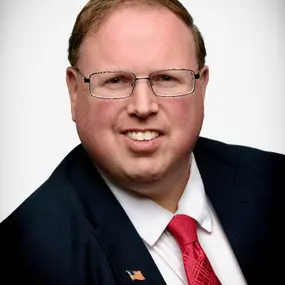
Peter Elder is the Republican Commissioner of the Monroe County Board of Elections, Chairman of the Monroe County Republican Committee, and longtime Leader of the Webster Republican Committee.
With more than 30 years of experience inside the Board of Elections, Elder has served in multiple roles, including Deputy Commissioner and Lead Inspector Trainer, giving him deep working knowledge of election administration, voter access, poll-site operations, election integrity, and the mechanics of local democracy.
Elder also brings decades of grassroots political leadership to Monroe County. He has led the Webster Republican Committee for 32 years and now serves as Monroe County Republican Committee Chair, where he is focused on candidate recruitment, party organization, voter engagement, and rebuilding a strong Republican presence across the county, including communities Republicans have too often failed to reach.
Before his current leadership roles, Elder served as Mayor of the Village of Webster and remains active in both the Webster town and village communities. His public service reflects a long-standing commitment to local government, civic participation, historic preservation, and community life.
Outside of his work in elections and politics, Elder is passionate about travel, history, family, faith, and service. He chairs the Webster Village Historic Preservation Commission and is active in Webster Baptist Church. His life and work reflect a belief that strong communities are built through integrity, participation, and a willingness to se… Read More