

 iHeartRadio
 Apple Podcasts
 Spotify
 TuneIn
 Podchaser
 Castro
 Amazon Music
 PlayerFM
 RSS Feed
 He Came Home to Fight for What New York Forgot
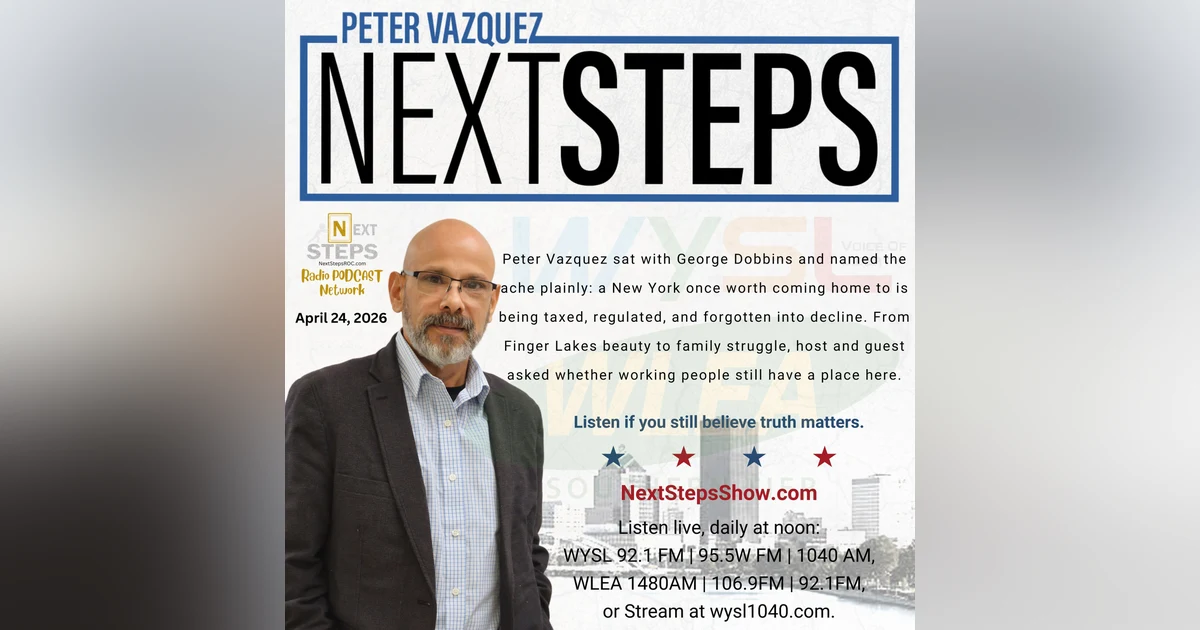

New York affordability crisis is the story of a state growing harder to love and harder to survive. Beneath the beauty of the Finger Lakes, the shoreline, and the small towns that once felt steady, a deeper unraveling is underway. Utility bills rise. Housing strains. Grocery costs climb. Child care becomes a second mortgage. Crime erodes peace. Rights are buried beneath bureaucracy. And working families are left asking how a place they built now feels designed to push them out.
This conversation follows that fracture where it hurts most: in the home, in the paycheck, in the long drive to work, in the fear that public life no longer serves the people carrying it. It confronts the slow violence of bad policy dressed up as virtue, where energy mandates punish the practical, bail reform weakens public trust, and government speaks of fairness while ordinary people absorb the cost.
What emerges is not just a discussion about economics or politics, but a warning about belonging. A state does not collapse all at once. It wears people down. It makes home more expensive, safety less certain, work less rewarded, and freedom more conditional. The real question is no longer whether New York is changing. It is whether the people who still love it will be allowed to remain.
New York affordability crisis: There are still places in New York where the morning light hits the land like a promise. The Finger Lakes in the summertime. The shoreline along Lake Ontario. The towns where people still know the family behind the counter, where work still means something, where a front porch, a pharmacy, a church pew, and a long drive home are stitched together into a life. That is the New York Peter Vazquez opened up on this broadcast, not as a postcard, but as a memory worth defending before the politicians finish pricing it out of reach.
That was the heartbeat of this conversation. Not nostalgia for nostalgia’s sake. Not empty campaign language. A real confrontation with the question hanging over working families from Lyons to Webster and far beyond it: what happens when the people who built a place can no longer afford to live in it, raise children in it, or recognize the government that claims to represent them?
Into that tension walked George Dobbins, Republican candidate for New York State Assembly in the 130th District, and he did not sound like a factory-made politician. He sounded like a son of Upstate New York. A man from Lyons. A man whose family has owned and operated Dobbins Drugs for generations. A lawyer who spent years in Washington, studied at Georgetown, saw the machinery up close, and chose not to be swallowed by it. He came home. Not because it was easier, but because it was truer. Because some people still believe that a place is worth returning to, and that public office should mean stewardship rather than self-promotion.
That is what gave the hour its gravity. George did not talk about New York as a consultant’s map. He talked about it like a father. Like a husband. Like a man who still wants his daughter to grow up loving the same ground that raised him. Beneath the policy was something older and stronger: the belief that a decent society should make it possible for families to stay rooted, to work honestly, to feel safe, and to hand something intact to the next generation. Radical stuff now, apparently.
The conversation moved where it had to move, into the slow suffocation of everyday life. Utility bills. Housing costs. Grocery prices. Taxes. The thousand cuts of modern governance dressed up as compassion. Peter pressed the point hard because families are living it hard. What good is all the moral preening out of Albany if the result is that dinner out becomes a luxury, heat becomes a burden, and shelter becomes an anxiety?
George answered like someone who has watched policy turn personal. He called out the madness of energy agendas that punish working people in the name of virtue, exposing the absurdity of climate theater that leaves ordinary households holding the bill while elites call it progress.
And then came the deeper fracture underneath all of it: the left’s obsession with “equity,” not as fairness under the law or opportunity open to all, but as resentment toward success and a political appetite for managed outcomes. George drew the contrast cleanly. Equality of opportunity is an American promise. Equality of outcomes is a political mirage that almost always ends in coercion, dependency, and bitterness. The poor should be protected. The vulnerable should not be abandoned. But a government that confuses compassion with confiscation, and justice with envy, is not healing a society. It is hollowing it out.
Public safety brought the conversation into even sharper focus. Peter did not mince words. Working people deserve to feel safe, and too many no longer do. George, married to an assistant district attorney and steeped in the real-world consequences of policy, spoke directly to what bail reform has done to public trust. This was not theory. This was the collapse of consequences, the release of people who should not be back on the street, the normalization of danger under the language of reform. When crime statistics can be massaged into talking points while communities still feel the weight of disorder, the public learns what too many leaders have forgotten: reality does not care about spin.
The hour also cut into rights, because no serious conversation about New York can avoid the question of freedom. George spoke plainly about the Second Amendment, about the absurdity of turning a constitutional right into a bureaucratic obstacle course, about long waits, mandatory courses stretched beyond usefulness, and a state culture that treats law-abiding citizens as suspects until paperwork proves otherwise. The issue was never just firearms. It was whether rights mean anything if they only exist after the government is satisfied. That question reaches far beyond permits and policies. It goes to the soul of self-government.
There were other moments that revealed the shape of the man behind the campaign. His respect for trades. His insistence that not every young person needs to be sent into debt to be told they have value. His recognition that rural communities and urban neighborhoods often suffer the same wounds by different names: poverty, broken families, weak schools, crime, isolation, and the humiliating distance between need and access. He did not flatten those differences, but he did something more important. He refused to let the state keep pretending they are separate worlds. They are not. They are connected by the same failures and waiting for the same kind of courage.
That is what made this conversation feel bigger than one district race. It was about memory and responsibility. About the old American belief that a place should still belong to the people who love it enough to stay, build, raise children, and fight for it. It was about the moral exhaustion of hearing government praise working families while making their lives harder. It was about the growing realization that leadership either protects the people or feeds on them. There is no magical third option, no matter how many consultants get paid to invent one.
By the time the hour closed, George Dobbins had made his case less as an operator and more as a neighbor. A man in his thirties. A father of a two-year-old. A husband. A lawyer. A lifelong Upstate New Yorker. A candidate not chasing a title, but trying to preserve a future in which his children might choose to stay where he chose to return. That matters. In an age of manufactured brands and political performance, sincerity still lands like a shock to the system.
This conversation did not offer fantasy. It offered a line in the dirt. A reminder that New York does not need more rulers speaking in polished slogans. It needs leaders who remember that government exists to serve the people, not to manage their decline with prettier language. Peter Vazquez brought the fire. George Dobbins brought the conviction. And somewhere between the beauty of the Finger Lakes and the strain on a family budget, between the dignity of work and the disorder of modern politics, the deeper question came into view: Can New York still be a place where ordinary people are allowed not merely to survive, but to belong?
That question is not going away. Neither are the people still willing to ask it out loud.
Keep the conversation going: More episodes · Watch videos · Read commentary · Send a voice message. Live weekdays at noon Eastern on WYSL and WLEA.
Bob Savage (0:00): This podcast is brought to you by Opendoor Mission, restoring hope and changing lives. Opendoormission.com.
Bob Savage (0:16): In a world that seems to change daily, what will you do next? Welcome to the next steps show with Peter Vesquez, a starting point for discussion Uh-huh. See, ladies and gentlemen. Sojo Peter Vesquez, a Kia of the Next Step Show. Yep.
Peter Vazquez (0:35): I am here once again. What a beautiful day it is today, ladies and gentlemen. Because you know what, guys? Every day when you wake up and you look out that window, it just feels good to say, god just creates some of the most beautiful landscapes around. How can we go wrong with that?
Peter Vazquez (0:50): Right, Senor Savage?
Bob Savage (0:51): Oh, I'm telling you. You drive around, Upstate New York, and I live in a lot of places. And I think there's nothing like the Finger Lakes in the summertime.
Peter Vazquez (0:59): It is. It is so much that the politicians wanna make, Upstate New York downstate's big old park for some reason, or at least it seems that way. You know, change begins when people who built the state stop asking permission from a system that seems to have forgotten them guys. And you know, today, I've invited a guy to come on and talk about, well, you know, how can we make New York State because they're not even elected officials. I know we elected them, but then they became politicians.
Peter Vazquez (1:27): Hey. We have George Dobbins, the Republican candidate for New York State Assembly in the 1 30th Assembly District. Sir, thank you for joining us in the Next Step Show.
Bob Savage (1:37): Yeah. Thank you, Peter. Thanks for having me on.
Bob Savage (1:39): No, man. It's always our pleasure. I love grilling you. No. I'm just kidding.
Peter Vazquez (1:42): You know what it is? I like I like asking questions that matter. See, a lot of people reiterate the problem. They say, oh, we need to do this, and they need to stop doing that. And I'm like, yeah.
Peter Vazquez (1:52): We we know. We we're saying it. Yeah. But what are you gonna do about it? And that's kinda where I went ahead a little bit today, if you don't mind, sir.
Peter Vazquez (1:59): Tell tell our listeners who you are, what is the one thirty eighth, and why why republic
Bob Savage (2:03): '1 thirtieth.
Bob Savage (2:04): Thirtieth. Yeah. The So,
George Dobbins (2:07): I'll I'll start with the January. I'm so I'm originally from Lyons which is in Wayne County. The hundred and thirtieth is all of Wayne County and then the town of Webster, okay? So, you've got, you know, quite a bit of shoreline along Lake Ontario. You've got, just at the bottom of Wayne County just before you get to the Finger Lakes.
George Dobbins (2:26): Lions is the county seat. That's where I grew up. My family is, four generations in Lions now. Great grandfather was asked by the mayor back in the 1940s to open up a pharmacy because he didn't like the other pharmacist in town. And so my great grandfather Bill started Dobbins Drugs.
George Dobbins (2:47): It's still owned and operated by my family. My dad works there. My brother's a pharmacist. He'll be taking it over at some point. The negotiations are ongoing.
George Dobbins (2:57): I made the mistake of so I'm the oldest of four. I made the mistake of not going to pharmacy school. I went to law school. I've I've I've been a lawyer for seven years.
Bob Savage (3:10): Where'd you go to law school?
George Dobbins (3:11): I went to law school at Georgetown down in in DC. I lived in DC for seven years. That's the only time I've lived away from Upstate New York. Actually, only time I've not lived in Lyons. I I I live two blocks from where I grew up.
Bob Savage (3:23): So you're steeped in high octane politics down there.
George Dobbins (3:27): Well, you know, so after, after college or during college, because I went to undergrad down there too, I thought I would get involved. You know, I I did some internships on the hill and everything else, and I don't know. It just that wasn't for me. The the internship thing wasn't for me. Congress, especially in Washington DC, is just a mess.
George Dobbins (3:49): I don't need this is not news to anybody.
Bob Savage (3:51): So you you picked up on this early. Yeah. Not Something doesn't smell right here.
George Dobbins (3:56): Right. 19, 20 years old, I was like, alright. I gotta do something else. I mean, I still I love history. I was a history and and political science major.
George Dobbins (4:02): I love being around this stuff, but so I made the decision. Alright. I'm gonna go to law school. I spent a semester, few hours a day studying for the LSAT, did pretty well on it, and then I had applied to a bunch of law schools and decided I was gonna stay in DC another three years. I still had friends down there, but then so my wife was with me.
George Dobbins (4:26): My wife was down in DC when I was in law school. She was actually a nurse. She was she still is a nurse. She's an RN. She she worked
Bob Savage (4:32): You did for her work?
George Dobbins (4:33): Yeah. Yeah. It was so she worked at a children's Children's National Hospital. It's a pediatric cardiac ICU nurse, which means basically babies with bad hearts. She had a, you know, very rough, few years there.
George Dobbins (4:46): She's doing God's work obviously, but babies born with heart defects and that sort of thing, so she was working there while I was doing the law school thing, and then we decided for obvious reasons, we didn't wanna raise our family in DC. We wanted to go back where our families are and where we understand the people, right?
Peter Vazquez (5:06): Oh, life makes sense. A little less political. It's a little less indoctrination type
George Dobbins (5:11): So of my wife, we moved home and we swapped. So I started working as an attorney and she went to law school. So, I I was the breadwinner and she.
Bob Savage (5:23): Wow. Yeah. MDJD.
Bob Savage (5:25): Yeah. Yeah.
Bob Savage (5:25): She. Look at that.
Bob Savage (5:26): Yeah. Well, RNJD. RNJ. She was a nurse but she.
Bob Savage (5:31): Oh, is she right right here.
Bob Savage (5:32): She went to
Bob Savage (5:33): a They do the work some I mean, seems
Bob Savage (5:36): like- Don't give me yeah. I was gonna say
Bob Savage (5:37): this is a kind of
George Dobbins (5:38): a controversial thing because she'd tell you she's just as proud, you know, that being an RN, I mean, they do God's work. You know, it's it's it's something else. But she went to Syracuse. She's a assistant district attorney now in Wayne County. So she works primarily, she does a lot of work with crimes against children and crimes against women.
Bob Savage (5:56): So a very similar thing to what she was doing before, just not really in the medical field.
Peter Vazquez (5:59): So you guys took your passion, and it sounds like, you you had a path that could have been a little easier than some had you followed the pharmacy footsteps maybe, right? Walking into a job, an established corporation to give back to your community right from jumpstart. That's exciting.
George Dobbins (6:14): Yeah. Yeah. You know, I I, my first forty hour week was at my dad's store, and I was 14. You know, there's a picture of me somewhere with a paycheck, but I realized sometime during that first forty hour week that the pharmacy wasn't for me. I did find in math and in science in school, but it wasn't my forte.
George Dobbins (6:36): I think my lowest grade in college was contemporary chemistry for non science majors, so when I got that grade back, I was like, all right, you made the right decision not going to pharmacy school because you might not have made it. My brother and my sister is actually also in pharmacy school right now, my youngest sister, they have minds better suited for that, but you know, one thing to your point, one thing I do miss is so I I commute up and up to Rochester every day. I work at a a big firm right downtown and we work with, you know, companies and real estate developers all over the country, right? So I kind of have I have that you know almost the corporate work and we're on a tie right now you know that that sort of thing but I do really I I I'm envious of my dad being behind the counter and knowing everybody and and that, you know, that environment. I I I don't have anything like that right now.
Peter Vazquez (7:34): Right. Right. But, you know, you need both ends, though, and you have the experience by watching your dad. You learned how to deal with customers, and it shows in the work that you do, and I happen to be married to, you know, a lawyer, and and there's no lack of, having to deal with people in customer service and finding, you know, this area, right, where everybody can kind of come to an agreement for the greater good. Yes.
Peter Vazquez (7:57): And I think that's one of the things that make legislators important, right, because they've got to bring all opposing sides.
George Dobbins (8:05): So, that's so that's interesting you mentioned that. One of the the so I am a real estate and business attorney which means I never go to court. You know, don't go to court. I don't that's the it's my wife. That's what she does.
George Dobbins (8:16): She's the real lawyer. I close deals, right? I I I close business deals. I close real estate deals and to your point, the the way you're successful in that is by bringing people together and you have to understand where everyone's coming from. You have to understand what your client wants, where they wanna be in five years, why they're trying to close the deal they are now, you know, what what their company does, what they're trying to accomplish, and you have to understand the other side.
George Dobbins (8:41): You know, you have to be realistic about alright, this guy's being a stickler about doing a an engineer's report because we promised him sixty days ago that we would close on time and we're not gonna close. You have to be reasonable, you know, not not that you don't advocate for your own side because that's your job as an attorney but you you have to understand the three sixty real reality and I I I do enjoy what I do. I I find every day is a puzzle puzzle. No two deals are the same And but that that's more my skill set is is what what I'm talking about.
Bob Savage (9:15): So so let me ask you on on the political stuff, and and this is where bringing people together, I think, is so important. You know what's really cool, Bob? I've got kids older than him. I'm just saying. I mean, this is this is great to see a young man Get used to it.
Peter Vazquez (9:29): Absolutely. And and you guys are taking the and the thing is, I'm not dissing. My my kids are taking the lead in doing things as family men, homeowners Yeah. Soon to be biz I mean, they're they're rocking it, and it's an exciting thing to see in an environment where the liberals have many of our youth convinced, right, that that that victimhood is the way to go, especially for people that look like me. Isn't that nuts?
Bob Savage (9:49): Yeah. I I I'm I'm a lucky guy. I'm not gonna lie. I've got I love my wife, and I've got a two and a half year old daughter too. So I I
Bob Savage (9:56): God bless you.
George Dobbins (9:57): Yeah. Thank you. I I understand where you're coming from.
Peter Vazquez (9:59): So so so right now, your platform and and platforms of many candidates throughout the spectrum that are running. I mean, it's our national mantra right now. Right? Bringing America a mega. Right?
Peter Vazquez (10:11): Make America great again. Yeah. Tell me something. Why are we having to do things again instead of having to be able to say a you know, that no one's talking innovation, but we can't because of everything that the left has done.
Bob Savage (10:24): Yeah.
Peter Vazquez (10:24): Right? Tell tell me something. What does it say about a state like New York, right, where all the candidates running, even the candidates that are sitting in office in the Democrat side, saying we have to change things and make things better. It sounds to me more like a like bamboozling this crisis. Yeah.
Peter Vazquez (10:41): They're filling us with nonsense.
George Dobbins (10:43): Yeah. Yeah. So I've got that that's interesting. I I've got two ways to approach that here. I think the first way to approach it is when you say again.
George Dobbins (10:50): Right? I think America has the greatest system of government that's ever been fashioned in the history of the world, right? And I don't just say that because I'm blowing smoke, I say that because I've studied it, I believe it. I look at what other countries do, you know, the the parliamentary system and and and, you know, the old king king you know, kingdoms and all that stuff. What we've got here, the democratic republic that we have is the best.
George Dobbins (11:17): So that's that's one thing. I do think, though, to your point, you look at look at the way the state is now, the the rising costs and everything else, it's it's pretty obvious that that system of government has has allowed for some mistakes to be made. Right?
Peter Vazquez (11:36): Yep. George Dobbins, ladies and gentlemen, Republican candidate for New York State Assembly, 100. Mira, don't go nowhere because I wanna talk about, you know, bringing down utility, housing, and grocery costs when we get back. We'll be right back right here in WYSL WLEA, who Peter Vazquez in the next step show. See Bob?
Bob Savage (11:56): You got
Bob Savage (12:06): Picture this, a mother of three finally turning the key to her first real home, a struggling neighbor no longer sleeping in their car, a child with a warm bed and a full night's sleep. That's the impact of your support.
Peter Vazquez (12:23): At Cuyca Housing Council, we're not asking for charity. We're building change. Whether you can give $5 or $5,000, every gift drives real results. Go to kuyukahousingcouncil.org or call me, Peter Vasquez, at (315) 536-8707. Together, we're taking a step towards independence one family at a time.
Speaker 0 (12:50): The youth of our city are in a new crisis. Criminal justice reform has created the consequences of no consequences and generated a whole new generation of 12 to 17 year old kids committing serious crimes. Never before have we had this level of youthful offenders, but ninety percent of these kids are just trying to do the right thing and need a safe sanctuary to retreat to. That's Rochester Youth for Christ. You can be a part of this solution by giving generously and regularly at yfcrochester.org/donate.
Bob Savage (13:20): Peter Vasquez and next step show
Bob Savage (13:22): on the voice of liberty.
Bob Savage (13:24): From minister Mike's lips to God's ears, you heard all about it. Youth for Christ Rochester, proud sponsor of this program, YFC Rochester dot o r g. And Hectic Foods in East Rochester, bold flavors for wild times. Stop by the store on Main Street there in ER. Again, here's Peter.
Peter Vazquez (13:43): And, you know, you can get your name on that list. See, (585) 346-3000 and say, I wanna sponsor that Next Step Show. I'd appreciated it to my listeners. For sticking with us all this time. See?
Peter Vazquez (13:57): I appreciate that. You know, I really do. And and for those of you that send me feedback, I appreciate it as well. And for those of you that I offend my talk in Spanish, I mean, I appreciate you too. See?
Peter Vazquez (14:08): You know, I like that.
Bob Savage (14:09): It's part of who he is. He can't help it.
Bob Savage (14:11): I I you know what? Listen, though. I'll tell you what. I love you. That's all I gotta say.
Peter Vazquez (14:16): George Dobbin, sir, thank you
Bob Savage (14:18): Yeah.
Peter Vazquez (14:18): For spending the time with us today. I truly appreciate you guys. Lines are open, by the way. You're welcome to ask him questions. (585) 346-3000 or (866) 552-1009.
Peter Vazquez (14:31): Cost is a is a big issue. I run a housing council in in in rural America, which is predominantly the 1 30th District that you're seeking to represent, sir. So so so tell me something. When you see residential electricity prices at 28.4% per kilowatt up from 25.3%, when you see things like well, in March 2026, New York State reports the prices were up 30 3.3 for food, 2.8% for home food at home, 3.9% in shelter. George, I've got people that that can't afford to pay for emergency shelter because, know, New York, if you make any kind of money, you gotta put that money towards emergency shelter Sure.
Peter Vazquez (15:19): Yeah. Which is a conversation we can have when you get elected because that's gotta change too. Yeah. What what what can we do about that? I mean, we live in a state that's collected a $162,000,000 in taxes in just fiscal year 2025.
Peter Vazquez (15:33): Where is that money going?
George Dobbins (15:35): Well so there's a lot of there's a lot to to chew on there. Let me start with, let me start with utility costs. Right? You know, the the the cost of and this we had a very cold winter this past winter, and and I'm sure you guys are familiar with the the report that came out from the governor's own people saying that if the CLCPA were her her green energy law were to go into effect as it's currently scheduled to, it would cost the average upstater an extra $4,100 a year a year to in in energy costs. Right?
George Dobbins (16:08): I mean, that's something that's you you talk about working people, you know, and and the average person that's just trying to make ends meet. 4,100 a year is not just, oh, we're not gonna go on vacation. It's, oh, we're not gonna be able to go out to eat. We're not gonna be able to get that extra whatever, you know, Christmas presents, all that stuff.
Bob Savage (16:27): Right. Be able to go to the grocery store. Yeah.
Bob Savage (16:29): Right. That's gonna become a luxury.
George Dobbins (16:31): Right. Yeah. Every I mean and and that's not a sign of success. This is America. Right?
George Dobbins (16:36): In America, we people should be able to, you know, work hard for a living and be able to enjoy living in America, living in Upstate New York, being able to go out to see friends at a restaurant or at a bar.
Bob Savage (16:49): And and, George, this is a completely artificial situation. It it's completely unnecessary. Is it not? I mean, all all we have to do is roll back these ridiculous mandates, which exist solely to, you know, to ingratiate the Hochul and her people with the green lobby.
George Dobbins (17:09): It's it's a it's a virtue signal. Right? The the speed at which it's gotta be done and the, you know, the the level of the for example, the carbon rates that they're reducing at a at a fixed schedule. That's all
Bob Savage (17:23): Junk science.
George Dobbins (17:24): Junks. There's the the reliance on solar panels.
Bob Savage (17:28): Right?
George Dobbins (17:28): I mean, I I deal on my own day job, but also as a town councilman in Lyons, we've been dealing with, you know, solar farms and that sort of thing. We all know that solar farms wouldn't be making any money in the state of New York if it weren't for the government subsidies that go out to those companies, right? And actually, we know this because the second these developers that put in the solar panels are done developing building them, they immediately sell them because they gotta get out. They got their development fee and they get out. And they usually sell them to some company in Korea or some company overseas where for whatever reason in their own country, they're they need to take a loss.
George Dobbins (18:05): But these, you know, what we need to see, if you want to see prices go down in utility costs, you need to see expansion of nuclear. I know that's a controversial thing but I I I think that we have a silver bullet, you know, and we discovered it eighty years ago, right, we need to see, you know, fewer restrictions on bringing energy in from out of state because those costs that for the for carrying energy out of state, you look, that's a huge part of your bill. It's like 25%
Bob Savage (18:40): of your bill. And. And vast increases by the way in the supply part of your electric bill. Look at you. That's where you're getting killed.
Bob Savage (18:47): Right. It's the supply charges.
George Dobbins (18:49): And you know, things like you know, the gas tax. Right? I mean, it's twenty three or twenty four cents per gallon of gas in a person's car. That adds up for the average person. And right now, we're seeing I mean, gas is over $4 a gallon.
George Dobbins (19:03): There's nothing stopping the governor from saying, okay. Until things cool down, let's chill with the gas tax. Right? Well,
Peter Vazquez (19:09): she she it's a tool for her to beat Trump up on. She's brining it on Trump and the and and that's but that's the politics. And these are the same people that use political language like words like equity to be able to sell, you know, some of this nonsense that just I mean, New York's top tax income tax rate is, like, 10.99% or something like that. I mean, it it's extremely high. We're we're
Bob Savage (19:30): On top of the federal taxes that people are already paying.
Peter Vazquez (19:33): Right? Yeah. But but there's no return. Tell me, sir, because you're gonna get beat up on this at one point or another equity. What does that mean to you, and and how can we justify an equitable type of government?
Peter Vazquez (19:46): Right? And and remember the definition of the word equity, please. Sure. Right? When they're collecting a $162,000,000,000 in taxes in one fiscal year.
Bob Savage (19:55): That's not I mean, I don't see it.
George Dobbins (19:57): Yeah. Equity. Oh, so I mean, if you're referring to equity is in the sense, here's one of the problems and one of the big differences I think between right and left and and and democrats and republicans in my own philosophy and some of my friends on the left is, you know, in America, I totally believe in equality of opportunity, right, of opportunity. Yeah. Yeah.
George Dobbins (20:14): We're all all men are born free. They're all endowed by their creator with certain unalienable rights. I mean, the whole the whole that's the that's what we're promised.
Bob Savage (20:26): Mhmm.
George Dobbins (20:27): We're not promised equality in outcomes. Right? Now there's a certain base level because we live in a decent society. People should not be, you know, left on the street with we have, you know, my we've got a Christian obligation to, you know, to to to protect the poor. Right?
George Dobbins (20:43): The the poor. But what we are seeing is a a shift from, you know, the obligation being we need to take care of the poor and the downtrodden to resentment for those who are successful. Right? And those are those are not zero sum things that you shouldn't be it's the wrong focus. I don't know if that answered your question, but that's just a philosophical way I look at things.
Peter Vazquez (21:08): No. I appreciate your question. And listen. There's no right or wrong answer in this in this interview. This is who is George Dobbins?
Peter Vazquez (21:16): Why should people even consider looking at you as an option?
Bob Savage (21:19): Sure.
Peter Vazquez (21:19): Because you're running not just, you know, Republican, Democrat. You there's a few people on the Yep. That's gonna be in the ballot.
George Dobbins (21:25): Yep. There's gonna be a Republican primary on June 23, between myself, Mark Johns is so I'm the endorsed Wayne County, Republican and conservative candidate, for the primary, but there's gonna be a primary. There's Mark Johns out of Webster. He's endorsed by the Webster Republicans, which is about a third of the the district population wise. And then there's Summer Johnson who's out of Marion.
George Dobbins (21:50): She's a former supervisor in Marion who also is who's who's in the run.
Peter Vazquez (21:53): Right. But she's not a Republican. She's in the on the leftist side. Right? On the Democrat side?
Bob Savage (21:57): No. She's a Republican.
Bob Savage (21:58): Oh, so there's a three way primary.
Bob Savage (22:00): Yeah. It's a three way primary.
Bob Savage (22:01): Yep. Interesting. I I I don't know who that individual is. You know? If she's listening, I'd love to have her.
Bob Savage (22:06): Is this Summer Johnson?
Bob Savage (22:07): Summer Johnson. Yeah.
Peter Vazquez (22:08): We'll have to make sure I get an email out to her. Mark, you know, Mark Jones used to have purple hair. Just just saying. I I he used to have purple when I met him, the guy had purple hair.
Bob Savage (22:16): Was it a a what? A mistake? What?
Bob Savage (22:21): Listen. Unless unless
Bob Savage (22:24): He said with refreshing candor.
Peter Vazquez (22:26): I'm not I'm not I'm not in any way beating up on the guy. You know, his his wife is a phenomenal individual. I believe she's still involved in politics in Webster. She does great things. I I think Johns was, in in the legislature, but he was also in the state assembly.
Peter Vazquez (22:40): And in my opinion, he's no longer in the state assembly for a reason. I'm just saying.
George Dobbins (22:45): I you know, I I will say this. His his big push, and I this is something I agree with, is for term limits.
Bob Savage (22:53): Mhmm.
George Dobbins (22:53): Right? He likes term limits. I think term limits are a good idea. I just don't think it's the best message for him individually to be be giving. You know?
Peter Vazquez (23:02): No. Because, I mean, I've I've been around for a little while, and and he has two. Before me, I think. Long enough for people to forget he had purple hair.
Bob Savage (23:10): Yeah.
Bob Savage (23:10): I Blue hair. Blue hair. One of those colors. I think it was purple.
George Dobbins (23:14): I so that's funny. I I I'll tell you a story quick. This is this has nothing to do with anything, but I once had blonde streaks in my hair and not for the reason that you think. I so I played football in high school, and I you know, football, two a day practices in the summer. You're sweating a lot, and I had acne medication on, and I didn't you know, you put it on.
Bob Savage (23:35): It's some kinda well, I took my helmet off, and it had completely bleached my eyebrows in the front of my head. So all my friends were like, George, did you get highlights in your hair?
Peter Vazquez (23:44): Oh, that's pretty funny. Pretty and and, again, I'm just picking on the guy. Just, you know, in in a time where we need leadership, in a time where we need role models, I think it's very important that an individual, that's why I pointed out that I have kids older than you because one the things I've always told my kids, when you're sitting at home, if you wanna do goofy things, that's on you, that's fine. But when you're out there and you're representing this family, because that's what children do, they represent the family when they leave the house, right? You're gonna represent with dignity.
Peter Vazquez (24:13): And they couldn't go to school in sweatpants, I wouldn't allow it. And I think that's important because see, we have too many kids right now running the streets thinking that they're, well, things that they're not, like gangsters. And the thing is, when you look at the a full annual state crime report shows that law and order means a lot. Right? Because in New York State, the report showed 400 and over 440,000 indexed crimes in 2023 up from 2022.
Bob Savage (24:43): Right.
Peter Vazquez (24:43): But yet we've got a mayor who's sitting and a governor who's sitting there saying things are great. Let's not forget about what's happening in New York City.
George Dobbins (24:50): Working people deserve to feel safe.
Peter Vazquez (24:53): Ladies and gentlemen, that is Elsino George Dobbins, Republican candidate for the New York State Assembly 1 30th District. Mira, don't go nowhere. Go potty, maybe. We'll be right back right here. Give us a call.
Bob Savage (25:06): WYSL, WLEA.
Bob Savage (25:07): Peter's full of the helpful tips, ladies and gentlemen. Guess what we're gonna do is maybe if if we can get this done, send George out the door with a giant pooper scooper and a map of the state of New York when he heads to the assembly. We'll be back. WYSL, WLEA.
Bob Savage (25:27): Peter Vasquez and next step show
Bob Savage (25:29): on the Voice of Liberty.
Bob Savage (25:32): If you would like to join the conversation, George Dobbins in studio along with Peter, who is back this week. We're very pleased to have him back in the studio. (585) 346-3000 is the number to call. Here's Peter.
Bob Savage (25:45): You know, you got one of those really I mean, talk radio, you can probably do, like, one of those, narrated type of radio, or stuff. Know, like, suave with that with that voice.
Bob Savage (25:57): Lake Wobegon? Like talk, like
Bob Savage (26:00): Listen. I was almost like, who the heck is that Peter Vesquez?
Bob Savage (26:06): Are you still asking these Listen.
Bob Savage (26:09): I still confused. Estruspection.
Peter Vazquez (26:11): Yeah. Remember, you know, when when you're grown ups I'm gonna throw the racial comment in there. Bob loves this. See? When you grow up being told you're less than something, you're always thinking something less.
Peter Vazquez (26:21): See? No? Doesn't not not even how about this? How about this? Scripture reminds us, see, in Proverbs 28 verse two, that when the righteous people lead, the people rejoice.
Peter Vazquez (26:33): But when wicked people rule, the people suffer. And that's not just theology. That's public policy, and it surely isn't just my opinion.
Bob Savage (26:40): Well, Peter, just just remember the immortal words of Barack Obama. That's just how white folks will do you.
Bob Savage (26:46): That is true. I almost forgot. Ladies and gentlemen, there you go. I'm just gonna blame it. Blame it on the white folks.
Bob Savage (26:53): Ladies and gentlemen, sorry, Bob. It's your fault. Where's Keith when you need him? Tell me about tell me about crime in your platform, sir.
George Dobbins (27:04): Sure. So I so my like I mentioned earlier in the hour, my wife is an assistant district attorney in Wayne County. So I I I'm not a a prosecutor, but I eat dinner with one every night. And yeah, I I I think I said this before the break. Working people in this state deserve to feel safe, right?
George Dobbins (27:24): I mean, I know that you can massage crime statistics and you can say one thing or the other but the the fact of the matter is that, you know, after bail reform, a lot of people were released that should not have been released. They're about to get on the street. You know, people can be arrested for domestic violence and then be released the same day back into the house where they were committing that sort of crime. Right? I I have some specific things that my my wife would want me to mention.
George Dobbins (27:53): Two, one, so in the state of New York, there's a the assault second, right? It's an assault against a person of a certain protected class. And there's about 80 or so people classes listed. It's if you're witness, if you're a police officer, if you work at if you're an RN at a hospital, that sort of thing, one of the a class you won't see in that assault second is pregnant women, and my wife has always wondered why that is. So one thing that I think I could do, this is a very small fix, is put pregnant women.
Bob Savage (28:28): Because if you if you assault a pregnant woman, the consequences should be higher. That's just something I think morally is correct.
Peter Vazquez (28:35): Common sense almost. I mean, that's what it seems like to me. Hey. Hey, Chuck. I I know I'm bail reformed.
Peter Vazquez (28:40): The the Department of Correction at the and the New York State Division of Criminal Justice Services. Right? They had this pretrial table that shows that in non New York City and district courts, right, the bill being bail being set fell from 35% and, to 20%, which is insanity to me. That same report shows over the same period that release on let's see if I can say this correctly. Recognizance.
Peter Vazquez (29:07): Recognizance. That's what's the word is. Right? That that rose 50, 52%. It rose up to 57% from 52%.
Peter Vazquez (29:14): That that doesn't seem like it's helping anybody.
George Dobbins (29:17): No. I mean, look. This is another down straight downstate driven issue. Right? Especially in the city of New York.
George Dobbins (29:23): They have Rikers Island. Everyone's heard of Rikers Islands. And there and there are horror stories out of there about people getting arrested in the streets in New York and ending up on Rikers Island for, you know, months and months and getting lost, and and I'm sure that was an issue. Right? I I don't get me wrong, but this is this is way overboard.
George Dobbins (29:40): Right? We're we're seeing violent people being released that shouldn't be. And, you know, the the it's I don't think there's anyone on the left or the right that doesn't think it's something that's gone too far. So
Peter Vazquez (29:53): No. It it it surely hasn't. Sir, why are you running as a republican? Because it seems in our area, especially Monroe County, looking at the numbers, that if you decided, hey. I'm just gonna wear the pink hats and and tell everybody this should be a woman and and whatever else nonsense that you get elected.
Peter Vazquez (30:09): And I know some people that have chosen to do that because they're saying that's the only way that they can that they can get elected to do the greater good work for their community. Right. I of understand it, but then I'm like, are we throwing the baby out with the bathwater here? So why why are you running Republican in a tough area?
Bob Savage (30:27): Well, you know, so I I've always been a Republican. I've never been registered anything else. I might have been an independent when I first registered to vote, but, I mean, the fact of the matter is I'm a conservative. Right? I'm a conservative guy philosophically.
George Dobbins (30:39): Right? When I was in high school, I was reading a lot of Ron Paul. I'm not quite a Ron Paul guy anymore, but I you know, I've got that. And then I read a book in in college my first year. It was called the great debate.
George Dobbins (30:52): It was about Burkean conservatism versus Thomas Paine and and what makes a conservative. And ever since then, I mean, I I've identified as a as a conservative philosophically, and the Republican Party is the conservative party in this country. I mean, I I family. Right. And and I'm I'm the son of a small business owner.
George Dobbins (31:12): Right? He's a Republican. I mean, is this is just you know, you are who you are. You're cut from a certain cloth. I will say, you know, Wayne County is is very republican.
George Dobbins (31:23): We're still because we're, you know, we're a rural district, and so it it's not quite the same situation as you see in Monroe County. I mean, it looks like the the Monroe County Republicans are really struggling, especially in the past few years. I and that's something is because the town of Webster is gonna be in my district. I take very seriously. We need to you know, the town of Webster needs to take back the town council or the town hall from the Democrats.
George Dobbins (31:49): They lost it last year because there needs to be some sanity, you know, brought into into government at the local level and and all over.
Peter Vazquez (31:59): And the thing is being conservative actually means you care about people's well-being. You care about where they go to bed at night. You care about where their children go to daycare, right? Is that daycare not just enhancing the parental wishes, but is it teaching that child, right? So let's talk about something universal that it doesn't matter where in the one hundred thirtieth or it really doesn't matter where in the state you are, because when you vote on things, you're impacting an entire Let's state, not just your area, talk daycare a little bit.
Peter Vazquez (32:30): And I thought this was appropriate for today, sir, because, well, today is childcare professionals day. Okay. I think that's important. Remember, I had five kids and I had lucky, I was lucky, I had five mother in laws living with me as well, so childcare was never too much of an issue, I have seen people that I serve today end up homeless because they had to choose between their childcare to go to work to afford the house that they can no longer afford because of the electricity bill. And many of these affordable housings, believe it or not, are becoming all electric.
Peter Vazquez (33:08): So so so the taxpayer helps pay, your rent, but your your your rent, your electric still, you know so so look, childcare in New York state, that's like a mortgage level expense. Let me share some numbers. Infant care in the center, $20,000 a year for one child. Toddler care, $18,000 or these are over 18. Alright?
Peter Vazquez (33:29): Two children in the center, 37,783 thousand dollars per year. But let me share this with you. In in this place called Child Care Aware of America, right, they put out this annual report that that compared these costs with other states, and these states happen to be more red states, I believe. Florida, is 13,011. Texas is 12,000, per student.
Peter Vazquez (33:57): Yep. And, North Carolina is 7,769 for, again, two children in the center. What's the difference in these states?
George Dobbins (34:06): You know, I I have to imagine it's the regulation. So my daughter goes to daycare. Right? Candy Apple Daycare Center in in Newark, New York Mhmm. Right out in Wayne County.
George Dobbins (34:16): My my wife went there. My my mother-in-law has worked there for forty years, and it is the only, you know, day care facility in probably forty five minutes in all directions. Right? They they it is it is a we have a a what do you call it? A a a there's not all the day care opportunities out in in Wayne County.
George Dobbins (34:41): That and then to your point, that affects working people. Right? Because if if you're a single mother that is trying to get back into the workforce and and and and help your children out, that that's a problem. But it's it's the regulations. It is so hard.
Bob Savage (34:55): My wife is on the board of the daycare. It is so hard to keep that place open, and they've been around for fifty years, and they've got experts there.
Bob Savage (35:01): And and you can fix that.
Bob Savage (35:03): You can fix make any promises,
Bob Savage (35:05): but I
Peter Vazquez (35:05): can point making promises, but you can fix that by working with people to help understand what those problems are.
Bob Savage (35:11): Democrats have kids too, and they they need to have their kids watched when they go to
Peter Vazquez (35:14): work. George George Dobbins, ladies and gentlemen, Republican candidate for New York State Assembly 1 30th District. Don Cono will be right back right here. See you on the Voice of Liberty.
Bob Savage (35:23): Yes. And we got one segment left here for you to call in if you'd like to talk to George at (585) 346-3000. Toll free, (866) 552-1009. It's next steps, WYSL, WLEA.
Bob Savage (35:42): At Cuyahoga Housing Council, we offer real help when it matters most. Whether you're facing foreclosure, stuck in an unsafe mobile home, need rental counseling, or critical repairs, we guide families New
Speaker 0 (36:05): York City is is a a city city consequences of no consequences and generated a whole new generation of 12 to 17 year old kids committing serious crimes. Never before have we had this level of youthful offenders, but ninety percent of these kids are just trying to do the right thing and need a safe sanctuary to retreat to. That's Rochester Youth for Christ. You can be a part of this solution by giving generously and regularly at yfcrochester.org/donate.
Bob Savage (36:36): Peter Vasquez and next step show
Bob Savage (36:38): on the voice of liberty.
Bob Savage (36:42): And the program brought to you today and every weekday by youth for Christ Rochester, yfcrochester.org, and hectic foods in East Rochester. Here's the host for the most, Peter Vazquez.
Peter Vazquez (36:52): The host that's gonna say this to you. Meta, New York needs leaders who remember that government exists to serve the people, not to feed on them. Right? Leadership either protects the people or it burdens them, sir. And I believe you're gonna be a leader that's gonna protect the people.
Peter Vazquez (37:08): Right?
Bob Savage (37:09): Yeah. Yes, sir. Thank you.
Bob Savage (37:10): Tell me about because because this is on your website. What's your website?
George Dobbins (37:15): Votegeorgedobbins.com.
Bob Savage (37:17): D o b b I n s. Right? D o b
George Dobbins (37:19): b I n s. Yes. George Dobbins was taken already. There's a a guy that's like a a workout influencer, unfortunately. So if you see a a guy that's doing a lot of pull ups or something, that's not me.
Peter Vazquez (37:30): That's pretty funny. Is he like Bill?
Bob Savage (37:32): Oh, yeah. Yeah. He's yeah. Crossfit.
Bob Savage (37:34): I mean, you're pretty fit yourself. You? Well,
Bob Savage (37:36): not not like this guy.
Peter Vazquez (37:38): Not like this guy? Gotcha. So so so on your website, it says Albany must stop infringing on individual rights, including our second amendment. Sir, I hear that more often on this show by politicians to later on be like, well, you know, maybe a restriction. Well, you know, maybe, you know, you can have, you know, your rights to your guns, but but not constitutionally.
Bob Savage (37:59): You know, you've gotta go through this rigor mort.
Bob Savage (38:01): Right.
Peter Vazquez (38:01): What's second amendment? What does that phrase, what does it mean? Explain it to our listeners.
George Dobbins (38:05): Sure. I mean, just as a you know, somebody that's gone through law school. Right? You've got the second amendment, you know, that guarantees your right to carry or your right to to bear arms. You know, I think arguing about, you know, hypotheticals about what regulations you would support or what regulation you weren't you would not support is kind of like how many angels can dance on the head of a needle in the state of New York because the fact of the matter is that it the New York has gone way too far in one direction on the second amendment.
George Dobbins (38:33): I'm a pistol permit holder. Okay? I got my pistol permit when we moved back home. I went through the eighteen hour course. I went through, you know, the the year long process it took to get the pistol permit and not for nothing.
George Dobbins (38:48): I, you know, I I don't have a criminal background. I don't have anything else. It's kind of ridiculous that in in order for me to get my pistol permit, it was that long of a process. Right? For something that is supposed to be, it's it's written down in the constitution as a right.
George Dobbins (39:02): You know, they're not all rights are explicitly written down. That's the, you know, that's in the bill of rights already but some of them are and one of them is the second amendment. So, you know, there's no question there.
Peter Vazquez (39:13): So so let me ask the question this way. If rights only exist after the bureaucracy is satisfied, are they still rights in a meaningful sense? Meaning, if I've gotta make the government feel good about me having my right, that's not a right.
George Dobbins (39:28): I mean, look. You do you do absolutely lose your rights if you do things like commit crimes. Right? You've got the right to travel all over the place until you, you know, rob a bank, and then you don't get to travel anymore because you gotta go to jail. Mhmm.
George Dobbins (39:41): And if you were to rob that bank, I guess, also, your right to the, you know, second amendment, your your right to bear arms also would be restricted. But that's after the fact. The assumption should be until you do something otherwise that you have this right. And that's that was the Bruin case in the state of New York. Right?
George Dobbins (39:58): There was a few years ago where you had to give a reason why you would get your your concealed carry pistol permit. And they struck that down because they said, no, no, that it's not a, you know, a May issue state which means you had to come up with an excuse. You know, a lot of people, a lot of your listeners might have said, oh, I had to say I work with a large sums of money or I, you know, work in a dangerous neighborhood or whatever else. No. The assumption is you have this right already.
George Dobbins (40:22): You don't need a reason for the right. You know? It'd be like saying you need a reason to be able to petition your government and send a petition in. No. You have that right.
Bob Savage (40:29): It's it's it's written down.
Peter Vazquez (40:31): So after the Bruin ruling, I believe the state enacted what's called the concealed carry improvement act. Are you
Bob Savage (40:37): familiar with that, Ed? Is that the sensitive areas where they outline all the
Bob Savage (40:41): It's part of it.
Peter Vazquez (40:42): Yeah. Okay. The strengthening really restrictions on concealed carry. It is really what it does. What's your opinion on that?
George Dobbins (40:50): Well, I I I'm somebody that went through that. Right? So, you know, I I think that's where they also increased the the course from five hours to eighteen hours, which I gotta tell you, I think was only designed to make it almost impossible to just do all the the training in a weekend. Right? Eighteen hours, that's two nine hour days.
George Dobbins (41:08): And, you know, I had a good course instructor. We had, you know, a lot of useful information there about, you know, what your duties and obligations are as a pistol permit holder in the state of New York, but there is not enough information to fill eighteen hours. You know? By the end, we were just watching YouTube videos. It was you know, it's tough.
George Dobbins (41:27): And and it's again, it's it is just designed barrier to make it so people can't get their pistol permit. My wife is interested in getting her pistol permit, but we've got a two year old at home, and it's not often that she's got a weekend that's free. Even if, you know, I I we're both very busy. You know? It it that's the barrier to entry.
Peter Vazquez (41:47): Yeah. You know, I don't have my pistol permit, and not not because I'm against it. I think everybody listening knows. I it just you know, I figured it okay. When I was in Afghanistan, right, I was there as a civilian as well.
Peter Vazquez (41:59): We had the option to carry guns, but we had to get our own.
Bob Savage (42:02): Yeah.
Peter Vazquez (42:02): All my buddies were out there buying AK forties really AK 40 sevens or or the Russian version of it. Right? Yeah. And and I I got a little 45 or the Russian version of a 45. Yeah.
Peter Vazquez (42:13): And people would look at me like, why did you get such a small weapon? I'm like, dude, if if someone's attacking me, right, the chances are that 45 is gonna get me out of there a lot faster than your AK 47 is. Right.
Bob Savage (42:28): Right.
Peter Vazquez (42:28): So so tell me, does the left have any argument whatsoever when they say things like automatic weapons shouldn't be in the hands of people like you and me for even everyday protection?
Bob Savage (42:41): I mean, you so you're saying does the left have any
Peter Vazquez (42:44): Well, you know, the whole restrictions in the magazines that they have now, the whole SAFE Act with all the No.
George Dobbins (42:49): I mean, what what that is is, again, those are just, you know, death by a thousand cut attacks on the right. Right? I mean, it's it's it's not that you having, you know, five rounds in a magazine versus 12 rounds in a magazine is gonna make you any more of a dangerous threat to your fellow citizens.
Bob Savage (43:11): Well, that gun is much shootier, though.
Bob Savage (43:13): Well, right. Right. When it has more bullets in the mirror. It's shooty.
Bob Savage (43:17): You know?
George Dobbins (43:17): Yeah. I so no. I mean, that and that's the if if you are a upstanding law abiding citizen, you know, your right is your right. Right. You
Peter Vazquez (43:26): know? So so tell me something. Does anybody whatsoever have a right to kill someone? Well Yes or no?
Bob Savage (43:33): So if you're protecting your life or the life of the other of
Bob Savage (43:38): another person. Protection. That's not so much a right. You have the right to protect
Bob Savage (43:41): the right. Are you meant to I mean, saying that they have a right to kill someone? Yeah.
Bob Savage (43:44): That's my question. I'm because I listen. I've heard the left tell me. You have no right to kill someone even in in self defense. So I'm just you do.
Bob Savage (43:51): You've got the right to protect yourself in the in in or your the the life of another.
Bob Savage (43:56): Your your loved ones, your family. I think there's biblical.
Peter Vazquez (44:00): Oh, there absolutely is. Yeah. So I was gonna follow-up with where do you stand in life? Does someone have the right terminate or end a life prior to
Bob Savage (44:07): Oh, no. No. I'm yeah. I'm a I'm a Catholic. I'm no.
Bob Savage (44:10): And then and I've actually I thought that's where you were gonna go with this is is do I
Bob Savage (44:13): was trying to be subtle. I didn't wanna come out and ask you. I know some people get off,
George Dobbins (44:17): you know, shooters. I look. It's again, you know, that's a it it's because here here's the thing. You know, we're we you know, you can say, alright. If if somebody's attacking a loved one, you have you know, do you have the right to use lethal force to protect that loved one?
George Dobbins (44:35): Yes. You know, obviously, every circumstance is different. Yes. But the person doing the attacking is guilty of something, and you're watching that, and people will be able to judge that. You know, with with a person that's unborn, I mean, that person's doing nothing.
George Dobbins (44:48): That that human being is is innocent. Right? And that's the idea. That's the way I look at it. It's so much more obvious a moral issue than, you know, oh, well, you know, this person was, we were in a bar fight, and he was beating up my friend, but I don't know if he was gonna kill him or not.
Bob Savage (45:08): And, you know, that that that's
Peter Vazquez (45:09): intentional. One is Right. One is intent and and there's religions like that where one's intentionally oppressive and the other one is more adoptive, but that's another conversation for another day. Sir, I love the work and and the language that you have out there for for pushing, more opportunity for trades work
Bob Savage (45:27): and
Peter Vazquez (45:28): trades training. I I work in rural America, sir, but I grew up right here in Monroe County right in Rochester Yeah. In an area where most elected officials have said, you know, just throw that community money so that they don't rob the rest of us, and I was insulted by them. I'm like, wow. How can elected officials or appointees think that?
Peter Vazquez (45:47): And the one thing that I've learned about living in rural or working in rural America, George, is that there are the same issues in rural America than in Rochester.
Bob Savage (45:57): Yes.
Peter Vazquez (45:58): That that that kills me that that so many people think that just because we live in the woods.
George Dobbins (46:03): Yeah. No. I mean, the solutions might have to be different, but the the the problems are the same. I mean, you still deal with poverty. You still deal with broken families.
George Dobbins (46:13): You still deal with with crime, and and you still deal with school districts that suffer. You still deal with people having to go to a grocery store. Now in the city of Rochester, there might be an issue where there's no grocery store nearby because of a crime issue. In rural rural New York, you might have an issue where there's no grocery store nearby because it's physically so far away, and you don't have the gas money to get there. Right?
George Dobbins (46:38): You can't walk there. But the issues are the same. You're absolutely right.
Peter Vazquez (46:42): Which is sad because even a lot of major, chains won't invest there because they say that the population isn't enough to support many business models, especially things like a big grocery chain or even a a small version of a grocery chain. Hey. We've got about a minute and a half left. I'm gonna open up the mic to you. Sure.
Bob Savage (47:01): But what would you like to share with our listeners, sir? Just whatever you'd you'd like.
Bob Savage (47:05): Well, I I'm I'll say again, I'm running in the Republican primary in the Hundred And 30th District. The Hundred And 30th District is Wayne County in the town of Webster. I am a, a Republican, a lifelong Upstate New York person. I'm a a practicing attorney. I've got experience in, business and and law, which is, something that I hope to bring to the table.
George Dobbins (47:26): I'm 31 years old. I'm a father of a two year old. I'm happily married. My wife is a prosecutor. I I love living here.
George Dobbins (47:33): I love Upstate New York. There's a reason we moved back, and it was because we wanted to raise our our daughter where where we, you know, grew up and where we'd understand the people and where we think that the values will be the same values we were raised with will be instilled in her. And the reason that I'm running is that I want my daughter to make the same decision someday and whatever children I have. I I want them to to say, god, I love living here too. What a great place to raise a family.
George Dobbins (48:00): And I've got a vested interest in it because I'm not going anywhere. I I it means a lot to me.
Bob Savage (48:06): Share share your website one more time.
Bob Savage (48:08): Vote georgedobbins.com.
Peter Vazquez (48:10): George Dobbins, ladies and gentlemen, meet up from Lions to Webster, from small business to farm to commuters just simply trying to hold on to, well, what we call life. Ladies and gentlemen, it's time for change. Pay attention. Real quick, yes or no, would you be interested in a debate with those running against you on this show here in the Next Step Show in the future? Yeah.
Peter Vazquez (48:31): I sure. Ladies and gentlemen, be a leader, be a leader, be a leader. God bless these United States Of America, and don't let unsegundo go by where you are not a voice for Libertad. Enjoy your weekend.
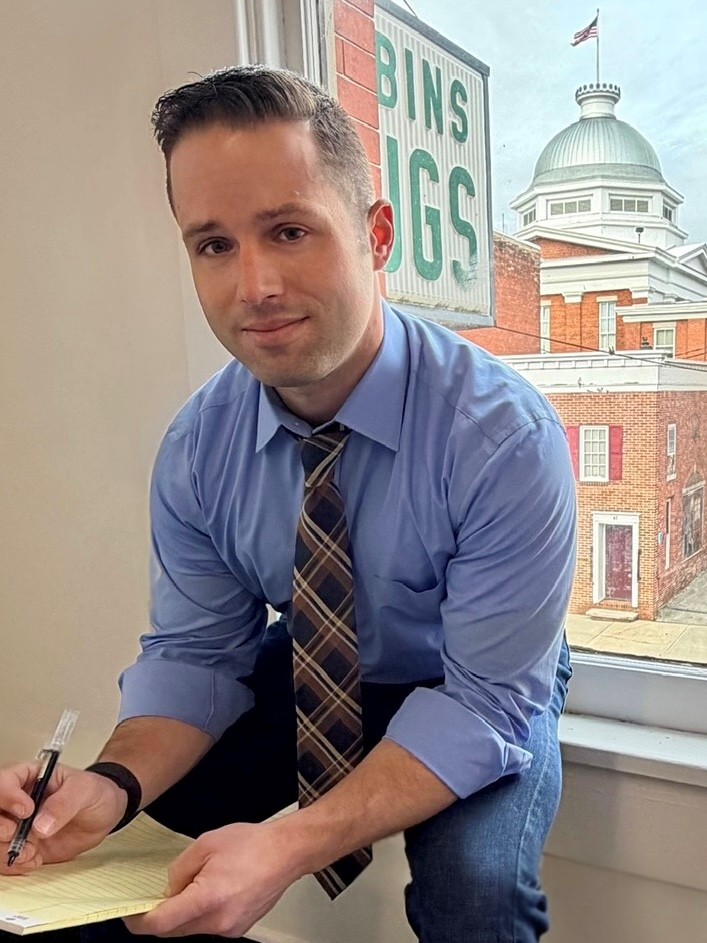
George Dobbins is a Republican candidate for the New York State Assembly in the 130th District and a lifelong resident of Lyons, New York, where his family has proudly owned and operated Dobbins Drugs, Inc. since 1942. Raised in a close-knit community shaped by hard work, faith, and neighborly responsibility, Dobbins carries those values into both his professional and public life. After studying law at Georgetown University and spending time in Washington, D.C., he and his wife made the deliberate decision to return home to Lyons to raise their family in the place that shaped them.
Before law school, Dobbins managed Brian Manktelow’s 2016 State Senate campaign, an experience that strengthened his understanding of state government and deepened his commitment to conservative principles. He is now running to succeed Manktelow in the Assembly, backed by the Wayne County Republican Committee, the Wayne County Conservative Committee, and Manktelow himself. For Dobbins, the campaign is not about ambition, but about service and giving back to the community that gave him so much.
A practicing attorney who commutes daily from Lyons to Rochester, Dobbins focuses on commercial real estate and business law, working alongside developers, investors, and job creators across Upstate New York and the country. He brings that same practical, solutions-oriented mindset to public service. His campaign is centered on the issues that matter most to hardworking families: good jobs, strong schools, and public safety. Grounded in the principles of life, liberty, free enterprise, a… Read More