

 iHeartRadio
 Apple Podcasts
 Spotify
 TuneIn
 Podchaser
 Castro
 Amazon Music
 PlayerFM
 RSS Feed
 Narrative Warfare: the Fight for the Real Truth

Narrative warfare is not merely a contest over headlines; it is the slow replacement of memory, judgment and common purpose with fear, tribal anger and managed perception.
Peter Vazquez confronts a nation where trust in government and media has collapsed, children struggle to read, families are divided by political labels, addiction still buries nearly 70,000 Americans a year, and local failures are renamed progress.
With TrineDay publisher Kris Millegan, the central challenge is not paranoia but discernment: read beyond the feed, question power without abandoning truth, and rebuild the habits that keep free people free.
There is a moment in every declining culture when the lie no longer needs to be convincing. Narrative warfare.
It only needs to be repeated often enough, shouted loudly enough, and delivered through enough screens that exhausted people stop asking whether it is true.
That is where the fight begins.
Not in Washington alone. Not inside an intelligence agency, a newsroom, a classroom, or a political campaign. It begins at the kitchen table when a child says there is “my truth,” “your truth,” and somewhere beyond both of them, “the real truth.” It begins when a father pauses because he realizes the phrase is not harmless. It is the language of a generation being trained to treat reality as negotiable.
America is not merely suffering from disagreement. Free people have always disagreed. The deeper danger is that we are losing the common ground on which disagreement can be resolved: evidence, memory, moral responsibility, and the courage to admit when something is false.
That is narrative warfare. The battlefield is not always dramatic.
Sometimes it looks like a feed that keeps serving the same anger until the algorithm feels more familiar than a neighbor.
Sometimes it looks like politicians reducing human beings to categories and then using those categories to keep families suspicious of one another.
Sometimes it looks like culture being separated from country, as though Puerto Rican identity must compete with American identity instead of enriching it.
Sometimes it looks like children taught what to repeat before they are taught how to reason.
The damage is measurable. Only 17 percent of Americans now say they trust the federal government to do what is right most or nearly all of the time. Trust in mass media has fallen to 28 percent, a record low.
These are not merely polling numbers. They are signs that the institutions responsible for informing and governing the people have exhausted their credibility.
But distrust alone does not make a citizen wise. Cynicism can be manipulated as easily as obedience. A population that believes nothing is not free; it is defenseless. When every claim is dismissed as propaganda and every rumor is embraced as hidden truth, manipulation has simply changed uniforms.
That is why discernment matters more than outrage.
TrineDay publisher Kris Millegan entered this conversation carrying the weight of an intelligence-shaped childhood, decades of reading, and a conviction that suppressed ideas must be tested rather than automatically buried. His most useful warning was not that every forbidden claim is true. It was that no institution should possess the power to decide what an entire people are permitted to examine.
The answer to bad information is not a smaller marketplace of ideas. It is a more disciplined citizenry.
“We need honest books.” We also need more than one book.
That point lands hard in a nation where reading itself is weakening. In 2024, only 31 percent of American fourth graders performed at or above the NAEP Proficient level in reading. The Rochester City School District’s four-year graduation rate stood at 60 percent in the latest state profile. A society that cannot teach its children to read deeply will eventually be ruled by whoever can make the shortest, angriest, most emotionally satisfying video.
This is not an abstract education debate. A child who cannot compare sources cannot expose a lie. A young adult who has never wrestled with a difficult book is easier to herd through a slogan. A citizen who cannot distinguish a documented fact from a viral assertion becomes raw material for every political faction, corporation, foreign adversary, and domestic opportunist seeking power.
The same manipulation thrives wherever pain is abundant. Addiction becomes a market. Poverty becomes a constituency. Race becomes a weapon. Fear becomes a subscription model.
Even after a historic decline, nearly 70,000 Americans died from drug overdoses in 2025, including more than 38,000 deaths involving synthetic opioids such as fentanyl. Those numbers represent progress from the previous year, but they also represent tens of thousands of families still receiving the worst telephone call of their lives.
A government program cannot love a child. An algorithm cannot raise one. A political movement cannot replace a father, a mother, a church, a teacher, a neighbor, or a book placed in a young person’s hands at the right moment.
When government trains people to believe survival depends upon permanent dependence, it does not rescue them. It narrows their imagination until the system that failed them appears to be their only possible savior.
Then the failures move from theory to the street.
Tents replace shelter. Repeat offenders bring gunfire back to the block. Heat becomes a luxury. Laws are applied selectively. Elections become another battlefield where trust is demanded but transparency is treated as an inconvenience.
Rochester’s City Council president released a 390-page homelessness report warning that encampments are unsafe, unregulated, and harmful both to homeless residents and surrounding neighborhoods. The report calls for low-barrier shelter, housing-first solutions, youth supports, emergency action, and an end to bureaucratic silos.
The point is not that every institution is evil or every official corrupt. That kind of thinking is its own trap. The point is that institutions become dangerous when they demand faith while resisting accountability.
Public service without transparency becomes performance. Compassion without competence becomes cruelty. Election integrity without public confidence becomes a slogan. Freedom without informed participation becomes a memory.
This is the Vanbōōlzalness Crisis in its clearest form: the relentless substitution of appearance for reality until failure is renamed progress and confusion is marketed as enlightenment.
The answer is not panic. It is formation.
Read beyond the algorithm. Verify before repeating. Refuse the cheap pleasure of hating strangers. Teach children that truth exists outside their feelings and outside the government’s press release. Defend the First Amendment without pretending every published claim is equally credible. Respect people enough to argue with their ideas instead of destroying their humanity.
Watch local officials after the cameras leave. Follow the money. Follow the outcomes. Vote in numbers too large to ignore. Show up before the crisis, not only after it.
Righteousness exalts a nation, but righteousness is not a mood. It is a standard. It requires leaders who tell the truth when the truth costs them, citizens who remain teachable when pride tells them they already know enough, and families willing to rebuild the habits that propaganda cannot easily penetrate.
The struggle is not simply over which narrative wins. It is over whether Americans will remain capable of recognizing reality at all.
Keep the conversation going: More episodes · Watch videos · Read commentary · Send a voice message. Live weekdays at noon Eastern on WYSL and WLEA.
CLEANED TRANSCRIPT
OPENING SPONSOR MESSAGE
ANNOUNCER:
This podcast is brought to you by Open Door Mission, restoring hope and changing lives.
OpenDoorMission.com.
SHOW OPEN
ANNOUNCER:
Mira la izquierda. Mira la derecha. ¿Qué ves? ¿Dónde estás?
In a world that seems to change daily, what will you do next?
Welcome to The Next Steps Show with Peter Vazquez, a starting point for discussion y un poco de dirección.
PETER VAZQUEZ:
Yep, un poco de dirección.
Como digo when we start: Mira. Look to the left. Look to the right.
Mira la izquierda. Mira la derecha. ¿Qué ves?
What do you see, ladies and gentlemen?
This is one of those times in history when we really need to make sure that what we are paying attention to is not merely the obvious. We also need to look at what is behind the obvious.
That is a fact, because we know, por seguro, that there are several things happening.
Some of us call it spiritual warfare. Here on this planet Earth, where we see the physical, we can also call it narrative warfare.
Welcome to The Next Steps Show. Soy yo, Peter Vazquez, always honored to spend my lunchtime with you.
I say “narrative warfare,” but what does that mean?
Let us talk about it.
Secrecy is the obvious part. Propaganda and the attention economy meet, bend public reality, and eventually make truth feel optional.
So many people ask, “What is the truth?”
One of my children once said to me, “Dad, there is my truth, there is your truth, and then there is the real truth.”
I did not respond immediately because I had to think about it. I am still thinking about it.
That is an interesting statement. But if that is true, what is the truth for real?
To have this discussion, we must understand something: If we do not learn discernment, we do not get to remain free, amigos.
Joining me is Señor Kris Millegan. You have heard him here before. Check out the previous conversation from November 17.
He is the publisher of TrineDay.
Sir, thank you for your time. Bienvenido a The Next Steps Show.
INTERVIEW WITH KRIS MILLEGAN
KRIS MILLEGAN:
Thank you very much for having me, sir.
PETER VAZQUEZ:
The pleasure is mine.
I was looking through your biography, Kris, and I realized—and I am only bringing this up because you have already put it out there—that you have been around for quite some time.
You have watched a nation evolve, change, and sometimes change back.
Talk to us about who you are and what you have experienced during your seven decades on this earth.
KRIS MILLEGAN:
I am an intelligence brat. My father was a spook.
I did not know that while I was growing up, but eventually he took me aside with a professor and explained that he had signed a document saying he could not talk for ten years. His ten years had ended.
He opened the conversation by saying, “The Vietnam War is about drugs. There are secret societies behind it.”
At first, I thought he was talking about the Mafia.
Then he said communism was all a sham and that the same secret societies were behind it. He described it as one large game.
It took me about twenty years to begin understanding what he told me during that conversation.
We have been led down some strange paths in this country.
This secret-society system was able to get its hooks into the country during the Spanish-American War and has significantly affected our political system.
A lot of it has revolved around the drug trade.
When people operating in the shadows control the drug trade, it allows them to sell plants for more than gold. That gives them a large amount of money, which they then use to corrupt the system.
That is very sad.
PETER VAZQUEZ:
It is absolutely sad and disgusting.
Ladies and gentlemen, we have Kris Millegan, publisher of TrineDay.
The lines are open: 585-346-3000.
Toll-free: 866-552-1009.
Give us a call. I know you have questions.
Kris, when I had you on November 17, we talked a great deal about the assassination of President John F. Kennedy.
I believe the JFK assassination is a reference point, but it is certainly not the destination of the work you do.
Your broader claim seems to be that the main action is psychological warfare against the American people.
Only about 17 percent of Americans say they trust the federal government.
If trust is that low, what is the honest solution? Is it more messaging? More transparency?
Nothing seems to be working.
KRIS MILLEGAN:
Honesty would be a very nice place to start.
Going back to the JFK assassination, the polling showed that after the Warren Commission report came out, the trust the American people had in their government began declining.
Honesty would be very nice to hear from our government.
PETER VAZQUEZ:
I fear that, especially with all the confusion that has been spread for decades—and perhaps more aggressively in recent years—many people have lost the ability to identify what honest truth is.
That leads to statements such as the one I mentioned earlier from my son: “There is my truth, your truth, and the real truth.”
But if he has a truth and I have a truth, where does the real truth come from?
Government, apparently?
KRIS MILLEGAN:
One thing I have found in my studies is that humanity has what I call a fail-safe device so that we do not simply run off a cliff and disappear.
The first fail-safe device is known as a dialectic.
I can say things I know are true about drug-running secret societies and intelligence agencies. Then someone I know is a spook can say something slightly more outrageous.
By controlling the extremes, you control the middle.
They give honest things to the left to carry. They give honest things to the right to carry. Then those ideas become debased because the two sides are made to fight each other.
The psychological warfare that has been inflicted upon the American people is very insidious.
PETER VAZQUEZ:
You are using the word “spook.”
For clarification, would you define that for our listeners?
KRIS MILLEGAN:
A spook is an intelligence agent—someone who works for an intelligence agency.
PETER VAZQUEZ:
One of the letter agencies. Someone who must operate covertly or behind the scenes.
The name fits.
Thank you for clarifying that. As we were talking, I imagined someone hearing that word and wondering what we meant.
It can be an honorable profession. Would you agree?
KRIS MILLEGAN:
Absolutely.
The people involved can be used and abused.
I talk about different levels of power.
At one level, there are secret societies. The next solid level consists of sovereign countries.
Between the secret societies and sovereign countries, you have intelligence agencies, criminal gangs, religious organizations, and fraternal organizations.
They can use their members to reach into sovereign countries and create havoc.
When our Founding Fathers created this country, they took an enormous step.
There were people working against the Constitution before the ink was even dry, because government of, by, and for the people is something that scares the powers that be.
PETER VAZQUEZ:
Kris, I want to bring you into the present and get your opinion on several things.
I believe psychological warfare is being used in ways that are beginning to kill Americans.
People are led to believe that they cannot survive without government. Before long, someone is trapped in a cycle of poverty, addiction, or a general belief that the world owes them something.
I believe that is connected to the words politicians use. Their language is crafted.
Let us also talk about the Super Bowl.
You have probably seen most of them if you watch football. Would I be correct in making that assumption?
KRIS MILLEGAN:
I am more of a college football fan than an NFL fan, but I have seen a few Super Bowls.
PETER VAZQUEZ:
Then you understand what I mean.
I am 53 years old, and I am not bringing up age merely to make a point about age. It is important because our nation has shifted in a way that does not reflect upward mobility.
We went from being a nation attempting to heal from slavery to being a nation where people are once again being told that white people are inherently horrible or racist.
I believe that is part of the psychological warfare.
When we look at Bad Bunny, the first Spanish-language Latino artist to headline the Super Bowl halftime show, he said he was highlighting Puerto Rican culture.
I am Puerto Rican, so this matters to me.
What I saw, aside from several other symbols, was someone claiming American culture while also separating Puerto Rican culture from American culture.
Puerto Ricans are American citizens.
From your perspective, is Puerto Rican culture not also American culture?
I will have to get your answer when we return from the break.
Ladies and gentlemen, Kris Millegan, publisher of TrineDay.
Do not change that dial. As a matter of fact, pick up the phone and give us a call.
You are listening to WYSL and WLEA, the Voice of Liberty, with Peter Vazquez and The Next Steps Show.
COMMERCIAL BREAK
[Music]
PETER VAZQUEZ — KEUKA HOUSING COUNCIL MESSAGE:
Picture this: a mother of three finally turning the key to her first real home. A struggling neighbor no longer sleeping in a car. A child with a warm bed and a full night’s sleep.
That is the impact of your support at Keuka Housing Council.
We are not asking for charity. We are building change.
Whether you can give $5 or $5,000, every gift drives real results.
Go to KeukaHousingCouncil.org or call me, Peter Vazquez, at 315-536-8707.
Together, we are taking a step toward independence, one family at a time.
ANNOUNCER — ROCHESTER AUTO SHOW:
The Rochester Auto Show, Friday, February 27 through Sunday, March 1 at the Convention Center.
Discount tickets are available at Tops Markets.
For details, visit TheRochesterAutoShow.com.
Driving tomorrow. The future starts here.
ANNOUNCER — YOUTH FOR CHRIST ROCHESTER:
The youth of our city are facing a new crisis.
Criminal-justice reform has created the consequences of no consequences and generated a new generation of 12- to 17-year-olds committing serious crimes.
Never before have we had this level of youthful offenders, but 90 percent of these young people are trying to do the right thing and need a safe sanctuary to retreat to.
That is Rochester Youth for Christ.
You can be part of the solution by giving generously and regularly at YFCRochester.org/donate.
STATION ID:
Peter Vazquez and The Next Steps Show on the Voice of Liberty.
INTERVIEW CONTINUES
PETER VAZQUEZ:
Ladies and gentlemen, welcome back to The Next Steps Show.
I hope you are taking a moment to let some of that música vibrate through you and allow the stress to begin melting away.
It is Wednesday. You have only a couple more days before you can sit back and say, “Mi familia time,” and shut everything else off.
A shout-out to our sponsor, Youth for Christ Rochester.
YFCRochester.org.
Ladies and gentlemen, the lines are open: 585-346-3000.
Llámanos gratis at 866-552-1009.
I have the honor of speaking today with Señor Kris Millegan, publisher of TrineDay.
Sir, I truly appreciate your time.
KRIS MILLEGAN:
Thank you, sir. I appreciate speaking to your audience.
PETER VAZQUEZ:
Before the break, I asked about the most recent Super Bowl, specifically the halftime performance by Bad Bunny.
There was also an alternative all-American show.
There is a significant cultural divide in society. I have had callers and guests say the controversy may have been intentional for ratings or attention.
My concern is this: I am Puerto Rican. I was born and raised here in Rochester.
My father always told me to fly the American flag above the Puerto Rican flag because that is the right thing to do. We are Americans, and being Puerto Rican is our culture.
I have always believed that Puerto Rican culture is part of American culture.
Is that a fact?
KRIS MILLEGAN:
It is interesting.
When you look at the Constitution, there were people who strongly believed all people were equal. But there were also people who believed they could own other human beings.
They had to reach a compromise.
We are still trying to create a more perfect union.
PETER VAZQUEZ:
During the break, you mentioned that you grew up during a grim period in this nation—the Jim Crow era.
One of my biggest concerns, especially because of psychological warfare, is that the division being created today is beginning to resemble past divisions.
I was not alive during Jim Crow.
From your perspective, are you seeing similarities or signs that we may be heading backward?
KRIS MILLEGAN:
What I see is a continuing effort to make us fight one another.
Our differences are far smaller than our commonalities.
Yes, I grew up in the Jim Crow South, and it was ugly.
I was originally from the West Coast, but my father worked for the government.
I was a little boy when I saw separate facilities.
You would go to a gas station and see one door for ladies, one for men, and another marked “colored.”
One of the things that helped my father survive his intelligence career was that he was also a lay preacher.
He had been raised Baptist and became Methodist through marriage.
Almost every month, we would visit a different church. My father would deliver his sermon, and afterward we would eat chicken dinner with people from the congregation.
He was once offered an enormous bribe to stay involved and turn a blind eye to narcotics transportation, but he refused.
I went to church every Sunday. We were taught that all people are God’s children and that we need to love our brothers and sisters.
We need to get beyond politicians trying to divide us and begin acting like Americans.
God, country, and family.
It seems straightforward.
PETER VAZQUEZ:
At least I thought so.
Let us return to your experiences, your research, and the things that led you to become a publisher and start TrineDay.
I want to dedicate the next segment to what it means to be a publisher and to the work you do through TrineDay.
First, can you identify an official story you believed during your life that later fell apart?
KRIS MILLEGAN:
One of the first was the official story of the Vietnam War.
During the conversation with my father and the Vanderbilt professor, they first told me about my father’s intelligence career.
He began when he was 18 as an exchange student in China. He eventually became a branch chief and headed East Asia analysis within the CIA.
They began telling me that they were playing out a “lose scenario” in Vietnam.
That did not make sense to me.
One of the things they were attempting to accomplish was to send young men and women from the United States, Australia, Canada, Korea, and several other countries into Vietnam.
Many of those young people became addicted to the heroin being offered by people throughout the region.
Part of the Vietnam War, in my view, involved creating addicted populations in countries around the world.
Officially, people say there may be one million to 1.2 million people addicted to heroin in the United States. I believe the number may be higher.
Even at one million people, that requires an enormous amount of narcotics to be broken down and distributed every day.
Russia has had a substantial percentage of its population affected by opium addiction. China has had an enormous number of daily opium users. Iran has also had a high percentage of its population affected.
The prohibition of drugs was not primarily about public health or community safety.
It was about keeping certain plants illegal, allowing those plants to be sold for more than gold, and generating large amounts of money that could be used to corrupt institutions.
That was one of the biggest things I found in my research.
Then there is the darker side of drugs: MKUltra, mind control, and psychological warfare.
Another conclusion I reached is that some secret societies have existed for a very long time. Some were once in opposition to each other.
Eventually, they recognized that their main opposition was the people.
They began working together to impose an authoritarian system that controls people rather than preserving government of, by, and for the people.
PETER VAZQUEZ:
Ladies and gentlemen, this is Kris Millegan, publisher of TrineDay.
The website is TrineDay.com.
What practical safeguards has your research identified that ordinary people can implement to protect integrity and civil liberty, especially regarding the information, books, knowledge, and skills we consume?
KRIS MILLEGAN:
Books are one of the most important safeguards.
One of the first things the Order of Skull and Bones did was influence our education system.
The American education system had grown from factory owners establishing schools for workers and from parents teaching children locally.
Then the Prussian education system was brought into the United States.
The Prussians were deeply upset after being defeated by Napoleon. They began taking control of children’s education and, instead of teaching them how to think, began teaching them what to think.
That education model was brought here.
In my view, people have been deliberately dumbed down for well over one hundred years.
Look at eighth-grade examinations from the late 1800s. Many college graduates today would struggle to pass them.
The other safeguard is reading books.
I have always been a reader. Books are how you learn about things you did not personally experience but that someone else did.
I strongly recommend reading books and investigating issues independently.
Do not simply accept what you are told.
PETER VAZQUEZ:
I want to quote something you said the last time you were here.
You said, “We need honest books. We need to read more than one book.”
I find that to be one of the most inspiring statements, especially today.
Look at education here in Rochester.
The Rochester City School District remains near the bottom of New York State in academic performance.
According to the statistics, Black and Hispanic students are graduating with extremely low levels of reading proficiency and college readiness.
KRIS MILLEGAN:
They do not have much incentive to learn.
They are shown a world in which billionaires get what they want, while people who are poor, Black, or brown are told they are automatically in trouble.
PETER VAZQUEZ:
Ladies and gentlemen, Kris Millegan.
Kris, we are going to take a break.
When we return, I look forward to wrapping up our discussion by focusing on the organization you lead as publisher: TrineDay.
The website is TrineDay.com.
While we are on break, visit the website and read its stated mission.
TrineDay was created in response to the corporate press refusing to publish books with a particular defect.
When we return, I will tell you what that defect is.
You are listening to WYSL and WLEA, the Voice of Liberty, with Peter Vazquez and The Next Steps Show.
Do not touch that dial.
Give us a call.
COMMERCIAL BREAK
[Music]
STATION ID:
Peter Vazquez and The Next Steps Show on the Voice of Liberty.
TRINEDAY AND THE BATTLE OVER INFORMATION
PETER VAZQUEZ:
Ladies and gentlemen, welcome back to The Next Steps Show.
Soy Peter Vazquez.
My guest is Kris Millegan, publisher of TrineDay.
The website is TrineDay.com.
You know what a publisher does. A publisher puts books into the world so people can learn.
TrineDay is more unusual.
Before the break, I mentioned part of its mission statement. TrineDay was created in response to the corporate press refusing books with a particular defect.
Kris, would you tell the listeners what that defect is?
KRIS MILLEGAN:
The books tell the truth.
It was interesting how TrineDay began.
I was running an email list with several people on it. One of them was Daniel Hopsicker.
He repeatedly complained that his book had been with an agent in New York for two years and nobody would publish it.
After hearing that enough times, I finally said, “I have a computer on my desk. They tell me I can make a book. Come on out.”
We published Barry and the Boys, about Barry Seal, drug running, intelligence agencies, and organized crime.
Then a friend of mine, Professor Antony Sutton, had a book that was going out of print.
I said, “That cannot happen.”
I borrowed $5,000 and started a publishing company without fully understanding what I was getting into.
I soon discovered that Daniel’s book was not the only manuscript circling New York because publishers did not want to touch it.
It was not necessarily because the books were untrue. It was because of their political implications.
I began publishing these books.
People began saying, “This hippie in Oregon is publishing books.”
I had read the Constitution. It says we have freedom of the press.
Another thing I tell people is that just because someone has a different point of view does not mean that person is completely wrong or evil.
One reason humanity survived is that when a tribe was standing in a dark forest, not everyone was looking in the same direction. Someone had to see the tiger coming from somewhere else.
Different points of view give us opportunities to learn.
One person cannot experience everything.
PETER VAZQUEZ:
Absolutely.
We learn from other people.
KRIS MILLEGAN:
I become sad when I see people shouting at each other or refusing even to speak with someone on Facebook.
We need to relearn how to have a discussion.
Earlier, you talked about narratives.
It is about narrative control.
Which narrative are you going to believe?
I believe media is part of a larger structure.
I describe three levels, each with three parts.
The top level is mining, metals, and money.
The next level is drugs, guns, and oil.
Then there is media, because those in power must control the narrative.
Music and movies shape culture.
The final part is what some people call magic: the ability to deceive or hoodwink the population.
There is also a tendency to create mass-trauma rituals to keep people in line.
In my view, the JFK assassination and September 11 were mass-trauma events.
Some secret societies associate death with power.
We need to understand the psychological warfare and the violations being inflicted upon the public.
PETER VAZQUEZ:
I call it discernment.
On this show, I coined the phrase the Vanbōōlzalness Crisis.
Bamboozledness means you bought a used car after someone fed you a line and you fell for it.
The Vanbōōlzalness Crisis is the ongoing, constant process of being fed that same line and repeatedly buying it.
It happens through action. It happens through messaging.
Who decides the difference between information that is suppressed and information that is simply untrue?
KRIS MILLEGAN:
That is a very interesting question.
I did not want to become a publisher. Publishing is a difficult business and requires a tremendous amount of work.
But someone had to give these writers the ability to put their books into the public conversation.
If you can control the narrative, you can largely control the people.
That is one of the reasons we have a First Amendment protecting freedom of the press.
It prevents a small number of entities from controlling the entire narrative and allows people to read different viewpoints.
PETER VAZQUEZ:
Absolutely.
I will share a brief story without identifying details because it is sensitive.
I know of a family in which a son has chosen to describe his parents as white supremacists merely because the parents disagree with certain political positions and attempt to present facts.
The individual making the accusation cannot present supporting evidence for what he has been led to believe.
That is psychological warfare. It is narrative warfare.
It is already beginning to take lives.
Every time I think about it, it makes me want to cry.
KRIS MILLEGAN:
People are distracted by movies, video games, and entertainment.
I hope people understand that our time on this earth is limited.
You may have 70 or 80 years if you are fortunate.
There are reasons to do good for your fellow human beings, your children, and your parents.
I recommend reading books, searching for information, and moving beyond the algorithm that feeds you the same material repeatedly.
PETER VAZQUEZ:
Definitely do not scroll through social media believing it is the greatest source of news ever created.
Ladies and gentlemen, we have more than 70 years of experience represented here.
Kris Millegan, publisher of TrineDay.
TrineDay.com.
Kris, I was looking through the authors you have published. I have already interviewed several of them, and I have others scheduled.
Can you speak about some of the books?
KRIS MILLEGAN:
One of the biggest books we have published recently is One Nation Under Blackmail.
It examines Jeffrey Epstein, blackmail operations, and honey traps.
It was released several years ago and argues that our system has not always operated organically. Powerful people have used every tool available, including blackmail, to control narratives.
We also have Deep Cover, Shallow Graves, written by an 88-year-old pilot who was involved in many questionable operations.
Another book is Two World Wars and Hitler: Who Was Responsible?
It is an important book written by two Scottish researchers challenging traditional British historical accounts.
I have read many books about money, war, and political power, but this one brings together a significant amount of material.
PETER VAZQUEZ:
We are reaching the end of the interview, and I could probably speak with you for hours.
I want to highlight another book because I believe I will soon have the author on the program.
It is Jeff Brown’s In Trudeau’s Kitchen: My Unexpected Journey with Power, Politics, and the Global Elite.
Ladies and gentlemen, visit TrineDay.com.
The author was hired to work for the Trudeaus.
Kris, I am down to the final minute.
Would you share about 30 seconds of wisdom with our listeners?
KRIS MILLEGAN:
Lord have mercy.
Respect your brothers and sisters.
Look toward the future.
Move toward a better future for our children, because that is what we must leave behind for them.
We must think about the world in which they will live.
Onward.
PETER VAZQUEZ:
Adelante, como decimos en español.
Ladies and gentlemen, more than 70 years of wisdom during the last 40 minutes.
The honorable Kris Millegan, publisher of TrineDay.
TrineDay.com.
Sir, may God bless you and the work you continue to do.
KRIS MILLEGAN:
Thank you.
PETER VAZQUEZ:
Ladies and gentlemen, 585-346-3000.
Toll-free: 866-552-1009.
I have one more segment.
No te vayas.
Soy yo, Peter Vazquez, on WYSL and WLEA.
COMMERCIAL BREAK
ANNOUNCER — KEUKA HOUSING COUNCIL:
At Keuka Housing Council, we offer real help when it matters most.
Whether you are facing foreclosure, living in an unsafe mobile home, seeking rental counseling, or needing critical repairs, we guide families toward stability and homeownership.
Visit KeukaHousingCouncil.org and take your next step toward independence.
ANNOUNCER — YOUTH FOR CHRIST PICKLEPALOOZA:
Cornhole at a pickleball tournament?
Yes.
Register for Youth for Christ’s Picklepalooza 2026, Saturday, April 25, from 3:00 to 7:00 p.m. at Dinkers in East Rochester.
Beginners and players of all skill levels are welcome.
Not a pickleball player? Join the cornhole tournament.
Enjoy pizza and treats from Perri’s.
Pickleball registration is $95 per player or $125 per team.
Cornhole registration is $40 per player or $75 per team.
Saturday, April 25, from 3:00 to 7:00 p.m. at Dinkers in East Rochester.
Register today at YFCRochester.org/pickle.
FINAL SEGMENT
PETER VAZQUEZ:
Youth for Christ does incredible work for young people.
Check out the website.
Y si puede, mira, what about that credit card?
Leave them a dollar or two, because they do not receive taxpayer dollars. They do their work through love, generosity, and prayer.
You cannot beat that.
Ladies and gentlemen, what did you think?
More than 70 years of experience.
A man who saw intelligence work from the inside. A man who has been around long enough to recognize decline.
Eso es la verdad.
That is the truth.
That is the real truth we try to discuss.
Freedom is not free, but freedom also requires leadership.
That is the point.
When we look at something on television and fail to look deeper, we get bamboozled—como digo.
Look at the race for governor.
Look at Elise Stefanik dropping out and stepping away from politics.
Think about the Republicans in the State Assembly who are leaving office at a time when Republicans say they need stronger representation.
Think about Lieutenant Governor Antonio Delgado ending his campaign.
Talk about psychological warfare.
You may ask, “How does that connect?”
This man challenged his boss and placed his political career on the line, only to later withdraw and say, “I have no viable path forward.”
Think about those words.
When Elise Stefanik stepped away, she said she wanted to focus on her family.
Only two months earlier, the woman appeared to be politically on fire.
Then Delgado says there is “no viable path forward.”
That is not a policy plan. It is an admission of political gravity.
We also return to the idea of books with a “defect”—concepts and discussions that challenge the mainstream narrative.
Are they false, or are they simply someone else’s truth?
I told you that one of my children said, “There is my truth, there is your truth, and then there is the real truth.”
My son, you may be a little confused.
First of all, I am your father, so it is always my truth.
I am joking. He is an adult. He has options.
I am joking about that too.
Children have many options today. That may be part of why so many are confused. There are so many options that they do not know what to choose.
How does psychological warfare connect to the loss of trust we have seen since the JFK assassination?
We can look locally.
We know political leadership is compromised.
Keep an eye on Lieutenant Governor Antonio Delgado and see where he ends up.
That is part of how you resist psychological warfare: You pay attention.
Look at Rochester City Council.
Earlier this year, councilmembers considered giving themselves a substantial raise while ordinary people continued struggling.
After public backlash, they moved to reject or reverse the increases.
CALLER: LORENA
PETER VAZQUEZ:
Lorena, thank you for calling The Next Steps Show.
LORENA:
Hi.
I have three ideas about why both Elise Stefanik and Lieutenant Governor Delgado dropped out.
One possibility is that they or their families were threatened. That may sound extreme, but perhaps candidates need greater protection.
Another possibility is that the Republican Party does not do enough to help candidates in New York State.
The third issue is that many people believe their votes will not count.
People do not know how many votes Lee Zeldin actually received. He may have won.
Your show helps, but people need to be brave and go out and vote.
PETER VAZQUEZ:
Thank you, Lorena. I appreciate the call.
She is absolutely right about one thing: We should never have to wonder what our elected officials are doing or why they are doing it.
Gary, thank you for calling.
CALLER: GARY
GARY:
Peter, we need to become involved and begin fixing the system from the bottom up.
Your guest was scratching the surface of how far back secret-society control may go.
To be honest, I believe it is more hideous and demonic than most people realize.
People should look at the symbolism used during the opening ceremony of the Olympics, including what appeared to be an inverted pentagram.
That is associated with satanic or Luciferian symbolism.
These forces have infiltrated many parts of society.
I believe President Trump is fighting a global war against this, largely through economic means.
People should stop believing everything they hear on local news and begin doing their own research.
Follow Promethean Updates or Promethean Action.
These are sources created by women who have dedicated their lives to exposing these issues.
There are also former CIA officials who say they recognized corruption and left.
Mike Jacobs is one example.
The best thing people can do is search for information about secret societies and follow the available evidence, if they have the stomach for it.
PETER VAZQUEZ:
I want to interrupt because I want to make sure we address another topic.
Since I have you on the phone, I want your opinion.
I believe elections play a significant role in the control exerted by powerful organizations.
There is proposed legislation known as the SAVE Act.
Local election commissioners have raised concerns about aspects of federal election policy.
Democratic Commissioner Jackie Ortiz has said certain proposals could be a disservice to voters. Republican Commissioner Peter Elder has noted that one-size-fits-all instructions do not automatically work on the ground.
However, we also need something capable of pushing back against unseen influence and the election concerns people continue raising.
What do you believe must happen?
GARY:
I believe powerful people are trying to preserve a system they created to take taxpayer money and fund programs and families around the world.
To defeat that, people must register and vote in massive numbers.
It is much harder to manipulate an election with 75 or 80 percent turnout.
The system is not being properly repaired.
You know I have worked with thousands of people across the country attempting to bring these concerns into the open.
We have seen resistance at every level, from federal agencies down to local boards of elections.
Officials tell us we do not know what we are talking about.
Everybody who listens to this station knows what happened with New York Citizens Audit.
We attempted to expose what we believed was the truth.
More information is still emerging.
In the meantime, powerful people will continue fighting against efforts to repair the system and return the country to the principle that everybody is equal and that the law should apply equally to everyone.
Read the Constitution.
Read the Bill of Rights.
Read the Declaration of Independence.
Just read more.
PETER VAZQUEZ:
Gary, I appreciate your time, sir.
GARY:
I appreciate yours, Peter.
Keep up the good work.
PETER VAZQUEZ:
I appreciate you.
Ladies and gentlemen, listen to Proverbs 14:34:
“Righteousness exalts a nation, but sin is a reproach to any people.”
When leadership turns into musical chairs, the basics begin breaking.
It does not matter which side of the aisle you are on.
Tents replace shelter.
Repeat offenders bring gunfire back to the block.
Heat becomes a luxury.
Laws are applied selectively.
Elections are pulled toward control.
But we can fix it.
Be a leader.
Be a leader.
Be a leader.
God bless these United States of America.
Never allow a second to pass when you are not a voice for liberty.
I love you.
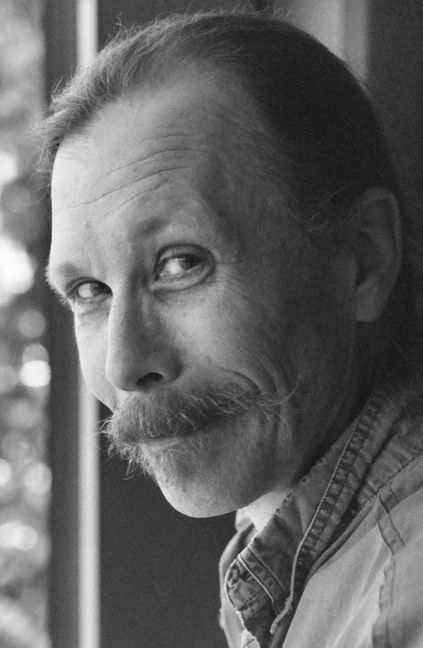
Publisher
Kris Millegan is the publisher at TrineDay, the country’s leading publisher of suppressed works. Millegan, 76, was born in Washington, D.C. and raised in Fairfax, Virginia, while his father was working for the Central Intelligence Agency. The last overt job of Millegan’s father was serving as Branch Chief, Head of the East Asia Analysis Office. Ten years after leaving the agency in 1959 and moving the family out to Oregon, Lloyd spoke to his son about his experiences in intelligence, especially about psychological warfare, narcotics trafficking, secret societies and the conflict in Vietnam.