

 iHeartRadio
 Apple Podcasts
 Spotify
 TuneIn
 Podchaser
 Castro
 Amazon Music
 PlayerFM
 RSS Feed
 Albany Failed. Monroe County Must Lead.

Monroe County Leadership is tested as Peter Elder steps into the center of a conversation about Albany’s late budget, rebate politics, rising costs, Rochester’s distressed future, schools, Republican discipline, and voter trust.
Peter Vazquez opens with Assemblywoman Andrea Bailey on the $268 billion-plus budget and its buried policy fights, while Assemblyman Josh Jensen adds force to the warning that New York has a spending problem.
But the heart of the show lands with Peter Elder, Monroe County GOP Chair and Republican BOE Commissioner, as the discussion turns to city strategy, candidates, election confidence, and whether local leadership can turn frustration into reform.
Monroe County Leadership. Albany passed a budget fifty-seven days late, and the people of New York were still expected to applaud as if lateness, bloat, and buried policy were signs of leadership.
But beneath the frustration, something important came through: there are still leaders willing to ask better questions, push harder, and remind New Yorkers that this state does not belong to Albany. It belongs to the families, workers, business owners, parents, veterans, seniors, students, and taxpayers who keep paying the bill.
Peter Vazquez opened the conversation with Assemblywoman Andrea Bailey of the 133rd Assembly District, who pulled back the curtain on a $268 billion-plus state budget that did not merely spend money, but hid policy inside the machinery of government. Ten budget bills. Overnight drops. Notes of necessity. Less than a day to digest language that will shape schools, energy costs, public safety, local governments, ratepayers, and families already stretched thin.
This was not budgeting as stewardship. It was budgeting as leverage.
Bailey cut straight to the heart of the so-called utility rebate. A one-time check of up to $200 may sound helpful to a family trying to survive New York’s cost of living, and no honest person should mock the family that needs it.
But the question is larger than the check. If Albany is sitting on billions in fees and taxes tied to energy policy, why not return relief directly to the actual ratepayers? Why send checks based on tax filings when businesses, renters, families, and bill-payers are not all touched equally?
Still, Bailey also pointed to glimmers of hope. The pushback on electric school bus mandates, the recognition that climate mandates have real consequences, and the continued fight from rural and upstate representatives prove that Albany is not beyond challenge. The system is heavy, yes. But heavy things can still be moved when enough people put their shoulders to the work.
Then Peter Elder, Monroe County Republican Party Chair and Republican Commissioner of the Monroe County Board of Elections, joined the discussion and brought the issue home. His message was clear: the old pattern of throwing money at problems has failed. Rebate checks do not lower utility costs. Spending more does not fix broken systems. But giving up is not an option either.
That became one of the strongest threads of the show: keep fighting.
A caller voiced what many New Yorkers feel, that the odds are long, the numbers are hard, and Albany often feels captured by a political machine that ignores common sense. Elder did not pretend the climb would be easy. He called it a long haul, a long vision, and reminded listeners that Republicans have won when they were not supposed to win.
The answer is not surrender. The answer is better candidates, stronger outreach, voter participation, and a willingness to go into communities Republicans have too often failed to reach.
Assemblyman Josh Jensen of the 134th Assembly District added the sharper warning from inside Albany: New York does not have a revenue problem. It has a spending problem. A $14 billion increase over last year is not discipline. It is a warning sign.
Yet Jensen also gave the conversation a needed charge of resolve. He spoke about seriousness of purpose, about talking to every voter, about explaining how decisions made in government directly affect public safety, affordability, schools, energy, and daily life.
That is where the hope lives: not in slogans, not in rage, not in waiting for someone else to fix it, but in serious people doing serious work.
Chris Brown, candidate for State Senate District 55, called in and brought the conversation into education, city schools, and the need for new ideas that do more than repeat the same failing formulas. Mark Johns, candidate for Assembly District 130, spoke about term limits, reform, and a record voters can examine. Callers raised concerns about energy projects, subsidies, rising electric bills, schools, public safety, and the feeling that ordinary New Yorkers are funding experiments they never asked for.
These were not interruptions. They were the pulse of the show. Then came Rochester.
Twenty million dollars in distressed-city aid may be heading to Rochester, but Peter Vazquez pressed the question that cannot be ducked: what is the Republican plan inside the city proper? Elder acknowledged the need for unity, leadership, and peace between Republican groups. He spoke about the Black Republican Club doing good work, the city committee working hard, and the need to build success instead of factionalism.
That matters because Rochester is not lost ground. It is contested ground. Elder noted that the city contains more than ten thousand Republican voters, making it one of the largest Republican municipalities in Monroe County. That is not nothing. That is a foundation. But foundations do not build houses by themselves. They need leadership, discipline, candidates, and presence.
The final turn brought the conversation to election trust. Elder stated confidence in Monroe County voting machines and election processes, saying the county tests repeatedly and welcomes observation. When pressed on voter-roll scrutiny and citizen investigators, he committed to meeting with concerned citizens alongside Commissioner Jackie Ortiz.
That commitment matters.
Because budgets decide who pays. Elections decide who writes the budget. Trust decides whether citizens still believe the system can be repaired.
This conversation was not only about one check, one party, one caller, or one budget. It was about whether New York still has enough citizens willing to lead, enough candidates willing to speak plainly, enough officials willing to answer questions, and enough voters willing to show up before the state they love becomes something they only talk about leaving.
The problems are real. So is the opportunity.
Be a leader. Ask the hard questions. Support the people willing to stand in the fight. Do not let Albany call failure compassion. Do not let frustration become surrender. And do not let a second go by where you are not a voice for liberty.
Keep the conversation going: More episodes · Watch videos · Read commentary · Send a voice message. Live weekdays at noon Eastern on WYSL and WLEA.
Albany’s Budget, Monroe County Leadership, Rochester, Schools, Energy, and Election Trust
Sponsor Opening
This podcast is brought to you by Open Door Mission, restoring hope and changing lives. Learn more at OpenDoorMission.com.
Show Opening
Mira la izquierda, mira la derecha, what do you see? In a world that seems to change daily, what will you do next?
Welcome to The Next Steps Show with Peter Vazquez, a starting point for discussion and a bit of direction.
Segment 1: Albany’s Late Budget and Assemblywoman Andrea Bailey
Peter Vazquez:
Budgets are supposed to be about money, not policy. That is according to Carl Heastie, the Assembly Speaker, the guy up in the Assembly who calls himself a leader.
But here we are. A $268 billion-plus budget just passed. It was fifty-seven days late, and it includes a $1 billion utility rebate program where people may receive up to $200.
We have a very busy guest joining us, the Honorable Assemblywoman Andrea Bailey from the 133rd Assembly District.
Assemblywoman, thank you.
Assemblywoman Andrea Bailey:
Thank you, Peter, for having me.
Peter Vazquez:
Absolutely. So we have a budget. Can you talk to us about it?
Assemblywoman Andrea Bailey:
Sure. What do you want to know?
Peter Vazquez:
Where do we even start, right?
Assemblywoman Andrea Bailey:
I know exactly where to start.
I believe the governor signed it. It was fifty-seven days late. We started with a couple of budget bills late last week and finished them up this week.
There are ten budget bills in total that make up the New York State budget. So when people hear that one bill passed or another bill passed, a lot of folks think, “Well, the budget is done.” I was home over the weekend and people said, “The budget is done, right?” I had to tell them, “No, that was only bill number three. We still had seven to go.”
There is a lot of policy buried in between those numbers.
Peter Vazquez:
And that is what this is all about, right, Andrea? This is the governor’s way of thinking. This is where she gets to shine and gain leverage.
We are now at more than a quarter of a trillion dollars?
Assemblywoman Andrea Bailey:
Yes, we are over that. You are talking about $268.1 billion or $268.2 billion.
When the governor came out with her budget earlier this year, I thought, “Holy cow, hang on.” That was already huge money.
But we passed that by $5.4 billion. We are looking at a budget that is $13.7 billion more than last year.
Peter Vazquez:
Peter Elder, Monroe County GOP Chair, is in the studio with us. He sends along his greetings.
Peter Elder:
Hello. How are you?
Assemblywoman Andrea Bailey:
Good. How are you?
Peter Elder:
Wonderful. Thank you for doing a great job for us in Albany.
Assemblywoman Andrea Bailey:
Thank you. It is my honor to represent the people of the 133rd Assembly District and to make sure rural New York is represented. Sometimes the headwinds make it feel like some people do not realize there is more to New York than the five boroughs.
Peter Vazquez:
We heard that at your district office in Avon, you are going to have a celebration where everybody in the district is invited to bring their utility rebate checks, and if we all contribute, maybe we can get a sheet pizza.
Assemblywoman Andrea Bailey:
I am not a fan of one-time rebates, to be honest with you.
That is $1 billion going out in rebate checks. There are a lot of flaws in how I personally believe this is being done.
If we truly want to help ratepayers, there are about $2.4 billion in fees and taxes sitting in energy-related coffers right now that could be given back to ratepayers.
If this were really about reimbursing ratepayers, then we would make sure the ratepayers are the ones getting reimbursed.
The way this is being sent out is typical of other rebates. It is based on tax filing. Not everyone who files taxes is paying an electric bill. Businesses, which have been hit some of the hardest, are not represented here.
For example, I have a grown son who was living with me in 2024. He is going to receive this utility rebate, but I paid the utility bill. I would gladly hand that money to him, but the methodology around it is flawed.
And when you look at when these checks are going to hit mailboxes, it is ironic.
Peter Vazquez:
Right before the election in the fall.
Assemblywoman Andrea Bailey:
Exactly.
Peter Vazquez:
So it is a very cynical bribe. They call it real relief, and many people buy into that.
Andrea, how much time did you actually have to read, analyze, and rebut this budget when it was handed to you?
Assemblywoman Andrea Bailey:
Unfortunately, the budget bills are pretty much dropped overnight.
I do have to say we have phenomenal staff. They go through the bills and break down the language by area of expertise, and that helps us when we go out to debate the bills or digest what is in them.
But you are lucky if you get twelve to less than twenty-four hours. Every bill comes with a message of necessity from the governor, so it goes right to the floor. It does not go through the process legislation normally should: committees, debate, or public hearings.
It is really Governor Hochul’s priorities and what she wants in there from a legislative standpoint. She has the ability to strong-arm what that looks like through the budget process.
Peter Vazquez:
There is a lot to cover with the spendathon, and we can go deeper on another show. But let us touch on a couple of lowlights.
Was there any relief in criminal justice reform?
Assemblywoman Andrea Bailey:
No. It was a sad day when we passed the portion that dealt with relationships we can have moving forward with federal partners. In my mind, much of that is going to make us less safe.
Peter Vazquez:
More of the same?
Assemblywoman Andrea Bailey:
Yes, more of the same.
Peter Elder:
It is more of the same. It is paranoia about law enforcement trying to take care of our communities and deport some of the worst people living among us.
Assemblywoman Andrea Bailey:
I would be remiss if I did not say there were some glimmers of hope. There were pieces that our conference has been advocating for.
We did see the five-year push on electric buses for schools, which is a win for our schools. But again, we are continuing to kick the can down the road. With the two-year extensions schools have, technically it is nine years, but the can keeps getting kicked down the road.
We need meaningful changes with the CLCPA. What was put into this budget bill was a step in the right direction in some of the regulations, but at the end of the day, we have done nothing to really address the affordability crisis created by the CLCPA, which was enacted back in 2019.
That is what we need to be talking about.
Peter Vazquez:
These people are like magicians sometimes.
One last question: on state gas-tax relief, was that discussed? Is that anywhere in the budget? Is that even a thing in Albany anymore?
Assemblywoman Andrea Bailey:
It was not in there anywhere.
I have heard some rumblings in the hallway here or there, but today is Friday. We come back next week, and we are slated to be there for four days.
I guarantee they are going to be four days of jam-packed bad policy coming down the pike. I am not sure if gas-tax relief will be taken up or looked at. The governor could do an executive order if she chose.
Peter Vazquez:
But she probably will not.
Andrea, I truly appreciate your time. I know you are very busy.
Before we go to break, do you want to share when listeners can hear your show here on WYSL?
Assemblywoman Andrea Bailey:
It is usually Saturday mornings, right?
Bob Savage:
Friday at 8 PM and Saturday at 11:30 AM.
Peter Vazquez:
There we go. Assemblywoman Andrea Bailey, 133rd Assembly District. Thank you, and may God bless you and the work you continue to do.
Ladies and gentlemen, do not go anywhere. Here in studio, the lines are open, and we are going to be talking with the Monroe County Republican Committee Chair and Republican Board of Elections Commissioner.
Call 585-346-3000.
Inside Albany is always available at WYSL1040.com on the podcast page.
Commercial Break
Commercial break.
Segment 2: Peter Elder, Monroe County GOP, and the Long Fight
Peter Vazquez:
Peter Vazquez, The Next Steps Show on the Voice of Liberty.
The phone lines are open: 585-346-3000 or toll free at 866-552-1009.
We have Peter Elder, Monroe County GOP Chair, in studio.
Before we go to the caller, check this out:
A government that breaks your ladder should not call itself generous when it hands you a shorter rope.
Keith, thank you for calling The Next Steps Show.
Caller Keith: Republican Leverage in New York
Keith:
This is for the Republican Committee. I am very conservative, and I hope we are all of one mindset.
With Democrats in control in Albany and throughout the state, where are we going with all this? There are sixty-two counties in the state. Hochul only won thirteen of them, but still beat her opponent.
It is not good for our side. Good Assembly people are trying, but they are completely outnumbered. Democrats will not accept any bill sponsored by a Republican. Realistically, where is this taking our state when our side has no leverage and apparently cannot change anything for the better?
Peter Elder:
That is a great question.
The first thing is: do not stop fighting.
The sentiment you expressed is something I have heard over and over again. There is a long haul ahead. There is a long vision here.
We know we have a registration disadvantage, especially in our urban areas, and we have to put up very good candidates to convey our message.
It is probably not going to happen in one or two cycles. It is going to be a slow progression of success.
The key is to not give up. If we give up, we give in.
Keep fighting. Participate. Turn out. Vote. You would be surprised what can happen. Republicans have won when we should not have.
Peter Vazquez:
Keith, I will give you the last word.
Keith:
At the state level, the Republican and Conservative parties are not doing anything. We are not getting support from the state level or from the Trump administration.
Peter Elder:
Imagine what would happen if we had a Republican governor.
Peter Vazquez:
Keith, thank you for the call.
Segment 3: Statewide Strategy and Elise Stefanik
Peter Vazquez:
Peter Elder, GOP Chair, is in the studio. If you would like to talk with him, call 585-346-3000.
What can you shed light on regarding Elise Stefanik? She seemed like the best hope for forward momentum.
Peter Elder:
I have read some great articles, and I have also spoken with people at the state level. There were a lot of things going on there.
What it really centered around was the House of Representatives and what would happen with her seat, and whether we could afford to give that seat up. There may also have been some health issues involved.
Peter Vazquez:
What do you mean by afford to give it up?
Peter Elder:
She is an incumbent. That seat had elected a Democrat before. She became extremely successful in the district and had serious support, but there was concern about what would happen to that seat.
Peter Vazquez:
There is also talk that she is on a short list for DNI to replace Tulsi Gabbard. What is that about?
Peter Elder:
The president has his own way of looking at things. He does not consult with me or anyone here. I would not want to second-guess him.
He has lists of people he considers for these positions.
Segment 4: Chris Brown Calls In on District 55, Schools, and Messaging
Peter Vazquez:
Chris Brown is waiting. Chris, are you on the line?
Chris Brown:
I am on the line. How are you?
Peter Vazquez:
Chris Brown for New York State Senate District 55. How are you?
Chris Brown:
Doing well.
I am calling to support Peter. He is not only the commissioner here in Monroe County, but also the Republican leader for the Webster Republican Committee, which I belong to in beautiful Webster, where life is worth living.
Earlier this year, he asked me if I would run for State Senate. After a close loss for town council last year, where I lost by a little over three hundred votes, there were some strategies I wanted to use last year that we did not employ.
One of them is getting media out that resonates more with the public by talking about specific issues instead of being general, which is what a lot of ads have done over the last few years.
Peter Vazquez:
Messaging. That is great to hear, Chris.
What is your vision for District 55?
Chris Brown:
District 55 includes Webster, East Irondequoit, West Irondequoit, Pittsford, Penfield, Perinton, the eastern part of Rochester, and East Rochester.
I want to help reopen the discussion around how we can improve proficiency scores in city schools.
I want to talk about specific ideas that borrow from existing programs like Urban-Suburban.
Past candidates have talked about vouchers, where people can choose whatever school they want. The teachers union has rejected that because it has consequences for inner-city schools, such as closures and teacher layoffs.
What I would like to do is open discussions with other school districts in District 55 and ask whether they can open fifty or one hundred spots through a lottery system for students from the inner city.
Those students would be bused into those schools, but their scores would remain with the original district.
Teachers would come with them in some kind of ratio that makes sense. For example, if twenty-five students go, a teacher comes as well. That way, the receiving districts get teachers who are being paid by the original district, and the students benefit from a better environment.
Hopefully, scores improve, and the district is rewarded by the state for that improvement.
It is different from Urban-Suburban and different from vouchers. I want to work with the other side. I am tired of the us-versus-them mentality. I want to come to the table.
Peter Vazquez:
Chris Brown, candidate for State Senate District 55, do me a favor. Send me an email. I would love to bring you on the show and take an hour to go deeper into what you are looking to do.
Any last words for Peter Elder?
Chris Brown:
Peter is a great guy and a great mentor. He has taught me a lot in the last twelve years I have been part of the committee. I look forward to working with him in the future.
Peter Vazquez:
Chris Brown, ladies and gentlemen. Chris, I appreciate the call.
Segment 5: Monroe County GOP Message on the Budget
Peter Vazquez:
Peter, before we go much further, I want your response to the budget.
We are in the middle of a heated election cycle. What is the Monroe County Republican message regarding the budget to the people listening in Monroe County?
Peter Elder:
The first thing is that this is the same old Democratic solution to everything: throw money at things and see if it fixes anything.
We have fifty years of experience showing that money is not the driving force in these problems. There are other things at play.
You hit it well with the rebate checks. That is not the way to reduce utility costs. It makes people feel good and buys votes. That is all it does.
Peter Vazquez:
When we get back from break, I want to ask this: should our candidates tell constituents, “Take the check, but do not be fooled by the politics behind it”?
Lines are open: 585-346-3000 or 866-552-1009.
Commercial Break
Commercial break.
Segment 6: Assemblyman Josh Jensen on Spending, Energy, and Serious Leadership
Peter Vazquez:
Welcome back to The Next Steps Show with Peter Vazquez.
We have another guest joining us: Assemblyman Josh Jensen from the 134th Assembly District.
Josh, welcome to the show.
Assemblyman Josh Jensen:
Thank you very much. Happy to be with Peter and Peter.
Peter Vazquez:
Josh, how are you?
Assemblyman Josh Jensen:
I am doing well. Thanks for having me.
Peter Vazquez:
We are talking budget today. We had Andrea Bailey on earlier from Albany, talking about what is happening there. We would like your perspective from Monroe County.
Assemblyman Josh Jensen:
Andrea Bailey is doing a great job. I just stepped off the floor of the Assembly, and she and I sit next to each other there.
I echo a lot of what she said: budgets are a statement of priorities.
There were some good things in this budget, but by and large, when you are spending $268.5 billion and seeing a record rate of government spending, with a $14 billion increase from last year, we do not have a revenue problem in this state. We have a spending problem.
A lot of decisions made in this budget put into question the long-term financial viability of New York State.
Peter Vazquez:
Assembly Speaker Carl Heastie said budgets are supposed to be about money, not policy. But the state is spending about $1 billion on $200 utility rebate checks. Is that real relief?
Assemblyman Josh Jensen:
I know a lot of people I represent are looking forward to that check, while others do not think it is a good use of money.
The way I look at it is this: New York does a very bad job finding ways to return money to taxpayers.
If we are not cutting taxes, I would rather find a way to get money back to the people of the state than have $1 billion sitting in an account or going to create a new program that needs sustained funding in New York City.
Will this bring down the cost of energy or make utility prices cheaper? No. But any time state government can give money back to people, it is something we should look at doing.
There is certainly more we could do to actually make our state affordable for everyone.
Peter Vazquez:
They spent a lot of time discussing energy mandates. Did Albany finally admit that energy mandates have a real cost to working families?
Assemblyman Josh Jensen:
They did.
I voted for a couple bills, and it was interesting listening to the conversation around transportation and energy.
The far-left progressives and Democratic Socialists stood up against that bill because we were changing and rolling back some CLCPA program mandates.
That reinforced for me that if they are so unhappy with it, it must be a pretty good thing for the people I represent. It was an admission that this one-size-fits-all approach, favoring solar and wind above anything else, does not work.
We need to make sure we have an all-of-the-above energy strategy. We need to prioritize natural gas and avoid forcing electric mandates on every home, business, and local government.
Even the five-year delay on the electric school bus mandate was an admission that these mandates are not working, viable, or feasible.
Bob Savage:
Everywhere you look in upstate New York, there are issues like electric school buses where most people agree they are impractical or impossible. We have crime, dysfunctional schools, and other major issues.
How can the GOP connect with suburban voters, including suburban women, and make these issues more visible and better understood?
Assemblyman Josh Jensen:
The answer is similar to what I say about what I do in Albany: kick at the darkness and hope it bleeds daylight.
Candidates for state, local, and federal office must be willing to talk to every voter. They have to explain how decisions made in federal, state, or local government directly affect people’s lives, whether it is public safety, affordability, or schools.
We cannot be afraid of seriousness of purpose. People want serious individuals representing them.
Candidates need to explain not only where they stand, but how issues directly affect voters. An informed electorate becomes better at the ballot box.
Peter Elder:
That is exactly right.
We have to go to places we have not been before to talk to people who may not have ever wanted to hear what we had to say.
Josh, you are a great example of an elected official who does exactly that. That is why you keep getting elected. Thank you for all you do in Albany.
Assemblyman Josh Jensen:
It is my pleasure. A high tide lifts all boats. We have the right message at the right time, and I think it will resonate with people through June and all the way to November 3, which is also my birthday. I am expecting a big celebration.
Peter Vazquez:
What are you seeing on the ground heading into the primary and the midterms?
Assemblyman Josh Jensen:
A lot of people in New York City and across the state are being primaried from the left by DSA-type candidates endorsed by figures like Zohran Mamdani and AOC.
That means they are going to try to throw whatever they can at the wall to increase their left-wing credentials before the primary. I am concerned about what may come next week during the last week of session.
There is a lot of bad policy that could come down. But Republicans, especially in the Assembly, have the ability to debate bills and lay bills aside. That can slow the flow of government and stop some bad bills from seeing the light of day.
It shows the power of having an informed opposition willing to hold government accountable.
Peter Vazquez:
Speaking of accountability, have you seen Joe Morelle’s TV ads? They are all Trump bashing with no positive accomplishments. We have to capitalize on that kind of thing.
Assemblyman Josh Jensen:
I have not seen those ads yet, but that is what I hear from people across Greece, Ogden, and Parma. They want serious people. They do not want elected officials who take them for granted.
The issues facing our state and community are bigger than one person.
Peter Vazquez:
Josh, thank you so much for your time. Assemblyman Josh Jensen, 134th Assembly District.
Assemblyman Josh Jensen:
Thank you. God bless, and have a pleasant weekend.
Commercial Break
Commercial break.
Segment 7: Caller Lorraine on Schools, Strategy, and Republican Strength
Peter Vazquez:
Welcome back. We have Peter Elder with us in studio.
Lorraine, thank you for calling.
Lorraine:
I will try to be quick.
One thing bothered me from the previous conversation. There was talk about school systems and letting a teacher come with every twenty-five students. I worry Republicans are too polite. Would Democrats offer us that same courtesy?
Peter Vazquez:
I have been reaching out to Democrats. Any Democratic candidate out there, whether I have had your opponent on or not, you are always welcome on this show. The Democratic Monroe County Committee Chair is also welcome.
Lorraine:
I do not mean that. I mean the school system. If you let in one teacher for every twenty-five students who leave public schools, you give an inch, and the union will try to take more.
Peter Elder:
There are two parts to that.
First, I do not think you should treat people as awfully as they treat you. I think we have to adopt the strategy that we are going to be better than that. We are going to be better people and a better party.
But I also think you are right that we need to be aware. We must be direct and forceful in what we say as a party.
Peter Vazquez:
Lorraine, I truly appreciate your call.
Segment 8: Mark Johns on AD 130, Albany Reform, and Term Limits
Peter Vazquez:
We have Mark Johns, candidate for the 130th Assembly District.
Mark, go ahead.
Mark Johns:
There are three of us in the race. I am the more experienced candidate. I have taken the term-limits pledge.
I am the only candidate in the race who voted against the SAFE Act. I am the only candidate in the race who voted against bail reform. I have a track record.
Anybody can promise anything, but I have a record from Albany.
The current assemblyman is leaving at the end of the year. There are three of us, and people will have a choice on June 23.
If people want to know what really goes on in Albany, go to my website and watch the one-minute video. It is MarkJohnsForAssembly.com.
If you still think what happens in Albany is good after watching that, then vote for someone else. But if you see what really goes on behind the scenes, I think you will realize we need real reform. Real reform starts with term limits.
Peter Vazquez:
What is your website again?
Mark Johns:
MarkJohnsForAssembly.com. People can donate there, but more importantly, watch the one-minute video.
Peter Vazquez:
Mark Johns, ladies and gentlemen. Mark, I appreciate your time.
Segment 9: Caller Ted on Energy Projects and Electric Bills
Peter Vazquez:
Ted, what is going on today?
Ted:
I am an electrician. Someone told me those windmills down in the Southern Tier are sitting there and not even hooked up making power.
Then you have all these solar fields popping up. Have you noticed how electric bills have doubled and tripled? It is ridiculous.
These people are getting kickbacks from solar, and nobody is talking about it.
Peter Elder:
This is exactly the kind of thing that happens when government subsidizes programs like this. They take the profit motivation out of it.
Most of these projects would not be built without government subsidies.
Ted:
It is a money grab. Why is no one talking about it? It makes me sick.
Peter Vazquez:
Ted, I appreciate the call.
Segment 10: Volunteers, New York City Influence, and Monroe County Candidates
Peter Vazquez:
We have Peter Elder, GOP Chair for Monroe County, with us in studio.
You have high-visibility candidates, and I assume you are looking for volunteers?
Peter Elder:
Yes, we are always looking for volunteers. Our candidates need your help.
They all have websites and Facebook pages. If you do not know who your candidates are, this is where it is helpful having both jobs. You can go to the Board of Elections website. All our candidates in Monroe County are listed there, including their names and the districts they are running for.
Then you can look them up and find more information on their websites.
Before your next question, I want listeners to realize that the Democratic caucuses in the county and state legislatures have largely been captured by New York City Democrats.
A lot of money in this budget went down to New York City. There is inside politics suggesting that, in order to get the New York City mayor not to criticize or oppose the governor, there had to be money flowing directly from Albany, from you and me, to New York City to keep that budget in line.
The New York City budget was in such a terrible deficit that it took your money to bail them out. This tax policy is only going to accelerate that.
Bob Savage:
Get ready to open your wallet even more. We are never going to escape this unless people stop voting for Democrats.
Forget the ideology. Forget Trump Derangement Syndrome. Forget the saber-rattling at ICE. None of those things are going to make your life better.
They are giving your money to New York City and leaving behind aging infrastructure. They make towns and villages grovel for grants because they cannot figure out how to let them raise revenue.
Think about what could be paid for if you were not paying for New York City. How do you like your roads and bridges?
Segment 11: Rochester City Proper, Republican Unity, and Leadership
Peter Vazquez:
We have about three minutes left, and I have to ask this question.
Twenty million dollars is going to the City of Rochester as a distressed city. Josh Jensen confirmed that there are people waiting on those $200 checks in places like the City of Rochester, and those voters decide elections.
But Republicans have a problem in the city. There is a feud between the two leading Republican committees in the city.
How do we fix it? Let us end this show on a good note. What will your leadership do to help Republicans reach one of the biggest voting blocs where Republicans keep failing?
Peter Elder:
I am committed to going into city committee meetings to make sure there is not division.
I have talked to the Black Republican Club, which does great work. I have also talked to the city committee, which is working very hard.
The biggest thing we can do to make sure there is not factionalism and arguing is success. It is amazing how much unity there is when you have success.
Most people do not realize that the fourth-largest Republican municipality in Monroe County is the City of Rochester, with 10,250 Republican voters.
We could have a strong, energetic city committee, and that is what we need to build.
Peter Vazquez:
But we need leadership.
Peter Elder:
We need leadership, and we need to win.
Peter Vazquez:
We need leadership to win because no leader who can win is going to follow someone. There has to be peace between these different groups.
Segment 12: Election Integrity and Monroe County Voter Trust
Bob Savage:
What about integrity in voting? Are the votes as tabulated going to be accurate?
Peter Elder:
They are.
We have great voting machines. That is not an issue. We have plenty of testing. We even had a resident come in and watch us test the other day.
You can be confident that the machines and our election process are going to do fine in Monroe County.
Bob Savage:
You are absolutely certain?
Peter Elder:
I am absolutely certain. We test over and over again to make sure.
Peter Vazquez:
I was hoping to get to this. An article shared with me in the Journal of Information Warfare quoted Andrew Paquette saying the system can no longer provide reliable answers to fundamental questions like, “Who voted in this election?”
Let me ask you two questions, and we will pick up on this the next time I bring you on.
Do you believe Monroe County voter rolls can withstand outside scrutiny?
Peter Elder:
Yes.
Peter Vazquez:
Will you commit to meeting with citizen investigators who have requested time with you in the past, as well as Commissioner Jackie Ortiz?
Peter Elder:
Yes.
Peter Vazquez:
Commissioner Ortiz, send me an email. We will make that happen.
Peter Elder:
We want to sit down with people. By explaining to them how the process works, people can come away understanding that we have a good process.
Closing
Peter Vazquez:
Ladies and gentlemen, Peter Elder, Republican Commissioner of the Monroe County Board of Elections and Monroe County Republican Chair, thank you.
May God continue to bless you in the work you do.
Ladies and gentlemen, be a leader. Be a leader. Be a leader.
God bless these United States of America, and do not let a second go by where you are not a voice for liberty.
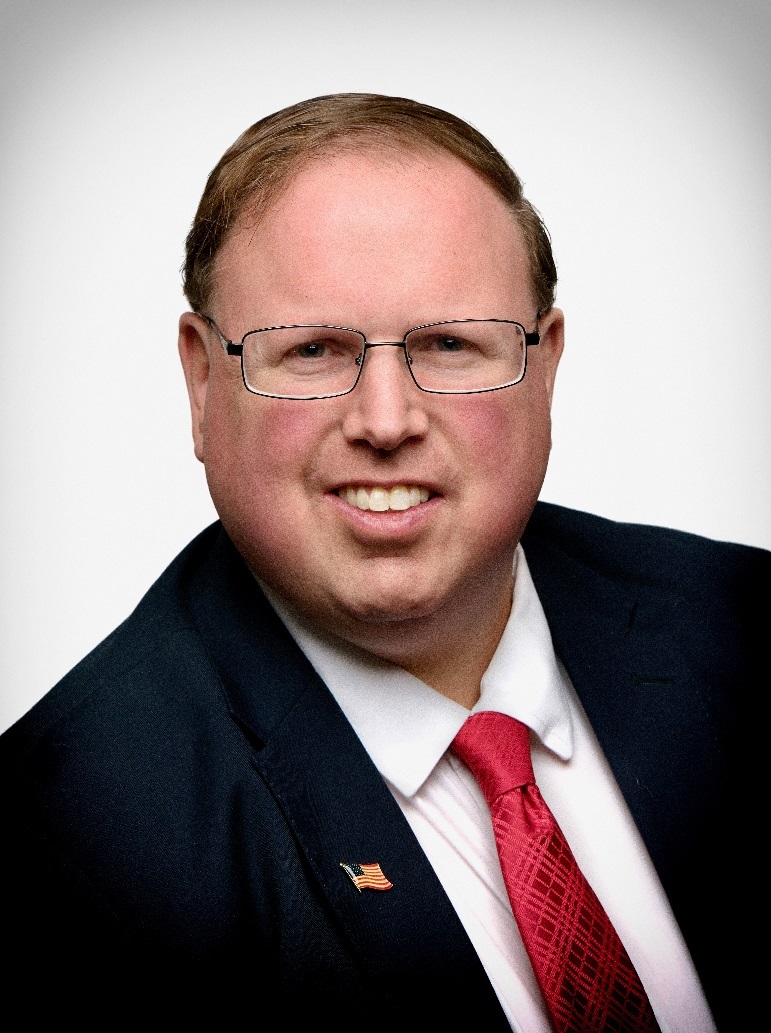
Commissioner/Chair
Peter Elder is the Republican Commissioner of the Monroe County Board of Elections, Chairman of the Monroe County Republican Committee, and longtime Leader of the Webster Republican Committee.
With more than 30 years of experience inside the Board of Elections, Elder has served in multiple roles, including Deputy Commissioner and Lead Inspector Trainer, giving him deep working knowledge of election administration, voter access, poll-site operations, election integrity, and the mechanics of local democracy.
Elder also brings decades of grassroots political leadership to Monroe County. He has led the Webster Republican Committee for 32 years and now serves as Monroe County Republican Committee Chair, where he is focused on candidate recruitment, party organization, voter engagement, and rebuilding a strong Republican presence across the county, including communities Republicans have too often failed to reach.
Before his current leadership roles, Elder served as Mayor of the Village of Webster and remains active in both the Webster town and village communities. His public service reflects a long-standing commitment to local government, civic participation, historic preservation, and community life.
Outside of his work in elections and politics, Elder is passionate about travel, history, family, faith, and service. He chairs the Webster Village Historic Preservation Commission and is active in Webster Baptist Church. His life and work reflect a belief that strong communities are built through integrity, participation, and a willingness to se… Read More