


Monroe County GOP leadership is put under a hard light as host Peter Vazquez presses Chairman Peter Elder on the questions that matter most: trust, turnout, fundraising, candidate recruitment, election confidence, and the steep burden of rebuilding after public defeat. This conversation moves well beyond campaign mechanics and party talking points.
It becomes a deeper examination of leadership itself, asking whether those who seek to guide others still have the discipline to face scrutiny, the humility to admit what is broken, and the courage to tell the truth when the truth is costly. What unfolds is not merely a political interview, but a serious test of character, accountability, and whether public trust can still be earned through conviction, endurance, and action.


Monroe County GOP leadership: A movement does not survive on memory alone. It survives when truth returns, when leaders stop hiding behind titles, and when the people demand more than slogans. That is the burden hanging over Monroe County Republicans now. Not theory. Not nostalgia. Not talking-point theater. A real burden, made heavier by losses, distrust, and a public increasingly tired of political packaging sold as principle.
In this episode of The Next Step Show, Peter Vazquez takes listeners into the hard reality facing Monroe County Republicans after painful defeats, public frustration, and a crisis of trust that no amount of polished messaging can cover. The atmosphere is not triumphant. It is sober.
There is no illusion that a few better press releases or a handful of safe appearances will fix what has been broken. The conversation begins where honest rebuilding always begins: not with chest-thumping, but with exposure. Not with spin, but with reckoning.
That matters because parties often fail in a predictable way. They begin to confuse inherited language with living conviction. They repeat words like “values,” “service,” “community,” and “leadership,” but the words become ceremonial, hollowed out by habit. They are spoken often and proven rarely.
And when that happens, the people notice. They may not always articulate it in elegant terms, but they can smell the difference between conviction and choreography. The body politic is not always scholarly, but it is rarely blind. It knows when it is being managed instead of led.
This is why the discussion is not merely about campaign mechanics. It is about leadership under pressure. Not the cheap variety built on applause lines, donor smiles, and party titles, but the kind tested by scrutiny, accountability, and the willingness to answer hard questions in public.
Real leadership is not revealed when the room is friendly. It is revealed when the room is skeptical. It is revealed when the base is restless, when critics are circling, when past failures are still visible, and when every sentence spoken carries the weight of a wounded institution trying to prove it still deserves to exist.
Chairman Peter Elder steps into that fire, and that matters. It matters not because stepping into the arena makes a man automatically right, but because it shows a willingness to be measured.
In an era when many institutions prefer insulation to accountability, there is something valuable about being willing to stand before the public and be challenged. That is where the conversation becomes more than local politics. It becomes a test of whether leadership still understands what it owes the people.
And what does it owe them? Not perfection. Not mythology. Not invulnerability. It owes them honesty, steadiness, and labor. It owes them the discipline to admit what is broken and the courage to repair it without pretending the cracks are cosmetic.
A party does not rebuild by acting offended that people have questions. It does not rebuild by demanding loyalty on credit. It does not rebuild by insisting that the brand itself should be enough. It rebuilds when conviction becomes action, when truth outranks comfort, and when leaders earn trust instead of assuming they are entitled to it.
That distinction is the beating heart of the episode. Peter Vazquez does not approach the conversation as a ceremonial host offering flattery and warm towels. He presses on trust, on structure, on outreach, on turnout, on the disconnect between stated values and practical outcomes.
He raises the harder question that lurks behind every local political setback: what good is a platform if the public no longer believes the people carrying it have the discipline, coherence, or moral courage to embody it? That is the kind of question weaker men resent. Stronger men answer.
What emerges is bigger than one county or one election. It is a warning about the Vanbōōlzalness Crisis, that deeper civic rot that sets in when institutions ask for loyalty without honesty, when politics becomes performance, and when self-government is reduced to branding exercises for factions that have forgotten the purpose of power.
The crisis is not simply that people disagree. Disagreement is normal. In a free republic, disagreement is part of the machinery. The crisis begins when truth is treated like a nuisance, when accountability is treated like betrayal, and when leaders become more concerned with preserving the appearance of strength than with doing the difficult work that actual strength requires.
That is how decline hides in plain sight. It does not always come in the form of a dramatic collapse. Often it arrives dressed as maintenance. It looks like people going through motions, committees repeating rituals, slogans surviving after the substance has leaked out, and organizations asking to be trusted because of what they once were instead of what they are now. It is political dry rot. The paint still shines, but the beams are soft.
Monroe County GOP leadership sits right in that tension. On one side is the temptation of cosmetic repair: better optics, safer language, friendlier framing, and the old hope that memory alone will carry the movement another season.
On the other side is the harder road: tell the truth, acknowledge the damage, widen the reach, strengthen the structure, and engage communities and voters who have either drifted away or never believed they were invited in the first place. That second road is not glamorous. It is slow. It is bruising. It requires humility. It requires listening without surrendering principle. It requires leaders secure enough to welcome scrutiny and disciplined enough not to confuse criticism with sabotage.
This is where the idea of leadership becomes moral rather than merely operational. Leadership is not a brand. It is endurance. It is discipline. It is the moral obligation to stand firm when the ground is shifting. It is the refusal to let panic become policy or vanity become direction.
It is the capacity to absorb pressure without becoming dishonest. It is the strength to say, “Yes, we have failed in places. Yes, trust is thin. Yes, rebuilding will cost something. And yes, we are still responsible for doing it anyway.”
There is also a lesson here for the public, and it is not a comfortable one. Citizens often want renewal without participation. They want integrity without involvement. They want better leadership while remaining spectators to the decline around them. But self-government has never worked that way. A people cannot neglect the local machinery of civic life and then act surprised when institutions become brittle, distant, or captured by smaller and more organized factions. Nature hates a vacuum, and politics is no different. If good people withdraw, disciplined opportunists do not. They move in, rearrange the furniture, and then pretend the house always belonged to them.
So this episode becomes a challenge not only to party leadership, but to listeners themselves. Do not retreat into cynicism. Cynicism is often just disappointed pride wearing reading glasses. It sounds intelligent, but it builds nothing. And do not surrender to drift. Drift is how communities wake up one day to discover that the habits, structures, and standards that once sustained them have been replaced by improvisation and grievance. Rebuilding begins with truth, grows through trust, and survives only when leaders and citizens alike are willing to do the hard work.
That hard work is rarely cinematic. It looks like answering uncomfortable questions. It looks like strengthening weak structures. It looks like showing up where you have not shown up before. It looks like turning values into systems, systems into persuasion, and persuasion into votes, credibility, and durable community presence. It looks like refusing the lazy choice between purity without victory and victory without principle. It looks, frankly, like grown-up politics in a culture that often rewards theatrical adolescence.
And that may be the deepest current running through this discussion. A healthy political movement is not sustained by anger alone, even when anger is justified. It is sustained by ordered courage. By character. By a willingness to be accountable to truth before demanding allegiance from others. That is the antidote to the Vanbōōlzalness Crisis. Not noise. Not vanity. Not factional pageantry. Truth. Structure. Endurance. Leadership with spine.
That is why this episode matters. It is not simply about Monroe County Republicans trying to recover from a difficult season. It is about whether a movement can remember that leadership is not theater and politics is not just a contest of impressions. It is about whether honesty can still interrupt decline before decline becomes identity. It is about whether a broken map can still become a path forward.
Because in the end, memory is not enough. Heritage is not enough. Branding is not enough. What matters is whether leaders will stand in the light long enough to be measured, whether the people will demand substance over slogans, and whether both will accept the old and unfashionable truth that freedom requires character. That is the road back. Narrow, difficult, unglamorous, and absolutely necessary.
Promote your brand on the Next Steps Show, airing on WYSL1040.com's AM 1040, FM 92.1, and FM 95.5 West stations. Discover more at nextstepsroc.com/advertise-with-us or dial (585) 346-3000 to get in touch with the WYSL team.
Have you ever dreamt of sharing your unique voice, stories, or expertise with the world through a podcast? Perhaps you're bubbling with ideas but uncertain about where to begin? The journey from idea to launch can be daunting, but that's where we come in. Dive Into the World of Podcasting with Next Steps Radio PODCAST Network! Visit NextStepsRoc.com or call Peter at (585) 880-7580.

Peter Vazquez:
In a world that seems to change daily, what will you do next? Welcome to The Next Step Show with Peter Vazquez, a starting point for discussion.
Let me share something with you. A movement survives not by living on memory, but by earning trust again through truth, grit, and the courage to rebuild what drift and weakness have buried.
Before I introduce my guest, I want this conversation to be focused on growth and understanding. I want emotional intelligence and discernment to be at an all-time high today.
We know Monroe County Republicans are not entering 2026 in a position of comfort. They are entering from a position of exposure. The backdrop to this show is not triumph. It is recovery after a political beating, over and over again.
WXXI posted on November 5, 2025, with the headline: “Democrats flip Monroe County suburbs as voters upend the status quo.” Democrats swept key suburban races, flipping places like Greece, Perinton, Mendon, and Rush. That left Republicans staring at the wreckage of a map that used to be pretty safe for us.
That same night, the new Republican commissioner told supporters, “We have a lot of rebuilding to do.” That is the emotional and political starting point for the future of the Monroe County Republican Party.
What happens when a party mistakes old habits for living convictions?
The official Monroe County GOP vision says rights come from God, not government, and that government must work for the people, not the other way around. That sounds right. But the practical question for 2026 is whether Monroe County Republicans can turn creed into structure, structure into persuasion, and persuasion into votes. In media and politics, poetry without organization is just expensive hot air.
Today, Monroe County Republican Party Chairman Peter Elder is here with us to take your calls and talk about what he is doing to make sure Republicans can break one-party control in this very troubled state.
Peter Elder, welcome to The Next Step Show.
Peter Elder:
Peter, thank you. Glad to be here.
Peter Vazquez:
Thank you for having the courage to come on a live radio show and have a conversation.
Before we go further, let me share one event. Larry Sharpe, running for New York State governor on the Libertarian line and seeking the Republican endorsement, has an event Friday, March 13 at 7:00 p.m. in Bemus Point, New York. Go check him out. Education is key. Follow, but do not be a follower.
Now, Peter, tell us about yourself. We know you are a commissioner. That is fine. But who are you?
Peter Elder:
That has been my career, but politics has always been my other career at the same time. I grew up in Webster, became a town leader there, and I am still the town leader there. I have always been involved in the community. I love my village and my town, and I love being involved in politics to get good candidates elected to office.
But I think it is less important that people know about the chairman and more important that they know about the candidates. My job is to make sure they win. What you can know about me is that I am dedicated to making sure the Republican Party is successful. I always have been, and I always will be.
Peter Vazquez:
I am going to challenge you a little bit. I trust President Donald Trump, not because I know him personally, but because I have followed his life, his work, and his family. I have seen enough to trust the leader I am putting my future and my grandchildren’s future behind.
People need to know you. Knowing you are commissioner and chairman is not enough. You come from an era that, in many voters’ opinions, is part of why the party is where it is. The leader is not a leader unless people are willing to follow him. So who are you?
Peter Elder:
Then I will go deeper. I am married. My wife and I have three children. We live in the village. I have been involved in government my whole life. I have supported candidates my whole life. I actually chaired two of your campaigns, and I know your family well.
I started young. At the Board of Elections, I was married when I was 26 years old and sat in the seat opposite the Democratic office. Over the years, I got promoted and literally moved from chair to chair until I ended up in the Republican office. I have seen a lot of change over time.
I think if I could say anything about myself, it is that I have loved seeing those changes and knowing people across generations. I was the youngest town leader ever elected in Webster, so I knew the older generation and the people leading today. I feel blessed. God has given me a great gift. He has let me endure, and endurance is a huge part of anything.
Peter Vazquez:
That is important, and let me say this publicly: I trust Peter Elder. That does not mean I will not hold you accountable. That does not mean I will not challenge you when I think something is off. That is what everybody should be doing.
So why should the people of Monroe County trust Peter Elder to lead this party into a success story?
Peter Elder:
The biggest thing is that I have become convinced over time that the Republican Party needs to do two things. First, we have to reach out to groups we have never been involved with before. We have to be available to people who are not already our friends. There is no challenge in only talking to people who already agree with you.
For example, all the years I have been leader in Webster, I have let anyone come into our meetings. Other town leaders have called me and asked whether they should allow outsiders into their meetings. I say yes. If a Democrat wants to come in, sit down, and hear what we believe, I consider that an honor because it gives me a chance to persuade them. How would I ever do that if I did not welcome them?
Peter Vazquez:
There was a time I sent more than 130 people to a Wednesday night city committee meeting and they were turned away because they thought I was trying to take over the party.
Peter Elder:
That would not happen with me. I would honor you for doing that and thank you.
Commercial break omitted.
Peter Vazquez:
Proverbs 24:16 says, “For a just man falleth seven times and riseth up again: but the wicked shall fall into mischief.” Peter, do not be the one who falls into mischief.
Peter Elder:
I always watch out for the mischief.
Caller Keith:
To the guest: in your exuberance, you sound like General George Custer riding off to his doom at Little Bighorn. It is good for you to be upbeat, but what I did not hear is exactly what you are going to do to turn around the dismal results for Republican candidates. Fourteen lost. The only winner was an incumbent female judge. You have a heavy lift.
I am a flat-out conservative. Conservatives in this state sadly follow their Republican brethren, and at the state level Ed Cox has offered very bad leadership. I am not calling you a RINO, but what Peter Vazquez asked you directly, you still did not answer: what are you going to do to turn things around? We have not heard your blueprint.
Peter Vazquez:
Keith, I appreciate the call. Let me throw some numbers out. Monroe County had about 127,340 Republicans as of September 2025, 205,536 Democrats, and about 158,000 unaffiliated voters. Peter, we have half the number of Democrats, and the voters who said they had enough seem to have drifted away. Keith is right. What say you?
Peter Elder:
The first thing is that a party is represented by its candidates, so we have to run candidates that energize people and make them want to vote.
This year, we have a record number of women running as Republicans. We have two African American women running in the 135th and 136th Assembly districts. The first step is understanding the climate you are in and running candidates who actually reflect the population people want to vote for. You cannot do the same old thing and expect a different result.
The second thing is we have to raise more money than ever, because money is how we get our message out. Third, we have to engage our committee members so they go out and engage voters. Fourth, and maybe most important, we have to improve turnout.
Many of the races we lost last year were lost because of turnout. We did not get our message out well enough to Republicans. They did not believe in us enough to go vote. We had races decided within 50 votes.
Keith, I want to encourage you especially: it is not all about purity. It is about finding the side you can get behind, because imagine what happens if the other side wins. You may not agree with us 100 percent of the time, but you do not need to. You need to agree enough that you still have faith you can call us, come into the office, and be heard. You will not get that from the other side.
Peter Vazquez:
That puts the burden of the party’s demise on your shoulders. Public mood is mixed, and I think that is putting it kindly. Your website is a little out of date. I am pointing that out because every little thing matters right now. People are fragile. One small inconsistency can send them the other way.
How do we fix this?
Peter Elder:
You have to find the side, come out and vote, and then get involved in the local Republican committees. If you want to make sure the party does not stray, you have to stay involved. You have to call your people to account.
That is why these committees exist. They are not just for little discussions. They are there so the normal voter can be involved and hold political leadership accountable. Elected officials come into those meetings. It is another way to hold them accountable.
When people do not get involved, then the 20 percent is doing all the holding to account. That is not enough.
Peter Vazquez:
After the 2025 losses, people online said the Monroe County GOP was dead. They blamed stale leadership, weak strategy, and the nationalization of local politics. I have a direct question.
There is a sentiment across the party that former chairman Bill Reilich was a problem and helped create where we are today. There is also a growing belief that he is helping control things through donations to offset the party’s bills. If that is true, people want to know. If he is helping, fine. But what is the strategy behind aligning with someone many people believe damaged the party?
Peter Elder:
The answer is yes. When he and I spoke while I was running for chairman, he said he would be willing to assist with the expenses for headquarters. We have a campaign account and a housekeeping account, and he has helped make sure we can have a headquarters that is open and available for people.
I am not going to apologize for that. I have known Bill a long time. Whatever errors he did or did not make are in the past. My focus is on the future and on bringing the party together. If someone donates legally to help us, I am going to thank them.
Peter Vazquez:
I talk about the Vanbōōlzalness Crisis all the time. I asked that question directly. He had no warning, and he answered honestly. You cannot ask for truth and then get mad when you get it.
News, weather, and sponsor segments omitted.
Peter Vazquez:
Do we rebuild the party by pretending nothing is broken? Of course not. We rebuild it by telling the truth, doing the hard work, and proving to the people that conviction still has a spine.
We have Mike Hennessy on the line.
Mike Hennessy:
Peter, you said earlier that you need to reach new constituencies, and I want to commend you for working with Lavell Lewis and the Black Republican Club.
You know I work extensively in the city with you. In 2024, almost 30 percent of African American men in New York City and almost 40 percent of African American and Hispanic men in the five boroughs shifted from blue to red to vote for President Trump. If 40 percent of those voters are shifting in New York City, how much can we hope to get in Rochester, and how much do we need to make a difference?
Peter Elder:
Surprisingly, when I ran the numbers years ago, it is about 30 percent. If we were to get about 30 percent of the voters who typically vote Democrat in a city council race, we would have a good chance of electing a Republican to city council.
That is exactly why I believe we have to reach out to people we have not reached out to before. That is where the party has to go in order to win elections in places we have not won before. People are shifting. Their allegiance is shifting. We know where the party is moving, and we have to move with it.
Mike Hennessy:
It is within reach if we do the work, and I know you are doing everything you can to do that.
Peter Elder:
Thank you.
Peter Vazquez:
I do not think people have outright given up on our platform. I think they are exhausted with the lack of trust in the party itself.
Peter Elder:
My message is: do not give up. The party’s core principles are pretty much the same as they have been for the last 30 years. They are about quality of life issues: lowering costs, controlling spending, public safety, and managing taxpayer dollars wisely. More and more people will embrace that message. The reason we talk about fundraising is because that is how we get the message out. The reason we talk about recruitment is because that is how we send people out to get the message out.
Peter Vazquez:
Sponsoring The Next Step Show is a great way to meet some tough people. Forty percent Latino listenership, just saying.
I am going to run off some candidate names in a minute, but first let us go to Gary.
Caller Gary:
I got an email from Project Civica. They do a monthly analysis of the voter rolls. They say there are 1,191,972 registered voters in New York who have not voted in at least five years, and another 1,776,300 registered voters who have never voted since registration. That is almost three million voters who could potentially be reached out to and asked why they have not voted or why they stopped voting.
Is that something you have considered doing? Have you reached out to those voters? And some of them have probably moved out of state, considering the out-migration we have had.
Peter Vazquez:
Let me frame that a little differently. I do not want Peter Elder the commissioner answering only as a commissioner. I want Peter Elder the party leader answering the question.
Peter Elder:
Elections are about people feeling the result is legitimate. I do not want to restrict access to elections, but I want people to know that when a candidate loses, the result was legitimate. That is why I support things like voter ID. We have to remove the idea that your vote does not count. Your vote absolutely counts.
As for the rolls, the voter roll is only step one in the process. You still have to get to the machine and cast the vote. The Board of Elections does everything it can to keep the rolls clean and updated. We do rely on people to give us updated information, but there are lots of safeguards in place.
As a party, yes, I think it is important that we reach out to people on those lists who do not vote. Some committees are actually petitioning only to those people this year to do exactly that. They have found that some have moved to Florida. Some have not generated adequate death notices. It is a good way to figure out what is happening on the ground.
But if you want to clean up those rolls entirely, you need an army of people. It is a lot of work.
Commercial break omitted.
Peter Vazquez:
Gary is back with one more point.
Caller Gary:
I would like to help you get people to vote. In 2016, Donald Trump was supposed to lose by 10 or 12 points, and he won. In 2020, a lot of skepticism developed about the election results, and in 2024 he won again because there was massive turnout. My point is this: if people do not believe in the election process, they will not turn out. You have to deal with that or people will stay home.
Peter Vazquez:
Peter?
Peter Elder:
I am not going to address individual voting machines directly in public. There are too many legal issues that can come from that. But I will say Monroe County did not adopt Dominion software. The party was behind that decision. As both chairman and commissioner, I believe we have an excellent machine.
I am not going to disparage other systems, but I will say this: we have a bipartisan structure in New York State. I have a great Republican staff. We operate well with the Democratic staff. We know what our job is, and we are going to make sure elections in Monroe County, both as a party and through the Board of Elections, are run in a secure way.
Peter Vazquez:
You and Commissioner Jackie Ortiz have said you would come back on this issue.
Peter Elder:
Yes, we would be happy to.
Peter Vazquez:
If we keep beating up the people who hold the keys, how are we ever going to expect the door to open so we can get information and protection?
Peter Elder:
Jackie and I understand people’s concerns, and we are committed to addressing them. That is why we came here, and that is why we will go wherever we need to go to let people know about the integrity of elections. I do not want people to feel like they should not give their input. We want it.
Peter Vazquez:
One last question for Gary and people like him who care deeply about God, country, and family: will you sit down with a group of people and go through the data so they can have confidence in the voter rolls?
Peter Elder:
Yes. The answer is yes. Call us, we will make an appointment, and we will do that. We have sat down with groups before, and we will do it again as many times as needed so that people know there is integrity in the system.
But we still need turnout. Integrity matters, yes, but nothing happens when you boycott an election. You need to vote.
Caller Gary:
There is a chicken-and-egg problem there. If people do not believe in the process, they will not turn out.
The other thing is this: earlier, you mentioned the importance of candidates. I think we had a pretty good slate of candidates last time around and still got a terrible result. Where did it go wrong, and where is the money going to come from?
Peter Elder:
All of those things are interconnected. That is my job: to convince people to donate to us and to give them confidence that they are investing their money wisely. Elections are always a risk. I have run and lost. I have run and won. Same thing with Peter.
The point is to give people faith by voting for us. That is why the party exists. Even if you do not know the candidate personally, the party is supposed to tell you what that person believes. Republicans have a brand, Democrats have a brand, and you have to have faith in that brand. Do not lose faith in the brand.
Peter Vazquez:
Let me run off some names. We won the judicial race we won in large part because we basically told the party to stand over there. We worked with the party, but we did not want the party to be the face. We won that race because of it, and I have the numbers to prove it.
Here are some of the candidates: Virginia McIntyre running for Congress in New York’s 25th against Joe Morelle, the first woman we have ever put up against him. Pamela Helming. Chris Brown. Orlando Rivera. Rob Ortt. On the Assembly side we have Mark Johns, a former assemblyman and current county legislator. Andrea Bailey, a phenomenal woman. Josh Jensen, our only Republican incumbent. Kalinda Washington, a Black Republican grounded in the movement in the city of Rochester. Kalinda Florence. Both of them are laser-focused on education and making sure schools produce qualified students, because that is the pathway to a better life. David Ferris. Tracy DiFlorio. At the statewide level we have Bruce Blakeman for governor, Todd Hood for lieutenant governor, Saritha Komatireddy for attorney general, and Joseph Hernandez for comptroller.
But on September 25, you said the district attorney race is the top of the ticket in 2026, and I cannot find a candidate named publicly. If the DA contest is more than just another line, then this is a symbolic test. Who is it?
Peter Elder:
It is Frank Chardy.
Peter Vazquez:
I know Frank. Ladies and gentlemen, think about that question and stand behind Frank and learn him.
Peter, can I have you back on Monday around 12:15?
Peter Elder:
I think so. Let me check my calendar and get back to you.
Peter Vazquez:
Thank you for being here.
Peter Elder:
Thank you for having me on.
Peter Vazquez:
You hear me say it every day: be a leader, be a leader, be a leader.
We have a leader here, a man who told the truth as he believes it, and that truth may hurt him. Thank you.
God bless these United States of America, and do not let a day go by where you are not a voice for liberty. I will catch you on Monday.
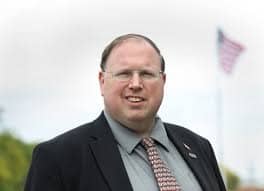
Chairman of the Monroe County Republican Committee / Commissioner for the Monroe County Board of Elections
Peter Elder is the Chairman of the Monroe County Republican Committee and the Republican Commissioner for the Monroe County Board of Elections. A former mayor of the Village of Webster and longtime local leader, he has spent years involved in public service, election administration, and grassroots politics.
He now leads the Monroe County GOP during a pivotal period, as the party works to rebuild after years of electoral losses and declining enrollment. Elder has focused his leadership on broadening the party’s reach, strengthening its bench, and engaging voters and communities that Republicans have too often left untouched.
His public message is rooted in a simple conviction: government should serve the people, and a healthy county depends on trust, accountability, and a real two-party system. As Monroe County heads toward critical races ahead, Elder is helping shape what Republican renewal looks like at the local level.