

 iHeartRadio
 Apple Podcasts
 Spotify
 TuneIn
 Podchaser
 Castro
 Amazon Music
 PlayerFM
 RSS Feed
 Wake Up and Get to Work

Memory and responsibility frame this powerful conversation between host Peter Vazquez and guest P. Rae Easley, Project 21 Ambassador. The discussion moves from Bob Woodson’s legacy and the rejection of liberal victimhood to Rochester’s ICE detention debate, government dependency, grocery prices, hip-hop’s cultural influence, Memorial Day’s Black origins, Muslim-American military service, fatherlessness, youth violence, and the urgent need to rebuild families, communities, and civic courage. The message is direct: America is not restored by leaders who profit from wounds, but by builders willing to wake up and get to work.
Memory and Responsibility. Rain soaked the weekend, but the conversation cut through like thunder.
The skies over Memorial Day were gray, the ground was wet, and the air carried that strange heaviness that comes when a nation pauses for sacrifice while too many people have forgotten what sacrifice even means. But inside the hour, the questions were not soft.
They were not comfortable. They were not polished for polite political theater. They were the questions too many leaders avoid because the answers point back at the systems they built.
Who profits when communities stay wounded? Who benefits when disorder becomes normal?
Who wins when families are divided, children are left without fathers, grocery bills climb, and politicians call it compassion while building another system of control?
Host Peter Vazquez opened the show with Bob Savage alongside him, and together they pressed into the Rochester ICE detention debate, the language of “transparency,” and the familiar political habit of creating a crisis, then campaigning as the solution.
The debate over ICE detention cells in Rochester was not treated as another headline to skim and forget. It became a window into something deeper: whether law still means law, whether public safety still matters, and whether elected leaders are truly defending communities or simply managing public emotion for political gain.
That is where the Vanbōōlzalness Crisis became impossible to miss. It was not hiding in theory. It was sitting right there in the headlines: public safety without honesty, immigration law without courage, government without accountability, and leaders who call enforcement dangerous after helping create the conditions that made enforcement necessary.
Then came P. Rae Easley, Project 21 Ambassador, civic leader, financial professional, media voice, and woman of conviction. She called in from a high school, where she had been tutoring students.
That alone said something before the deeper conversation even began. She was not merely talking about helping children. She was doing the work. In a culture full of people who post concern, brand concern, monetize concern, and then go home, P. Rae came with a different message: either help or be quiet.
Through her voice, Bob Woodson’s legacy entered the present tense. Not as an obituary. Not as nostalgia. As a challenge. No pity parties. No liberal victimhood. No social-service plantation dressed up as justice. No pretending that permanent dependency is compassion.
Her message was simple, sharp, and necessary: wake up, go to work, invest directly, or stop pretending to care.
She reminded listeners that black America is not a community of permanent victims. It is a people with inheritance, dignity, history, faith, and power. She rejected the tired machinery that profits from telling people they are broken beyond repair. She spoke of neighborhoods, families, education, crime, ownership, and dignity with the clarity of someone who has seen both the harm of dependency and the strength that rises when people remember who they are.
Memorial Day itself carried that same truth. Freed black Americans helped shape one of this nation’s sacred traditions, honoring Union dead in Charleston in 1865. They did not wait for permission to remember. They gathered, buried, honored, and declared through action that freedom deserves reverence. As P. Rae made clear, if black Americans could influence the calendar of the nation, then why pretend they cannot influence their own future?
That question hung over the hour.
Memory and responsibility. The conversation moved from Bob Woodson to Rob Base, from hip-hop’s power to unite to the damage caused when culture is turned into a soundtrack for death. It moved from music as memory to music as responsibility. Hip-hop, in its best form, tells stories from the ground. It gives life. It carries rhythm, pain, joy, warning, and witness.
But when culture is hijacked by industries that profit from debauchery, death, and division, it stops speaking life and starts selling destruction back to the very communities it claims to represent.
The show moved from Muslim-American service to the difference between faith and terrorism. It moved from Memorial Day to military sacrifice across backgrounds and religions. It moved from fatherlessness to teen takeovers, from social media chaos to the missing role models young men and women desperately need. It moved from race politics to the deeper American question beneath it all: are we going to keep monetizing wounds, or are we finally going to start rebuilding people?
Because America is not healed by leaders who profit from pain.
America is not restored by people who campaign on broken families while doing nothing to rebuild them.
America is not strengthened by teaching children to hate the country before they understand the sacrifices that made their lives possible.
America is rebuilt by those who remember sacrifice, restore families, defend truth, protect children, honor work, and pick up the tools.
The rain came down. The headlines came hard. The truth came harder. And by the end, the message was not complicated. “The people had a mind to work.”
That is the charge. Wake up. Get to work.
Keep the conversation going: More episodes · Watch videos · Read commentary · Send a voice message. Live weekdays at noon Eastern on WYSL and WLEA.
Rain soaked the weekend, but the conversation cut through like thunder.
The skies over Memorial Day were gray, the ground was wet, and the air carried that strange heaviness that comes when a nation pauses for sacrifice while too many people have forgotten what sacrifice even means. But inside the hour, the questions were not soft. They were not comfortable. They were not polished for polite political theater. They were the questions too many leaders avoid because the answers point back at the systems they built.
Who profits when communities stay wounded?
Who benefits when disorder becomes normal?
Who wins when families are divided, children are left without fathers, grocery bills climb, and politicians call it compassion while building another system of control?
Host Peter Vazquez opened the show with Bob Savage alongside him, and together they pressed into the Rochester ICE detention debate, the language of “transparency,” and the familiar political habit of creating a crisis, then campaigning as the solution. The debate over ICE detention cells in Rochester was not treated as another headline to skim and forget. It became a window into something deeper: whether law still means law, whether public safety still matters, and whether elected leaders are truly defending communities or simply managing public emotion for political gain.
That is where the Vanbōōlzalness Crisis became impossible to miss. It was not hiding in theory. It was sitting right there in the headlines: public safety without honesty, immigration law without courage, government without accountability, and leaders who call enforcement dangerous after helping create the conditions that made enforcement necessary.
Then came P. Rae Easley, Project 21 Ambassador, civic leader, financial professional, media voice, and woman of conviction. She called in from a high school, where she had been tutoring students. That alone said something before the deeper conversation even began. She was not merely talking about helping children. She was doing the work. In a culture full of people who post concern, brand concern, monetize concern, and then go home, P. Rae came with a different message: either help or be quiet.
Through her voice, Bob Woodson’s legacy entered the present tense. Not as an obituary. Not as nostalgia. As a challenge.
No pity parties.
No liberal victimhood.
No social-service plantation dressed up as justice.
No pretending that permanent dependency is compassion.
Her message was simple, sharp, and necessary: wake up, go to work, invest directly, or stop pretending to care.
She reminded listeners that black America is not a community of permanent victims. It is a people with inheritance, dignity, history, faith, and power. She rejected the tired machinery that profits from telling people they are broken beyond repair. She spoke of neighborhoods, families, education, crime, ownership, and dignity with the clarity of someone who has seen both the harm of dependency and the strength that rises when people remember who they are.
Memorial Day itself carried that same truth. Freed black Americans helped shape one of this nation’s sacred traditions, honoring Union dead in Charleston in 1865. They did not wait for permission to remember. They gathered, buried, honored, and declared through action that freedom deserves reverence. As P. Rae made clear, if black Americans could influence the calendar of the nation, then why pretend they cannot influence their own future?
That question hung over the hour.
The conversation moved from Bob Woodson to Rob Base, from hip-hop’s power to unite to the damage caused when culture is turned into a soundtrack for death. It moved from music as memory to music as responsibility. Hip-hop, in its best form, tells stories from the ground. It gives life. It carries rhythm, pain, joy, warning, and witness. But when culture is hijacked by industries that profit from debauchery, death, and division, it stops speaking life and starts selling destruction back to the very communities it claims to represent.
The show moved from Muslim-American service to the difference between faith and terrorism. It moved from Memorial Day to military sacrifice across backgrounds and religions. It moved from fatherlessness to teen takeovers, from social media chaos to the missing role models young men and women desperately need. It moved from race politics to the deeper American question beneath it all: are we going to keep monetizing wounds, or are we finally going to start rebuilding people?
Because America is not healed by leaders who profit from pain.
America is not restored by people who campaign on broken families while doing nothing to rebuild them.
America is not strengthened by teaching children to hate the country before they understand the sacrifices that made their lives possible.
America is rebuilt by those who remember sacrifice, restore families, defend truth, protect children, honor work, and pick up the tools.
The rain came down.
The headlines came hard.
The truth came harder.
And by the end, the message was not complicated.
“The people had a mind to work.”
That is the charge.
Wake up.
Get to work.
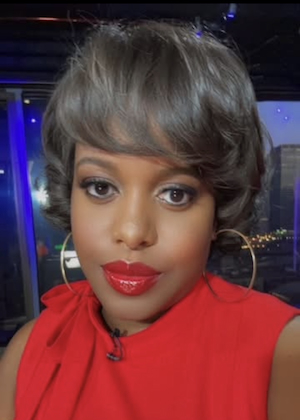
Project 21 Ambassador and Civic Leader
P. Rae Easley is a Project 21 Ambassador, civic leader, financial professional, and media commentator whose work spans public policy, regulated finance, and international education. She is recognized for combining technical expertise with community-centered advocacy.
She earned her Bachelor of Science in Finance from Hampton University and her Master of Education in Language, Literacy, and Culture from the University of Illinois Chicago.
P. Rae spent seven years as a FINRA-registered Investment Advisor at Merrill Lynch, advising clients on wealth management, financial planning, and risk analysis. Her experience in a highly regulated industry informs her approach to economic policy and fiscal accountability.
Her civic involvement began at age twelve in the office of Congressman Danny K. Davis. By high school graduation, she had completed more than 500 community service hours, including work related to federal housing policy and leadership within the NAACP.
P. Rae later served as a founding teacher at IQRA Bilingual Academy in Dakar, Senegal, and worked as an international literacy consultant. She is the former hostess of Black Excellence Hour on WVON 1690 AM Chicago, where the program became the station’s top-performing show.
She is frequently featured on national political platforms and is the mother of a fourteen-year-old daughter who attends Chicago Public Schools.