

 iHeartRadio
 Apple Podcasts
 Spotify
 TuneIn
 Podchaser
 Castro
 Amazon Music
 PlayerFM
 RSS Feed
 Truth, Bills, and the Cost of Managed Reality

Managed Reality is the thread running through today’s conversation, from media gatekeeping to Albany’s promises and Rochester’s rising costs. Peter Vazquez speaks with Luis Cornelio, Associate Editor for MRC Free Speech America, about Big Tech, news apps, censorship, identity politics, and how Americans are fed information before they ever get to think.
Then Peter and Bob turn local, confronting New York’s budget, Rochester’s $300 million transformation promise, car insurance pressure, High Falls, past failed projects, and callers frustrated by political control. The question is blunt: are citizens being informed, or managed?
Managed Reality. Truth does not usually fall in one dramatic collapse. It falls quietly, headline by headline, invoice by invoice, promise by promise, until ordinary people look around and realize the ground beneath them has shifted.
Peter Vazquez opens with Isaiah 59:14: “Truth is fallen in the street.” That verse becomes more than Scripture today. It becomes a mirror.
Luis Cornelio, Associate Editor for MRC Free Speech America, joins the conversation to expose how Big Tech, news aggregators, censorship, and digital platforms shape what Americans see before they ever get the chance to think.
The problem is not only fake news. It is invisible news. It is not only deletion. It is demotion. It is not only bias. It is a machine that feeds millions of Americans a curated version of reality, then calls it neutral.
Luis lays out the force of the Big Four news apps: Apple News, Google News, MSN, and Yahoo News, digital gatekeepers driving massive traffic while pushing left-leaning sources and burying right-leaning voices. Yahoo News becomes the case study. In April, right-leaning source placement fell from 15% to 5%, while BBC content suddenly surged and left-leaning outlets kept their prime real estate.
That is not balance. That is camouflage.
The conversation then moves from national media to local framing, from CNN and Fox to Rochester nonprofits, from headlines to public language. Peter presses the deeper question: when leaders, media outlets, activists, and institutions frame law enforcement, immigration, identity, and conservatism through fear and accusation, are they informing people or conditioning them?
Luis answers with clarity: identity politics is a cage. Americans are not voting blocs, props, tokens, or demographic property. A Dominican conservative, a Puerto Rican Republican, a Black independent, an old-school Democrat, a faith-filled voter, a working-class parent, each one is a human being with a mind, a conscience, and a right to reject the script.
Then the show turns home.
Peter and Bob open the lines and move into the price of managed reality in New York. Albany passes a massive budget and calls it relief, but families still face higher insurance, utility pressure, unaffordable cars, and the daily cost of bad policy.
Rochester gets another promise: $300 million for transformation, $75 million for High Falls, and more money for public facilities, transportation, streets, and public safety. But Rochester has heard promises before.
Renaissance Square. The Fast Ferry. High Falls. Grand visions. Big numbers. Public money.
Unfinished dreams.
The question is not whether Rochester needs investment. It does. The question is whether this investment will produce measurable change, or whether it becomes another monument to political marketing while working people keep waiting for streets that work, neighborhoods that rise, and leadership that finishes what it announces.
Callers bring the frustration into the open. Keith questions why true outside voices struggle to break into New York politics. Gary presses into distrust, corruption, elections, and the belief that the public has been fed official narratives for too long. Whether listeners agree with every claim or not, the emotional current is unmistakable: people are tired of being managed, packaged, labeled, and ignored.
That is the Vanbōōlzalness Crisis in full view.
Media calls manipulation “curation.” Government calls higher costs “affordability.” Political machines call control “democracy.” Institutions call confusion “progress.” And ordinary people are left at the kitchen table trying to make sense of the headline, the bill, the ballot, and the broken promise.
This is a conversation about truth, but it is also about courage.
Because a free people cannot survive on curated reality. They need discernment. They need moral clarity. They need leaders who tell the truth before the invoice arrives.
And they need the will to say, clearly and without apology, that America is not defined only by her sins, but also by her promise, her achievements, her liberty, and the citizens still willing to defend her.
Keep the conversation going: More episodes · Watch videos · Read commentary · Send a voice message. Live weekdays at noon Eastern on WYSL and WLEA.
Opening and Introduction
Peter Vazquez:
This podcast is brought to you by Open Door Mission, restoring hope and changing lives. OpenDoorMission.com.
Mira la izquierda, mira la derecha, ¿qué ves? In a world that seems to change daily, what will you do next? Welcome to The Next Steps Show with Peter Vazquez, a starting point for discussion y un poco de dirección.
Mira, Señor Bob, I just feel like dancing today and singing. It is such a beautiful day outside. But then you look at a verse like Isaiah 59:14, where it says, “Judgment is turned away backward, and justice standeth afar off: for truth is fallen in the street, and equity cannot enter.”
I look at that verse and say, that is exactly what we see happening.
Bob:
Nice scene setter here. Very cheerful, upbeat Isaiah message.
Peter Vazquez:
The thing is, Bob, those messages are cheerful, and I will tell you why. They warn us. They teach us. We spend too much time looking for the fluff and not enough time looking for discernment.
Today’s guest has been on before. We have had MRC guests on many times because this issue is so important. Even in the fun stuff we read, even in the warm and fuzzy stuff we hear, there is that Vanbōōlzalness, that deception.
Our guest has been studying how Big Tech, news aggregators, censorship, media, politicians, and digital platforms shape what Americans see before they ever get a chance to think. That is the problem.
Ladies and gentlemen, joining us today is Luis Cornelio, Associate Editor for MRC Free Speech America.
Luis, bienvenido al Next Steps Show, Papa.
Luis Cornelio:
Thank you for having me.
Luis Cornelio on Media Influence and Hispanic Voters
Peter Vazquez:
Luis, before we get too far into the interview, I was reading your bio. You were an editor for a Spanish outlet as well, correct? Was it all Spanish?
Luis Cornelio:
It was bilingual. It was called El American. We ran news both in Spanish and English, and I used to run the English edition.
Peter Vazquez:
So you do know Spanish, and you saw a lot of how media influenced many Latinos in this nation, am I correct?
Luis Cornelio:
You are absolutely right. This happens every day and in every theme: immigration, the economy, cultural news. We are being brainwashed, and that has been happening for a long time, which is why I try to point it out as much and as often as I can.
Peter Vazquez:
Luis, let me point out that today is the first day of Caribbean American Heritage Month. I was looking at prominent Caribbean figures, not specifically Latinos, just people from the Caribbean. It was surprising, because when you look at this, you ask, do conservatives really have a place, especially as Latinos?
Alexander Hamilton was born in Nevis, and he was a Federalist. Shirley Chisholm, the first Black woman elected to Congress, was a Democrat. Colin Powell was a Republican, the son of Jamaican immigrants. Kamala Harris has Jamaican and Indian heritage. Yvette Clarke is also prominent. The point is, a lot of these prominent people are very much on the left-leaning side. I think that perpetuates some of the myths out there about Latinos needing government help.
Luis Cornelio:
You are absolutely right. Kamala Harris has had a distorted view of what Hispanics really want and what we wish for. It is no secret that many of us are culturally Catholic. We are pro-life. We prefer low taxes. Some of us who came to the United States are actually pursuing the American dream.
We are not trying to get payments from the government or food stamps. We are trying to buy houses, get jobs, and truly live the American dream. I have been here for over ten years now, and I love the Dominican Republic, but in terms of safety and the economy, there is no place like the United States.
Peter Vazquez:
And I believe the Dominican Republic provides a stipend to its people, am I correct?
Luis Cornelio:
They do have some partial government-run health care for people who actually need it, but it is very limited.
Peter Vazquez:
The common folks do not normally benefit from that type of ideology, as I refer to it.
Trust in Media and the Big Four News Apps
Peter Vazquez:
If trust in the media is collapsing across party lines, is the public becoming more cynical, or are we finally, especially those of us who have been bamboozled for years, like Black and brown communities by Democrats, becoming more discerning?
Luis Cornelio:
Here is what has been happening. The Media Research Center has been exposing the fake news media since 1987. Now there is a new digital landscape in terms of information and news. We know trust in the news media has been steadily declining for decades.
But for some reason, these outlets continue to receive millions of visitors and readers every month. That is when David Bozell, president of the Media Research Center, asked us to investigate and figure out where those numbers were coming from. Who is reading the news media?
We know reputable polls show that only a very small percentage of people have strong trust in the media. So what does that tell you about the rest of Americans?
That is when we identified what we now call the Big Four news apps: Apple News, Google News, Microsoft’s MSN, and Yahoo News. These are digital news aggregators. Collectively, they receive more than 500 million visitors each month. They are actively aggregating nearly exclusively left-wing news sources, while censoring and excluding outlets, sources, and radio shows like this one that may have a different perspective to offer Americans.
You are being punished for having the wrong ideology and are not being promoted by the Big Four news apps.
Peter Vazquez:
Not at all. I was looking at numbers that showed right-leaning source placement, meaning conservative-type news, fell from 15% in March to 5% in April.
Luis, you are in media. You are a reporter. You put news out there. You work within an organization that exposes unbalanced media. Should there be such a thing as left-leaning or right-leaning media? Should media not just be truthful regardless?
Luis Cornelio:
That is true, and that is what we wish for. But the truth is, that is not what has been happening.
The legacy media nowadays, you could pretty much go to the DNC press website and read headlines that are repeated in The New York Times, The Washington Post, and other outlets. These outlets are sleeping together with the same type of rhetoric.
We wish the news were accurate and fair. That is what we try to do at the Media Research Center. We call out the legacy media for not doing that.
Peter Vazquez:
They appear to be so coordinated that one would swear they meet weekly to decide how they are going to parse the misinformation going out.
Luis Cornelio:
What is crazy is that I do not even think they need the meetings anymore. The moment there is a news development, or a Republican politician announces something, even when President Trump announces an initiative, outlets like The New York Times and local papers come to the same conclusions because the problem is ideological. That is why you get the same type of rhetoric across national and local news cycles.
Systemic Bias and Yahoo News
Peter Vazquez:
In an article you wrote on May 18, you referenced allegations of systemic bias. Talk to us about that. I get concerned when I see the word systemic tied to things like racism or bias. Tell us what that is.
Luis Cornelio:
I can give you a perfect example. We were talking about the Big Four news apps, these digital news gatekeepers of information. To give you an example of how systemic their bias is, we took a small sample. We looked at the top 20 stories promoted daily at 8:30 in the morning.
These are heavily trafficked sites in the morning. People are driving to work, waking up, clocking in, and reading the news. We looked at the type of stories being promoted.
For Yahoo News in the month of April, only 5% of the stories promoted came from right-leaning sources, primarily Fox News. The rest came primarily from radical left-wing news sources. That is an example of how systemic the bias is.
We know outlets like The New York Times and The Washington Post are spinning the news and failing to report stories that may be detrimental to the political left. Those are the same stories being elevated and delivered to millions of Americans on a daily basis.
Peter Vazquez:
We are starting to realize that in the modern media economy, censorship is not always deletion or exclusion. It is demotion. It is minimizing. It is drowning something among a whole bunch of other news so people cannot see the difference.
When we get back from break, Luis, I want to address local media and see your opinion on that.
Ladies and gentlemen, we have Luis Cornelio, Associate Editor for MRC Free Speech America. We will be right back here on WYSL and WLEA’s Next Steps Show. Do not go anywhere. It is the Voice of Liberty.
Break
[Sponsor messages and station break.]
Local Media and National Aggregators
Peter Vazquez:
Tell a friend about the program. We appreciate you passing the word about The Next Steps Show on WYSL and WLEA.
Mira, ladies and gentlemen, do not forget we are on social media: Facebook, YouTube, Rumble, X. Leave a comment. Share a note. If you go to NextStepsShow.com, on the right side of the screen there is a tab where you can send us a voicemail that we can share on air. You can also send me a text message. Why? Because without dialogue, what do we have?
Well, I know what we have. We have Kathy Hochul. That is usually how it happens.
Ladies and gentlemen, I have Luis Cornelio, Associate Editor for MRC Free Speech America. Sir, thank you again for your time.
Luis Cornelio:
Thank you for having me.
Peter Vazquez:
Tell me about local media. Do they fall into the same traps as some of the Big Four news apps?
Luis Cornelio:
Of course. I will give you a perfect example. The New York Post is considered right-leaning by third-party independent media bias firms. The New York Post is getting punished by the Big Four news apps. Their stories are nowhere to be found on these national, highly influential digital news aggregators.
By contrast, you will get your typical New York Times articles at number one or number two across Google News, MSN, and Yahoo News. This is systemic.
Peter Vazquez:
Very much so.
Framing, CNN, Fox, Iran, and Language
Peter Vazquez:
Luis, I want to spend the rest of this conversation talking about framing, because I believe the bamboozlement is not just deletion or demotion. It is also how things are framed.
For example, looking at a headline on CNN, they might frame something as escalation plus diplomacy, while Fox frames that same article as defensive action plus regional conflict. One seems to frame things as despair and chaos, while the other does not. Am I accurate in that?
Luis Cornelio:
You are very much on point. I will give you a perfect example. Anyone who takes a stroll through CNN.com or watches CNN coverage of the Iranian war and then flips over to Fox News will probably think they are reading about two different wars.
Why is that? Because outlets like CNN have seized on every mishap, every error, even perceived errors, to spin and attack the Trump administration’s military operations in Iran. This is systematic. It happens on every topic you can think of.
President Trump came out and said, in essence, that the administration was talking to the Iranian government about a potential peace deal. The Iranian regime came out and denied it. Outlets like MSN, CNN, and The New York Times ran with the Iranian response and framed headlines as Iran refuting, shutting down, or contradicting President Trump.
Then a few days later, an Iranian spokesperson had an interview on a legacy media outlet and admitted they were negotiating with President Trump. Only then did those outlets run headlines that corroborated what President Trump had said earlier.
Peter Vazquez:
That is interesting. In your article regarding Yahoo News, you used examples from Salon and The New Republic. Salon had an article titled, “Not just ICE: Do we need DHS?” The New Republic had one saying, “No One Is Intimidated by Trump Anymore.”
To go further on framing language, it is not just news sources. It is also social media posts and leaders in communities, like pastors and nonprofit leaders. Here in Rochester, there is a nonprofit focused on the Hispanic community. Their CEO, over the last year, said things like, “They are coming for us,” in regard to ICE doing its job locally. That is framing as well. Is that part of the same thing?
Luis Cornelio:
Yes, absolutely. Our purview is limited to the media, but I can tell you this. When President Joe Biden came into office, he wanted what he described as a whole-of-society effort to promote his policies and get things done.
That is what we uncovered during the Biden years. At the Media Research Center, we were heavily focused on fighting Big Tech censorship and the collusion between the federal government, nonprofits, and Big Tech companies. They were working hand in hand to shut down Americans who had a different view on COVID-19, gender ideology, the economy, immigration, you name it.
If you misspoke on social media, you were punished. There were nonprofits receiving money from the federal government, scrolling through social media, flagging the average Joe or Maria in New York City who was honestly speaking his or her mind, and sending those posts directly to powerful people at tech companies. Accounts were shut down.
Biden himself said he needed a whole-of-society effort. He got it. Religious leaders, nonprofits, Big Tech companies, corporations, all sharing this ideology and shutting down anyone who disagrees. You do not even have to be conservative. You can simply have a different view on any topic, and you are considered the enemy.
Identity Politics and Conservative Latinos
Peter Vazquez:
Luis, locally in my own backyard, with people I have worked with growing up and done community work with, once they realized I was a Republican, suddenly I was not Puerto Rican anymore to them.
Luis Cornelio:
People ask me sometimes, why are you not a left-wing activist? To be honest, what fuels my passion for truth is my hatred for identity politics. People try to put me in a box because I was born in the Dominican Republic, came to this country ten years ago, and have an accent. How dare I support ideas that might be detrimental to the political left?
We are human beings. We are individuals. We all have different perspectives, and we should. This is not North Korea, where you have to adhere to one ideology. Even though Democrats want us to be North Korea, Cuba, or Venezuela, this is the United States of America. We have a First Amendment right to say what we want to say and believe what we want to believe. Simple as that.
Peter Vazquez:
Or on our side, conservative and Republican leaders sometimes want to use us as token Latinos for their own agenda without truly understanding or asking questions. That bothers me too. A genuine approach would be, “Luis, I want you for you and your experience.” The left sees that token behavior and uses it against us.
Reuters Institute found global concern over distinguishing truth from falsehood online at 58%, with the United States at 73%.
Luis, I have one more question. Should Americans fear fake news more than invisible news?
Luis Cornelio:
That is a good question and a tough one. They should probably fear both. Americans are smart. There is a reason why trust in legacy media has been declining.
The problem is that millions of Americans are being fed fake news without their knowledge. Apple News comes preinstalled on virtually every modern iPhone. Google News comes preinstalled on virtually every Google or Android phone. People are being fed push notifications from left-wing sources.
I think it is only a matter of time until Americans realize this is happening and fight back by deleting Apple News and Google News from their phones. It is getting there. Those sources do make it very convenient.
Peter Vazquez:
Luis Cornelio, Associate Editor for MRC Free Speech America. What is your website?
Luis Cornelio:
MRCFreeSpeechAmerica.org.
Peter Vazquez:
MRCFreeSpeechAmerica.org, ladies and gentlemen. Make sure you check it out.
Luis, we have about 30 seconds left. I will leave you to share anything you believe listeners should hear.
Luis Cornelio:
Americans should be thankful for the rights we have in this country. They should fight back whenever those rights are being targeted, and they should fight for fair and balanced views.
Peter Vazquez:
Luis Cornelio, Associate Editor for MRC Free Speech America. May God bless you and continue to bless the work that you and the organization do.
Luis Cornelio:
Thank you so much.
Transition to Caller Engagement
Peter Vazquez:
We will be right back here on The Next Steps Show. No cambies.
Lines will be open: 585-346-3000. Toll-free outside the local calling area: 866-552-1009.
Managed Reality, Albany, and Affordability
Peter Vazquez:
As promised, or threatened, depending on how you look at it, the lines are open: 585-346-3000 or toll-free 866-552-1009.
What can we talk about today? Let us talk about the price of managed reality. How is that for a title, Señor Bob?
Bob:
What on earth does that mean?
Peter Vazquez:
It means New York has a budget. Rochester has promises. Ratepayers still have higher bills. Drivers are still paying a lot for insurance. Immigration enforcement is becoming another protest battlefield.
The story is this: government keeps announcing rescue, while ordinary people keep asking why rescue always arrives with a freaking invoice.
Bob:
Some rescue, right?
Peter Vazquez:
Spectrum asked whether the budget answers the need for affordability. I do not think it does.
Bob:
It depends on what you are talking about. Most aspects of the budget do not address affordability. Sometimes you get window dressing that attempts to appear as if they are addressing affordability.
Look at the solutions being advanced to solve the high cost of car insurance. None of them really address the root causes of what is going on, which is the high rate of expensive claims due to criminal justice policy in the state.
Peter Vazquez:
Which leads to chaos and continued losses.
Bob:
Exactly. That is the affordability crisis. It is in the policy.
Car Theft, Insurance Costs, and City Residents
Peter Vazquez:
Let us look local. Rochester Monroe Transformation Initiative. Have you heard of that?
Bob:
I was talking about local too. With all the teenage car thefts, chase-crash combinations, vandalism, smashing windows, and stealing Kias and Hyundais, that creates a loss pattern. Insurance companies take that into account when they set insurance rates.
Peter Vazquez:
I have friends who live in the city who had to give up their cars because of insurance. They could not afford the rates. Buying a Kia or Hyundai is easier for people on lower incomes.
Bob:
I would not buy one. Find yourself a used car you can afford that is not a Kia or Hyundai. I do not understand this Kia and Hyundai thing. I thought that had been addressed years ago.
Peter Vazquez:
Maybe the issue of the car itself being stolen was addressed, but not the social issue of kids stealing the cars.
Bob:
Supposedly they were going to do firmware updates and security changes because they are notoriously easy to steal. There are tutorials online that kids are using.
Peter Vazquez:
Old cars were never stolen that easily from what I remember.
Bob:
It was never like the movies, where someone yanks wires under the steering column and sparks them together. But I guess Kias and Hyundais are that simple. If 13-year-olds and 11-year-olds can do it, anyone can.
Peter Vazquez:
If you drive around Pittsford, you do not see that many Kias and Hyundais. If you drive around Jefferson Avenue, Norton Street, even parts of Park Avenue, there are many Kias and Hyundais. They must be easier for lower-income people to buy.
I know two people who bought their first brand-new car after a hard life. They got on their feet, then their car was stolen. Their lives were devastated for months. They could not comprehend why their car was stolen and why Kia, Hyundai, or the insurance company was costing them something.
Bob:
There are easy instructions available online on how to steal these cars. It is incumbent upon the manufacturers to make them not so stealable and to retrofit them somehow. Other cars are not stolen with that frequency, so clearly it is possible.
Rochester’s Budget Promises and the Transformation Initiative
Peter Vazquez:
Here is a worthy question: what good is a historic budget if the people living under it still feel historically ignored?
Bob:
It is an issue of marketing now, is it not?
Peter Vazquez:
That it is. That is Vanbōōlzalness. That is what we were talking about in the first half. Things are presented and framed a certain way. That is why I have to coin that phrase.
I asked Luis about local media because I spend a lot of time looking at local news sites. When you brought up the budget the other day, I had not seen anything on it. I still do not know how you found out. To me, that framing means people do not have the news they need.
Then they can push something like the Rochester-Monroe Transformation Initiative.
You said someone should buy a used car instead of a Hyundai or Kia, and I do not disagree. But to get a decent used car these days, at minimum you need about $5,000 to buy what we used to buy for a few hundred dollars.
This initiative brings major state money into the region, at least on paper. It is $300 million for Rochester and Monroe County, with $75 million highlighted for High Falls State Park. The rest is for public facilities, transportation, street improvements, and public safety improvements.
Bob:
Do we not already pay for street improvements? Is that not part of the existing tax structure?
Peter Vazquez:
I thought we did.
Bob:
Is this a bond issue or a budget issue?
Peter Vazquez:
This is in the budget. Assemblymember Harry Bronson put it out and local officials are talking about how great it is.
I bring this up because I want to go down memory lane. We tried this before. Renaissance Square was sold as the biggest redevelopment project in the area. By 2009, the vision had split apart. They spent money. Somebody got paid. A lot of people got paid.
Then there was the Fast Ferry. That was a mess. There was an $11.5 million loan request, and Mayor Bob Duffy said absolutely not.
What really gets me is that High Falls got about $40 million back in the 1990s and 2000s to try to make it great, and now they think a park is going to make a difference?
Ladies and gentlemen, the lines are open: 585-346-3000 or 866-552-1009.
Bob:
I wonder why Rochester cannot do great things like the city of Hornell. Hornell seems to be doing phenomenal things.
Peter Vazquez:
We will be right back here on The Next Steps Show. Lines are open.
Break
[Sponsor messages and station break.]
Caller Keith on New York Politics and Ballot Access
Peter Vazquez:
Sometimes we start talking in here and forget we are supposed to be on the air. Just in time to save us, we have Keith on the line.
Keith, what is up today?
Keith:
To everyone else in the audience, if you do not call, then you keep getting me like a bad penny. Let that be a lesson.
Today, with so many people not liking Hochul and many people still unaware of Mr. Blakeman, why is the Larry Sharpe candidacy for governor not taking off as a bridge between Democrats and Republicans?
When he has had his show on your station, he seems to do well with feedback from a nationwide audience. Why do you think Mr. Sharpe is not catching on when there is a vacuum between people hating Hochul and people not knowing Blakeman?
Bob:
Where do we start?
Peter Vazquez:
I will start with this. Do you remember how Sharpe did in a recent election when everyone thought he had momentum? The Green Party beat him. It was a minuscule vote.
Bob:
Part of this is structural, and it is unfair. It stinks because he has been denied a ballot line through the machinations of the major parties. That means he is essentially a write-in candidate. I believe he is this time too.
There are strictures imposed on write-in candidates. The name has to be entered exactly correctly. Larry Sharpe spells his last name with an “e.” How many people will take the time to vote, vote for a write-in candidate, and write his name correctly?
Keith:
Why do the state committees make it so difficult? Sharpe is Sharpe, with or without the “e.”
Peter Vazquez:
Because they want to maintain the status quo. That is the whole game. The Democrats want to be the leading party, propelled by corruption, bad policy, and idiocy. The Republicans want a seat at the table and to be the loyal opposition.
Bob:
Do you really want self-correcting anything on these voting machines? You want more technology there?
Keith:
I was making an analogy to using a computer. If you get a digit or character wrong, there should be some self-correcting software. I understand both parties want to keep power, but if we have a true open society, like your guest said in the first half hour, the established parties should open up and let people breathe and express themselves.
Whether it is Mr. Sharpe or anyone else, true minority candidates are deliberately kept out.
Bob:
No question about it. Nobody wants change because corruption gets spread around. Everybody gets their bite of the pie. They hang on to power, or what passes for power.
The electorate is unaware. Those who are aware and frustrated throw up their hands because nothing seems to change. That is how blue states get stuck with bad policy because there is a lack of true choice engineered into the state.
It would take cataclysmic change from the top. The fish rots from the head down. People would have to vote for change, and neither scenario seems likely.
Peter Vazquez:
Not at all. I do like Larry Sharpe. He is great to talk to and presents very well. But some of the policy beneath the surface is not really workable and you would not want it anyway. That does not detract from his attractiveness as a candidate.
Keith, thanks for the call.
Caller Gary Stout on Election Trust and Public Distrust
Peter Vazquez:
Gary, our good friend Gary Stout, what is going on?
Gary Stout:
Hello, Bob. Hi, Peter.
We do have self-correcting machines to vote on. The Democrats have self-correcting machines. If you vote the wrong way, it corrects your vote for you.
Bob:
In a perverse way, Keith gets his wish. He just did not know it yet.
Gary Stout:
There is a lot of stuff that is going to come out about Smartmatic, Venezuela connections, and everything they say Tulsi Gabbard is going to drop. She has 30 days to do it.
Peter Vazquez:
Gary, you and I were talking before you left when we were recording the Second Amendment show. You dropped a number on me that made my jaw hang open. Three hundred ten thousand grand jury indictments?
Gary Stout:
Something like that, a number over 300,000. A couple months ago, I heard over 100,000. They have had information through the work of Gary Berntsen, Patrick Byrne, and others who dug deep into the connection between Venezuela and Hugo Chávez contracting software that could defeat an election and defeat audits.
They have used it around the world in many countries and have sold stolen elections for money. It is the same people involved in trafficking drugs and kids. It is one more enterprise used to control everybody else. Stay tuned.
Peter Vazquez:
Are the 310,000 indictments largely election-related? Epstein-related? Other subject matter?
Gary Stout:
I think a lot has to do with elections, because this is a worldwide cabal running the whole thing. It is not just the United States. They are taking down corruption around the world, coordinating with the good side of different militaries. It will be drip, drip, drip, and then it will come out like someone knocked over a fire hydrant.
Peter Vazquez:
Three hundred ten thousand indictments is not drip, drip, drip. That is a tidal wave.
Gary Stout:
Some of these sources may be bogus because both sides put out bad information, but these people have been consistently correct so far.
Peter Vazquez:
Your numbers come from a trusted source?
Gary Stout:
So far. But I had a trusted source for 40 years that fooled me not too long ago.
Peter Vazquez:
I have met a few of those people.
That video you texted me the other day, I have it and I am saving it. I hope Tulsi Gabbard does what she is going to do and we can tie it together.
Gary Stout:
That is my hope too. I sent it because it connects a lot of dots. Use your common sense and intuition. If you start putting these things together and thinking about what you have been told versus what made sense, you will find that not much of what we have been told officially has really been the truth over the last hundred years or so.
Peter Vazquez:
Absolutely.
Gary Stout:
It will be a rude awakening for people who clung to the idea that everything they see on the nightly news is true. It is far from it.
Peter Vazquez:
Is this supposed to happen while Gabbard is still in office, or will it continue after?
Gary Stout:
They say it will continue for several years to clean this up completely.
Peter Vazquez:
With that many indictments, it would have to go on for a while. Physically, how do you serve that many and process those people?
Gary Stout:
They say there have been high-level expansions at Guantanamo Bay, including courtrooms set up for broadcasting and geriatric facilities. I think we will see a lot of old crooked politicians go bye-bye.
Peter Vazquez:
I sure hope so, Gary. That is the only way to have justice for the people whose money has been stolen, wasted, and defrauded, and then used to fund wars that kill our kids.
Gary Stout:
Absolutely.
Peter Vazquez:
Gary Stout, ladies and gentlemen. Gary, I appreciate the call.
Closing
Peter Vazquez:
Ladies and gentlemen, let me leave you on this note: Democrats and the left truly believe America is defined by its sins, not its achievements.
We will be back here tomorrow on The Next Steps Show con el Señor Savage.
Be a leader. Do not let a second go by where you are not a voice for liberty.
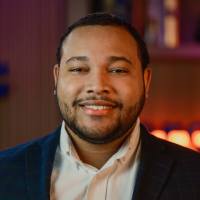
Associate Editor for MRC Free Speech America
Luis Cornelio is Associate Editor for MRC Free Speech America, where his work focuses on media bias, Big Tech censorship, free speech, and the digital platforms shaping America’s public conversation.
He graduated cum laude from CUNY’s City College of New York with a major in political science. Afterward, Luis worked on President Donald Trump’s 2020 re-election campaign. Following the 2020 election, he became editor-in-chief of the start-up news site El American, now known as Voz Media, and later served as an aide at the Thomas More Society.
Luis is also a graduate of The Heritage Foundation’s internship program. His background in journalism, public policy, law, and conservative media analysis gives him a sharp perspective on how news, technology, and political narratives influence what Americans see, believe, and debate.