

 iHeartRadio
 Apple Podcasts
 Spotify
 TuneIn
 Podchaser
 Castro
 Amazon Music
 PlayerFM
 RSS Feed
Literacy Is Liberation is the heartbeat of this conversation: a call to restore reading, reasoning, and responsibility in a city that honors Frederick Douglass while too many children struggle to understand the words in front of them.
Peter Vazquez sits down with educator, author, literacy advocate, and 136th Assembly District candidate Clianda Florence, joined in studio by LaVelle Lewis of the Black Republican Club, to confront a crisis that cannot be solved by slogans or spending alone.
The discussion moves through Rochester’s painful education outcomes, the weakening bond between parents and schools, trauma in families, classroom disorder, crime, mental health, school choice, and the danger of replacing critical thinking with political programming.
Callers Keith, Gary, and Dave press the conversation further, asking why basic literacy has collapsed, why schools stopped teaching children how to think, and how culture, policy, and fear shape the classroom.
Florence grounds the answer in legacy, faith, family, and practical reform, insisting that literacy is not merely academic achievement. It is liberation. It is the doorway to freedom, dignity, safety, and self-government.
This is a hard-hitting conversation about whether schools are still educating children or simply managing communities, and what must happen when families decide decline is no longer acceptable.
Literacy Is Liberation. There are moments when a conversation stops being commentary and becomes a mirror.
A city can spend money, build slogans, rename programs, hold press conferences, and still leave a child staring at a page he cannot understand.
A state can say “ever upward” while families look around and wonder whether anyone in power still knows which way up is. Rochester knows this contradiction too well. It is the resting place of Frederick Douglass, a man who understood that literacy was not decoration. It was not a school metric. It was not a political talking point. It was the first key in the lock.
Reading meant freedom. Understanding meant power. Speaking meant dignity.
And today, in the very city that honors his name, too many children are being handed diplomas without the tools to read the world that is waiting to devour them.
Peter Vazquez returns to the microphone with a hard question beating underneath every word: are our schools still educating children, or are they managing communities? That question lands heavily because it is not theoretical. It lives in neighborhoods where parents are exhausted, children are anxious, classrooms are unstable, and systems have become fluent in excuses.
It lives in the face of the student who can pronounce the words but cannot comprehend the meaning. It lives in the family told to trust the process while the process keeps failing their child.
Clianda Florence, educator, author, literacy advocate, mother, and candidate for New York’s 136th Assembly District, brings more than policy language into the room. She brings legacy. She carries the echo of Minister Franklin Florence and the civil rights tradition that saw education as liberation, not bureaucracy. Her message is not soft. It is not polished for comfort. It is urgent: literacy is liberation.
Not someday. Not after another committee. Not after another funding formula. Now.
The conversation cuts through the old excuse that more money automatically means better outcomes. New York spends heavily, yet Rochester’s children continue to struggle with English language arts and math proficiency. The numbers are not merely statistics. They are warning sirens. They are the sound of a community being told to celebrate survival while ignoring the machinery that keeps producing crisis.
Clianda Florence refuses the simple answer because the problem is not simple. It is layered. Leadership. Unions. Curriculum. Standards. Discipline. Fear. Trauma. Policy. Family instability. Empty political promises. Adults who forgot the children they claimed to serve once they climbed into positions of authority. Her critique is not aimed at teachers alone, nor at parents alone, nor at one building or one board. It is aimed at the culture of failure that keeps calling itself normal.
Callers Keith, Gary, and Dave bring the public into the conversation, each one pressing on a different bruise. The basics have been abandoned. Accountability has thinned. Children are distracted, but adults are often absent in the places where courage is required.
Schools once taught young people how to think; now too many institutions seem satisfied telling them what to think. That shift matters because a person who cannot read deeply cannot challenge what he is told. A child without comprehension becomes an adult vulnerable to manipulation. And a community without literacy becomes easy prey for anyone selling pretty words with ugly consequences.
That is the heart of the matter. This is not only about books. It is about freedom.
It is about whether parents are treated as partners or obstacles. It is about whether school boards exist to serve children or launch political careers. It is about whether classrooms are places of formation or containment. It is about whether trauma-informed education becomes a real tool for healing or just another fashionable phrase pasted over broken systems.
Peter draws from his own life, recalling the brutal reality of low expectations and the quiet damage done when adults decide certain children are not worth chasing after. One signature. One dismissal. One young man pushed out instead of pulled back in. That kind of moment can alter a life. It is not always dramatic when it happens. Sometimes the collapse comes quietly, with paperwork and indifference.
That is why relationships matter. That is why standards matter. That is why words matter.
Clianda Florence speaks of vocabulary as destiny, of creeds instead of rules, of speaking life into children who have been surrounded by language that shrinks them. Minority. At-risk. Less than. Behind. Deficient. Words can become cages when repeated long enough.
But words can also become keys. Greatness is within you. Knowledge is power. Who do you say that you are?
The conversation does not avoid the hard edges. Crime, mental health, housing insecurity, food deserts, school choice, parental authority, and the Second Amendment all enter the room because life does not arrive in neat policy categories. A child who cannot read may also be a child who is hungry. A parent who misses a school meeting may be working two jobs. A teenager acting out in class may be carrying a home life no curriculum map can measure.
None of that excuses failure. It explains why shallow solutions do not work. And that is where the emotional center becomes clear.
- The “why” is not partisan theater.
- The “why” is the child.
- The child who deserves to read.
- The parent who deserves to know how to help.
- The teacher who deserves leadership with backbone.
- The community that deserves safety without surrendering liberty.
- The city that deserves more than managed decline wrapped in hopeful language.
LaVelle Lewis, leader of the Black Republican Club, adds another layer by pointing toward organizing, school choice, and the need for candidates and citizens willing to challenge old political patterns. His presence reinforces the broader theme: communities do not change because someone sends another press release from a comfortable office. They change when people with roots, memory, and courage decide that inherited failure is not destiny.
There is something deeply American in that idea. Old school, even. The kind of truth that does not need a consultant to explain it. Families matter. Faith matters. Literacy matters. Discipline matters. Liberty matters. A child should be taught to read, reason, speak, and stand. A parent should not need a law degree to understand what is happening in a classroom. A community should not have to beg its leaders to value competence over slogans.
Rochester is not hopeless. That is the point. A hopeless place would not produce voices like these. It would not still have parents fighting, educators insisting, callers challenging, and citizens refusing to clap for decline. The city still remembers Douglass, even if it has forgotten too much of what he stood for. Memory can become movement when people stop treating legacy like a museum exhibit and start treating it like marching orders.
Literacy is not a luxury:
- It is the beginning of self-government.
- It is the difference between being led and being used.
- It is the difference between hearing a promise and reading the fine print.
- It is the difference between surviving in a system and challenging it.
This conversation is a call back to first principles, and apparently, we need those again, because civilization loves misplacing the obvious. Teach children to read. Respect parents. Build strong families. Tell the truth. Restore order. Demand excellence. Stop pretending failure is compassion.
A community that can read can rise. A child who can understand can choose. A people who can question can remain free. That is the work. That is the burden. That is the next step.
Promote your brand on the Next Steps Show, airing on WYSL1040.com's AM 1040, FM 92.1, and FM 95.5 West stations. Discover more at nextstepsroc.com/advertise-with-us or dial (585) 346-3000 to get in touch with the WYSL team.
Have you ever dreamt of sharing your unique voice, stories, or expertise with the world through a podcast? Perhaps you're bubbling with ideas but uncertain about where to begin? The journey from idea to launch can be daunting, but that's where we come in. Dive Into the World of Podcasting with Next Steps Radio PODCAST Network! Visit NextStepsRoc.com or call Peter at (585) 880-7580.

Sponsor Message:
This podcast is brought to you by Open Door Mission, restoring hope and changing lives. Visit OpenDoorMission.com.
Intro:
Mira la izquierda, mira la derecha, ¿qué ves? ¿Dónde estás? In a world that seems to change daily, what will you do next?
Welcome to The Next Steps Show with Peter Vazquez, a starting point for discussion y un poco de dirección.
Peter Vazquez:
Buenas tardes, ladies and gentlemen. It is me, Peter Vazquez.
My gosh, it has been so long. Where have I been? You know what? Work-life balance todos los días. Pero mira, we cannot forget about the things that are important. That is why I brought on great guests last week to talk about the loco, to talk about the broader situation here in the United States of America and in our great state of New York.
What is the motto? Ever upward. Excelsior.
Pero caramba, sometimes I sit back and wonder, are we really moving ever upward?
I had the opportunity to travel to some island nations, ladies and gentlemen, and when I say God, country, and family, when I say freedom is the reason why we have to continue doing what we are doing, I mean it.
Because we all know, if you are not thinking, someone else is thinking for you.
When literacy collapses, freedom weakens. We have seen that before. We saw it during slavery. We saw it when people tried to prevent women from having the power they have today.
When schools expand into every corner of family life, parental authority weakens as well. We saw that in 2024. Remember that big program? I think they called it Prop One or something like that.
When government-backed frameworks and uncontested social issues are layered into an already failing academic system, families have a right to ask a blunt question:
Are these schools still educating children, or are they managing communities?
Today we are joined by a woman whose life and work reflect a deep commitment to education, family, and community. That sounds a lot like God, country, and family to me.
She is a mother of three, a literacy advocate, and a leader with more than 20 years of experience in teaching and community development. She is no stranger to the civil rights movement. As a matter of fact, she is carrying forward the legacy of her grandfather, Minister Franklin Florence, right here in Rochester, New York.
She continues to pave a path forward to freedom by teaching people how to read and understand what is being placed in front of them. I call that a solution to the Vamboozledness Crisis.
Ladies and gentlemen, say one more thing. Just one word.
Clianda Florence:
Liberation.
Peter Vazquez:
Liberation, ladies and gentlemen.
That voice belongs to Clianda Florence, educator, author, literacy advocate, and candidate for the 136th Assembly District, which represents an area I grew up in.
I have spoken with commissioners of urban development in the City of Rochester, and they told me people who live in those areas are thrown money just to keep them from robbing the rest of us. That is what I was told by leaders who have led the community I grew up in.
Clianda, tell our listeners who you are.
Clianda Florence:
Hello, everyone. My name is Clianda Florence. I am excited to be here today, and I want to thank you so much for having me on to talk about my passion, my love, and my legacy.
Literacy is not only the foundation upon which everything is built, but it is truly freedom. It is liberation. It is a door that, in many cases, for Irondequoit, Brighton, and parts of the city, has become a revolving door of failure.
That has got to change. Together, we will always achieve more once we understand the why in order to get to the how.
Peter Vazquez:
You move with a model that says literacy is liberation, connecting faith, family, and freedom.
Frederick Douglass said, “Once you learn to read, you will be forever free.” Is he not buried here in Rochester? Has the left not taken away our right to read?
He is one of the guiding lights in our community. We quote him, we visit his gravesite, we put up stickers, we take pictures, and we bring people to see him. Yet the very thing he stood on, the very thing he fought for, has become a place of uncertainty.
I believe if he were walking these streets today, he would be sickened by the fact that we know his legacy, we know what he stood for, and yet we still see dismal outcomes for children and adults in our community.
Proverbs 22:6 says, “Train up a child in the way he should go.” That is the moral urgency of education.
You are an educator. You have a lot of training.
Clianda Florence:
I do. Just a little sprinkle here and there.
I began my journey as a graduate of the Rochester City School District. I graduated in 1999 from Wilson Magnet High School. I went to School 16. I went to School 3 when it was interim.
I saw great leadership. I saw excellence. I saw leaders who wanted us to be great and who wanted us to understand that what was given to us, we were expected to pass on when we became great within our community.
Then I went down south to Bennett College for Women and earned my bachelor’s degree in psychology because I wanted to understand how people think. I wanted to understand their why. I wanted to understand how trauma informs how we go about choosing and doing.
From there, I went into education. I was originally subbing and getting my master’s in social work. A principal at School 16 told me, “You need to leave that and go into education, because I see your passion. I see your love for children and families, and we need someone like you here with us.”
That is what I did for more than 20 years in the classroom, in the trenches, helping families in our community understand their voice and their advocacy.
Peter Vazquez:
Clianda Florence is the founder of Strength to Say and Let’s Get Lit. You also have your own podcast.
Let me share some numbers. New York State spends around $30,000 per student, double the U.S. average. Yet the Rochester City School District posts only about 16% English Language Arts proficiency and 12% math proficiency.
Why does a state that spends more money than any other state in the nation have such a poor education system?
Clianda Florence:
That is such a layered question. It is not a monolithic answer. There is no silver bullet we can shoot into the air and make all of what we see disappear.
But knowledge is power.
One thing we need to understand is that this is not just a city problem. This is a county problem. In 2023, EdTrust did a report showing that less than 40% of third- through eighth-grade students in Monroe County were reading on level.
The problem is that our leadership has shifted. We have many people who do not know who they are. When you do not know who you are as a leader and you do not know how to stand up for what is right, you become fearful.
I was never tenured, and I will tell you why. I refused to succumb to things that were not going to help our children and families become the best they could be.
When you have people fearful of systems, that matters. The state changed tenure from three years to four years. The unions have crippled education because they have shifted the narrative.
When professionals do not look like professionals, when we say we want our children to have excellence, be excellence, and experience excellence, but they do not see that in how we dress, how we care, or how parents are invited into schools, that matters.
When we run behind curriculum instead of understanding how standards drive instruction, that matters.
There are so many layers to why education looks the way it does, not only in the city school district but across Monroe County. We are literally in a crisis, and everybody is moving as though this is normal.
Peter Vazquez:
Ladies and gentlemen, that is Clianda Florence.
This is real talk. Call 585-346-3000 or toll-free at 866-552-1009.
This is not only a Monroe County issue. This affects people in rural communities, too.
We will be right back on The Next Steps Show, the Voice of Liberty, with Peter Vazquez and Clianda Florence. And we have LaVelle here, too.
Music Break
Sponsor Message:
Picture this: a mother of three finally turning the key to her first real home. A struggling neighbor no longer sleeping in their car. A child with a warm bed and a full night’s sleep.
That is the impact of your support.
At Keuka Housing Council, we are not asking for charity. We are building change. Whether you can give $5 or $5,000, every gift drives real results.
Visit KeukaHousingCouncil.org or call Peter Vazquez at 315-536-8707. Together, we are taking a step toward independence, one family at a time.
Sponsor Message:
The youth of our city are in a new crisis. Criminal justice reform has created the consequences of no consequences and generated a whole new generation of 12- to 17-year-old kids committing serious crimes.
Never before have we had this level of youthful offenders. But 90% of these kids are just trying to do the right thing and need a safe sanctuary to retreat to.
That is Rochester Youth for Christ. You can be part of the solution by giving generously and regularly at yfcrochester.org/donate.
Peter Vazquez:
Peter Vazquez, The Next Steps Show, on the Voice of Liberty.
We are here with Clianda Florence, ladies and gentlemen. Also in studio, head of the Black Republican Club, Señor LaVelle Lewis.
We have Keith on the phone. Keith, I am glad you called.
Keith:
I was born in Kentucky. I do not know if that makes me the H-word of hillbilly, but I can read and write very fine, thank you.
What is going on? Even in depressed areas, people could read and write. What is going on with so much illiteracy?
I think teachers have to get back to basics. They are not teaching anymore. We talk about seat time. When I lived in the city, I know one school, Monroe Middle School, was letting out at 1:15 in the afternoon.
How do you get kids educated when they are not in class?
When I went to school, we were in school until at least 3:30. Teachers have to get back to basics. They may have gone to whole English instead of using phonics.
What is going on that we cannot get American teachers to teach? We are not doing enough to get kids to read. They are on electronic gadgets and all these modern distractions.
I was born in 1955. We did not have a lot of this. Kids today are not held accountable, and many teachers are lefty. They are not teaching.
Peter Vazquez:
Let her answer, Keith. I will add something to that because I have noticed there are kids who can read the words on paper, but comprehension, understanding what it actually says, is the issue.
Clianda Florence:
Thank you so much, Keith, for your question and your comment.
What we are facing right now is that we have a lot of educators who are afraid to go against the tide.
When you have leaders in position who do not understand what is necessary because they have been too far away from the classroom, they only come down from the hill when it is convenient. Then they make decisions and policies that choke everyone.
When children are allowed to be educational hijackers, when they are allowed to act, behave, do, and say whatever they want, that impacts how new learning happens. The teacher becomes more of a disciplinarian than an instructor.
When you are in a position where you have to discipline, fight against policies being pushed down to you, and you are not able to interact with those in power to make decisions, learning suffers.
This is why I went back to get my second master’s degree. I wanted to understand what was going on in the minds of leaders. What happens when people in the classroom say they want to stand for children, but when they get the opportunity to lead, they forget the journey of those they left behind?
We have to get families engaged again in the classroom and in the culture and climate of the school setting.
We need school leaders who are boots on the ground, who get out of their offices and into classrooms. Not with an “I am going to get you” approach, but by truly building relationships with teachers and children.
We need board members who are informed and who are not using the school board as a platform to pivot to something else on the backs of children in our community.
We need board members who understand why policy has to be informed and how the trickle-down effect impacts not only our school community but the communities where we live.
That is why crime is at the height it is. I dare you to ask how many of these young people are reading on level. When you are 17 years old reading at a second-grade level, where is your comprehension? Where is your knowledge?
Peter Vazquez:
When local media, like the D&C, writes at a third-grade, fifth-grade, or eighth-grade level, what does that say?
Keith, did you have anything to follow up with?
Keith:
If the people who are supposed to fix the problems cannot enunciate, correlate, or have a proper understanding themselves, then we are in big trouble.
We are already in trouble in this country. Unless it is stopped, we are just going to continue to slide. We are in decline. I do not care what Americans want to say, beating their chests and saying America is number one. No, we are not. We are hurting badly. We are in decline. People had better stop it or we are finished as a nation.
Peter Vazquez:
Keith, I truly appreciate your call, Papa. Keith always comes in with great questions and heat.
Clianda, I am going to push you a little bit. Your grandfather was a liberator and did a lot of civil rights work. He is no longer with us.
Right now, we live in a time I have dubbed the Vamboozledness Crisis, where we are distracted by Epstein files, Trump, transgenderism, and all these other things. We are being eroded from within.
They are using words like equity, pro-choice, democratic socialism, no kings. Pretty words. In my opinion, especially in Black and brown America, they are pushing feelings over facts and identity over integrity.
One in five U.S. adults lives with mental illness. Nearly one in five children ages 3 to 17 have been diagnosed with mental, emotional, or behavioral disorders. Forty percent of high school students report persistent feelings of sadness and hopelessness.
In a time when we should be focused on teaching our kids to grow, we have another caller.
Gary, thank you for calling.
Gary:
Hello, Peter. My pleasure.
Think about what happened starting in the 60s and 70s. There was always an emphasis on teaching people how to think. When they shifted that to what to think, they had to do something to limit the thought process of the people they were trying to bamboozle.
If you do not teach kids to read, or at least not to read effectively, it is very difficult for them to check anything they are told or to learn how to think.
I think it is a whole system of basically dumbing down the population to sell them a load of garbage.
Now we are in the stage where we have one of the worst school districts in the whole country and one of the highest-paid school boards. This is the home of Frederick Douglass after he escaped the South. That man taught himself to read at a time when I believe it was illegal for him to do so.
Look at where we came from, and then look at the message of Martin Luther King Jr. He said to judge him by his character, not by his color. Now schools spend the whole year teaching kids that color is what matters and that they are either oppressed or oppressors. Then one day a year they celebrate Martin Luther King Jr.
So what is going on? Is it a plan?
Peter Vazquez:
Identity over integrity. Facts over fiction.
Gary, I appreciate the call. We are short before we go to break. Clianda, how do you respond?
Clianda Florence:
I appreciate what Gary said.
In teacher language, you are talking about Bloom’s Taxonomy. I want to encourage everyone to look that up. Bloom’s Taxonomy is something teachers are expected to move through when teaching.
What we have boiled education down to is pure application. But Bloom says we should be moving children and adults to become critical and analytical thinkers, speakers, and questioners.
When we allow technology to erode that, when we do not have books in hand, when we lessen communication and interaction, when we keep everyone in lines and do not put them in groups, all of that plays into the outcomes we are seeing today.
Peter Vazquez:
Ladies and gentlemen, Let’s Get Lit.
Tell me something, though, because there are people out there who will say “Let’s Get Lit” has another meaning.
Clianda Florence:
It does, depending on how you connect it. But when you look at it, it is clearly getting literature or literacy back into your life. That is the most important thing.
Peter Vazquez:
When we get back from break, I am going to ask you to explain what Let’s Get Lit really means.
Ladies and gentlemen, we have Clianda Florence. Lines are open.
Ezekiel 22:27 says officials can become like wolves tearing their prey. You need to be involved.
We will be right back.
Music Break
Peter Vazquez:
Peter Vazquez and The Next Steps Show on the Voice of Liberty.
“Education high! Leave them teachers alone!”
I used to say that when I was in high school. Then one day I went to school after being out in the community. You know what I was doing out there? I was being exactly what they told me I needed to be: just a brown kid who believed that what was in front of me was all I had.
Then one day I went to school, and someone walked out of his office and said, “You do not want to be here?” I said, “No.” He said, “Sign right here, and do not tell your parents.”
I was 15 years old. Every day after that, I got on the bus and left.
I had five babies before I was old enough to drink. I am not blaming that man, but I am saying this: there is a certain level of expectation in the Black and brown community that is set by policy and by people who look like us.
Talk to me about that.
Clianda Florence:
I am glad you said that.
Another friend of mine, Michael Powell, talked about how he did not come to school and no one came looking for him when he was in high school.
When we do not understand the importance of relationships, we miss everything. I always tell people, if you cannot be relational, I do not care how knowledgeable you are.
Peter Vazquez:
How can someone be relational when we are constantly told, especially as Black and brown folks, that it is someone else’s fault? We are constantly told that because of this, we cannot do that.
Our own policies use words like minority. But Black people in Rochester make up about 60% of the population. That is no longer a minority. Why are we still convinced we are less than something?
Clianda Florence:
I am big on words. Vocabulary will help propel you either forward or backward.
Until we begin to speak life into ourselves, we will continue to suffer. That is why I said something critical to my students and their families when I was in the classroom.
We did not have rules. We had a creed. Within that creed, they had power words that were not only the linear approach to their success, but helped them see that they could be great because greatness was within them. Therefore, greatness had to come forth.
That was what I expected, inspected, and what they expected of one another.
Until we understand that other people do not get to determine who and what we are, we will continue to struggle. The Bible says, “Let this mind be in you, which was also in Christ Jesus.”
So the question is: what mind are we having? What mind are we renewing?
When we fail to renew our mind and buy into the lie someone else said, we become trapped. Jesus asked the disciples, “Who do you say that I am?” Not what others say. Who do you say that I am?
I told my students and parents: who do you say that you are? If you say you are less than, that is your choice to stumble, fall, and be sucked into the ideology of what others believe you to be. Until we understand that knowledge is power, we will remain stuck.
Peter Vazquez:
Amen to that.
There are people listening throughout the world today: Israel, Japan, the Middle East, Texas. Here is a comment from the West Coast.
Mark Turner says that when he was in public elementary school, there were three grade-level classes: an advanced class, an average class, and a lower-level developmental class. Teaching was tailored to each level depending on aptitude and test scores.
That had something to do with the old schoolhouse approach. You learned based on ability instead of standardized tests.
He also says that today kids of all levels are mixed together, including English as a second language students and special education students. This seems to create a teaching-to-the-lowest-common-denominator approach instead of raising the bar.
You mentioned trauma-informed education. I want to tie that into this statement because I think the two go together. Politics has taken trauma-informed approaches away from everything and tied policy or standardization, a controllable element of equity, to skin color.
Clianda Florence:
It is very interesting you said that because I had to shift the way my families and students looked at numbers.
One of the things we have done is allow numbers to cause trauma. When you teach the test instead of informing our families and students about the standards, you create anxiety instead of understanding.
Peter Vazquez:
I want everybody to understand why standards are more important than test-prep trauma.
Dave from Brockport, thank you for calling.
Dave:
Long time. Great guest. Great topic.
I think I have said this to you before, Peter, but I want to reiterate for your guest what stuck in my craw 20 years ago. It was this whole climate thing.
If you tell a kid for 12 years that they are a curse on the planet, versus the biblical worldview that we are supposed to take care of the planet, steward it, and that it was built for us, I think that has a real negative impact on student success.
If they think that if they drive a car or build a big house they are a threat to the world, does that make sense?
Peter Vazquez:
Let me add to that, Dave. I do believe this increase in mental health issues, what I call the Vamboozledness Crisis, does not grow in a vacuum.
Clianda, how do you respond?
Clianda Florence:
Mental health is a real issue, and it is not something we can answer in one way.
We have to talk about how it informs families and communities before students ever enter the classroom.
We need to see things from a micro, meso, and macro approach. That simply means the individual, the community, and the policies that inform them.
When you look at places where people walk through high crime, food deserts, unstable education systems, limited job opportunities, no grocery stores, housing insecurity, rent that is too high, resources that are too low, and families working two or three jobs to make ends meet, how does that inform how a parent shows up?
How does that inform the child who has to help put siblings on the bus because mom and dad have to work? How does it inform the child who has to open the door and figure things out because mom and dad are still working?
Then they go into school and hear test prep, test prep, test prep. They become anxious. Does that inform outcomes? Yes, it does.
Instead, we need to let parents and families know what the standards are, what they can do to help, and how policymakers can understand the pressing issues squeezing children and families.
Peter Vazquez:
Dave, I appreciate the call. I apologize for keeping it short, but there is a lot to discuss.
Let me ask you about a word that has people confused. Define equity for me. You use that word in your work, and your grandfather did, too. It is a word of contention today.
Clianda Florence:
It should not be a word of contention.
I want people to look up the picture that shows equity using boxes. Peter, you may need five boxes. LaVelle may need seven. I may need none.
But I have moved toward liberation because liberation removes the need to carry boxes in order to see over the gate. We need to talk about liberation because we need to free everyone to be at the same place at the same time.
Peter Vazquez:
Rochester recorded 36 homicides in 2025, fewer than in 2024. Some leaders call that success.
But we have the worst education system in New York State, or one of the worst. We have the highest-paid school board, which has put more restrictions on parents being able to represent their children, in a population that has not been taught the oratorical skills Frederick Douglass said we need.
How can families and schools rebuild proactive bonds to support youth trauma and parental trauma, especially when parents are still suffering from their own youth trauma, and when culture glamorizes feelings over facts?
Clianda Florence:
Until we equip parents with the tools they need to bridge the gap between school and home, we will not get where we need to go.
Peter Vazquez:
What are those tools?
Clianda Florence:
Those tools will look different by grade band.
For elementary and pre-K, we need to help parents understand what they need to know. That is where standards come into place.
This summer, parents looked at what resources they needed in association with the numbers. If we do not get parents back into schools and see them as partners, we miss one of the most important tools.
LaVelle Lewis:
When I was there, I thought I was in trouble too. I felt like I was literally in school. I highly recommend going to her camp.
Peter Vazquez:
That voice is LaVelle Lewis, leader of the Black Republican Club.
We are here with candidate for the 136th Assembly District, Clianda Florence. She is a New York State Senate awardee and has received a commendation from Jeremy Cooney. I want to talk about that, too.
We will be right back.
Sponsor Message:
At Keuka Housing Council, we offer real help when it matters most. Whether you are facing foreclosure, stuck in an unsafe mobile home, need rental counseling, or need critical repairs, we guide families through stability and home ownership.
Visit KeukaHousingCouncil.org and take your step forward toward independence.
Sponsor Message:
Cornhole at a pickleball tournament? Yes.
Register for Youth for Christ Picklepalooza 2026, Saturday, April 25, from 3 to 7 p.m. at Dinkers in East Rochester.
Beginners and all levels are welcome. Not a pickleballer? Join the cornhole tourney. Fabulous pizza and treats from Torietti’s.
Pickleball is $75 for singles or $125 for a team. Cornhole is $40 for singles or $75 for a team.
Register today at yfcrochester.org/pickle.
Peter Vazquez:
Peter Vazquez and The Next Steps Show on the Voice of Liberty.
I love the conversation we are having today. Call 585-346-3000 or 866-552-1009. If you are living in rural America, I want to hear from you.
We cannot let another second go by without acknowledging heroes in our community like YFC Rochester. That is Youth for Christ Rochester, saving lives in the very areas we are talking about today.
We also have Hettie’s Foods, because every advocate, every person fighting the good fight, needs great barbecue right there in East Rochester.
LaVelle, I do not want to spend a lot of time because I have had you on before and listeners know about it. You hate when I ask these questions, but I will ask anyway.
Are you here as the leader of the Black Republican Club because our candidate, the best candidate on the ticket, is Black?
LaVelle Lewis:
No. First of all, we definitely have a team within the Black Republican Club. We love our haters, but in the Republican Party, it is hard to change what has been done in the past when it has not worked.
We have a group starting from a small nucleus of people who actually want to see change and are leaders as well.
Since the first time I spoke to Clianda over the phone, she was referred to me by one of my cousins. She and Clianda had a long-standing relationship before I started speaking with her.
Then Clianda said yes to coming on our literacy panel at the Rundel Library. It was a really good panel. Joe Peña was there. Mike Hennessy was there as a guest at our latest event.
Since then, we have connected around this challenge we have in education.
Within our club, and as an extension of supporting Clianda and her passion, I have said this to so many people, especially in the party: Clianda does not need the Republican Party to push and do what she is doing. This is her passion. This is who she is.
She comes from a legacy through her grandfather that is all about change within our community and county.
We see an issue. We see a problem. Just yesterday, school choice was clearly an issue. It is on the ballot this year. We had two city council members say no to a charter school that wanted to move into a vacant school that was bigger and could hold them.
So we know there is a deliberate political attempt on the left, and sometimes on the right, where they do not want to see Black and brown folks organize, run, and be elected in this town.
Peter Vazquez:
You mean Republicans, too?
LaVelle Lewis:
There are some out there. In any party, you have that. Look at the Democrats. They are tearing down Morelle right now.
Peter Vazquez:
The Democrats have been tearing down the Black and brown community for as long as I can remember. That is just fact.
Let me get back to you later. We will talk about all the candidates because you are supporting some great candidates.
Today I am supporting the Black Republican Club member and State Assembly candidate, Clianda Florence. And they have white members, too.
LaVelle Lewis:
Yes, we do. And Hispanic members.
Peter Vazquez:
I have not been extended an invitation.
LaVelle Lewis:
Anytime, Peter.
Peter Vazquez:
Clianda Florence, ladies and gentlemen.
In 2025, 162 people were shot in Rochester, down from 419 in 2021. As I mentioned earlier, the mayor is taking a victory lap on that.
But community leader Woody Lightfoot put it plainly. I believe he closed his laundromat at 5 p.m. because he and his customers still do not feel safe. He said, “People’s perception is reality.”
Mayor Malik Evans renewed Rochester’s gun violence state of emergency and is looking to extend it.
Where do you stand on the Second Amendment? That is important to every person listening to this show today.
Clianda Florence:
I believe everybody has a right to choose where they stand.
We also talked about mental health. One of my caveats is that if people are showing signs that their mental health is not where it should be, we need to look at access to guns.
One of my mentors once told me that if someone lacks comprehension, they will use whatever tools are around them and think about the results afterward.
You should have the right to carry if you have gone through the process and passed everything. But when you have done something to violate that right, there should also be consequences.
Peter Vazquez:
Dialogue and honesty are important.
Too many people put elected officials on a pedestal. I teach college as well, and I had a college student tell me that they put their elected officials on a pedestal. That scared me.
Everything you discuss defines freedom. Recently, the New York governor signed Prop One into law, which takes away rights from parents using community schools and other language.
We also know we are fighting many Second Amendment rules. In the recent election, there was a law passed where a police officer or someone in authority can hold someone based on a mental health diagnosis without due diligence. That is scary for many people.
How do we justify our freedoms and constitutional rights with the reality that there are people out there who should not have guns, even though it is their constitutional right? Where is the balance?
Clianda Florence:
We have to put real programs in place that are more communal.
Peter Vazquez:
Informed?
Clianda Florence:
Yes, trauma-informed.
When I say communal, I mean every stakeholder has to be at the table to inform decisions, policies, and programs in a way that does not leave one stakeholder feeling othered.
When we do not have everyone at the table, we cannot properly talk about training. We cannot talk about what needs to happen when officers step onto a call.
If officers are not truly trained to identify what a mental health break looks like, we need people at the table to discuss what that training looks like.
Second, what are the phone numbers people should use? We have 311, 211, 911. But if I am having a traumatic break and you are telling me which number takes priority, and the number I automatically go to is 911, what comes with calling 911?
That is the kind of conversation we need to have.
Peter Vazquez:
The honorable Clianda Florence, educator, author, literacy advocate, and candidate for the 136th Assembly District.
You have 30 seconds to share whatever you want to share. Include your website.
Clianda Florence:
My website is FriendsForCliandaFlorence.com.
I want to thank you all so much for listening today. If you heard something I was not able to break down further, please reach out to me. Please visit my website.
I am excited about this. I want us to understand why school choice is important. I also want us to understand that literacy is truly liberation.
We have to get literacy back to the forefront because right now we are in a crisis.
Peter Vazquez:
Ladies and gentlemen, ask the question: is education still educating children?
Be a leader. Be a leader. Be a leader.
God bless these United States of America, and do not let a second go by where you are not a voice for liberty.
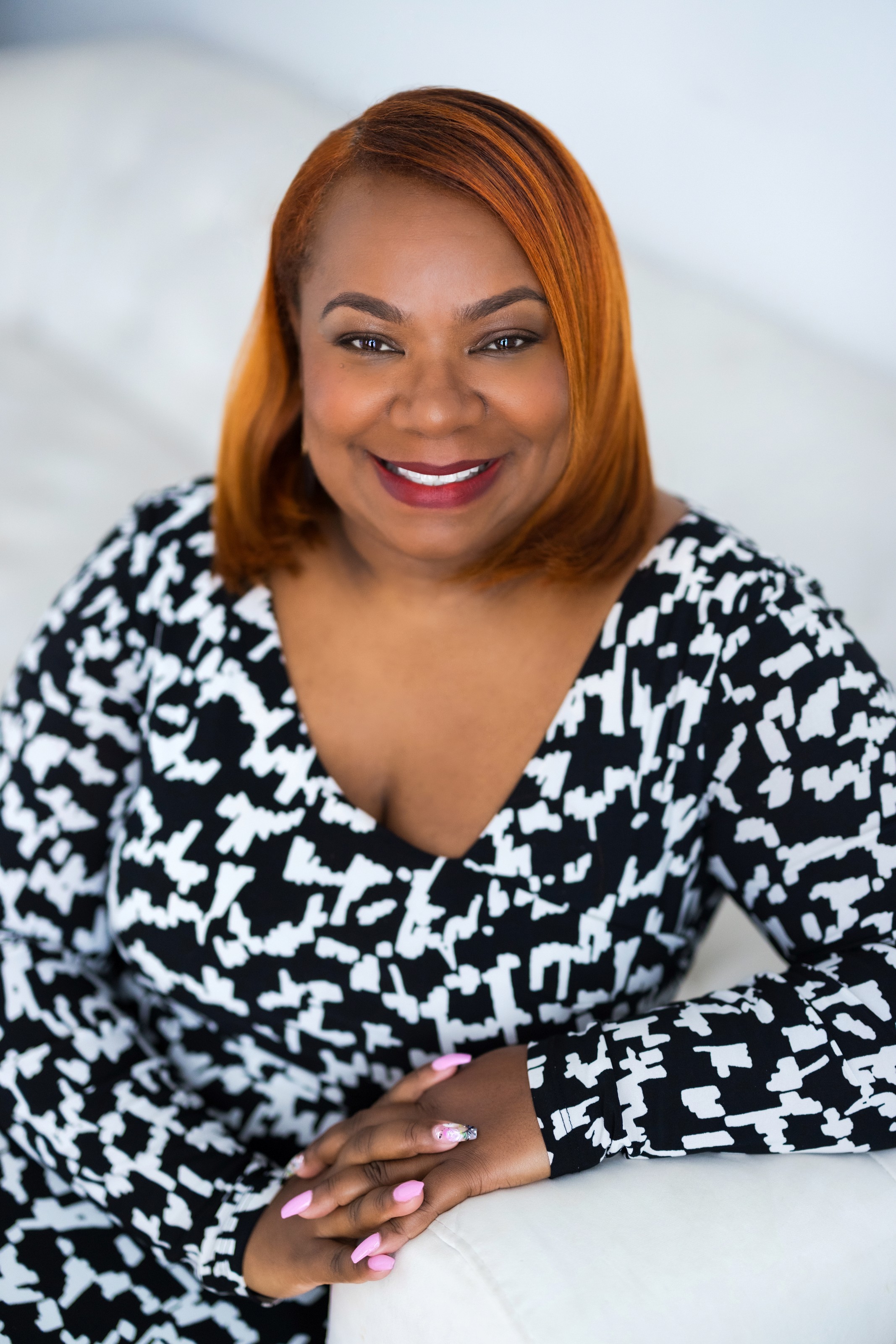
Clianda Florence, Educator, Author, Literacy Advocate, and Candidate for New York State Assembly’s 136th District
Clianda Florence’s story begins with legacy.
Raised in the shadow of courage and conviction, she carries forward the spirit of her grandfather, the late Minister Franklin Florence, a civil rights leader whose voice helped shape Rochester’s fight for justice. From that inheritance, Clianda found her own calling: to make literacy not merely a classroom skill, but a doorway to dignity, freedom, and opportunity.
For more than 20 years, Florence has served as an educator, author, mother of three, and community advocate. Her life’s work has been rooted in a simple but powerful belief: when people learn to read, write, speak, and think with confidence, they gain the power to shape their own future.
That belief became the foundation for Strength 2 Say, the platform she founded to provide classes, professional development, and book studies that help individuals and communities find their voice. It also gave life to Let’s Get L.I.T. — Liberating Individuals Through Literary Texts — a nonprofit that brings literacy beyond school walls and directly into homes, neighborhoods, and family spaces. Through book clubs, block parties, summer sessions, and family-centered programs, Florence has worked to place books, conversations, and possibility into the hands of those who need them most.
Her voice now reaches even further through the Let’s Get L.I.T. radio podcast on WDKX 103.9 FM, where she lifts up diverse stories and leads meaningful conversations on literacy, education, and community transformation.
Florence’s work has earned wide recognition.… Read More