

 iHeartRadio
 Apple Podcasts
 Spotify
 TuneIn
 Podchaser
 Castro
 Amazon Music
 PlayerFM
 RSS Feed
 Life Before the Damage

Life Before Damage frames a hard hour on life, law, family, and responsibility. Host Peter Vazquez speaks with Attorney Mary J. Browning of Operation Outcry at The Justice Foundation about abortion pills, women injured by abortion, state sovereignty, and the fight over mifepristone. John C. of Caring Choices then brings the issue home to Rochester, where pro-life conviction becomes diapers, ultrasounds, fatherhood, post-abortion healing, and support after birth. The call is not merely to oppose death, but to build abundant life.
Life Before Damage. There are days when the calendar remembers strange things.
End of the World or Rapture Party Day. A failed prediction. A missed apocalypse. A reminder that man has always tried to mark the hour of judgment, even while ignoring the judgment already unfolding in front of him.
Peter Vazquez opened with that irony, then turned the question where it belongs: why do we invent days for failed prophecies, but still struggle to celebrate life in the womb?
That question carried the hour.
Attorney Mary J. Browning, Legal Advisor to Operation Outcry at The Justice Foundation, joined the conversation with the weight of testimony behind her. Not talking points. Not slogans. Testimony. She serves as Counsel of Record in a Supreme Court amicus brief filed on behalf of 2,794 women injured by abortion, drawn from thousands of declarations collected by The Justice Foundation.
These are women who were told abortion would be simple, private, clean, and empowering. Then came the pressure. The isolation. The physical injury. The silence. The grief that did not fit the marketing language.
Behind the word “choice,” some women describe coercion. Behind the word “privacy,” some describe abandonment. Behind the word “care,” some describe a bathroom floor, a body in shock, a child lost, and a wound no political campaign wants to name.
Mary Browning walked through the fight over the abortion pill, the FDA’s eroded safeguards, the removal of in-person visits, the rise of mail-order abortion, and the question of whether state sovereignty still means anything when one state can shield the sending of abortion drugs into another.
This was not theory. This was law meeting blood. The Comstock Act. The Fifth and Fourteenth Amendments. The Declaration’s first promise of life, liberty, and the pursuit of happiness. America marching toward its 250th birthday while still arguing over whether the smallest child is worthy of protection.
Then the conversation came home.
John from Caring Choices stepped in from the local front lines, where the answer to abortion is not just a speech, a sign, or a court brief. It is diapers. Wipes. Ultrasounds. Parenting classes. Fatherhood. Adoption conversations. Post-abortion healing. Men and women walking beside mothers and fathers long after the crisis moment passes.
He made the answer plain: pro-life must mean pro-abundant life. Not only before birth. After birth. Through fear. Through poverty. Through fatherlessness. Through confusion. Through the long road of learning how to be a mother, a father, a family.
Rochester knows what happens when a culture disconnects life from responsibility. It shows up in the abortion numbers. It shows up in fatherlessness. It shows up when young people can connect to a phone but not to a child. It shows up when public spaces become stages for disorder and adults act surprised that children raised without roots drift toward chaos.
This is the Vanbōōlzalness Crisis: a culture that calls death compassion, disorder expression, abandonment autonomy, and then wonders why families are breaking, children are raging, and communities are tired.
But this hour did not end in despair. It ended with a command. Be a leader. Speak for life. Stand with mothers. Stand with fathers. Defend the unborn. Help the wounded heal. Build families strong enough to resist the culture that profits from their collapse.
Because the next step is not another polished excuse. It is truth with backbone. Mercy with standards. Life defended before the damage becomes another headline.
Promote your brand on the Next Steps Show, airing on WYSL1040.com's AM 1040, FM 92.1, and FM 95.5 West stations. Discover more at nextstepsroc.com/advertise-with-us or dial (585) 346-3000 to get in touch with the WYSL team.
Have you ever dreamt of sharing your unique voice, stories, or expertise with the world through a podcast? Perhaps you're bubbling with ideas but uncertain about where to begin? The journey from idea to launch can be daunting, but that's where we come in. Dive Into the World of Podcasting with Next Steps Radio PODCAST Network! Visit NextStepsRoc.com or call Peter at (585) 880-7580.

Peter Vazquez:
Welcome to The Next Steps Show with Peter Vazquez, your starting point for discussion.
Today is End of the World or Rapture Party Day. Did you know that?
Bob Savage:
Everybody knows that, Peter.
Peter Vazquez:
I just found this out.
Bob Savage:
You always want to share.
Peter Vazquez:
According to radio preacher Harold Camping, May 21, 2011 was supposed to be the day of the Rapture. That did not work out too well. Then he changed it to October 21, 2011, and that did not happen either.
The thing is, I find some of these days that we celebrate as human beings interesting. What I do not understand is why we do not celebrate life more often, especially life inside the womb.
Most of us, I think, do that in our own way. We raise families, build careers, get education, and hopefully accomplish things. I think that is part of doing what God told us to do: come here and do our work.
But when you look at numbers like Monroe County’s teen pregnancy rate at 19.2 per 1,000, and when you look at a county abortion ratio of 265.8 abortions per 1,000 live births, it should make us stop and think.
Bob Savage:
How many Planned Parenthoods do we have?
Peter Vazquez:
We have one too many. There is one in Brighton and one on University Avenue, both within a small radius.
When we talk about life, when we talk about pro-life issues, and when we talk about abortion, we have to ask a hard question: are people trying to play God?
To have that discussion, I have invited Attorney Mary J. Browning, Legal Advisor to Operation Outcry at The Justice Foundation, and Counsel of Record in the Supreme Court amicus brief filed on behalf of over 2,000 women injured by abortion.
Mary, welcome to The Next Steps Show.
Mary J. Browning:
Thank you for having me on your show. I am so honored to be here.
Peter Vazquez:
The pleasure is ours.
We were just talking about people who try to predict things like the Rapture, even though the Bible is clear, especially Matthew 24:36, where it says, “Of that day and hour knoweth no man.”
But when we look at abortion numbers, I start to wonder if some people are trying to play God.
Mary, tell us who you are. What is Operation Outcry, and what is The Justice Foundation?
Mary J. Browning:
Thank you for asking.
I spent most of my legal career as a litigator, but as of late, I am the Legal Advisor to Operation Outcry. Operation Outcry is the ministry of The Justice Foundation that collects declarations from people who have been harmed by abortion.
We utilize those declarations in briefs around the country and also in the U.S. Supreme Court. Sometimes we call upon people, if they are interested, to testify in cases or before legislators. It is a way of bringing purpose from the pain of abortion.
Peter Vazquez:
And this brief impacts the issue of abortion nationwide, correct?
Mary J. Browning:
That is correct.
Peter Vazquez:
If I understand correctly, the brief says the women represented suffered grievous psychological injuries, and many suffered severe physical complications. The Justice Foundation says it has collected 4,855 legally admissible affidavits or declarations from women injured by abortion.
Behind the word “choice,” which is the word many use instead of pro-abortion, some women describe pressure. Behind the word “privacy,” some women describe isolation.
Can you talk to us more about these affidavits and how abortion is actually impacting people?
Mary J. Browning:
Most definitely.
As you mentioned, for a number of women, abortion was truly not even their idea. It was not what they would choose. It was what someone else wanted them to do.
Up to about 50 percent of women who have abortions say it was really not something they wanted or something they sought. A recent study indicated that the suicide rate or the rate of hospitalization for depression is significantly higher for women who undergo abortions they did not really want than for women who carry to term, have an abortion they were seeking, or have a miscarriage.
It is very different for women who have abortions, particularly those who are forced or pressured into having abortions.
Some of the psychological harms include suicide, depression, and addiction to substances as a way to numb the pain. Some women check out of their lives in terms of not bonding with subsequent children. Some have difficulty in personal relationships because of betrayal or because they feel unworthy of having a good relationship after undergoing an abortion.
There is a whole range of experiences for women. The harm is not only to women, either. Some men have paid for an abortion, taken their girlfriend or wife to get an abortion, or later learned that they had a child who was aborted. So the harm can be to both women and men.
Bob Savage:
With abortion, you always have one dead and one injured. I do not believe I have ever had a conversation with a woman who had an abortion who is not suffering because of it.
Peter Vazquez:
Mary, before we get too much into the case, I want to ask this. You are coming at this from the perspective of an attorney, through a legal lens, but so many people dismiss the whole abortion discussion as some religious issue that has no place in mainstream conversation.
I disagree with that. At the core of abortion is the termination of a life. Whether someone is led to believe it is something different or not, that is what really happens.
Mary J. Browning:
For the people I know who have gone through restoration and healing, it is generally through a relationship with the living God, where they are able to identify and accept forgiveness for what has happened.
But this is not just religious. It goes against our moral code. As women, our identity is to be nurturers and protectors of the next generation. The womb was intended to be the first place of sanctuary for our offspring. Men are intended to be protectors and providers.
The very nature of abortion goes against everything we were created to be and do as men and women, as male and female, as mother and father.
Peter Vazquez:
Tell us about the brief. What is it called? What is its intent? There are about 4,855 declarations, and the brief is filed on behalf of approximately 2,794 women. What does all of that mean? And what is a brief?
Mary J. Browning:
We have about 4,855 people who have given us their declarations. About 2,800 of them, specifically 2,794, have given us permission to represent them specifically in briefs that we file. That is the difference in the numbers.
This particular brief that we recently filed in the U.S. Supreme Court speaks to the issue of the abortion pill and the harm from the abortion pill itself, along with the broader harm of abortion generally.
For decades in our country, most abortions were surgical abortions. Now most abortions occurring in our nation are from the pill. We talk about “the pill” as if it is one pill, but it is really two different drugs. The first causes the baby to disengage from the uterus and is intended to starve the baby to death. The next pill causes the uterus to contract with the intention of extracting the baby from the womb.
The case itself is really about that first drug and how it is disseminated.
The FDA approved the drug in 2000. When they approved it, they had certain protections in place for women and girls receiving the drug. Over the years, they reduced and eliminated almost all of those protective measures.
In 2000, when they approved the drug, they said it would be safe only if the mother was not over seven weeks gestation, only if there were three in-person visits, only if there was an examination to rule out an ectopic pregnancy, and only if the woman was observed when taking these pills to make sure she was not having some immediate adverse reaction.
Over time, those protections were eroded. In 2023, some of the last protections were removed, so now there is no requirement for any in-person visits. There is no examination of the mother. There is no determination of gestational age. There is no identification of whether this is an ectopic pregnancy or whether the pregnancy is further along than expected.
Peter Vazquez:
That is Attorney Mary J. Browning, and this is important for you to know because these are the implications.
We are back on The Next Steps Show on the Voice of Liberty.
Proverbs 31:8-9 says, “Speak up for those that cannot speak for themselves, for the rights of all who are destitute. Speak up and judge fairly; defend the rights of the poor and the needy.”
I think the preborn qualify.
CDC reports that in 2022, 53.3 percent of abortions were early medication abortions at nine weeks or earlier. Among eligible abortions, 70 percent were early medication abortions.
This brief argues that the FDA removed essential protections such as in-person visits. Mary, thank you again for your time today.
Mary J. Browning:
Thank you, Peter.
I would add that another protection the FDA removed was not allowing mail order. In 2023, the FDA said there was no need to see a doctor. You can order these online. There is not even a requirement for a video visit. A male or a female, anyone, can go online and get them.
The other part is mail order. You can go online and the drugs will be mailed to your home, whether or not your state allows abortion pills.
Peter Vazquez:
It appears to me that this case is not just about chemical abortion. It is also about state sovereignty.
Justice Thomas, in his dissent, said the Comstock Act was violated. He said all of this violates the Comstock Act. Can you speak to that?
Mary J. Browning:
I agree with Justice Thomas on that.
The Comstock Act prevents mailing or sending by common carrier any abortifacient. The drug we are talking about is certainly an abortifacient. That is the purpose of this drug.
We do not see our federal government enforcing this law, and that is one of the complaints the state of Louisiana has in this lawsuit. It is also one of the points those of us filing friend-of-the-court briefs are mentioning to the U.S. Supreme Court. The FDA’s protocol for pill abortion violates federal law, specifically the Comstock Act.
Peter Vazquez:
Can you describe the Comstock Act for listeners?
Mary J. Browning:
The purpose of the Comstock Act was to prevent the mailing of certain materials. It covers a number of materials, including pornography and other things. One thing it explicitly banned is the mailing of drugs or items used to cause abortion.
It is broad enough to include common carriers, not just the U.S. Postal Service. Today mail can move through FedEx or other carriers, but the Comstock Act is broad enough to encompass those methods. It would prevent the mailing of drugs that cause abortion.
Peter Vazquez:
KFF reports that Louisiana identified $92,000 in Medicaid costs for two women who needed emergency care in 2025 after complications allegedly caused by out-of-state mifepristone.
Guttmacher also reported approximately 642,700 medication abortions in 2023, about 63 percent of all abortions in the U.S. health care system, up from 53 percent in 2020.
Mary, I have a granddaughter who passed away about 10 seconds after she was born. She was about 22 weeks old. I remember holding this baby because they allowed us to keep her in the room after she passed for a day, I believe. She was a full baby: hands, eyes, ears. She was there.
I remember thinking about the effect it would have on someone’s mind to watch that go down the toilet. It has to be astronomical.
Mary J. Browning:
You are so right about that, Peter. That is part of the problem, and part of what our brief tries to demonstrate to the Court.
The trauma to women and girls who have taken these drugs is significant. There is no age limit on who can be given the drug. The language used around it is part of the problem. Women are told, “This will restart your period” or “This will take care of the tissue.” That is a problem because it is not talking about the reality that this is your child, this is a baby.
When the baby is expelled at home, in the bathroom, into the toilet, or on the floor of the shower, these women and girls are not expecting to see their own child. The trauma is exponential.
Then they are left with the question of what to do with the baby, with the human remains. Many women and girls cannot flush the baby down the toilet. They do not want to put the baby in the trash. They are left with what to do with the baby. The trauma behind that has to be life-changing and long-term.
Peter Vazquez:
The Justice Foundation’s Declaration of the Right to Life in the U.S. Constitution argues that the Constitution contains two Life Clauses, the Fifth and Fourteenth Amendments, and that those clauses protect life from commencement.
The declaration ties that claim to the Declaration of Independence, which recognizes that all men are created equal and endowed by their Creator. The declaration also argues that American common law, statutes, and government outlawed abortion for approximately 200 years, from the 1770s to the 1970s.
Mary, New York has moved aggressively to protect abortion access, while Louisiana and other states are fighting to restrict mail-order abortion pills. What should listeners here in New York and across the world understand about this post-Dobbs clash between the states? Governor Hochul is essentially saying, “Forget your state, come here and we will give you your abortion.”
Mary J. Browning:
It has gone even beyond that for New York. If I understand correctly, New York has a shield law, which means it will protect people sending abortion drugs into states like Louisiana, where those drugs and abortions are banned within state borders.
You mentioned whether this erodes a state’s authority to determine what occurs within its own borders. Laws like New York’s shield law protect people sending drugs into states like Louisiana. That is part of the case that was recently at the U.S. Supreme Court.
I believe there was a New York prescriber who sent the drugs into Louisiana, and Louisiana cannot make anything happen to that person because New York will not extradite the person to Louisiana to stand trial for the harm occurring in Louisiana.
Peter Vazquez:
It is like we live in two different worlds as we move toward our 250th anniversary of what America truly is.
We are down to the last couple of minutes. I have attorneys who listen, and I have law students and parents listening too. What advice would you give them if they feel called to pro-life legal advocacy? We need a lot of you.
Mary J. Browning:
I would encourage them to get active. There is a simple act any listener can do. They can go to The Justice Foundation and sign the declaration specifically indicating that we have the right to life in our Constitution.
As you mentioned, Peter, it is in the Fifth and Fourteenth Amendments. It is in our Declaration of Independence. When we first declared independence from Britain, we claimed that each person had the inalienable right to life, liberty, and the pursuit of happiness.
For someone in law school, I would encourage them to connect with the pro-life legal community. There are organizations to which attorneys can be connected and can be useful.
Peter Vazquez:
Ladies and gentlemen, Attorney Mary J. Browning, Legal Advisor to Operation Outcry at The Justice Foundation, and Counsel of Record in the Supreme Court amicus brief filed on behalf of 2,794 women injured by abortion.
Mary, thank you so much for your time today.
Mary J. Browning:
Thank you.
Peter Vazquez:
May God continue to bless you in the work you do.
This is The Next Steps Show on the Voice of Liberty. We will be right back.
Welcome back to The Next Steps Show. Enough with the polished excuses, Bob. Would you agree with that statement?
Bob Savage:
What excuses?
Peter Vazquez:
Enough with the polished excuses. We hear them all the time.
The mayor was recently talking about how great the city is and how shootings are down, and then he is on the news talking about these fights with 400 or 500 youth at places like Ontario Beach Park.
Everyone knows Ontario Beach.
Bob Savage:
No arrests?
Peter Vazquez:
That is the thing. Four or five hundred young people, organized online, and no arrests. They know about it. It was not the first one this week.
But what do you expect when there is a culture of death in a county, in a state, that preaches “ever upward”? A lot of these kids come from the same neighborhoods I grew up in. What message do policy leaders send when abortion is readily available, when medication abortion is being pushed, and when leadership keeps promoting the wrong priorities?
Teen pregnancy rates are 19.2 per 1,000. To expand on the first half of the show, I have asked someone local to talk to us about this culture of death that we are seeing. This is John C. with Caring Choices.
John, thank you for joining us on The Next Steps Show.
John C.:
Thank you, Peter. Thank you for having me.
Peter Vazquez:
I appreciate you. I do not know if you heard the first half of the show, but I had Attorney Mary Browning, Legal Advisor to Operation Outcry at The Justice Foundation. We were talking about the abortion pill and the legal fight around it.
Here in Monroe County, and here in New York State, abortion seems almost like a commodity. We are not seeing what we are seeing in states like Louisiana.
John C.:
That is absolutely true. Politically, we have a governor who had $100 million in the New York State budget for abortion in different ways: funding of Planned Parenthood, purchasing abortion pills, and other efforts. We live in a state that is definitely not Louisiana.
Peter Vazquez:
John, you are part of Caring Choices. Tell us what Caring Choices is, because it is local here in Rochester.
John C.:
Caring Choices is a pregnancy health center. We have a location on Chili Avenue in the city, another location in Webster, and we have a mobile unit that goes into underserved areas.
We do pregnancy testing, options counseling, parenting classes, abortion education, community referrals, material aid for moms and dads, car seat programs, and life skills. Parenting classes are a huge part of our ministry.
Peter Vazquez:
You mean tools that actually shift culture back toward being a decent human being. Not fighting, not posting on Facebook that your highlight of the day is violence, but actual counseling and discussion.
John C.:
Our counseling is about helping every woman have a quality choice and understand what that choice means. It means understanding that life is valuable, that children are a heritage from the Lord, and that even if the world tells her she cannot raise this child, we are going to share with her and walk alongside her.
Not just at the moment of decision. We walk alongside her with diapers, wipes, clothing, car seats, and parenting classes to help her connect with her child.
We live in a disconnected society. We often have moms come in and say, “I do not know how to connect with my child. I can connect with my phone. I can connect with social media, but I do not know how to connect with my child.”
We are there to walk alongside them and help them get grounded. Our mission is John 10:10: Jesus came to give life and life more abundantly. That is the passion of our ministry, to walk alongside them. We are there at the point of decision with ultrasounds as well.
Bob Savage:
John, what do you say when the left cynically says conservatives and Republicans love children only until birth, and then the mom is on her own?
John C.:
I think I just pointed to that. We are there to walk alongside them. We are with them to help them understand that they are capable.
Raising children is hard, but it is also a blessing. Earlier, I did not get Peter’s call because I was babysitting my grandkids and having a blast with them outside on the swing set.
Peter Vazquez:
When you say you walk alongside these moms, what do you mean by that?
John C.:
We sit with them. We talk with them. We counsel them. We listen to them. Counseling is really about listening, hearing their needs, and walking alongside those needs.
Those needs can be physical: diapers, wipes, car seats, clothing, winter coats. We have baby boutiques at both centers where moms can go shopping. We also help them understand that this child may be the greatest gift they will ever have.
I remember a client from a number of years back, and this story has repeated itself over and over again. Six months, a year, or two years later, a woman comes in and says, “I do not know what my life would be like without this child.”
We recently had a young woman share that her child saved her life. She was in an abusive relationship, and the love of her child saved her life.
Peter Vazquez:
I have heard that story so many times.
I have done a lot of work with the pro-life community. I want to highlight men like yourself, Mike Warren, Jim Havens, Jim from CompassCare. You men are taking the lead in this pro-life issue. Tell me why.
John C.:
It is not just the moms.
First, life is a gift from God. Children are a heritage from the Lord. It is critical to have men involved.
We live in Rochester, and Rochester has 73 percent fatherlessness. One direct outcome of fatherlessness is teen pregnancy. You were mentioning criminal activity earlier, and that is another direct outcome of fatherlessness.
One of the great joys of being part of this ministry is getting to sit with dads when they come in with their girlfriend or wife for an ultrasound. You were talking about abortion pills earlier, and I did not hear all of the attorney’s conversation, but 73 to 80 percent of abortions at this point are truly abortion pills.
Peter Vazquez:
And New York State is shielding abortion pill providers from other states.
Leadership is important. In New York State, we have leadership that promotes everything other than life, in my opinion. Recently, we have seen the result of what happens when there is a death culture in a community like Rochester.
The mayor said the issue goes beyond security and lies in community engagement. He also said sometimes parents are “fueling the fire.” But parents today in the city of Rochester are often the product of policies that push this culture.
John C.:
I agree. None of us are perfect parents, but that is exactly why parenting and fatherhood classes are a critical part of what we do.
We are not just there to walk alongside the mom and dad at the point of decision. We want to walk alongside them for the next three to five years. Our ministry cannot go on forever, so we eventually hand them off to the local church or other agencies. But we want to walk with them in those critical early years to help them become the moms and dads they desire to be but may not know how to be because of the culture we live in.
Peter Vazquez:
When we come back from break, I want to ask you a simple question before I let you go. Is abortion truly just a religious thing that religious fanatics need to worry about, or is it something that impacts the secular world as well?
We are back with John C. from Caring Choices.
If you are listening in Rochester, or in any urban center, and you do not normally listen to talk radio, make this recommendation to your friends. This is why The Next Steps Show exists. I know firsthand what it is to be you. Think about that.
John, thank you again for staying with us.
John C.:
It is a pleasure.
Peter Vazquez:
We are in a world where abortion is being normalized. What would you say to people who think abortion is good, especially given the way it impacts black and brown America? As a man who believes in God, country, and family, what would you say, including the secular side of this issue?
John C.:
I could go in a number of directions.
Start with the birthrate in our nation. The birthrate is dwindling. We are down to around 1.6. Countries like Japan are down around 1.1, and they have no one to take care of their elderly. We are destroying ourselves.
Even from a non-religious path, if we are a capitalist society and you want that society to grow, does it grow with fewer people? No, it does not.
Peter Vazquez:
Even the most radical non-faith-based person can understand that.
John C.:
From a political standpoint, if you are a political party that promotes a culture of death and the ending of children’s lives, where do you think your future constituents are going to come from?
In the church and the body of Christ, we are told to be fruitful and multiply.
Peter Vazquez:
Can we say we are pro-life if we are not also pro-mother, pro-father, pro-family, pro-adoption, and pro-support after birth?
John C.:
No. That is why we use the term pro-abundant life.
The term pro-life can divide, and so can pro-choice. But who does not want abundant life as a mom or a dad? Who does not want abundant life for their family and children?
We focus on abundance. God wants us to have abundant life. He wants us to be fruitful. He wants us to enjoy raising children. That does not diminish the fact that raising children is hard and expensive. It is challenging, but it is the greatest joy you will ever have.
We want that for dads, not just moms. We want the whole family to experience abundant life. The family works best when it is knitted together. Not that a mom cannot do it on her own, because we work with many moms who do, but our passion is to see fathers involved.
More recently, we are seeing men coming into our center with the young woman. The men want to keep the child, and the woman is struggling with it. I think cultural pressure is driving much of that.
Peter Vazquez:
Once upon a time, my ex-wife decided she wanted an abortion. This was before I started paying attention to God, country, or family. She said, “Take me to Planned Parenthood on University Avenue,” and I did. She told me she wanted to check a few things.
A week later, she had me take her back to finalize whatever she was doing. Several months later, I found out she had ended the life of one of my children.
As a man, I do not know how I felt about that. I knew there was nothing I could have done legally had I known. There was no legal right there.
John, for our listeners, share what Caring Choices is and what options you have for women, and also for men who want to maintain a relationship with their unborn child.
John C.:
Everything we do is free, and everything is confidential. We receive no government support for the work we do. We have a great staff and volunteers who are well trained. They are not professional counselors; they are coaches.
We offer pregnancy tests and counseling. Options counseling means we walk through what abortion is, what parenting is, the challenges of parenting, and adoption. We work with a great organization out of Syracuse that does adoptions.
We provide ultrasounds for moms. If they choose life, we provide prenatal vitamins. We walk alongside them with baby gear such as strollers and car seats, diapers, wipes, and clothing. We also offer prenatal parenting classes and toddler parenting classes.
We also look at needs. Are they struggling with housing? We can make referrals for housing. Are they struggling with postpartum depression? We help there as well.
You mentioned abortion recovery. Most people who have been part of an abortion bury it deep. It may be 10, 20, or 30 years before it really comes to the surface. It can manifest itself similarly to PTSD, with drug abuse, alcohol, and other struggles. So we provide post-abortion recovery care for both men and women.
Peter Vazquez:
What is your website?
John C.:
Our website is caringchoicesphc.com.
Peter Vazquez:
Caringchoicesphc.com. What does PHC stand for?
John C.:
Pregnancy Health Center.
Peter Vazquez:
You are adding value to the 250th anniversary of this great nation by helping ensure we have patriots being born. I do not mean Republican or Democrat. I mean patriots who believe in God, country, and family.
John C.:
Amen.
We are having two golf tournaments in August, and one of the things we will celebrate is our nation’s 250th anniversary at that golf tournament. They can learn more at caringchoicesphc.com/golf.
Peter Vazquez:
Do you know Mike Keneally from Youth for Christ Rochester?
John C.:
I do know Mike. I have been on his show before.
Peter Vazquez:
You are saving preborn lives in the same community where Youth for Christ Rochester is saving lives for those who chose to keep living with their children. Is that not amazing?
John C.:
Amen.
Peter Vazquez:
John, thank you. Caringchoicesphc.com. May God bless you and the work you continue to do.
John C.:
Thank you, Peter. Thank you, Bob.
Peter Vazquez:
Be a leader, ladies and gentlemen. Be a leader.
God bless these United States of America. And do not let a second go by, como digo todos los días, be an advocate for liberty todos los días.
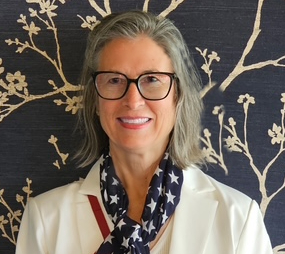
Attorney
Mary was a private practitioner and owner of a family law firm serving the Mid-Missouri area for close to 20 years. During that time, she gained extensive litigation experience in hundreds of criminal and civil trials and became a strong advocate for the safety and protection of abused and neglected children.
She later served as General Counsel for the Missouri Department of Social Services, where her work included testifying at budget hearings and committee hearings, drafting legislation, writing Executive Orders, and educating legislators. She also served as the State’s Child Fatality Review Panel Chair for several years.
Throughout her legal career, Mary prosecuted criminal cases involving child victims, domestic violence, assaults, sexual offenses, and drug violations. She is licensed to practice law in Missouri and before the U.S. Supreme Court.
Most recently, Mary serves as Legal Advisor to Operation Outcry, a ministry of The Justice Foundation. In that role, she has written or assisted in writing a number of briefs advocating against the harm of abortion and for the protection of women and girls who experience abortion, as well as some men.