
 iHeartRadio

 Apple Podcasts

 Spotify

 TuneIn

 Podchaser

 Castro

 Amazon Music

 PlayerFM

 RSS Feed
LaToya Nkongolo: Representation Is Not the Result
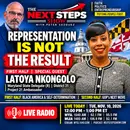
Maryland Delegate and Project 21 Ambassador LaToya Nkongolo joins Peter Vazquez to examine faith, political identity, public safety, education, democratic socialism and opportunity after the November 3 election. Later, Peter and Bob Savage challenge identity-based political messaging and debate entrepreneurship, Governor Kathy Hochul's tax statements, and the cost of state mandates.
Key Takeaways
- LaToya Nkongolo describes her experience as a Black Republican in Maryland and discusses why political labels should not determine how people judge her work.
- The interview explores faith, family, public safety, education and opportunities for people in communities of every background.
- Peter Vazquez and Bob Savage question political messaging built around race and call for leaders to demonstrate practical results.
- The discussion addresses democratic socialism, job creation, entrepreneurship, New York tax promises and county costs.
Today, Maryland State Delegate and Project 21 Ambassador LaToya Nkongolo joins Peter Vazquez to confront a question that election-night celebrations cannot answer: Does representation produce real opportunity? Drawing on her experience in mental health, addiction treatment, community advocacy and public office, Nkongolo discusses political labels, her family's history, public safety, education, democratic socialism and the challenge of earning trust across communities.
After the interview, Peter and Bob Savage examine the use of race in American politics, a widely circulated graphic celebrating Black elected leaders, and the difference between symbolic milestones and measurable progress. The discussion challenges Republicans to reach voters with substantive ideas rather than identity-based messaging, while considering economic independence, entrepreneurship, job creation and the role of government.
The conversation also turns to Governor Kathy Hochul's statements about taxes and the cost of mandates passed from state government to counties. Election results determine who holds office. The more demanding question is whether public decisions improve the lives of families, workers, entrepreneurs and their communities.
Speakers' political opinions, interpretations and allegations are presented as their views rather than independently established findings. Survey responses about favorability toward an ideology do not, by themselves, establish an individual's political identity or that of elected officials.
Original broadcast: November 10, 2026, at 1:00 PM EST (America/New_York). The Next Steps Show with Peter Vazquez on WYSL/WLEA, Voice of Liberty Network. Putting People First.
Keep the conversation going: More episodes · Watch videos · Read commentary · Send a voice message. Live weekdays at noon Eastern on WYSL and WLEA.
Advertising and sponsorship opportunities.
Frequently Asked Questions
Who is the guest on the November 10, 2026 episode?
Maryland State Delegate and Project 21 Ambassador LaToya Nkongolo joins host Peter Vazquez to discuss political identity, leadership and public service.
What does the episode say about representation?
Nkongolo, Vazquez and Bob Savage explore the difference between recognizing cultural identity and judging leaders by political labels, experience and measurable outcomes.
Which economic and government issues are discussed?
The broadcast examines democratic socialism, entrepreneurship, job creation, Governor Kathy Hochul's tax statements and the costs of government mandates passed to New York counties.
LaToya Nkongolo: Representation Is Not the Result
The Next Steps Show | Episode 740 | November 10, 2026
Edited reading copy of the original on-air transcript. Commercials, station news, music and station-break announcements are omitted. Automated transcription can contain errors. A repeated caption artifact was condensed near 00:07. Timestamps are from the original source transcript and may not line up with the edited podcast MP3.
Opening: Family, Faith and the Election
Program introduction [00:00:00]: In a world that seems to change daily, what will you do next? Welcome to the next steps show with Peter Vazquez, a starting point for discussion.
Peter Vazquez [00:00:13]: Yep. Yep. Yep. Yep. Yep. We are doing a okay. You know something, ladies and gentlemen? Let me start off the show today by saying, listen. You know what? Look around your family, especially when you have older folks in your family, like an older mother-in-law, especially, and for those guys that, have the privilege of having a mother-in-law with you. You know what? Give them a hug. You know, at one point or another, look over and say, hey. Hey.
Peter Vazquez [00:00:36]: Hey. Thank you. When they say thank you for what? Say, well, you know what? Thank you for for the beautiful daughter or or son, I guess. You know, that that that you that you allowed me to marry and that you're raised to be such a great person because you know something? Someday, those people are gonna be gone. And the thing is that impacts your life more than you can even imagine as an in law, Bob. You know, that trips me out. Anyhoo, I'm just babbling. No. No. You're not.
Bob Savage [00:01:05]: It's good thought. Let's be thankful for our elders and, the wisdom that they impart, and let's try to, you know, enjoy the time we have them.
Peter Vazquez [00:01:14]: Something a little positive, I would say, you know, right off the bat. Why not? Because I am gonna talk a little politics today, ladies and gentlemen. We're gonna talk a little bit more about, elections and and and not from a perspective of, oh, man, we lost, but from a perspective of where where do we go from here? And the thing is, see, you know, I say it all the time, especially as a conservative, especially. Right? You know, in America, and I'll tell you, I love God, country, and family that we've always gotta see what's happening tomorrow.
Peter Vazquez [00:01:42]: We have a great nation worth protecting. And there is nothing that has been laid in front of us since, well, this past election that says that anything has changed in that respect because the work is still up to us, and it doesn't even matter about skin color for that matter.
Interview: Maryland State Delegate LaToya Nkongolo
Peter Vazquez [00:01:57]: You know, joining us right now, see, is the Maryland Republican state delegate deputy minority whip and project twenty one ambassador, LaToya Nkongolo. Ma'am, thank you for joining me on the Next Step Show today. Benvenida.
LaToya Nkongolo [00:02:13]: Thank you. Thank you so much, Peter, for having me.
Peter Vazquez [00:02:16]: Yes. Absolutely. You know, I'll tell you. I I, you know, you know, I I... I'll tell you, I love family. And I think family is the reason why I continue to do the things that I do. When I say things like God, country, and family, you know, I say it in that order. And people are like, why? And I'm like, well, listen. Without God, do we really have a country? And and I want my family to thrive and do well in the country that God had given us. And and that's kinda where all that comes from. Let's tell you
LaToya Nkongolo [00:02:43]: what I mean, we... When you say one nation under God, you know, our country was founded on godly principles. So that is the, that that should be what drives us and what is, you know, overseeing, you know, who we are as a society.
Peter Vazquez [00:02:59]: 100%. And interestingly, if I may, you know, the the the Bible brings us together, you you know, united in unity under God's name, right, and all that great stuff. And and we live in a society that talks a lot about diversity and talks a lot about, bringing our individualism, which, you know, sounds good, I guess, in theory, kinda. But doesn't a group united work a little better than people that are diverse with their own agendas?
LaToya Nkongolo [00:03:27]: That's right. I mean, we're we're not, you know, an island as a people. And, you know, a lot of people that say that they're independent, we're not independent. God did not create us to be independent. He created created us to be interdependent where we work collectively, you know, use our strength to to build one another up. And that that can be whether it be in our family or in our communities. But we are interconnected, interdependent people, and that's the way God made us.
Peter Vazquez [00:03:55]: Now if you don't mind, ma'am, tell us exactly what does it mean to be a Maryland Republican state delegate and and especially a deputy minority whip. Those are titles that many people here in New York may not be too familiar with, and we're listened to worldwide, actually, and on the West Coast. So what is it? Okay. Is it an elected position, or did somebody It
LaToya Nkongolo [00:04:15]: is an elected position. Yeah. So it's an elected position. So a state delegate is what we're referred to here in Maryland. In most other states, it is the state representative. So we are the lower house, the lower chamber of, the general assembly. So you have your senators and you have your delegates. So we're equivalent to a state representative. And and, you know, what that means is that, you know, we meet for a legislative session to pass bills that impact, the lives of Marylanders across the state. So that... That's my role as a Republican.
LaToya Nkongolo [00:04:50]: I am in the super minority here in Maryland. As a black Republican, I'm even more of a super minority, because I'm the only black Republican serving in the Maryland General Assembly and actually the first to be elected, to the Maryland General Assembly. So so that's my role is to just bring a more conservative perspective, to the house and also just remind people that, you know, our our country is really built for us to to really thrive and and and live the American dream. So a lot of my legislation is focused around around that and my conservative values.
LaToya Nkongolo [00:05:26]: And then you asked about the deputy minority whip. So the deputy minority whip is the person in the house who researches the bills and and tells people why they should or shouldn't vote for the bill. So my job really is to whip the votes. That's why it's called minority whip. So because, the Republicans are the minority, that's where the minority comes from. The whip is really for me to... You know, with the votes to really influence people to support or oppose legislation.
Peter Vazquez [00:05:53]: Well, you know, that doesn't sound very minority to me. That's, I mean, that sounds pretty big, pretty large, pretty influential in somebody who's making things happen. Although the way you describe your state legislator, it was almost like you were describing New York State or Albany.
LaToya Nkongolo [00:06:08]: Yes. Yeah. And that's that's how it is in in pretty much every state. So every state has a general assembly. You have your lower chamber, your upper chamber, and, yeah. So we we pretty much work side by side with our senators, with our governor, you know, in order to to, cast legislation.
Peter Vazquez [00:06:26]: So you mentioned that you were, you know, in the lower house and that you were in the minority because you're a Republican, and and we get it. You know? Because like I said, that's like they hear in New York. But you said also because you're black, which makes it even, more so in the, you know, in the in the minority. But it's not the narrative we're hearing. I mean, at least throughout our area, through everything that I see throughout this nation, you know, they say that people of color are blacks. Right? You know, that they, what?
Peter Vazquez [00:06:55]: You know, that that that they deserve and should be in... Heard and at the top, and and nothing else should matter. But... No. No.
LaToya Nkongolo [00:07:15]: Right. Yeah. And that... And, unfortunately, you know, that... That's the, box that they wanna put us in. You know? It's okay to be a minority. It's okay to be black if you're Democrat. But as soon as you come out of the closet, that's how I describe it. It's like coming out of the closet and people learn that you're a Republican. Now all of a sudden, you're not black enough. You know, where I tell people, I have lived the blackest experience in America. My family has been here, before before emancipation.
LaToya Nkongolo [00:07:44]: You know, my family's been here since the the late seventeen hundreds, and I lived in low income housing all my life. My mother was a single teenage mother. I lived on welfare. I went to a historically black college. I mean, I did everything that that black... That that, you know, what is considered the black experience in America. However, when you're a Republican, it's almost as all of, all of that goes out the window. You have no credibility in some people's mind.
LaToya Nkongolo [00:08:09]: But I'll honestly say that when I get out in the community and I talk to people, whether you're black, whether you're Latino, white, it doesn't matter. A lot of people... If if they hold your values and they hear your point of view, they they tend to agree with you. So I'd I'd I'd go to a lot of black churches for that reason because they don't hear enough from black Republicans, and they only hear the narrative that's being perpetuated by the media.
Peter Vazquez [00:08:32]: In one of those narratives, you know, I'm gonna put that... What you just described right on the Republican's lap. And and and I've had this discussion back and forth. You know? I I tell the leaders here, I said, just stop being fake. Stop with the... You know, I'm gonna put up a bilingual web. No. Stop all that. Just get out there and have a conversation with the people and have them understand because people learn through what they see. So, you know, we talk a lot about here in this area, and we've seen it throughout the nation.
Peter Vazquez [00:08:57]: At LaToya, where where cities especially, they'll say, oh, well, you know, we don't have police officers that look like us. And I'm like, well, yeah, you you... You've convinced all... You know, a good portion of them that being a cop is horrible in the most racist job you can ever have, for example.
LaToya Nkongolo [00:09:12]: Right. I mean... And and the thing is is that, you know, the people that talk about abolishing the police or, you know, the adult, you know, because they don't they don't want police in certain neighborhoods. Well, in my neighborhood, I actually felt safer when there were police officers controlling the community where I could go outside and didn't have to worry about, you know, having to to fight for my life. And, you know, a lot of people who haven't lived that experience, they're now pushing legislation for for people or community that they have no no no concept of. No. You know?
LaToya Nkongolo [00:09:45]: Because they haven't lived it. They haven't experienced it. So, again, that's more of a reason for us to be on this side of the aisle to have these conversations, bring that perspective, to support law and order, to support, you know, education that that focuses on academics and not, you know, social agendas. You know, all of the things that we need in order for all communities, not just black communities, but all communities to thrive.
Peter Vazquez [00:10:09]: And it should be. You know, it brings me to a really important analysis because I've been... You know, everyone says, oh, well, Peter, you know, all elections end up the same. Every president loses something, for the most part or has for, you know, consecutively for a long time, you know, during the midterms. And and my thing is this, there there... There's a new ideology in town. And I say new only because it's become more prevalent, and that's that democratic, socialism. And and what I see, LaToya, is that that ideology has come after not just the Democrat Party. Right?
Peter Vazquez [00:10:46]: That's the obvious. But they've come after communities and people that have been convinced that because of their skin color, they're already at a disadvantage. Now you are a mental health professional. You're an addiction professional. So you probably see this impact, directly in the community a lot because even mental health numbers are on the rise in the black and brown communities. Why do you Absolutely. Why do you think the DSA or the socialists are coming in large numbers, to urban centers where there's, you know, a higher number of blacks and browns?
LaToya Nkongolo [00:11:17]: Well, I I think you you nailed it when you talked about the, mental health piece. It it... It's site... You know, it's psychological warfare. You know? If you can peep... Keep people in psychological change, then, you know, you have more of an influence over how they vote, how, you know, how they respond, you know, their emotional reaction to the media and, you know, and and that's the problem is that, you know, when people feel, and when they're reacting out of emotions and feelings, that that really is what drives this democratic socialism or or any...
LaToya Nkongolo [00:11:49]: Anything else that really is a a threat or a danger to any person. When when you're vulnerable, that's when you're taken advantage of. And, unfortunately, we have too many people who are, you know, psychologically, convinced
Peter Vazquez [00:12:04]: Yep.
LaToya Nkongolo [00:12:05]: That they can get ahead, that they... That the the world is against them, where I'm here undoing all of that, where I'm empowering people, where I'm, you know, giving them the skills.
Peter Vazquez [00:12:15]: LaToya, I'm gonna have to interrupt you real quick. Ladies and gentlemen, that is the honorable project twenty one ambassador LaToya Nkongolo. Yep. I'm a Maryland Republican state delegate. We'll be right back right here in the next step show.
Interview Continued: Elections and Individual Opportunity
Peter Vazquez [00:14:02]: Thank you much, sir. I appreciate it. Ladies and gentlemen, in the telephony, we have the honor of having Maryland Republican state delegate, their deputy minority whip, and a project twenty one ambassador, LaToya Nkongolo. Ma'am, thank you again for spending, this half hour with us.
LaToya Nkongolo [00:14:21]: Thank you, Peter. And I also wanna just let your listeners know if they wanna follow me, they can, find me on Facebook at delegate LaToya Marie Caldwell Congolo and on Instagram at TikTok at LaToya Nkongolo.
Peter Vazquez [00:14:34]: Now now you just... You you you had a race this past election as well that I believe the numbers showed you're in the lead, but the numbers aren't final. Talk to us about that.
LaToya Nkongolo [00:14:43]: Yeah. Yeah. I'm actually, here at the board of elections now. They're taking a break. I'm observing the mail in ballot. So I still have a strong lead. We're we're just waiting for the numbers to be finalized, But it looks like I've clinched the win, so I'm I'm pretty pretty confident. I mean, even if my opponent were to get 100% of the ballots that are left over, he still can't catch up. So, I'm just glad that I survived the blue tsunami.
LaToya Nkongolo [00:15:08]: And in a district where plenty of people said that, you know, the the district wouldn't vote for a black woman, especially with a black woman with my ethnic name, and they showed up in strong numbers. And they made the the election too big to rig. So it's close, but, you know, I just wanna thank my supporters and my district for showing up and voting for common sense.
Peter Vazquez [00:15:28]: What was turnout during the the November 3 in your area? Was it heavy... Heavier than previous years, similar?
LaToya Nkongolo [00:15:34]: Yeah. Yeah. We actually did. I mean, compared to the, the last midterm election, our numbers were astronomically higher than they were four years ago. And it... You know, we we, the the Republicans, we out, we out, did them during early voting as well as election day. The mail in ballots obviously are where Democrats have more of advantage. I have my own opinions of that, but, but even with their their mail in ballots, they have they they weren't able to, catch up to, the Republicans who were running our ticket.
Peter Vazquez [00:16:08]: Wow. That's, that's that's good stuff. That's good stuff. Manuel, congratulations on that lead, and congratulations on that win. Because I'll tell you, there surely was a blue tsunami. And the thing is, when it comes to election integrity, you know, so many people, are watching and paying attention. Mhmm.
Bob Savage [00:16:25]: I I...
Peter Vazquez [00:16:26]: I'll tell you, at least here locally, I I did say to some of my election integrity friends that, you know, I think we gotta watch and ask questions, but we've
Bob Savage [00:16:34]: got a
Peter Vazquez [00:16:34]: lot more work to do as a party than we do, you know, anything else as well. So
LaToya Nkongolo [00:16:39]: I I agree. I mean, we... What what I'm doing here today, I've been watching... I I knew the numbers going in, how many ballots were returned, how many were requested. Every day I've been here watching them count ballots. I'm tallying up the votes. We have a team of Republicans here. So, I mean, we're we're we're really, you know, overseers. We're the watchdogs here, and we're not, allowing any... Allow them to just tell us anything. You know, we're watching every vote and every every number, every ballot that's coming in.
Peter Vazquez [00:17:09]: Was it worth it? Because the whole race, everything you went through, the the the discussions you had, and I'm sure you probably had a few, heavy tongues coming at you.
LaToya Nkongolo [00:17:20]: Oh, gosh. So I... I've gotten used to that. I I have a very thick skin. You know, I'll tell any Republican, especially if you're in a a blue state or where you're in the minority, you're gonna have to work three times as hard. You're gonna have to just, you know, accept that people are gonna criticize you and make you out to be a horrible human being because you're a Republican. And you just have to stay laser focused. So was it worth it? Absolutely. You know, any opportunity to...
LaToya Nkongolo [00:17:47]: That I have to serve my community, you know, I'd I'd I'd gladly, I welcome the fight because I'm a fighter. So, yeah, I I wasn't discouraged at all. It it was a great experience, and I would do it all over again.
Peter Vazquez [00:17:59]: You know, you know, see see, this is what I mean, ladies and gentlemen. Someone on here who's working hard, ma'am, you embody god, country, and family, what it means to be American. And not once did I hear you say, well, you know, a a society owes me anything because of my skin color. You haven't blamed. As a matter of fact, everything that you have shared says to me that you had looked at what society has thrown at you and said, bring it on. Challenge acceptance.
LaToya Nkongolo [00:18:25]: Absolutely. I welcome it. And, you know, it's it's funny, Peter, because I I had someone tell me one of the most expensive... It's supposed to be a compliment, but someone told me one time, they said, LaToya, you have the confidence of a middle aged white man. I said, no. I have the confidence of a LaToya. So, you know, I don't know why they tie confidence to a middle aged white man, but I just think it just takes that. It takes hard work. I think it takes a belief in yourself, and you have to look at yourself as it doesn't matter.
LaToya Nkongolo [00:18:52]: No one is more capable than you, because of their color, their skin, or their gender. You have to really see yourself as someone who is who is just as capable as anyone else.
Peter Vazquez [00:19:03]: And that's all what got... I mean, that's even biblical. And the thing is, most of the people that are saying because you're black or brown, you must need help because that's something that I've heard my entire life. And I'm like, no. Just get out of my way. I'll be alright. Right?
LaToya Nkongolo [00:19:16]: Oh, I love that. I say it all the time. No. I just need you to get out of my way. Just get out
Peter Vazquez [00:19:20]: of my way.
LaToya Nkongolo [00:19:20]: Just don't create more... Don't create barriers for me. Just get out of my way.
Peter Vazquez [00:19:24]: And those people that are, you know, that are kinda yelling that mantra and trying to convince our young people, they understand the fight. They understand what it means for people to get out of the way. And the only thing that I can boil down to is that we've got people in office, you know, that say they look like us and they wanna offer us something. Because I can tell you, my backyard's worse now than it was when I was growing up, for their own personal gain. I mean, why is there someone that Ben... Why why isn't schools named after Ben Carson in in in urban centers? The...
Peter Vazquez [00:19:56]: I mean, it just don't... But but because he's a Republican. Because he has
LaToya Nkongolo [00:19:59]: And he was revered before people knew he was Republican. I mean, everyone admired doctor Ben Carson for who he was as a doctor. I mean, he, you know, he lives here in Maryland. So Yeah. For us here in Maryland, you know, doctor Carson was, like, the epitome of of of success and and what you wanna strive to be. But as soon as he, you know, there he came out of the Republican and all of a sudden his credibility or credentials went out the window. It didn't matter anymore. But I think that we're slowly starting to get away from that.
LaToya Nkongolo [00:20:30]: I truly believe that, you know, the younger people are more engaged, and they they are open to hearing both sides. I think it's that older crowd, the Al Sharptons of the world, who wanna keep people feeling like they're down and and and and just the, you know, down and out and the world is against you. But I think the younger people are feeling more, they're they're more open minded.
Peter Vazquez [00:20:53]: Yeah. I I I believe so too. And I think some of the numbers are showing that especially with Gen z's and the millennials that are now parents.
Bob Savage [00:21:00]: Mhmm.
Peter Vazquez [00:21:00]: You know, and and and getting older and understanding and fueling the pain. So so we got a few minutes left in this interview, and I wanna kinda talk a little bit about what we're talking about now and... As it pertains to race and skin color because, you know, one of the things that I'm seeing is this big applaud for the amount of, what what they're referring to, what people are referring to as black leaders making history on election night and in identifying, you know, all the seats that we won throughout, you know, throughout the country.
Peter Vazquez [00:21:32]: However, aside from this graphic not being correct in in its statements, which is also misleading and part of the influence that's causing harm in in my opinion. But this came out from an individual who who is black, a local guy, who is Republican, who who claims that his faith drives everything that he does, and he refers to himself as a Christ slum, where he mixes Christianity and Islam together, I guess. Mhmm. But but you see, I think this is an issue because how do we ever find a colorblind society? And and I'm gonna be going into this in the next step that's...
Peter Vazquez [00:22:10]: You know, I thought this is a perfect... To get your comment on this. How do we enter a colorblind society where being Republican or whatever doesn't have to be prefaced with black or Hispanic before it, where we're just... Well Mhmm. Whatever we are.
LaToya Nkongolo [00:22:26]: Yes. I I don't... I... I'm not sure if that ever happened if I'm gonna be honest. I mean, because there are so many, you know, types of people, so many cultures here. And, you know, I I don't wanna ever forget the fact that I'm a black woman. I don't wanna... I don't want people to, you know, not... I don't want them to focus on that solely necessarily, but I don't want them to not ignore it either. I mean, I think that, you know, you wanna embrace the election. You know, you wanna embrace being Italian.
LaToya Nkongolo [00:22:56]: I mean, you know, I go to all these festivals, Italian festivals, Irish festivals. You know, people embrace that, and and that's okay. But that should not be the requirement to, you know, now be hired or should not be what they're looking for as the the top... You know, the the the thing that they're that they're seeking in, you know, elevating people. It really should be based on your work ethic and and your marriage.
Peter Vazquez [00:23:21]: Well, yeah, that's America. Right? You know? Many, backgrounds, many ethnicities, many, you know, different perspectives coming together united, alright, under, well, under one one flag, the the united... Under one way of life, under God, country, and family, at least for this nation.
LaToya Nkongolo [00:23:41]: Right. And and and we all are Americans. I mean, I think that that's what we need to focus on. We're Americans.
Peter Vazquez [00:23:47]: Maryland Republican state delegate project twenty one ambassador LaToya Nkongolo. Ma'am, I truly appreciate your time today, and may God bless you and the work that you do.
LaToya Nkongolo [00:23:59]: Thank you so much, Peter. God bless you, and have a great day.
Peter Vazquez [00:24:02]: Absolutely. Ladies and gentlemen, don't change that vibe. When we get back from this short break, we... The lines are gonna be open. (585) 346-3000. (866) 552-1009. Mida, right off the bat, I wanna know this. Do you believe, especially if yours... Doctor's skin color, right, that that your success should be tied to your political affiliation or your affiliation. All your skin color will be right back right here on the voice of liberty network.
Representation, Race and Political Messaging
Peter Vazquez [00:30:30]: I see. Give us a call. I wanna hear from you, ladies and gentlemen, and check it out. If you just wanna call and you wanna share an idea that's not really what we're talking about, it's not even done being because dialogue's important. It ain't always about just Peter Vazquez. Sometimes it's about you. See? Occasionally, I'm just kidding. (585) 346-3000. You know, I asked before the the the break. Right? I had asked. Right? Does does success really...
Peter Vazquez [00:30:57]: Or or should it be equated to skin color or to political affiliations? And and let me run some numbers by you because, you know, again, when we've got local leaders... And I'm speaking to those of you in our own backyard, see, in whatever backyard you're in because it's the same thing. Right? Promoting certain things that, again, we may look at and be like, oh, that's cool, because we have been conditioned to look at it and say, oh, that's cool. But listen, though. You know, like I asked before, and, Bob, you had said this before too.
Peter Vazquez [00:31:31]: How do we ever have a colorblind society when color is dictating everything that we perceive, especially as it relate to politics? And, Mida, I'm sorry, but the Democrats have that race won already. And I don't mean the last elections. I mean the race race. Right? Republican struggle, which is why instead of saying, no, we're gonna stand true here, and instead, we're gonna teach. But, you know, we end up, again, with Facebook posts saying, hey. You know, this is a a great black leader success. But let me read some numbers to you, though.
Bob Savage [00:32:04]: Hang on. Before you do that, I wanna... You did a fly by, and I wanted to call everybody's attention to it, and I'd like you to comment on it. You made a, a reference, I don't know, a couple paragraphs back about the race race. Mhmm. What is the race race? The race. K. Well, no. Tell me what
Peter Vazquez [00:32:18]: it is. Well, it... It's the ideology... And I'm not gonna say people because I believe left and right tries to do it just to... The the left does it better. Ideology, that is intended to convince you because of something that you look like using historical points, right, to keep you bamboozled, to keep you enslaved, I guess. That's the way I view the race race. Right? Who can convince people enough? Oh, you know who? Malcolm X, I think, in that clip that I played described it perfectly.
Bob Savage [00:32:49]: Well, yeah. He... But he's he's zeroing in on a certain political persuasion back when he was alive in the mid nineteen sixties. It's the same political persuasion? In a way. And in a way, it's also way different. And that's because it's become this... It's become a, a phenomenon of a of a global political orientation. I'll I'll put it that way. We have people out there... Sorry about the headphones feeding back. That's me. You got the ones that don't do that. The the the problem is that we have a a global cabal who's out there.
Bob Savage [00:33:23]: Soros is one of them. He's just an example of what's going on. Mhmm. Who's who's MO and their whole, the the the whole thing... Their whole act consists of dividing people. And what they do is they look for a convenient ethnic or historical division that exists in every human society. Yes. You know, these people don't like that people. You know, it's, taste great, less filling. It's fat versus skinny. It's tall versus short. You know, whatever it is. It...
Bob Savage [00:33:52]: That was used very effectively to exploit ancient ethnic, divisions and hatreds in Europe, particularly in Eastern Europe when the Soviet Union broke up. And we had the former Soviet satellites like Romania, Bulgaria, Hungary, Poland, and so forth. You know? And, and there's a whole bunch of, strength that took place over there. Now the same vectors are being applied to American society. And what is the convenient fulcrum which is used to do this? It's race. Yeah. Because, you know, a hundred and eighty years ago, we had a very few people in this country who owned slaves.
Bob Savage [00:34:34]: And it was never a universally accepted concept even from the beginning of this country, but it's being misconstrued by people with an agenda to, make us suspicious of each other. And just the mere fact, I wouldn't make this argument. I think the mere fact that race is constantly front and center stage in the the political discourse in this country, perpetuates that prejudice and that practice. But you think back... I mean, I'm old enough to know.
Bob Savage [00:35:06]: I can look back in the nineteen sixties and nineteen seventies, and I grew up at, when when, you know, that issue was being addressed and was being, I don't know, revised. I guess our attitudes were being revised during that time period to to a great degree of success. This is the most diverse society on the face of the planet. Mhmm. And it's it's a miracle that we're not all at each other's throats constantly. But this is being exploited. It's not necessary for, people to be suspicious and, and and, distrusting along racial lines.
Peter Vazquez [00:35:47]: But but what happens... And and I guess this is why I'm bringing it up today. What happens when everything you described, right, is what's happening within our own party? See see, the thing
Bob Savage [00:35:57]: is where it's happening. The fact is it is happening. It's gonna it's gonna happen because it's been... There's been a normative effect by the, the the usual suspects, the leftists, the global leftists, the one worlders who want chaos because what they want is world communism. And look at what's happening. Look at what happened in the election.
Peter Vazquez [00:36:18]: You know how if, how the party... The local Republican Party and I, we've always kind of been at a... Not at odds. Just I hold them accountable and they get mad at me. Or I ask questions, and they're like, well, why are you asking us those questions? Or or why are you campaigning in a certain policy or this or that?
Peter Vazquez [00:36:32]: And I come to realize, Bob, that I don't think I'm Hispanic enough for the Republican Party either in some cases because I don't think, you know, and this mentality of being anything less than American, which is why I don't understand it, but I like to expose it because you're right. Even within our own party, it's being used. But that new ideology in town, that Democrats socialist... Remember before the election, we were like, yeah. You know, so a lot of these people won their primaries. It doesn't mean they're gonna win the election, but a lot of them won the election.
Peter Vazquez [00:37:01]: And this is my biggest issue with race because this is that subtle push for what I believe is the truest, threat to this nation, which is this ideology, this quasi religious, which is an actual political ideology, Islam. And and I'm not gonna beat up on every Islam or whatever. I mean, that's between them. But let me let me let me let me share because, see, Islam, in my opinion, is equivalent to socialism, and they use socialism.
Peter Vazquez [00:37:33]: And then now in this nation, they're using race because if I understood what you said correctly, all those other nations that you had mentioned and all those other, I I guess, where people were getting killed for who they were and so forth, that was more ethnic cleansing type stuff as I understand it. That was more religious based than race based. Correct?
Bob Savage [00:37:52]: No. It's a lot of... Well, you know, I mean, it's a thing. Well, we we we... If you're talking about the Jews, yes. But then we we had all these other ancient, you know, battles. I mean, these people in in Central Europe and Eastern Europe who have been battling each other just because of ethnicity for thirteen hundred years. Yeah. So they don't trust each other. And that has... You know, time heals all wounds, and a lot of that... A lot of those schisms had pretty much gone dormant until the likes of George Soros came along. And Obama. Yeah.
Bob Savage [00:38:22]: Yeah. And Obama's another great... The great divider.
Peter Vazquez [00:38:25]: Oh, I think... Honestly, I think a lot of the racing became more prevalent when Obama became president. Because remember, he's the one... And a lot of this stems from from what I can tell, at least most recently, when the White House under Obama came out with the... Hang on. Hang on. White Hispanic. That's what it was. Because if you remember in that first... Oh, was it Trevon Martin, I think, the gentleman Yeah.
Bob Savage [00:38:48]: Yeah. The guy in, Zimmerman, the guy in Florida That's who it was. Who shot the team.
Peter Vazquez [00:38:52]: Well, they tried saying he was white, but it turned out that he wasn't white. He was actually Hispanic. So then that's when they came out with the term and just came from the administration. Ladies and gentlemen, look it up. Same
Bob Savage [00:39:01]: technique, though. You notice that it's the same technique. Who cares what he is? Is he white? Is he black? Is he Hispanic? The fact is that he was defending himself against somebody who's trying to kill him.
Peter Vazquez [00:39:10]: End of community. But but you see race still being used. Why do I have an issue, especially because we expect it from the Democrat party. We expect it from, I mean, really, we do. And the thing is many have said the Democrat party don't own us in the Hispanic community. Some prominent local people have said that publicly. You know what? The Democrat party don't own us, but, yeah, we still keep the vote that way. But this is my issue about This particular meme that identifies that black leadership, making history.
Peter Vazquez [00:39:39]: But let me let me let me share these numbers because, see, if this is... If this list of black leaders that were elected on November 3 is a representation as they refer to it as, black excellence, then then these numbers concern me. Pew reports 52% of black adults view socialism positively in its 2022 survey. 58% in a separate survey identified support for black owned business effective for racial equality. These are 13% of... We're talking 52% of black adults are socialist. So that means if I'm under... And, again, this is basic, but remember, I jumped out of high school.
Peter Vazquez [00:40:26]: That means that 52 of the Democrats that were voted that they're calling representative of black lives are socialist.
Bob Savage [00:40:34]: Alright. But let me let let me ask you this question. Why is this question coming up? Why is everything being parsed in terms of race?
Peter Vazquez [00:40:42]: Well, it's... In in in today's show or just in general? Both. Okay. So so in today's show, I'm bringing it up because, remember, I've talked a lot about the the influence, the, that that that that people have with mics, especially with social media with information going out there, that's representing whatever it is that they're trying to represent.
Bob Savage [00:41:05]: So why why are they doing that? Why why are those people doing that? Why are they... They have the microphones. They got the information going out. Why? Because because they want sponsors and they want they wanna monetize this kind of conversation. Yes. Very toxic though, to the body politic. Would you not agree? 100%, which is why
Peter Vazquez [00:41:24]: I'm hoping that our listeners are gonna say, well, wait a minute. I should go look at this list. Look at it with a little bit more scrutiny, especially for those of us that are trying to make a difference in our, you know, great nation and keep it America and say, woah. Woah. Stop. Especially when you're doing it under the Republican banner. Sorry, Bob. That has consequences, and we can't allow that messaging. We'll be right back right here in the next section.
Community Leadership, Entrepreneurship and Taxes
Bob Savage [00:43:40]: Yes. The show must go on, and that includes you.
Peter Vazquez [00:43:43]: Absolutely. With the telephones, ladies and gentlemen, 5... Or 585 5853463008665521009. And listen, again, you know, Bob's not wrong. Why is this race thing keep coming up? That's my whole point. But but let me share something with you. See? Because, you know, again, when we look at what's coming out of people's mouths, what's influencing our youth... Tell me something. How is it that a young individual in a city here, especially in our backyard, but this is true to most urban centers, right, where the the population of blacks and browns exceed all the other, demographics, I guess.
Peter Vazquez [00:44:24]: Right? By large numbers, I believe Rochester, Bob, if I'm not mistaken, is, like, 60% black. Would you agree with that? The city of
Bob Savage [00:44:31]: The city. The city of Rochester. More than that.
Peter Vazquez [00:44:33]: More than that?
Bob Savage [00:44:34]: Yeah. Probably.
Peter Vazquez [00:44:34]: Then then then do you know that in that city... And I I... I've had conversations with people with the exception over the years of myself and most young people have never been exposed to a conservative voice whatsoever. They're taught this. And this is coming, because remember, we have black representation in the Republican Party in the city of Rochester. Okay?
Bob Savage [00:44:59]: I don't think I don't think Lavelle's gonna like that that you put in there.
Peter Vazquez [00:45:04]: That's a good thing. But... Yeah. Well, okay. Well, I'm just...
Bob Savage [00:45:06]: I didn't know what you're saying when you're going. I mean, of course, there's black Republicans.
Peter Vazquez [00:45:10]: Of course, there's black Republicans. And I did chuckle. You know why I chuckled? Because unfortunately, and I'll say this and I've said it before, I haven't really talked about it on air, but there's there's too much gettleness going on within the black representation in the
Bob Savage [00:45:23]: city. What's ghettoness?
Peter Vazquez [00:45:24]: Oh, come on. I mean
Bob Savage [00:45:25]: I'm telling you. I I don't understand. Explain.
Peter Vazquez [00:45:27]: Well, I mean, you wanna talk about race? So...
Bob Savage [00:45:30]: I I mean No. No. No. No. No. You said, you said ghetto. What the... What what a... That's an orient of... A political orientation? That's a description of of an attitude of certain, politicians?
Peter Vazquez [00:45:42]: You... Actually, you know what? Actually, now that you mentioned that, I think representatives that are representing the city both on the Democrat and ghettoness. That should be its own political party, and that might even do well.
Bob Savage [00:45:57]: And it's a suggesting this. Are you suggestion, about, about Peter that,
Peter Vazquez [00:46:02]: they are plantation keepers? Let let me suggest... Yes. But let me suggest this because some of them may say, oh, Peter, you're not black. You're not qualified to say something like that.
Bob Savage [00:46:13]: Hey. Take take a ride somewhere else. We're qualified to say anything we want to. This is still The United States Of America.
Peter Vazquez [00:46:20]: Let me put it this way. Okay? We lost and lost and lost, not just this past November 3, but last election, and the election before that, and the election before that, to the point where we have black representation who's sitting there saying things like, god, country, and family? No. We don't do that. Let's capitulate. Let's find out where it is that we can go in and bamboozle some other little black folk. Oh, what do you call that? Kipika Plantation? Because that is what they did there. And, unfortunately, yeah, the slave owners and Peter Elder, listen.
Peter Vazquez [00:46:54]: In that city representing us do need to be replaced. (585) 346-3000.
Bob Savage [00:46:59]: What did Peter Elder do?
Peter Vazquez [00:47:01]: Oh, nothing. I'm just letting him know because I think I've told him a billion times. We need representation in the city that does two things. One is leaves their personal damn feelings out of it and understands that, you know, if somebody hurt your fanny at one point, it's not about you, so go shake their hand and make amends or smile and get business done.
Peter Vazquez [00:47:19]: Because right now, we don't need a representative or any representative at any level in the city of Rochester that's focused with, what was speaking with a tongue that isn't, solid on, well, values that created this nation to begin with.
Bob Savage [00:47:35]: Oh, yeah....
Peter Vazquez [00:47:36]: That they claim to stand with.
Bob Savage [00:47:37]: Now we're getting somewhere. That that is absolutely a prerequisite to making some, to making some big changes here. First of all, our young people, we we, COVID, horrible thing, very, very tough on a lot of people, but, boy, it was a blessing. And I'll tell you why it was a lot of blessing because it was a it was a big readjustment in our attitudes and in our awareness level of what's going on in this country, starting with our young people and with
Peter Vazquez [00:48:04]: schools. Al Sayed already put out that he believes that one good job should pay enough to raise a family. I agree. I agree with that. What's wrong
Bob Savage [00:48:13]: with that?
Peter Vazquez [00:48:15]: And and the thing is, like I mentioned, most, most people who work hard achieve things like elected office as well. So every single person understands that one good job should absolutely pay well. But but but, Bob, though, these statements, though, because when you read further into their policy, and this is what's being perpetuated by some black Republicans throughout this nation, not necessarily in our own backyard always. Right? Where does prosperity begin? Because if life was just about getting a job and raising your family, last time I looked, that describes surviving.
Peter Vazquez [00:48:49]: That doesn't describe growing, and it doesn't describe prosperity or the entrepreneurship, nature that this culture, black and brown, has.
Bob Savage [00:49:01]: In a in a few minutes we have left in the show, let's recalibrate this discussion a little bit. Where do where do jobs come from, Peter? Business owners. What... Okay. But... No. You know what I'm saying. I mean, what what produces a job? Why why does a job exist to pay somebody enough that they can support a family?
Peter Vazquez [00:49:17]: Well, because there's a need and somebody had intuitive or, innovation, and they put things together and sacrificed. And
Bob Savage [00:49:25]: Now we're getting somewhere. Okay. So what happens is why do we have a successful self reliant, prosperous middle class in this country, in the first half of the twentieth century?
Peter Vazquez [00:49:38]: You know, because people worked. People were innovating.
Bob Savage [00:49:41]: And when people were working, what were they doing?
Peter Vazquez [00:49:43]: They were creating. They were putting
Bob Savage [00:49:45]: money back into the community. Exactly. Okay. So what we were doing is the the middle class took the, you know, the the blessings that god has given us, the resources that we have in this in this country, everything from timber to coal to aluminum to iron, to, all the other things, to to the, you know, the agricultural people, the farmers, and we we produced useful value, which got added to these raw materials.
Bob Savage [00:50:16]: And in the production of these raw materials into useful things that human beings need and want and doing it excellently and having the best quality of any of these, types of materials in the world. We were able to sell these things that's value added that produces wealth, and that's where the jobs come from. You know, we make... We we took a bunch of stuff out of the ground, and we made automobiles. And we had innovation, and we had kids who were taught truths based, you know, upon the enlightenment, the teachings of god. And, and and that inspired these people to invent things.
Peter Vazquez [00:50:57]: You know, though, this this is the... You're a 100% correct. But, again, what's being revert... You know, Bob, I'll tell you. Most of these people that we've been talking about that's on that list that they're calling black excellent, you know, they were elected. Right? Mhmm. Most of these people would probably understand that, but the thing is most of them are all but one. Well, they would say something like, no, Bob. That was what, you know, that was what caused this nation to be so horrible. You know?
Peter Vazquez [00:51:26]: Not even just the slavery part of it, but remember, we stole this land from the indigenous people to begin... I mean, that's the nonsense they keep putting out there Right. That takes away from everything we just taught someone.
Bob Savage [00:51:37]: And and the other thing was... Another thing that we used to have and one of the things that made us great was we had a truth based society. And that's... The... All that stuff that you rattled off just now, that's all a bunch of lies.
Peter Vazquez [00:51:47]: Oh, yeah.
Bob Savage [00:51:47]: It's just nonsense. It's stupid.
Peter Vazquez [00:51:49]: Here's another line from Kathy Hochul on NBC New York.
Bob Savage [00:51:52]: What? Why from Kathy? Seventh. No. Seriously?
Peter Vazquez [00:51:55]: And she said this. She said, I will not raise taxes. I am very clear on that. Kathy Hochul, NBC New York on November 6. But if we had... But if we need more, we will find
Bob Savage [00:52:09]: a path. But wait. Leave more. You won't raise taxes, but if you need more what? You more cash? What are you gonna do? Just print it? Listen. I'm just... You know what? New York's got... Breaking news, folks. New York's gonna have its own currency.
Peter Vazquez [00:52:23]: Oh, man. Listen. You know what? I'd love to since... And let's move away from race. I guess I've kinda much made my point on that because now, right, the Democrats are running. You've got county executives and the Democrat side lining up for more housing dollars as they call it. Oh, oh, oh, oh, guess who they're serving predominantly, by the way, with all these new found projects that are gonna be all excited for, by some of these places like Alsar County and others. A Muslims? But the the true immigrants is the second one. And and and the black community, specifically stated.
Peter Vazquez [00:52:56]: But this is cool.
Bob Savage [00:52:57]: Keep them on the plantation.
Peter Vazquez [00:52:58]: I... Listen. That's what they thought about it. And it just so happens that a Republican over in Wrestler County says, man, you know something, this state becomes more and more expensive. And just because the state says those mandates have to be paid by the county, doesn't make them cheaper. Ladies and gentlemen, be a leader. Be a leader. Be a leader. God bless these United States Of America, and don't let a second go by where you and not a voice for Liberty Amira. Thank you.
End of supplied source transcript [00:53:26].
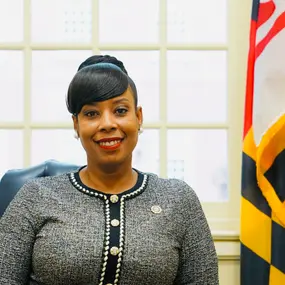
Maryland State Delegate | District 31 | Project 21 Ambassador
LaToya Nkongolo is a Republican member of the Maryland House of Delegates, a licensed mental health and addictions therapist, and a dedicated community advocate. Her involvement in public service began through grassroots advocacy, where she worked to strengthen families, expand access to mental health services, and address challenges affecting her community.
Appointed to the Maryland House of Delegates on January 10, 2025, Nkongolo quickly earned recognition for her leadership and legislative accomplishments. Her honors include 2025 Legislative Rookie of the Year and 2025 New Leader Honoree by Leadership Anne Arundel. She was also selected as a Maryland State Director for Women in Government, a national organization supporting women in public office.
In 2026, Nkongolo was appointed Deputy Minority Whip on the House Judiciary Committee. Beyond her legislative responsibilities, she hosts a weekly radio program on Radio One and regularly contributes political and public policy commentary to Newsmax.
As a Project 21 Ambassador, Nkongolo brings her experience in mental health, community advocacy, and government to national conversations about individual responsibility, economic opportunity, public policy, and effective leadership.