




Institutional Corruption Exposed confronts what happens when leaders protect power over truth and institutions value image over integrity. Peter Vazquez speaks with Lawrence Erickson about blackmail, espionage, and moral compromise inside the Catholic Church, and with P. Rae Easley about political coercion, housing mismanagement, economic dependency, and the machinery of control in Chicago. From sanctuaries to city streets, the discussion exposes how secrecy erodes trust, how compromised leadership weakens communities, and why accountability, transparency, and principled courage remain the only path to restoration.







Institutional Corruption Exposed: Peter Vazquez walks the line between headline and heartbeat, tracing what he describes as a cultural unraveling where secrecy hardens into policy and fear becomes a form of currency. The conversation does not begin with politics. It begins in the sanctuary. A Rhode Island report pulls decades of clergy abuse and institutional response into public view, forcing an uncomfortable question: what happens when an institution becomes more concerned with protecting its reputation than protecting its people?
Lawrence Erickson, author of Vatican Coup, steps into that tension. He argues that abuse and cover-ups do not merely wound victims or damage credibility. They create leverage. When wrongdoing is hidden rather than confronted, leaders become vulnerable. Compromise becomes currency. Blackmail becomes a tool. Over time, spiritual authority erodes, replaced by quiet negotiations shaped not by doctrine, but by pressure. Erickson suggests that throughout the twentieth century, forces beyond theology—intelligence interests, financial entanglements, political calculations—exerted influence within the Church. Whether one agrees with every conclusion or not, the central warning is clear: secrecy breeds susceptibility. When moral failures are concealed, leadership can be steered from behind the curtain.
The discussion does not remain within cathedral walls. The lens swings outward, into neighborhoods where policy is not theoretical but tangible. From Chicago’s West Side, Honorable P. Rae Easley brings lived experience. She describes blocks hollowed out after the 2008 housing collapse, homes demolished, families displaced, and federal funds left idle while communities deteriorated. She recounts how employment structures shifted, with workers capped below full-time hours to avoid regulatory triggers, reshaping economic stability one paycheck at a time.
Easley portrays a social-service economy that conditions compliance. When jobs, contracts, and public benefits are intertwined with political alignment, dissent carries risk. In such an environment, “help” can become leverage. Dependency replaces mobility. Survival incentives overshadow civic independence. She speaks of residents who hesitate to voice opposition for fear of retaliation, fines, or lost opportunity. The system, she argues, rewards silence and punishes resistance while presenting itself as compassionate governance.
Across both conversations—one rooted in church history, the other in municipal policy—a pattern emerges. Institutions that conceal truth gradually surrender moral authority. Leaders who avoid confession invite manipulation. Communities that tolerate secrecy eventually lose trust. Whether in a diocese or a city hall, when transparency fades, control consolidates.
The thread connecting sanctuary and street is not partisan rhetoric. It is accountability. When truth is delayed or diluted, someone else takes the wheel. The void left by compromised leadership is rarely empty for long. Power flows toward those willing to exploit vulnerability.
The remedy proposed is neither flashy nor modern. It is disciplined and ancient. Confession. Transparency. Courage that carries cost. Institutions regain strength when they confront failure openly rather than shielding it. Leaders regain trust when they accept scrutiny rather than deflect it. Communities regain footing when citizens demand clarity instead of comfort.
Institutional Corruption Exposed is not simply an indictment. It is an invitation. An invitation to examine where secrecy has replaced stewardship, where fear has replaced conviction, and where reputation has displaced responsibility. Between church halls and city blocks, the lesson is consistent: integrity cannot be negotiated. It must be chosen, protected, and, when necessary, restored at a price.
Promote your brand on the Next Steps Show, airing on WYSL1040.com's AM 1040, FM 92.1, and FM 95.5 West stations. Discover more at nextstepsroc.com/advertise-with-us or dial (585) 346-3000 to get in touch with the WYSL team.
Have you ever dreamt of sharing your unique voice, stories, or expertise with the world through a podcast? Perhaps you're bubbling with ideas but uncertain about where to begin? The journey from idea to launch can be daunting, but that's where we come in. Dive Into the World of Podcasting with Next Steps Radio PODCAST Network! Visit NextStepsRoc.com or call Peter at (585) 880-7580.

This podcast is brought to you by Open Door Mission, restoring hope and changing lives.
Mira la izquierda. Mira la derecha. What do you see? In a world that changes daily, what will you do next? Welcome to The Next Steps Show with Peter Vazquez.
We gather for direction. Sometimes the conversations are heavy, but they are necessary. Without education and honest dialogue, nothing improves. We must listen, learn, and take action.
When an institution fears exposure more than it fears God, it stops leading and starts negotiating. Negotiation without principle invites exploitation. Proverbs 29:25 reminds us, “The fear of man brings a snare, but whoever trusts in the Lord shall be safe.”
Today we look beyond headlines into the consequences of secrecy and scandal, and how they produce compromised leadership. A Rhode Island Attorney General report renewed scrutiny of clergy abuse cases, raising serious questions about reassignment, accountability, and transparency.
Lawrence Erickson, author of Vatican Coup, joins the conversation. Raised in a secular family and later converting to Catholicism, Erickson began examining parallels between political corruption and internal Church affairs. He argues that consolidated power and moral compromise have shaped modern Church history.
The Rhode Island findings span decades, examining accusations and diocesan responses. Erickson traces problems back to the mid-twentieth century, pointing to Cold War dynamics, intelligence influence, and blackmail networks. He contends that compromised leaders become vulnerable to coercion.
When asked how this affects his faith, Erickson explains that institutions are staffed by human beings, and history shows repeated external pressures and internal failures. He argues that spiritual integrity must not be displaced by political calculation.
The conversation shifts to civic leadership and public policy.
Project 21 Ambassador P. Rae Easley joins from Chicago’s West Side. Raised in a politically active household, she began civic work at age twelve in Congressman Danny K. Davis’s office. She later earned degrees in finance and education and spent seven years as a FINRA-registered Investment Advisor at Merrill Lynch.
Easley describes Chicago as a social service economy where employment and political loyalty often intersect. She recounts how fear of retaliation discourages dissent and limits civic independence.
Discussing the 2008 housing crisis, she details how entire neighborhoods were gutted while federal housing funds remained underutilized. She argues that mismanagement and regulatory burdens contributed to instability and economic stagnation.
Her experience under the Affordable Care Act included work schedules capped below thirty hours to avoid mandatory insurance requirements, forcing multiple part-time roles to maintain income.
Easley maintains that economic dependency structures reinforce political alignment. She references historical coercion tied to employment and public services, asserting that many citizens vote based on survival rather than policy agreement.
Throughout the program, Peter Vazquez emphasizes that the goal is not to attack faith or community, but to confront secrecy wherever it exists. When leaders conceal wrongdoing, trust erodes. When truth is avoided, authority weakens.
The conversation closes with a call for accountability and courage. Institutions must choose transparency over protection of power. Citizens must demand integrity. Leadership rooted in truth strengthens both church and community.
God bless the United States of America. Be a voice for liberty.
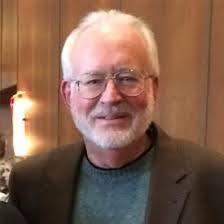
Author and Catholic Commentator
Lawrence Erickson is a devout Catholic author who examines the complex crossroads of faith, power, and moral accountability. His work explores the uneasy space where religion, geopolitics, and human frailty intersect.
In Vatican Coup: On Blackmail and Espionage in the Catholic Church, Erickson investigates the forces that reshaped the Church during the twentieth century. He traces the influence of blackmail networks, Cold War maneuvering, financial scandal, and the infiltration of secular and foreign interests within the Vatican. From controversies surrounding the Vatican Bank to the resignation of Pope Benedict XVI, he follows the historical threads connecting intelligence agencies, organized crime, and compromised leadership.
Drawing on historical records and modern revelations, Erickson argues that political calculation and moral compromise have too often displaced spiritual clarity. His work is not an indictment of faith, but a call to conscience. Echoing Pope Paul VI’s warning about “the smoke of Satan” entering the Church, Erickson challenges readers to confront difficult truths about secrecy, corruption, and the ongoing struggle between good and evil within one of the world’s most enduring institutions.
His writing invites believers and skeptics alike to examine the cost of silence, the dangers of compromised authority, and the necessity of accountability in any institution entrusted with moral leadership.

Project 21 Ambassador and Civic Leader
P. Rae Easley is a Project 21 Ambassador, civic leader, financial professional, and media commentator whose work spans public policy, regulated finance, and international education. She is recognized for combining technical expertise with community-centered advocacy.
She earned her Bachelor of Science in Finance from Hampton University and her Master of Education in Language, Literacy, and Culture from the University of Illinois Chicago.
P. Rae spent seven years as a FINRA-registered Investment Advisor at Merrill Lynch, advising clients on wealth management, financial planning, and risk analysis. Her experience in a highly regulated industry informs her approach to economic policy and fiscal accountability.
Her civic involvement began at age twelve in the office of Congressman Danny K. Davis. By high school graduation, she had completed more than 500 community service hours, including work related to federal housing policy and leadership within the NAACP.
P. Rae later served as a founding teacher at IQRA Bilingual Academy in Dakar, Senegal, and worked as an international literacy consultant. She is the former hostess of Black Excellence Hour on WVON 1690 AM Chicago, where the program became the station’s top-performing show.
She is frequently featured on national political platforms and is the mother of a fourteen-year-old daughter who attends Chicago Public Schools.