


Free Speech Crisis explores how speech is no longer silenced by force but managed through fear, pressure, and social punishment. Peter Vazquez traces censorship from Venezuela’s collapse to America’s campuses, joined by Sean Stevens of FIRE, who reveals how self censorship, shout downs, and deplatforming reshape education and public life. Liberty survives only where speech is defended, not conditioned.


Free speech rarely dies with a bang. It gets managed, softened, and labeled “safety” until dissent becomes hazardous. Peter Vazquez presses the fault lines from Venezuela’s censored past to America’s weaponized headlines, then sits down with Sean Stevens of FIRE to map campus self censorship, shout downs, and the moment protest turns into enforcement. Truth survives only where people refuse to be trained silent.
Promote your brand on the Next Steps Show, airing on WYSL1040.com's AM 1040, FM 92.1, and FM 95.5 West stations. Discover more at nextstepsroc.com/advertise-with-us or dial (585) 346-3000 to get in touch with the WYSL team.
Have you ever dreamt of sharing your unique voice, stories, or expertise with the world through a podcast? Perhaps you're bubbling with ideas but uncertain about where to begin? The journey from idea to launch can be daunting, but that's where we come in. Dive Into the World of Podcasting with Next Steps Radio PODCAST Network! Visit NextStepsRoc.com or call Peter at (585) 880-7580.

The Next Steps Show – Cleaned Transcript
Host: Peter Vazquez
Guest: Sean Stevens, Chief Research Advisor, Foundation for Individual Rights and Expression (FIRE)
Opening Reflection
Peter Vazquez opens with a cultural warning. Free speech rarely disappears through force. It erodes quietly through fear, pressure, and the promise of order. The central question is framed plainly: who gets to speak, and who is told to sit down and stay quiet.
Peter reflects on recent political and media moments, including statements labeling journalism as a national security threat, and asks whether conditional speech is the first step toward broader rights erosion. He stresses discernment over slogans and reminds listeners that liberty depends on vigilance.
Segment One: Managed Speech and National Narratives
The discussion moves to media influence, propaganda, and the danger of weaponized journalism. Peter compares modern censorship dynamics to historical examples, including Venezuela under Chavez and Maduro, where speech restrictions preceded economic and social collapse. He argues that suppression begins with managed narratives, not outright bans.
Callers weigh in, debating responsibility, media accountability, and the real world consequences of inflammatory rhetoric. Peter plays devil’s advocate, defending the principle that even irresponsible speech is still speech, while warning that repeated misinformation can shape behavior and provoke harm.
Segment Two: Protest, Enforcement, and the Line Between Them
The conversation turns to protest culture, law enforcement confrontations, and tragic outcomes when emotion overrides judgment. Peter challenges listeners to separate free expression from coercion, asking when protest becomes enforcement and when rhetoric crosses into danger.
Callers discuss personal responsibility, the role of leadership, and how repeated messaging can distort perception. Peter introduces the concept of long term psychological conditioning, arguing that people do not snap overnight but are shaped by years of narrative reinforcement.
Segment Three: Campus Speech and Institutional Pressure
Peter introduces Sean Stevens, Chief Research Advisor at FIRE. Sean explains FIRE’s mission, history, and expansion from campus focused advocacy to defending free expression nationwide. He outlines how FIRE measures speech climate through data driven tools, including the College Free Speech Rankings and the National Speech Index.
Sean explains that self censorship is the most effective form of control. Students quickly learn which ideas are costly to express. Data shows that elite institutions often rank lowest for speech tolerance, while pressure campaigns, shout downs, and deplatforming have normalized restrictions on expression.
Segment Four: Research Findings and Free Speech Metrics
Sean details FIRE’s survey findings, including student attitudes toward shutting down speakers, blocking access to events, and even justifying violence in limited circumstances. He explains why shout downs violate not only speaker rights but also the rights of listeners.
Sean outlines FIRE’s approach as a First Amendment watchdog. The organization uses public advocacy, policy reform, rankings, and legal pressure to force institutional accountability. Colleges that want to improve are guided through speech code reform and transparency.
Segment Five: Beyond Campus
Sean explains FIRE’s growing role outside academia, including advocacy against government overreach, public censorship, and violations of individual expression. FIRE now engages in litigation, legislative advocacy, and public education to defend speech rights across society.
Closing Reflection
Peter ties the discussion together. From Venezuela to American campuses, the pattern is consistent. Speech becomes conditional, dissent becomes hazardous, and silence is rewarded. Liberty does not vanish overnight. It is trained away.
Listeners are urged to resist managed speech, defend open inquiry, and remain voices for liberty in their homes, schools, and communities.
End of Transcript
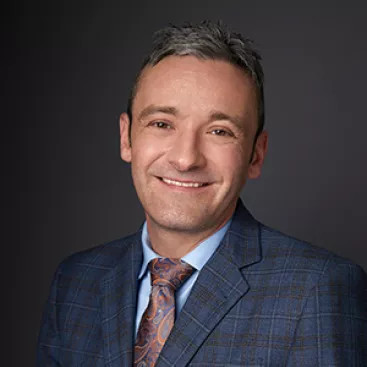
Chief Research Advisor at Foundation for Individual Rights and Expression (FIRE)
Sean Stevens, Chief Research Advisor at the Foundation for Individual Rights and Expression (FIRE), earned his Ph.D. in Social Psychology from Rutgers University in New Brunswick in 2013. At FIRE, he leads the College Free Speech Rankings, the National Speech Index, and oversees the Campus Deplatforming Database, providing empirical insight into the state of expression in America.
Before joining FIRE in 2020, Sean served as Research Director of the Social Perception Lab at Rutgers and later as a Postdoctoral Fellow, with additional affiliation at Stanford University’s Center for Advanced Study in the Behavioral Sciences. In 2016, he joined Heterodox Academy as its first Director of Research, where he developed the Campus Expression Survey.
Over the past decade, Sean has collaborated with scholars nationwide on the psychometric validation of multiple scales, including measures of Left Wing Authoritarianism, Moral Foundations Questionnaire 2, and a revised Willingness to Censor Scale, presented at the National Communication Association’s 2024 conference. He is also a member of the Best Practices in Science Movement, promoting rigor and integrity in social science research.