

 iHeartRadio
 Apple Podcasts
 Spotify
 TuneIn
 Podchaser
 Castro
 Amazon Music
 PlayerFM
 RSS Feed
 Phil Bell and the Crisis of False Compassion

Free Market Accountability drives Peter Vazquez’s conversation with Phil Bell, founder and CEO of Tower K Group and Project 21 Ambassador. Bell rejects the politics of lowered expectations and says plainly that the best government help is often for government to get out of the way. From there, the discussion becomes a hard look at dignity, work, ownership, faith, family, and the right of citizens to build without being managed into dependency.
Bell explains how Tower K Group advances free markets, limited government, individual liberty, and personal responsibility through fundraising, media, events, and public affairs.
The conversation moves through homeownership and tri-merge credit reporting, AI and blockchain, property taxes, entrepreneurship, nonprofit accountability, reparations, racism, Rochester’s failed “Gloves Up, Guns Down” boxing event, biblical compassion, financial stewardship, voter ID, the SAVE Act, and election integrity.
The thread is simple and sharp: a full picture protects people, while a partial picture manipulates them. Whether the subject is credit, charity, race, technology, failed community events, or elections, Vazquez and Bell call listeners back to truth, receipts, work, responsibility, and the courage to stop letting government, nonprofits, and political machines define the limits of their lives.
Free Market Accountability. America does not need another manager. It does not need another committee, another agency, another promise wrapped in red tape, another politician standing at a podium telling working families that the road to dignity runs through government permission.
America needs men and women with enough courage to stop asking permission to be free.
That truth carried Peter Vazquez’s conversation with Phil Bell, founder and CEO of Tower K Group and Project 21 Ambassador. It was not just a discussion about politics. It was a conversation about the soul of citizenship, the dignity of work, the danger of dependency, and the cost of letting distant power define the borders of ordinary lives.
Phil said it plainly, and the line cut through the hour like a bell ringing in a quiet church:
“The only government help that I need is for the government to get out of my way.”
That was not a talking point. It was a worldview. It was a rejection of the soft chains that often come disguised as compassion. It was a reminder that a free people cannot be managed into greatness. They must be challenged, equipped, trusted, and allowed to rise.
Peter and Phil began where so many American conversations should begin: with identity. Not the shallow identity politics sold by parties and institutions, but the deeper identity of citizenship, faith, family, work, and responsibility.
Phil pushed back against the idea that Americans should lead with labels before they lead with country. He spoke of growing up hearing one term after another used to divide people into political categories, and he asked the question too many leaders avoid: why put anything ahead of being an American?
That question matters because labels are not always innocent. Sometimes they are used to describe. Other times they are used to manage. They become leashes. They become excuses. They become tools for politicians and institutions that want citizens to see themselves first as victims, clients, or demographic inventory instead of men and women made in the image of God, capable of building, owning, leading, and leaving something behind.
Phil’s own story stands against that lie. As founder and CEO of Tower K Group, he works in the world of business, fundraising, public affairs, events, media, and nonprofit strategy. His work is rooted in free markets, individual liberty, limited government, and personal responsibility.
In a culture that often treats business leadership as suspicious and wealth-building as morally dirty, Phil reminds listeners that ownership is not oppression. Ambition is not betrayal. Leadership is not something reserved for someone else’s children.
A young person dreaming of becoming a CEO should not be laughed at. A child who wants to own a railroad should not be mocked into smaller thinking. A father trying to build wealth for his children should not be treated like he has stolen something from the world. The American dream is not shameful. It is not greed to want to build a business, buy a home, raise a family, and leave your children more than memories and unpaid bills.
It is stewardship.
That theme moved naturally into homeownership, credit, and the danger of partial pictures. Phil’s commentary on tri-merge credit reporting became one of the strongest illustrations of the hour. When a family applies for a mortgage, lenders traditionally examine credit information from the three major credit bureaus. The system is imperfect, but the principle matters: the fuller the picture, the fairer the judgment.
Phil warned that shrinking that picture from three credit reports to two, all to save roughly $100 on a massive transaction, could hurt the very people politicians claim to help. A mistake on one report could deny a qualified borrower a loan.
A missing data point could raise an interest rate. A family close to the margin could lose the opportunity to own a home, not because they failed, but because the system chose convenience over completeness.
Freedom is not a theory. It is the next step.
Promote your brand on the Next Steps Show, airing on WYSL1040.com's AM 1040, FM 92.1, and FM 95.5 West stations. Discover more at nextstepsroc.com/advertise-with-us or dial (585) 346-3000 to get in touch with the WYSL team.
Have you ever dreamt of sharing your unique voice, stories, or expertise with the world through a podcast? Perhaps you're bubbling with ideas but uncertain about where to begin? The journey from idea to launch can be daunting, but that's where we come in. Dive Into the World of Podcasting with Next Steps Radio PODCAST Network! Visit NextStepsRoc.com or call Peter at (585) 880-7580.

Sponsor:
This podcast is brought to you by Open Door Mission, restoring hope and changing lives. OpenDoorMission.com.
Show Intro:
Look to the left. Look to the right. What do you see? In a world that seems to change daily, what will you do next? Welcome to The Next Steps Show with Peter Vazquez, a starting point for discussion and a little direction.
Peter Vazquez:
Welcome back, ladies and gentlemen. Welcome back. Happy Victory Day for World War II 2026.
I will tell you, I like this President Day that we have on May 8th. Today, President Donald Trump proclaimed May 8th, 2026, as a day to celebrate Victory Day for World War II. How exciting. To all our veterans out there, I hope today you find someplace warm, and may God continue to bless you and the work that you do.
Bob:
I think the president is referring to Victory in Europe. It is celebrating the victory, the support that we gave our European allies, working together. Strange concept, considering how little support they give us, but who is keeping track?
Peter Vazquez:
That is part of the reason why I brought it up, Bob. Everybody is watching and talking. I was watching Kamala Harris yesterday on some Democrat nonsense show, and she was talking about how Trump is out there bashing our neighbors and ruining relationships. I thought, no, not really. When I see Trump doing something like this, I think, okay, I see what he is doing.
Bob:
She called him incompetent. Talk about somebody with zero self-awareness. You are the number two officer in the Biden administration, for God’s sake, and you cannot put together a cogent sentence in public, and you are calling Donald Trump incompetent. Somebody this morning on Glenn Beck’s show referred to him as the greatest president since Washington. At first blush, that sounds like hyperbole, but stop and think about the accomplishments.
Peter Vazquez:
Yes, the accomplishments and the growth for all people, not just Black and brown people or Asians or whatever these people try to continue to say need help. That leads me to the conversation we are going to have this hour.
The last time I had today’s guest on, I asked him whether he needed government help because he is Black. His answer was powerful. He said, “The only government help that I need is for the government to get out of my way.”
Mira, what a concept. As a Latino, as a Puerto Rican, as a Boricua, I say the same thing. That is not just a quote. That is a worldview, ladies and gentlemen. It should be. That is a declaration of God, country, and familia. That is a rejection of dependency politics.
It is a reminder that dignity does not come from bureaucrats, programs, slogans, or politicians who barely know the people they claim to rescue, the ones they have bamboozled.
Joining us once again, this time for the full hour, is the honorable Phil Bell, founder and CEO of Tower K Group and a Project 21 Ambassador. Ladies and gentlemen, it is my honor to introduce him once again. Phil, thank you again for joining us.
Phil Bell:
Peter, thank you so much for having me. I always love joining you here. You have a great show. I love your values. I love the people of Western New York. I love hearing those ads with places like Cornell and Lake Alfred and every place else, all that I know from railroading. This is truly an honor.
Peter Vazquez:
There are a lot of railroads up here, I will tell you.
One of the things I love about the work that you do is that it truly shows that you are trying to teach not just Black and brown people, but Americans, to understand that we are Americans, and all these other labels do not matter.
Quoting you again from the last time I had you on, you said when the government is here to help, Americans should check their wallets, their freedoms, and then exit the door quickly, especially those of us with a little more pigmentation.
Phil Bell:
Absolutely. I could not have said it better myself. One of the things I always wondered was when I was a kid in the early 1990s and you started to hear people using the phrase African American. A few years before that, it had been Black. I started to ask myself, why would I want to put anything ahead of being an American?
We have the best country. We have the greatest opportunities. Even the poor among us live in a way that is so much higher than even the kings of the ancient world. Yet we have so many people who say, I want to segment that. I want to put something else ahead of that, or I want to set that aside. It just boggles my mind.
Peter Vazquez:
Phil, I want to spend a few minutes on you. You are an impressive guy. The work you are doing is a perfect example of what the left, especially in places like New York, Colorado, and California, says that we cannot do.
You are the founder and chief executive officer of Tower K Group. Can you talk to us about your role and what Tower K Group does?
Phil Bell:
Yes. Let me tell you a little story.
I worked for almost seven years with FreedomWorks. Anybody out there who was involved in the Tea Party rallies knows FreedomWorks. We were one of the biggest grassroots organizations on the center-right.
FreedomWorks shut down, and I had always wanted to start my own business. I was talking to my bosses as everything was winding down, and they said, you should do it.
It started as a business to raise money for conservative nonprofit organizations, which is what I had been doing previously. Then we started to grow. We grew by doing events. We grew by doing media. We grew by doing public affairs. Now we do all of those.
At our core, it is promoting our values in a for-profit way: free markets, individual liberty, limited government, personal responsibility. We do that by working with a lot of the great people you hear out here who are saying these good things and helping to educate the public. We help make sure they have the money they need, the outlets to get on shows like yours, and the ability to get their word out and advance it in every way. That is what Tower K Group does.
Peter Vazquez:
You are the chief executive officer. I assume that comes with responsibility. You are a leader. You are leading people.
This whole mantra, where you said government needs to get out of your way, can you expand on that? Here in New York, and in many similar states, they have people believing that a position like chief executive officer is beyond our reach. They say we are unable to get there for one reason or another, usually tied to race or circumstance.
Phil Bell:
Right. That is one of the things that is so distressing.
When I look out and see the type of role models the culture promotes, first of all, they denigrate business leaders. If you are a chairman, chief executive officer, or wealthy individual, which by the way I am not, in case the IRS is listening, they say somehow you had to get to that position by doing something mean. You had to step on somebody. You had to take something from someone that you did not earn.
That is the first thing they do.
The second thing they do is say, how are you ever going to become that?
I remember when I was a little boy and said I wanted to own a railroad. The first thing that happened was people laughed at me. How could you ever do that? How could you ever be the head of this? You do not know this. You do not know that.
First of all, you do not know what I know. Second, why do you not want to envision being the best? Even if you envision being CEO and do not quite get there, maybe you become senior vice president. Maybe you become a junior vice president. Maybe you get pretty high up there and influence positive things in your industry, community, state, or otherwise.
All of that would be great. I hope as many people listening as possible, if you are inspired to do it and if God guides you in that direction, do not let anybody throw you off of that.
Peter Vazquez:
Absolutely. You are also in banking. Again, if I listened to the mantra I was raised with here in Rochester, New York, I would not be on the radio. I would not be the leader of an organization. I would not be a father of five successful children who are handling their business.
In January 2026, you wrote a commentary that is on Project21.org or NationalCenter.org. The title was “A $100 Cost That Could Lock Millions Out Of Homeownership.” I thought this was a great piece because you argued that eliminating tri-merge credit reporting could cut a lot of people, especially people of color and poor people, out of buying a house.
The government was saying it would save a homeowner roughly about $100. You explained why that is not a good idea and how these feel-good rules end up hurting the people they claim to help. Listening to the left, homeownership should just be given to you. It is not something you work for. They turn it from a money-making scheme into a birthright.
Phil Bell:
Right. I encourage anyone who believes homeownership is a birthright, or that you should have homeownership or anything else given to you, to go look at the pictures of some of the things that are given to you in communist or socialist countries.
In the Soviet Union, they gave you food, and you waited in very long lines to get it. In Cuba, they give you housing, and nobody really enjoys it. You do not want what is “given” to you. You want what you earn, and you want the ability to earn it.
As for the piece I wrote, there are three major credit bureaus we are all familiar with, such as Experian, TransUnion, and others.
Peter Vazquez:
Phil, I have to go to break real quick. Hold on to that thought, because what you are about to say is one of the most important concepts we all need to understand.
Ladies and gentlemen, the honorable Phil Bell, founder and CEO of Tower K Group, Project 21 Ambassador, and an American who knows God, country, and family. We will be right back right here on The Next Steps Show with Peter Vazquez.
Advertisement:
Organic ingredients, no high fructose corn syrup ever, a little sweet, definitely bold. For the flavor freaks, backyard grill masters, kitchen rebels, savor Hectic Kicking Ketchup, Hectic Barbecue Sauce, Hectic Honey, Hectic Hot Sauce, and Hectic Gold. If you like bold flavor with attitude, it is Hectic Foods, 101 Main Street in East Rochester. Hours at HecticFoods.com.
Advertisement:
The youth of our city are in a new crisis. Criminal justice reform has created the consequences of no consequences and generated a whole new generation of 12- to 17-year-old kids committing serious crimes. Never before have we had this level of youthful offenders. But 90 percent of these kids are just trying to do the right thing and need a safe sanctuary to retreat to. That is Youth for Christ Rochester. You can be part of the solution by giving generously and regularly at YFCRochester.org/donate.
Station ID:
Peter Vazquez and The Next Steps Show on the Voice of Liberty. Donate to WYSL and WLEA. Next Steps brought to you by Youth for Christ Rochester, YFCRochester.org.
Bob:
Let Peter pick up with his guest where they got cut off going into the break.
Peter Vazquez:
I appreciate you. Turner in social media, thank you for posting.
Phil, a listener on social media quoted James Brown, who said, “I do not want nobody to give me nothing. Open the door and I will get it myself.” That was back in 1970. Is that something? Back in the day, they understood the same concept.
Phil Bell:
Think about it. As much as I hate the discussion of slavery because I feel that in the United States we take it too far, not as a historical thing, but it becomes cultural, which is wrong.
If you are a descendant of slaves, then you know what happened when people were given something. They were given a job. They were given a place to live. They were given purpose. None of that is anything we would want.
So that is a great way to say, if somebody wants to give you something in 2026, I would rather go out and earn it myself.
Peter Vazquez:
California’s reparations, and I am sorry, we have to get back to the banking discussion because I think that is important. What you just said was powerful.
I was watching a comedian, I think his last name was Snyder, who was making a joke about California’s reparations. They are talking about paying people in California of color for slavery. But there was not any slavery in California, and I do not think there were slave owners. I know I am not the biggest history buff, but I think that goes to your point.
Phil Bell:
California was not a state.
Peter Vazquez:
California was not even a state. Interesting.
Phil Bell:
That is another thing that is absolutely amazing. I was reading about Evanston, Illinois, right outside Chicago, doing something similar. Instead of using slavery as the justification, they are using redlining and housing discrimination from the early 1900s.
You have to think about what the worst part of this is. Everyone is born with a clean slate. You are not responsible for what your father did, your grandfather did, your great-grandfather did, and so on. You are born with a clean slate. You are born with the ability to go out, make friends, plot your own way, build a family, and do everything else.
Yet we continue to tell people that rather than doing that, they should live as if they were in a time they were never part of. Even worse, we tell them to treat someone who may be nice to them, be a friend, or otherwise, as if they are a pariah for something someone they never met and have no knowledge of may have done years ago. I cannot figure anything worse than that.
Bob:
That is a trick the left does a lot. They take the values, knowledge, and experience of the present day, impose it on the distant past, and offer that as evidence that this is a corrupt and forsaken society.
Phil Bell:
Then they only tell half the story.
Bob:
Exactly. They only tell half the story.
Phil Bell:
One thing that really grinds my gears is when people say with a straight face that white people came and took us from Africa. No, that is not true. That is not what happened.
There were many times where Black people were sold by the leaders of those countries into slavery. That happened. Yet you are going to continue to demonize someone because they have white skin, and say these people have to pay for something that did not happen to me? Give me a break.
Peter Vazquez:
You mentioned a full picture. That goes back to the discussion on homeownership and financing. I dubbed the phrase Vanbōōlzalness Crisis, where they constantly tell you things and use words to manipulate you over centuries, like the word minority. I do not like that word. I think it is inappropriately used.
I believe that when the full picture is shared, it protects people. Partial pictures manipulate them. Partial facts deny families homes. Partial labels end up labeling citizens as extremists in some cases.
To quote you again, you said, “You want to make sure that as big a picture of your financial snapshot is being taken as possible, not a small picture of it.” You were referring to finance and tri-merge credit reporting, because you need all credit reports. But that applies to everything we are discussing.
Phil Bell:
Yes. Here is a little backstory.
When you are going to buy a house, buy a car, or otherwise, there are three major credit bureaus that keep track of your financial story, how you respond when you owe somebody money.
Currently, when you purchase a home, a credit report is taken from all three agencies, and that gives a full financial picture.
As we all know, and this is not good, those credit reports can be inaccurate. They can be inaccurate in positive and negative ways. You want to make sure any potential lender gets a full understanding of what you have.
For example, let us say there is a mistake on TransUnion that would knock you down and potentially give you a higher rate. You can also check Experian and say, wait a second, I see what is going on here. This person is actually a very good risk, someone you should absolutely loan money to.
During the Biden administration, there was a proposal to save $100 per loan by going from taking all three credit reports to only taking two of the three. The Trump administration has said it is not going to do that, but it was necessary to make sure this information stayed out there in the public so that maybe not this administration, but a future administration, does not try to do what the Biden regime was doing.
That ultimately would have led to people being declined for loans who otherwise would have qualified, or others paying higher interest rates than they should have been assessed.
Peter Vazquez:
I work in housing, and we help people secure loans through various lenders and federal programs. Those credit reports become critical.
I asked one of my counselors why we cannot just use one of the free reports, because that is a cost we absorb as an organization. He said the same thing: we are going to cheat these people out of a loan if we do not get the full picture. All these different credit reporting agencies report differently.
On that question, is there any way they could all be consolidated into one universal tracking system for credit to simplify the process?
Phil Bell:
I think we are probably going to see something like that with the coming of AI and the growth of the blockchain. One of the best ways we could get an idea of your financial picture is to use the blockchain, because what does blockchain do? It tracks every transaction and identifies who is making that transaction.
If you owe Joe Blow $100 because you purchased a watch and did not pay it, you could look at the blockchain and say, yes, you did not pay it. Or if you did pay him back with interest and a little extra, you can look at that and see it.
The system we currently have is not perfect. I do not say it is. It developed over years because that is what we had. We know it is flawed. But if there is one thing the American economy is good at, it is entrepreneurs getting in and solving problems.
I believe the blockchain plus AI is ultimately going to do that. That will lead to more people being able to borrow, more security for banks so they do not have to worry about as many bad loans, and ultimately an even higher standard of living.
Peter Vazquez:
I did not have this on the list, but since you brought up artificial intelligence, I figured I would ask.
AI is promoted by our president. We are putting a lot of money into it. We are in a race against China and other nations to be at the head of that. On the other side, we have states passing laws to eliminate as much technology out of classrooms as possible because of distraction.
Then we have politicians, especially here in New York, campaigning on free broadband for everybody. Where does all this technology fit in today’s world, especially for people who are just trying to take their next steps and make something of themselves? Is AI good, bad, or good for some sectors?
Phil Bell:
First of all, I think AI is overblown in terms of the focus on it. Let us get to what it really is. It is a tool, and it is going to be implemented by everyone in a different way, just like the internet.
If you are in the industry I will be in in the future, owning my own railroad, you do not need AI in the same way you would if you were a law firm or something else. It is not one size fits all.
It is up to each industry, each individual business, and each individual to say, can I use this most effectively? They need to pay attention to what is coming out and see what works and what does not.
I personally love to do all of my writing by myself, but I do like the idea of having something that can help me do research so I can find more information to synthesize when I am writing an op-ed, writing an insight, or doing something germane to my business. I do not want it done for me, but I want something that can help me cut down on research time.
That is a good example. I think you will see the same thing happen as time goes on and people start to ignore the hype.
The one thing I do not want to see is more government coming in and saying, we are going to regulate it, we are only going to let you do this with AI, or we are going to say you have to do that with your AI. Let the people figure it out.
We figured it out with the internet, and that became a major growth engine for our country. The same can happen with AI, but we need to keep the politicians where they belong, which is away from the work that actually makes a profit.
Peter Vazquez:
Almost every question I ask about every tool that is out there, from every guest, has a common thread: keep the politicians out of it, because they end up rotting everything at the core. It is like cancer.
Bob:
The only way to keep them out of it is to keep the money out of it.
Phil Bell:
That is true.
Peter Vazquez:
Ladies and gentlemen, that is the honorable Phil Bell, founder and CEO of Tower K Group and a Project 21 Ambassador. We have more to discuss with him. Phil, we will be right back. Ladies and gentlemen, do not go anywhere. Right here on The Next Steps Show with Peter Vazquez and the Voice of Liberty.
Advertisement:
Organic ingredients, no high fructose corn syrup ever, a little sweet, definitely bold. For the flavor freaks, backyard grill masters, kitchen rebels, savor Hectic Kicking Ketchup, Hectic Barbecue Sauce, Hectic Honey, Hectic Hot Sauce, and Hectic Gold. If you like bold flavor with attitude, it is Hectic Foods, 101 Main Street in East Rochester. Hours at HecticFoods.com.
Advertisement:
The youth of our city are in a new crisis. Criminal justice reform has created the consequences of no consequences and generated a whole new generation of 12- to 17-year-old kids committing serious crimes. Never before have we had this level of youthful offenders. But 90 percent of these kids are just trying to do the right thing and need a safe sanctuary to retreat to. That is Rochester Youth for Christ. You can be part of the solution by giving generously and regularly at YFCRochester.org/donate.
Advertisement:
Did your car have a tough winter? Did you hit a deer? Maybe spin out on ice? Do not order new parts. Get big savings on wheels, mirrors, headlights, engines, transmissions, or body panels at Northside Salvage. Get quality, warrantied parts at a fraction of the cost of new. New cars average over $55,000, so fix your existing ride, extend its life, and save. If you have an old car on your property, Northside Salvage will buy it for cash and take it away, no matter its condition. Not running? No problem. Northside Salvage. Visit IWantScrap.com.
Advertisement:
Boys and girls, mark your calendars for July 11th and 12th for the great 2026 Geneseo Air Show, featuring the F-22 Raptor, B-25s, P-51s, and more. Tickets online at NationalWarplaneMuseum.com.
Station ID:
Peter Vazquez and The Next Steps Show on the Voice of Liberty.
Bob:
Yes, the favorite son of Hackensack, New Jersey, Phil Bell is on.
Phil, I used to work in radio in Hackensack.
Phil Bell:
Really? What station?
Bob:
WWDJ, 970 DJ, right there on Hackensack Avenue, near the George Washington Bridge.
Phil Bell:
I know that area well.
Bob:
You are taking me back. E.J. Korvette across the street there, the little plaza. Anyway, nobody knows what we are talking about. Phil, I will give you back to Peter.
Peter Vazquez:
It is a small world after all. Ladies and gentlemen, mind your P’s and Q’s, because you do not know who you help today who can be there for you tomorrow. You just do not know.
Sir, there was an event recently in Rochester called “Gloves Up, Guns Down.” The focus was anti-gun and anti-violence. They do that a lot here.
Unfortunately, this particular event was a boxing event at a very big venue that holds about 10,000 people, and it flopped. I do not even think there were 1,800 visitors. Then there was over $100,000 in debt.
There is a local leader tied to the event who carries a lot of weight here in Rochester. He was asked by a local reporter, a question that every taxpayer, donor, unpaid fighter, pastor, and investor had a right to ask: “Is it the community’s responsibility to pay for the consequences of this failed event?”
His response was this, and I would like your feedback. He said, “The Lord says, we are our brother’s keeper. We ought to bear one another’s burdens at a time of need.”
Listen, I do not mess with Scripture. I believe in God wholeheartedly, but the Bible is very clear that compassion is not a substitute for financial accountability. I think what he did takes away from those of us who believe in God, country, and family. I also think he furthered the narrative that the left tries to push that this whole God concept is being used against us or to manipulate us.
Phil Bell:
Absolutely. I hate hearing things like that.
First of all, this was his event that he put on. That is it. It is his event, and he should be responsible for what it costs to put it on.
Why would you go out and take Scripture and say, no, everybody else has to pay for what I want? This is the exact same thing the left has done for so many years in trying to guilt us as Christians into going along with SNAP, Section 8, and all of these things, which, number one, the majority of them do not have a positive impact on the people they are supposed to serve, and number two, end up being incredibly wasteful and fraudulent.
We say, no, no, I have to go along with it because the Lord says I have to help the poor. No. The Lord says you, meaning you, me, us as individuals, are to help the poor. The Lord did not say the government is to help the poor. The Lord did not say we have to abdicate the responsibility He has given us to someone else and say the government will take care of it.
Peter Vazquez:
Absolutely. Bearing one another’s burdens is a serious Christian principle. You have to help your neighbor. That is why I argue against those who say they are Christian, God, country, and family, but then look an illegal boy in the face and say, sorry, you have to starve and be homeless. I do not agree with that. That is not a Christian principle. Christianity is worldwide. It is one culture.
But compassion is not a substitute for financial accountability. I wanted to point that out and get your opinion because we were talking about nonprofits. This gentleman represented a nonprofit. Now there is a $100,000-plus bill and a lot of people unpaid, and they are trying to put a God spin on it to a culture that believes in God, country, and family.
Phil Bell:
If they had a 10,000-person turnout and he made a ton of money, would he have shared that with others?
Peter Vazquez:
I will have to reach out to the organizer and ask him that question.
Phil Bell:
I am sympathetic to what happens when you put on an event and people do not show up as you hoped. But that is the sort of thing you have to be prepared for from the start.
I have taken my lumps on that. I can tell you, I did not run out and say, the Lord said someone else should give us taxpayer dollars to support my conference that did not work out. That would be absurd.
Peter Vazquez:
Let me try that for listeners. The Next Steps Show does not run on films, but if you want to give generously because you are a Christian, would that work? Is there a Bible quote I can use?
I am kidding, ladies and gentlemen. I do not think you will find one.
Phil Bell:
No, I do not think so either.
Peter Vazquez:
That leads to the dark histories of this nation and how there is some reality and validity to some claims from the left. Slavery existed. Racism exists.
I had someone in a local town, on a property that cost me a lot of money, someone from the municipality, literally say to me, “We do not want your kind here.”
I look at the big picture and think, if I live in rural America, minding my own business, being kind to everybody regardless of who they are or what they look like, and my town has only two Black families, and then I watch the news telling me this guy is white so he is inherently racist, can we blame a group of people for being offended by that and responding in kind?
Phil Bell:
Let us ask the question: what does racism really come down to? It comes down to one person or several people expressing that they do not like you for a random reason.
I had a relative who did not like going to the buffet because that person did not like seeing larger people walking around. If that means someone gets treated differently because of that prejudice, being treated differently is all the same. I do not want to spend time around you. I do not want to do business with you. I do not want to sell to you. That is it.
What we have done is elevate racism to being a special form of discrimination and ignore every other form. People say, she can dislike you because you are conservative, or he can dislike you because you came from New Jersey, and that is okay. But the minute someone says they dislike you because of skin color, then suddenly it is treated as a special category.
You have to sit back and say, there will be people in the world who like me and people in the world who dislike me. They will pick reasons I have nothing to do with, and even if I could change them, I probably would not want to. They are free to dislike me for whatever reason, and I am free to ignore that completely. That is the way to live. That is the way I live.
Peter Vazquez:
That is the way I live too. Thank you for that.
I want to end the show today on elections and election integrity. I brought this up with one of your colleagues at Project 21 earlier in the week.
Here in New York’s 25th congressional district, Congressman Joe Morelle has been in politics forever. He said it is hard to believe America is having the same voting-rights fight it had during the civil-rights era of the 1950s and 1960s.
He is invoking centuries of struggle that go back to Selma, where people were attacked. He opposes the SAVE Act, calls it part of a Republican election takeover, and says Democrats will use every tool to stop voter suppression.
Think about those words.
Then he joins Hakeem Jeffries and creates something called the New York Democracy Project, which I believe is an anti-American project that will promote bad elections.
Sir, what do you think about the SAVE Act? Are these Jim Crow rules? Is Trump taking us back to an era where people of color and women are no longer valued?
Phil Bell:
No. First of all, this is preposterous.
Mr. Morelle and Hakeem Jeffries get it wrong off the bat because we do not live in a democracy. We live in a representative republic. If they are serving in Congress and are not smart enough to get that right, you should not listen to them.
Let us go a step further. There is absolutely nothing going on that is disenfranchising Black and brown people. Get your ID, go vote, and learn about the candidates. That is what matters.
Peter Vazquez:
The honorable Phil Bell, founder and CEO of Tower K Group and a Project 21 Ambassador. Project21.org.
Sir, do you have a website where people can learn more about you?
Phil Bell:
Yes. Go to TowerKGroup.com. That is T-O-W-E-R-K-G-R-O-U-P dot com.
Peter Vazquez:
May God continue to bless you and the work you do, sir. I appreciate your time today.
Phil Bell:
Thank you for having me on. It has been a pleasure.
Peter Vazquez:
The pleasure is ours. Ladies and gentlemen, Project21.org and TowerKGroup.com. You have to check them out.
Mira, be a leader. Be a leader. Be a leader. God bless these United States of America. Do not let un segundo go by this weekend where you are not advancing the voice of liberty.
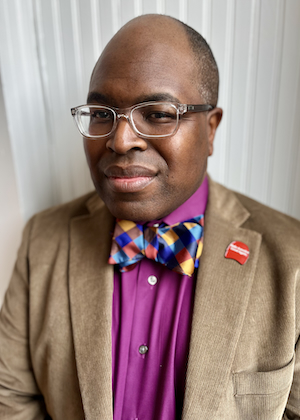
Phil Bell, Founder and CEO of Tower K Group and Project 21 Ambassador
Phil Bell is the founder and chief executive officer of Tower K Group, an investment bank dedicated to helping nonprofit organizations build lasting, well-funded programs and helping donors identify organizations capable of advancing their policy goals.
A Project 21 Ambassador, Bell brings a rare blend of public policy, finance, grassroots advocacy, nonprofit strategy, and media experience. His interest in politics and public policy began in an unlikely place: an Amtrak station in Jacksonville, Florida.
As a young man waiting for a train, he wondered why Amtrak owned so little of the track it used. That question led him into the history of American railroads, the consequences of overregulation, and the importance of free markets. It became an early lesson in what happens when government decides it knows better than citizens, businesses, and the marketplace.
Bell developed that perspective through his studies at Boston University and early work with Inplex, Inc. and State Street Bank. He later worked with GoRail, where he engaged state and local officials, transportation leaders, chambers of commerce, and private-sector partners to help members of Congress understand how re-regulating the railroad industry would harm the economy.
His advocacy work expanded into grassroots politics, including House Speaker Newt Gingrich’s 2012 presidential campaign, where Bell helped train and motivate volunteers in voter outreach and campaign engagement.
After supporting state-level pro-religious liberty efforts, Bell spent nearly seven years lead… Read More