

 iHeartRadio
 Apple Podcasts
 Spotify
 TuneIn
 Podchaser
 Castro
 Amazon Music
 PlayerFM
 RSS Feed
 Buried Truths, Broken Homes, Public Faith

Cultural Discernment runs through this hard-hitting conversation as Peter Vazquez opens with Richard Syrett, host of Richard Syrett’s Strange Planet, regular guest host on Coast to Coast AM, and author of Tales from the Rock and Roll Twilight Zone. Together they examine rock’s buried history, symbolism, institutional influence, and the danger of blindly accepting official narratives.
The show then turns to school-board power, New York education spending, and the quiet ballots shaping children’s futures. Pastor Vince Giardino of Gospel Light Bible Baptist Church closes the hour with fatherless homes, street ministry, revival, music, and faith in the public square. Truth must be questioned, lived, and defended.
Cultural Discernment. Music is never just sound. It carries memory, rebellion, grief, temptation, and sometimes a message buried so deep that a culture only understands it after the damage is done.
Peter Vazquez opened the hour with Richard Syrett, host of Richard Syrett’s Strange Planet, regular guest host on Coast to Coast AM, and author of Tales from the Rock and Roll Twilight Zone.
The conversation moved through the darker corridors of rock history, where official stories harden quickly, legends become mythology, and the public is told to stop asking questions.
The Beatles, Paul-is-dead folklore, symbolism, occult references, cultural engineering, and the strange power of music all became part of a larger question: who shapes the soundtrack, and who benefits when people stop listening with discernment?
Then the conversation turned from culture to classrooms. While national media obsessed over primary maps, New York voters quietly decided school budgets and school board seats. No party labels. No cable-news circus. Just the quiet ballot that controls taxes, curriculum, discipline, parental voice, and the formation of the next generation.
Low turnout, incumbent power, union ground games, rising per-student spending, and the unanswered question every taxpayer should ask: where is the return on investment?
The hour also touched the political tremor in Kentucky, where Thomas Massie fell in the most expensive House primary in American history. More than $32 million in ad spending, outside power, party discipline, foreign policy pressure, and the warning shot to anyone who thinks independence comes without cost. Politics, like music, has its gatekeepers.
Then Pastor Vince Giardino of Gospel Light Bible Baptist Church brought the conversation home. Not theory. Not abstraction. A hometown pastor speaking into fatherless homes, street ministry, addiction, homelessness, revival, Christian courage, and the public square.
The church was never called to be a spectator. It was not built to hide behind stained glass while the culture collapses outside the door. Pastor Giardino reminded listeners that as goes the church, so goes the culture. The Gospel belongs in the home, in the street, in the pulpit, and in public life.
This was the thread running through the entire hour: America is not merely confused politically. It is spiritually disoriented. It is being shaped by songs, schools, money, media, silence, and broken homes. The answer is not panic. The answer is discernment, courage, truth, fatherhood, faith, and a church willing to step outside.
Listen, share, and take your next step.
Promote your brand on the Next Steps Show, airing on WYSL1040.com's AM 1040, FM 92.1, and FM 95.5 West stations. Discover more at nextstepsroc.com/advertise-with-us or dial (585) 346-3000 to get in touch with the WYSL team.
Have you ever dreamt of sharing your unique voice, stories, or expertise with the world through a podcast? Perhaps you're bubbling with ideas but uncertain about where to begin? The journey from idea to launch can be daunting, but that's where we come in. Dive Into the World of Podcasting with Next Steps Radio PODCAST Network! Visit NextStepsRoc.com or call Peter at (585) 880-7580.

Opening Segment: Richard Syrett and the Soundtrack Behind the Shadows
Peter Vazquez:
Every generation, every culture, every part of this globe sees music do more than fill the air. It carries memory, rebellion, pain, identity, and sometimes a message that culture does not fully understand until years later.
Rock and roll especially has always lived near the edge: the edge of freedom, fame, excess, mystery, danger, and power. Some legends did not simply fade away. Some stories did not simply end. Some deaths were quickly labeled, filed away, and handed to the public as settled history.
That is what we call Vanbōōlzalness: constantly being told something that may or may not be true, then being expected to trust the institution telling us the story, even when we do not know whether that institution is trustworthy.
Our guest for this segment is a storyteller, broadcaster, investigator, and guide into the unexplained. His work has taken him from radio to television, from paranormal investigations to rock history, from Coast to Coast AM to The Conspiracy Show, from Strange Planet to the darker corners of the music world.
He is also the author of Tales from the Rock and Roll Twilight Zone. It is my honor to bring to you Richard Syrett. Richard, bienvenido to The Next Steps Show.
Richard Syrett:
Peter, thanks for that wonderful introduction.
Peter Vazquez:
Absolutely. I love music. No matter how bad my day gets, the moment I put on one of my favorite songs, everything goes away. My brain shifts from stress to not stress.
Richard Syrett:
Same here. It is the soundtrack of my life, and the soundtrack for countless generations.
Peter Vazquez:
Absolutely. I was reading a report from Substream Magazine from March of this year that said rock music is experiencing a massive cultural and commercial resurgence. That surprised me, although I did not know rock and roll was ever really on its way down.
But after preparing for this interview, I realized there is a dark side of music. Talk to us a little bit about that.
Richard Syrett:
This book, Tales from the Rock and Roll Twilight Zone, really comes out of the shadowy corners where rock and roll does not just play. It lingers. It haunts. It refuses to let go.
What drew me in was the feeling that rock history has another history underneath it, a shadow history. The official story tells us what happened, but the Twilight Zone version asks what did not make it into the press release.
For example, the book opens with The Beatles. There is an entire section, four chapters, on The Beatles. They were more than a band. I am asking whether their explosion as part of the British Invasion into American life was simply musical genius meeting perfect timing, or whether something more engineered may have been at work.
It also goes deep into the whole “Paul is dead” phenomenon, the legend that Paul McCartney died in a car crash in 1966 and was replaced by a double. I do not look at it merely as a fan theory, but more as a strange cultural ritual built on clues left in album covers, backwards recordings, symbolic clues, and mass belief.
There are also darker chapters: Robert Johnson at the crossroads, Jimmy Page and Aleister Crowley’s house on the shores of Loch Ness, Boleskine House, Brian Jones, the founder of the Rolling Stones, at Cotchford Farm, Jimi Hendrix, Elvis Presley’s contested death, and, of course, the Kurt Cobain case.
I am looking at whether the official narrative, which often hardens almost instantly, should be reopened. The point is not to declare every theory true. The point is to reopen these files.
Peter Vazquez:
I am speaking with Richard Syrett, author of Tales from the Rock and Roll Twilight Zone.
Your book also explores how powerful institutions, intelligence agencies, corporate entities, and others may have influenced the direction of popular music and possibly some of the mysterious events and deaths you mentioned. What role do you believe these powerful institutions play, even in today’s music?
Richard Syrett:
This is where the book gets most provocative.
Consider the timing of The Beatles’ arrival in the United States. On February 9, 1964, they appeared on The Ed Sullivan Show. About 73 million Americans were watching. That was roughly one-third of the entire U.S. population at the time.
This happened just three months after the assassination of John F. Kennedy. It was a moment of national trauma. Into that emotional vacuum came a wave of joy, energy, and distraction. Most importantly, distraction.
Some researchers I interviewed, people like Nelson Paul, who was a student of Marshall McLuhan, and John Coleman, author of The Committee of 300, argued that institutions such as the Tavistock Institute were studying how music could influence mass psychology.
Whether you accept that or not, it raises fascinating questions. Was rock music purely organic, or did it also serve as a tool for shaping culture?
Even if you reject the more extreme claims, I think it is undeniable that music has the power to redirect emotion, identity, and even ideology on a massive scale.
Peter Vazquez:
I was reading something from those who helped book this interview, and it described your book as both an exposé and an invitation. I think that is important because the invitation asks readers to participate in discernment, understanding, and asking the right questions.
Richard Syrett:
Absolutely. That is really the whole spine of this book: unanswered questions.
I have spent my entire adult career on Strange Planet, Coast to Coast AM, The Conspiracy Show, and then The Rock and Roll Twilight Zone podcast, which inspired this book, asking the same basic question in different costumes: what is hiding underneath the official story?
That is the question more and more people are asking, not just about rock history, but about almost everything else, whether we are talking about the Kennedy assassinations, JFK, RFK, MLK, Watergate, Vietnam, 9/11, or COVID. We are asking what is hiding underneath the official story.
Peter Vazquez:
Absolutely.
Your book also explores symbology, and you touched on this a few minutes ago. For listeners who may be new to the whole concept of symbolism in music, including music being played backwards, I remember the talk when I was growing up about devil worship and people saying not to play music backwards. At least in my generation, those things were treated more like folklore.
But they played a role. What should people look for, and where do you think the evidence is strongest when it comes to symbolism shaping culture?
Richard Syrett:
Rock has always communicated on multiple levels, Peter.
The classic example would be Sgt. Pepper’s Lonely Hearts Club Band from 1967. On the cover, you have Aleister Crowley, this infamous occult figure. You have a collage of historical and cultural icons arranged almost ritualistically.
Then you get into the music, and you have songs like “Lucy in the Sky with Diamonds,” which has been widely interpreted as referencing LSD.
Whether intentional or not, these elements, not only on that album but on countless albums in rock history, create layers: visual, lyrical, and symbolic.
Then it is left up to fans, because it is human nature. We want to decode them. We want to debate them. We want to internalize them. Over time, those symbols take on a life of their own.
Rock music is not just listened to. It is interpreted.
Peter Vazquez:
It shapes culture. That is why I started with the introduction. It does not matter where you are on this globe. There is music, and it is shaping the way people think, feel, and respond to emotional situations.
We are down to the last couple of minutes, and I want to make sure I get this in. Some may say, “Peter, you and your guest sound a little bit like conspiracy theory.” In today’s culture, the word conspiracy seems like a panic button to some people. How do you respond to skeptics who dismiss these theories as coincidence or speculation?
Richard Syrett:
That is a crucial question.
Early on when I got into this arena, I said I am here to take the word conspiracy back. Conspiracy can be a theory, but it is also a legal term. Criminal conspiracies exist. There are tens of thousands of conspiracy charges laid every year in the United States.
In terms of separating serious evidence from speculation, coincidence, or conspiracy thinking, it is a crucial question because a coincidence is not proof. A symbol is not a confession. A rumor is not evidence.
But when a story contains repeated contradictions, missing evidence, altered accounts, and people with motive or opportunity, then you have to keep digging.
I go back to the “Paul is dead” material as a good example. I am not saying, “Here is proof Paul McCartney died in 1966 and was replaced by a double.” I am saying look at how the myth was constructed.
Look at the Sgt. Pepper drum, which has a kind of headstone appearance. If you use a straight-edge mirror, other clues are revealed. There is the black carnation on Magical Mystery Tour, “Revolution 9” played backwards, and other repeated clues in the myth.
The point is to examine how the story formed, why it spread, and why people believed it.
Peter Vazquez:
Richard, I appreciate you and the work you do. Ladies and gentlemen, we will be right back here on The Next Steps Show. I am opening the lines. No te vayas.
Host Commentary: Discernment, Influence, and the Quiet Ballot
Peter Vazquez:
It is a dog-eat-dog world out there, ladies and gentlemen. It is. Make sure you are praying for discernment, praying for emotional intelligence, and asking questions.
Do not be the sheep. You end up being shaved at some point in your life if you are.
A shout-out to our sponsors, Youth for Christ Rochester. These people are doing miracles every day in an environment where so many have simply given up. Gracias for the work that you do. Visit YFCRochester.org. There is a tab that says volunteer. Click on it. That is it. Go there, click on it, and you become a mentor for someone who needs you.
We live in a country where we know there is a crisis. Some of us cannot put our finger on it. We say it is political. We say it is a lack of faith, a lack of fathers, a lack of something. But it is definitely a lack of something. You can feel it.
I do not think this nation has forgotten its truth. I think we have been bamboozled for so long that some of us are finally saying, “Wait a minute, take a look at the truth.”
That is how we end up with authors writing books about things that make you wonder why people shaping culture sometimes suddenly end up missing, dead, or written into stories that close too quickly.
Some of you may say, “Peter, you are talking about rock and roll. They are druggies. They are headbangers.” Maybe. But so are politicians. So are pastors. So are many individuals who call themselves influencers and shape you in one way or another.
I have said this before on this show: watch what you say and try to carry a smile, because you do not know who is watching. That smile or frown can make someone’s day.
Influence. Media. Culture. It is intriguing.
Right now, national media has spent most of the morning obsessing over primary results, especially in places like Georgia and Pennsylvania. But another election story happened yesterday that hit closer to home: school board budgets and school board elections.
I know some of you are saying, “Peter, I do not have time for all these elections. Why should I care about school board elections?”
They are not glamorous. They do not dominate cable news the way other primaries do. But for parents, taxpayers, teachers, and students across New York State and across this nation, the school board election and school budget vote may be one of the most critical votes out there.
Talk about close to home.
The interesting thing about these school board races is that they are officially nonpartisan. You will not see Democrat, Republican, Libertarian, Green Party, or any party label next to the candidate names.
But if you say these races are anything but political, you are right. That is why I wonder why turnout is so low.
School board elections have become one of the most important battlegrounds in this nation. They touch everything from taxes to parental rights to school safety to culture. And we are talking about culture: what your children listen to, what they learn, what they absorb, and what forms them.
School boards and school budgets impact the daily formation of the next generation. We have had people on this show talking about how bad our schools are. This is the quiet ballot that controls the future.
Look at the budget vote. Look at who shows up when most people stay home. That is how the future is being shaped.
We are all looking at Washington. Some of you are being bamboozled. You are looking at Trump. You are looking at national politicians. But look at your local school board. Look at who shows up when most people stay home.
In a race with no party affiliation, how do you track who wins? Some will say you look at the individual. But what are you really looking at? Their platform? Their associations? Their institutional support?
Across New York, school board incumbents who run for reelection enjoy an overwhelmingly high success rate, hovering around 83 to 84 percent. Incumbents win. It does not always matter where they stand ideologically because they already have the advantage.
School board elections throughout this nation are notoriously low-turnout elections, often dropping below 10 to 15 percent of registered voters in a district. In a low-turnout environment, institutional memory and name recognition crush outside messaging almost every time.
Then the teachers unions play control because the side that controls the message for the few hundred who show up often controls the outcome. The victor controls it.
Now let us look at the budget.
From local districts such as Rush-Henrietta, Pittsford, and Webster, all the way down to the Lower Hudson Valley, communities overwhelmingly voted yes on school budgets. We are talking about a lot of money.
That connects to Vanbōōlzalness almost masterfully. New York State’s property tax cap, passed around 2011, has been mastered by school districts. They know how to work the wording and keep increases under the cap.
Statewide public-school enrollment is projected to drop by about 1 percent. Yet districts are proposing an average of around $37,000 per student. Let me ask you: where is the return on investment?
New York is number one in spending. The District of Columbia is number two. Meanwhile, states such as Nevada and Idaho spend far less per student, yet in many cases show stronger return on investment when it comes to students reading and writing at grade level.
How is it that New York State spends the most and we vote for this year after year after year? The same school board people. The same systems. The same outcomes.
Now look at the primaries.
This is where some people are paying attention. A libertarian-leaning Republican who decided he was not going to simply fall in line is no longer there. Trump-endorsed former Navy SEAL and farmer Ed Gallrein won that race against Thomas Massie.
We will be right back on The Next Steps Show on WYSL and WLEA, Voice of Liberty.
Segment: Pastor Vince Giardino and the Church Beyond the Stained Glass
Peter Vazquez:
You know something, ladies and gentlemen? The church was never called to be a spectator. It was not built to hide behind stained glass while the culture collapses outside its door. Absolutely not.
The Gospel belongs here. It belongs in the home, in the streets, in the pulpit, and in the public square.
It belongs where fathers are missing, where men are drifting, where families are breaking, where addiction is consuming, and where truth is mocked.
People still need to hear that our Lord and Savior Jesus Christ is not a private accessory. He is the answer to the human condition.
Let me ask you: when a church says its mission is connecting people to Jesus, is that still treated as the answer to human need? Or has America reduced it to a private slogan with no public authority?
To have that discussion, I have invited someone I respect deeply: the pastor of Gospel Light Bible Baptist Church, Pastor Vince Giardino, known as Pastor G.
Pastor, bienvenido to The Next Steps Show.
Pastor Vince Giardino:
Brother Peter, it is so nice to be on your show. Praise the Lord for the opportunity to have this discourse with you on the radio waves.
Peter Vazquez:
Absolutely, Pastor. I appreciate you taking the time. You, like many other pastor friends I have, such as Jose Rodriguez, are doing amazing things. I think you truly show the amazing work that happens when a nation remembers God, country, and family.
In June of 2025, there was a report on a congressional fatherhood resolution citing U.S. Census Bureau data. It said about 18.4 million children in the United States, roughly one in four, live without a father in the home. That includes biological, step, or adoptive fathers.
That is destroying our nation, is it not?
Pastor Vince Giardino:
Yes, sir.
There was a phrase for many years: “As goes the culture, so goes the church.”
But really it should be: as goes the church, so goes the culture.
Think about that for a minute. That is quite a statement. People are blaming the culture for the condition of the church, when the church should get its marching orders from the Lord Jesus Christ, our solid rock.
Jesus said to Peter, “Upon this rock I will build my church, and the gates of hell shall not prevail against it.”
Unfortunately, the culture has prevailed against the church in the public square, in the judiciary, in the legislative realm, and in ordinary conversation with ministerial people across the board.
Let me underscore this: our condition as a church at large is how the country is going.
Peter Vazquez:
There are quite a few topics I am hoping we can hit, Pastor, and I want to get a local response.
I think what I see is revival. This is the first time in my lifetime that we have had a president of the nation who has unapologetically put Jesus Christ, God, and faith at the center. Interestingly, he has even distinguished the difference between faith and religion.
Pastor Vince Giardino:
Yes, and that is a blessing as we catch our breath.
Regarding the administration and presidents, praise the Lord. President Donald Trump has both thumbs up for religion and the freedom of religion.
But I want to emphasize that no matter what, whether we have a president favorable to religious liberty or not, we are to stand in the evil day. Personally, as pastors, men and women of God, and families, we are to stand. God will take care of us and do great exploits whether we have a religious-friendly president in the White House or not.
As I said after the first and second elections of Donald J. Trump, we have been given a window of time, an opportunity to get the Gospel out there before the Lord Jesus Christ appears for His church.
Praise the Lord that we have been given that window of opportunity under number 47, who is doing great things for religious liberty and who, God willing, will implement good policies that endure beyond his presidency.
But the Christian still needs to stand in the evil day, whether it is a blue state, a red state, whether there is evil legislation, or whether there is a falling away of the church.
Peter Vazquez:
Ladies and gentlemen, Pastor Vince Giardino, pastor of Gospel Light Bible Baptist Church.
Pastor, I was watching a movie recently. I think it was Evan Almighty. There was a scene where the character portraying God spoke to the spouse of a man who was called to build a modern-day Noah’s Ark. She was confused about prayer, and he explained that when people ask God for things, God does not always simply hand them the finished result. He gives them opportunities, paths, and guidance.
That is discernment. God does not necessarily just hand someone a million dollars. He gives paths and guidance to achieve what He calls them toward.
I think that is something missing in today’s public square. When I opened this segment, I said the church was never called to be a spectator. I chose those words because in previous discussions you and I have had, you have called for Christians, especially men, to act.
Can you define what it means when people say the church was not called to be a spectator?
Pastor Vince Giardino:
Absolutely.
Our marching orders, our dictates, and our policy as Christians are to live by faith and to pray.
The Bible is clear that we are the hands and feet. First Corinthians chapter 12 talks about the Spirit and how the body is supposed to work. Paul is speaking to the church at Corinth, a church he planted, giving basic doctrine on how the church is supposed to function.
In First Corinthians chapter 12, the church is described as a body, and the head is Jesus Christ. That body is supposed to work in sync with the head of the church.
Just as our brain sends orders to our hands and feet, Jesus Christ commands His body. Part of that movement is to get the Gospel into all nations.
How do we do that, Peter? How is God’s Great Commission, which unfortunately has often become the great omission, supposed to be carried out?
God uses the church to do that. He uses believers to do that.
There are many churches almost sequestered because there is pushback from every direction: Hollywood, Broadway, the music industry, politics, the educational system, and even ordinary neighbors. There is this idea that the church is okay to exist as long as it does not go outside its doors.
Unfortunately, many pastors find it very comfortable not to go outside the doors. Consequently, water seeks its own level. The people under the local shepherd, the undershepherd, are often content to stay idle inside the church doors, receive sermons, and do nothing with them.
That was never meant by Jesus Christ. The church was never meant to simply hang out at a certain address, receive sermons, and not do anything with them.
Peter Vazquez:
Gospel Light Bible Baptist Church says that you minister to men and women from all walks of life. Your church has outreach language, meaning you go out and actually talk to people because people matter. It sounds like you truly believe that.
You do something called street ministry. How do we get the Word to people? I believe it means taking it to them.
Pastor, I have been involved in housing for some time, and I can tell you every individual I have met who decided to place their situation, as bad as it was, in God’s hands and pray, their lives changed. They are in stable housing now, working their way through some of the mess.
More than 770,000 people were counted as homeless in the United States. Nearly 150,000 children experienced homelessness. Around 70,000 Americans died of drug overdose.
Your outreach program takes you to the streets. What is street ministry, and how do you do it?
Pastor Vince Giardino:
I do not want to be oversimplistic, but I want to be clear.
By the Lord’s commands and His directives, He put something on my heart years ago. I have been pastoring Gospel Light for 21 years, and we have always had a presence in our Jerusalem and Judea: Rochester, New York, Gates, New York, the west side of Rochester.
We have always tried to bring the Gospel. I was trained for many years ministering to children and bringing kids into church for over 20 years at First Bible Baptist. I was the bus director there for many years. We enjoyed busing kids in every week and seeing many lives changed.
When I came to Gospel Light, we did not have the budget for buses, so we did it in other ways.
Peter Vazquez:
We are going to pay some bills quickly. Gospel Light Bible Baptist Church, Pastor Vince Giardino, Pastor G, will be right back after these messages. Do not go anywhere.
Segment: Music, Ministry, Discernment, and Public Faith
Peter Vazquez:
Youth for Christ Rochester, ladies and gentlemen, YFCRochester.org. Visit that website. Click volunteer or donate if that is your thing. Mike Hennessy is doing great things. He is also a veteran and a pastor creating miracles, something your local governments cannot do.
Our guest is rooted here, raised in Gates, New York, ministering in his hometown, serving men and women from all walks of life, and leading a church whose mission is direct and unashamed: connecting people to our Lord and Savior Jesus Christ.
Pastor, thank you for staying with us.
Let me read Ephesians 5:11: “And have no fellowship with the unfruitful works of darkness, but rather reprove them.”
Pastor, in the first segment of this show, we talked with a guest about some of the darker areas of music. Music is also integral to Christian ministry and even street ministry. Can music be bad, or is it always good?
Pastor Vince Giardino:
I have a music brain. I was instructed as a kid. My dad encouraged me and brought me to piano lessons, so I had a very early love for music.
That led into church music after I got saved as a teenager. Music has certainly underscored my ministry through hymns and spiritual songs. I have taught a lot about music.
Peter Vazquez:
We have teenagers listening to music every day. Music is influencing their lives, and in some cases very badly. How can our children either shift to Christian music or understand secular music so it does not consume them?
Pastor Vince Giardino:
When a person gets saved, especially a teenager, and truly gives his or her heart to Christ, someone needs to disciple them and show them the difference between the world’s music and church music, Gospel-centered music.
That is what happened to me. After getting saved, I began to fall in love with the Lord’s music.
He makes us new creatures in Christ. We have a new path. We have a new song, as the Psalms say. Everything becomes new when you get saved.
When teenagers are listening to rock music, rap music, goth music, or trash hardcore rock and roll, if they truly have gotten saved, someone should be there instructing them to focus on Jesus Christ.
There is such a wonderful variety of good Christian music for them to fall in love with, and the Spirit will help them do that.
Peter Vazquez:
I have always prayed for discernment. Once you give your life to Christ, you start seeing the symbolism and hidden messages in some of that music.
Pastor, do you know Pastor Mike Hennessy from Youth for Christ?
Pastor Vince Giardino:
I sure do.
Peter Vazquez:
Wonderful. You support the work they do?
Pastor Vince Giardino:
Yes. I am very supportive of Brother Mike and Youth for Christ.
I was reached in 1975 through Youth for Christ, where I gave my heart to Jesus Christ in Toronto, Canada, through a leader at a local club where I went to school. He led me to Christ, and he was a staff member of YFC at that time in the 1970s.
YFC holds a special place in my heart.
Peter Vazquez:
As it does with me. It could not be led by a better person here in our area.
Last topic, Pastor. Recently, this past Sunday, there was Freedom 250, a rededication of prayer. It was one of the most amazing things I saw. My only regret was that I could not be there personally.
There are critics of everything, and this is an old line we hear over and over again: that there must be a clear distinction between church and state.
But Pastor, when a nation publicly gives thanks to God, is that historical memory in the making or ideological overreach?
Pastor Vince Giardino:
I listened to recorded segments of Rededicate 250. I heard Eric Metaxas speak about freedom issues and George Washington. It was excellent.
God’s people need to understand biblically and historically that our American heritage is rooted and stabilized in the church being involved in legislation, just as it was in the earlier birth of our country for many years.
The church fought for religious freedom. Because many Christians do not know history, they do not understand the church’s role in interfacing closely with good organizations that are spokespeople for us.
Groups like New Yorkers for Constitutional Freedom and other organizations are involved in this work. We are blessed to have men like Keith McGuire notifying pastors and Christians about legislation they need to be directly involved with.
Much can be said on this, Peter. I would love to have another time to talk about it.
Peter Vazquez:
I am planning on bringing you into the studio and keeping you here for an hour. Maybe I will negotiate a second hour and keep you for two. That is how much respect I have. Maybe I will bring Jose on and we can all three talk.
Ladies and gentlemen, Pastor Vince Giardino of Gospel Light Bible Baptist Church, located on Lyell Road in the town of Gates. Pastor, I truly appreciate your time today.
Pastor Vince Giardino:
Absolutely.
Peter Vazquez:
Ladies and gentlemen, be a leader. Be a leader. Be a leader.
God bless these United States of America, and do not let a second go by where you are not a voice for liberty.
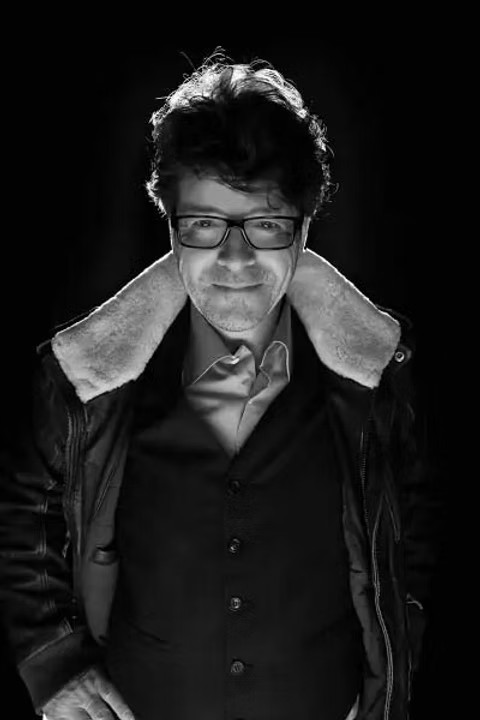
Host of Richard Syrett’s Strange Planet, regular guest host on Coast to Coast AM, and author of Tales from the Rock and Roll Twi
Richard Syrett has built his career walking straight into the questions most people are trained to avoid.
As host of the acclaimed podcast Richard Syrett’s Strange Planet, and as a regular guest host on Coast to Coast AM, the most-listened-to late-night radio program in the world, Syrett has become a trusted voice in the arena of the unexplained.
He is not a tourist in mystery. He is a seasoned interviewer, storyteller, and investigator who knows how to let strange claims breathe without surrendering common sense at the door, a rare talent in a world where people either mock what they do not understand or swallow nonsense whole like it is communion bread.
Beginning in 2010, Syrett created, wrote, produced, and hosted five seasons of The Conspiracy Show, a documentary-style television program that aired across Canada, Australia, parts of Europe, and Africa. In 2013, he co-starred in the Discovery Channel pilot The United States of Paranoia, which investigated claims of electronic harassment and mind control. In 2018, he created, wrote, and hosted the critically acclaimed podcast The Rock ’n Roll Twilight Zone on Westwood One and The Chris Jericho Podcast Network.
His work has also brought him to numerous television series, including William Shatner’s Weird or What?, National Park Mysteries, and Freak Encounters. Across radio, television, podcasting, and investigative storytelling, Syrett has earned a reputation for examining the strange, the hidden, and the controversial with discipline, curiosity, and narrative force.
Richard Syr… Read More
Pastor
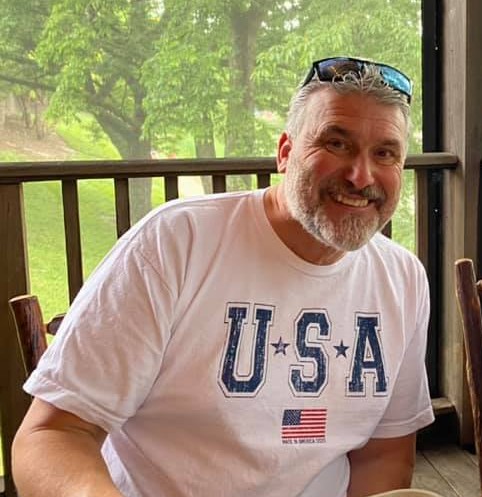
Pastor Vince Giardino is not a pastor who treats ministry like a desk job with better lighting.
Known affectionately as “Pastor G,” he serves as pastor of Gospel Light Bible Baptist Church, where he ministers to men and women from all walks of life with conviction, urgency, and a clear burden for souls.
His work is rooted in the belief that the church was never called to hide behind stained glass while the culture collapses outside its doors. The Gospel belongs in the home, in the pulpit, in the street, and wherever people are broken enough to know they need truth.
Raised in a Roman Catholic home in Gates, New York, Pastor Giardino was saved at the age of 15. That personal transformation became the foundation of a life spent pointing others to Christ. Now ministering in the very hometown that shaped him, he counts it a privilege to serve the people of Gates and the greater Rochester area.
Pastor G’s mission is direct and unashamed: reach the lost for Christ, strengthen the church, and remind a drifting culture that spiritual collapse cannot be solved by politics, programs, or polite silence. It requires truth, repentance, courage, and the saving power of Jesus Christ.