

 iHeartRadio
 Apple Podcasts
 Spotify
 TuneIn
 Podchaser
 Castro
 Amazon Music
 PlayerFM
 RSS Feed
 California’s Warning, New York’s Echo

California Warning is the phrase that captures this conversation with Peter Vazquez and Craig DeLuz: California is no longer just a distant West Coast experiment. It is a national warning, and New York is becoming the echo.
Peter and Craig confront the deeper crisis beneath the headlines: one-party rule, public schools serving systems instead of children, government dependency sold as compassion, churches retreating from the public square, and housing markets twisted until ownership slips away from working families.
Craig brings the perspective of a California conservative, Project 21 Ambassador, school board trustee, and media voice who has seen the damage up close.
The discussion moves from California’s political future to Rochester’s billion-dollar school budget, from failed progressive incentives to the moral difference between charity and coercion. Craig argues that when government punishes work, rewards dependency, and replaces family and church with bureaucracy, it does not heal communities. It weakens them.
The conversation closes with homeownership, faith, civic duty, and the responsibility of believers to re-enter the institutions they abandoned. A home is not just shelter. It is memory, inheritance, and a stake in the country.
Apathy is not humility. Silence is not righteousness. America is not dismantled all at once. It is surrendered piece by piece, until citizens decide to stand, pray, speak, build, and act.
California was once sold as the postcard of America’s future: sunshine, ambition, innovation, and the promise that tomorrow would be bigger than yesterday. But today, California looks less like a postcard and more like a warning label.
Peter Vazquez sat down with Craig DeLuz, Project 21 Ambassador, California Republican Assembly spokesman, host of The RUNDOWN, and longtime Robla School District Board trustee, for a conversation about what happens when a state blessed with beauty, wealth, talent, and opportunity begins to rot under the weight of bad incentives, one-party arrogance, and government that mistakes control for compassion.
This was not a conversation about California alone. It was about America.
California shows the pattern first. New York echoes it next. Then the rest of the country is told to applaud the decline as progress.
Families are priced out of homes. School systems spend like small nations while children still struggle to read, write, and count. Police departments are drained of recruits while politicians promise safety from podiums. Churches and charities are pushed aside by government programs that expand dependency and call it mercy.
Race is weaponized into political management. Media narratives are staged before the questions are even asked. Watchdogs become weapons. Homes become portfolios. Compassion becomes coercion.
That is the Vanbōōlzalness Crisis in full view: deception as normalcy, inversion as policy, and confusion as a governing method.
Craig DeLuz brought the California picture into sharp focus. The state is not collapsing because it lacks resources. It is collapsing because it rewards the wrong behavior and punishes the right one.
When success is taxed, work is burdened, families are weakened, law enforcement is undermined, and dependency is subsidized, the result is not compassion. The result is managed decline with a moral speech attached.
The same disease is visible in New York.
Rochester’s school district can approve a $1.16 billion budget while families still wonder why so many children are being failed by the system.
Charter school fights expose the real question: does education funding exist to protect institutions, or does it follow the child? Diesel prices squeeze school transportation budgets because energy policy is not theoretical when buses still have to run. Housing proposals chase wealth with new taxes while working families remain locked out of ownership. Immigration becomes lifestyle branding while border enforcement is treated as cruelty.
This is how a nation dismantles itself: not always with explosions, but with policies that sound compassionate while breaking the foundations.
DeLuz made the moral argument plain. True compassion does not impose. It empowers. The neighbor who helps, the church that serves, the business that hires, the family that sacrifices, and the community that steps in with love and accountability do more to restore human dignity than any bureaucracy ever will. Government can write checks. It cannot replace the human soul.
The conversation turned to the Southern Poverty Law Center and the deeper crisis of institutional trust. When private organizations gain the power to brand citizens, ministries, parents, and conservatives as threats to society, the question becomes unavoidable: who watches the watchdog? America can confront real extremism without surrendering moral judgment to unelected ideological referees.
Then came the housing crisis. A home is not just shelter. It is memory, inheritance, stability, and a stake in the ground. It is how ordinary families build wealth and pass something on. But when Wall Street moves into the neighborhood and turns homes into portfolio lines, families are pushed from ownership into permanent renting. That is not competition. It is displacement.
Peter and Craig closed where serious conversations should close: with faith, responsibility, and action. Prayer matters. But prayer cannot become an excuse for retreat. Apathy is not humility. Silence is not righteousness.
If people of faith abandon schools, media, politics, entertainment, business, and public life, they should not be shocked when those institutions are captured by people who hate everything they claim to love.
America does not need more polished excuses. It needs citizens with courage.
California is the warning. New York is the echo.
The country is the battlefield. The road back is not complicated. Tell the truth. Protect children. Restore the family. Defend ownership. Rebuild schools. Respect work. Enforce the law. Support local charity. Challenge corrupt institutions. Stop calling dependency compassion and stop calling surrender progress.
The question is not whether the rot is real. The question is what will we do next.
Promote your brand on the Next Steps Show, airing on WYSL1040.com's AM 1040, FM 92.1, and FM 95.5 West stations. Discover more at nextstepsroc.com/advertise-with-us or dial (585) 346-3000 to get in touch with the WYSL team.
Have you ever dreamt of sharing your unique voice, stories, or expertise with the world through a podcast? Perhaps you're bubbling with ideas but uncertain about where to begin? The journey from idea to launch can be daunting, but that's where we come in. Dive Into the World of Podcasting with Next Steps Radio PODCAST Network! Visit NextStepsRoc.com or call Peter at (585) 880-7580.

This podcast is brought to you by Open Door Mission, restoring hope and changing lives. OpenDoorMission.com.
Peter Vazquez:
Mira la izquierda, mira la derecha, ¿qué ves? ¿Dónde estás? In a world that seems to change daily, what will you do next?
Welcome to The Next Steps Show with Peter Vazquez, a starting point for discussion y un poco de dirección.
What will you do next, ladies and gentlemen? I think that is an appropriate noon question as you are sitting there eating your McDouble or your bacon wrap, enjoying the day because it is beautiful out there.
God, country, and family. You always have to find time for that inner soul. You absolutely do.
If you live in places as cold as New York, or compare them to places as warm as California, that is okay too, because when you visualize things into cabeza, sometimes it actually does come true. I believe that.
Every conversation has to deal with reality. We have to talk about warm places like California, because warm, beautiful places like California are becoming the warning. Cold, miserable, high-tax places like New York State are becoming the echo.
The crisis is national.
Watchdogs become weapons. Schools serve systems. Compassion becomes coercion. Race redraws power. Homes become portfolios instead of inheritance, instead of the thing you leave for your children.
When government acts like homeownership is something it should control, rather than an opportunity for growth, that is a problem.
California is not dead, and neither is America. The question is whether enough people still have the courage to name the rot, reject the lies, and rebuild on the principles that made this country worth defending: God, country, and family.
Today’s guest understands that fight. We have had him here before. He is a Project 21 Ambassador. Before someone says, “My gosh, is that all Peter interviews?” the answer is no, but these are important discussions, especially as we walk into the midterm elections.
You are going to hear a lot of this: if you are Black, you have to vote Democrat. If you are Hispanic, you have to vote Democrat. You are already hearing that.
Joining us is a Black conservative voice in hostile political territory. He is a media veteran, a policy advocate, a school board trustee in California, and a movement communicator standing where culture, law, education, economics, and liberty collide.
Joining us is Señor Craig DeLuz, Project 21 Ambassador, California Republican Assembly spokesman, host of The RUNDOWN, and longtime Robla School District Board trustee.
Señor DeLuz, bienvenido to The Next Steps Show.
Craig DeLuz:
It is a pleasure to be with you.
Peter Vazquez:
The pleasure is ours. Sometimes here in New York, when we talk to people on the West Coast, it feels like we are talking to another world.
Craig DeLuz:
It does feel that way sometimes. The good thing is I spend a lot of my time getting out of California and visiting America. It is good to meet patriots from all over the country.
Coming from a state where you are also, to a certain degree, behind enemy lines, I know you feel our pain.
Peter Vazquez:
That is a great movie title: Leaving Cali, Going to America.
Places like California and New York sometimes feel like another country, not part of a great nation that believes in God, country, and family.
How is life on the West Coast? How is the warm, beautiful weather? They have made songs about how great California is. You must be loving it there.
Craig DeLuz:
The weather and geography are blessings. There are so many blessings in California. Those blessings are the only reason California has not gone into total collapse yet, although it is getting there.
The interesting thing is that those blessings make leftist politicians think people will never leave California because it has all of this. But everybody has their breaking point. Many people, in terms of hundreds of thousands every year, have hit their breaking point and are leaving the state.
Peter Vazquez:
Once upon a time, I lived in Barstow, California. I think the population was probably four, and that was me and my family. I am kidding, but it was small. My oldest son was born in Victorville.
Are you up north?
Craig DeLuz:
Yes. I am in Northern California. I am actually in Sacramento, the belly of the beast, where all the bad liberal ideas are birthed before they invade the rest of the nation.
Peter Vazquez:
I was in Sacramento visiting my daughter a few years ago while she was volunteering with AmeriCorps. I saw someone living under a bridge. They had broken down their furniture into sections under the bridge, like a bedroom and living room. I was going to take a picture, but I was heartbroken.
That is still going on in California, even with a governor saying liberal policy is the way it needs to be.
Craig DeLuz:
We have more homeless people than any other state in the nation. We have more illegal immigrants than any other state in the nation. We have greater poverty and income inequality than any other state in the nation.
It shows that whatever you incentivize, you get more of.
Peter Vazquez:
We are learning that in New York quickly. The bigger the checks become, the bigger the dependency becomes. That dependency is not just happening in Black and brown communities. It is happening in rural America too.
I have not seen so many people in desperate situations as I have in the last 10 years in places like Yates County, New York.
One-party rule can lead to that kind of disaster in states, can it not?
Craig DeLuz:
In particular, if it is the Democratic Party, absolutely.
The problem is that many of them believe what they are doing is good. But whenever you disincentivize people from standing on their own two feet, earning income, providing for their families, taking risks, investing, and being successful, you get less success.
When you tell people the more successful they are, the more government will take from them, then people stop working hard, stop innovating, and the state attracts people who are not interested in doing those things.
Peter Vazquez:
The Public Policy Institute of California, or PPIC, had a February survey showing likely voter registration at 46% Democrat, 27% Republican, 25% decline-to-state or independent, and 2% other parties.
These numbers mirror Monroe County or New York State, where Democrats have the lead. But when you look at independent voters and combine them with Republicans, they can supersede Democrats.
I have found that many independent voters in this area are people who refuse to publicly state where they stand, but they lean God, country, and family. Do you see the same thing in your area?
Craig DeLuz:
The numbers we have seen show that decline-to-state voters tend to vote two to one Republican. In many cases, they are frustrated with the Republican Party in California because it has not presented a bold distinction.
For many years, the California Republican Party tried to be Democrat-lite. Now you are starting to see newer elected officials in California who are not afraid to be conservative and vocal.
The big social issues are not necessarily abortion like they once were. Today, it is not wanting pornography in your child’s school or not wanting sex-change operations on children. Those are 80-20 issues, and we are on the right side of them.
Peter Vazquez:
I believe California is ready for an opposition party again. We will talk about that when we come back.
Peter Vazquez:
We are back. Again, I have Señor Craig DeLuz, Project 21 Ambassador, California Republican Assembly spokesman.
Before the break, I said it appears California wants an opposition party again. Am I misinterpreting the data?
Craig DeLuz:
California has what is called a jungle primary or top-two primary. In the primary election, everybody is on the same ballot. Everyone gets the same ballot. Right now, there are about 62 candidates running for governor, and they are all listed on one ballot regardless of party.
The two candidates who get the most votes move forward into the general election. There is no write-in. Whoever gets into the top two, unless someone gets over 50%, goes to the general election.
Peter Vazquez:
It seems Californians want to change that. They want to see a Republican and a Democrat in the general election. I find it hard to distinguish when two Republicans or two Democrats run against each other in the general election. It feels like a uniparty.
Craig DeLuz:
Democrats pushed that system through so they could have two Democrats running against each other in general elections.
Now the problem is that, in the governor’s race, they started with something like seven or nine Democratic candidates, all of them equally unimpressive. At one point, none were getting more than 10%. As one starts to creep above 10%, the others spend money attacking them, and it brings them down.
Right now, there are only two top-tier Republicans. In just about every poll, those two Republicans have been one and two. I am not saying it is likely, but there is more than a puncher’s chance that California could wind up with two Republicans in the general election and no Democrats on the ballot for governor in November.
Peter Vazquez:
Is that even possible, looking at registration and turnout?
Craig DeLuz:
When you consider that there are still seven Democrats running and only one is getting more than 10% in the polls, yes.
Right now, Xavier Becerra is leading among Democrats, but Tom Steyer has already spent north of $150 million in this gubernatorial race and is now hitting the airwaves against Becerra. If Steyer rises, others will spend against him too.
It is a real possibility because Democrats are doing the crab-in-a-barrel thing. As soon as one crab starts climbing toward the top, the others pull him back down.
Peter Vazquez:
One of our listeners on the West Coast, Mark Turner, said you are 100% correct. He said California has been depending on federal subsidies to bail out failed and corrupt policies, and many of these dried up under Trump.
I assume, as a conservative, you support Trump in California.
Craig DeLuz:
Most definitely.
He is talking about subsidies for electric vehicles, but the big one was COVID money. California schools and local governments were in danger of huge budget deficits until they received billions of dollars in COVID money from Washington.
Now that money has dried up. Instead of using that time to become more frugal and make necessary cuts to avoid structural deficits, many municipalities and the state increased programs, gave raises, increased benefits, and added benefits for the homeless and illegal immigrants.
California went from a $100 billion surplus to a structural deficit of about $35 billion. Structural means unless you change something, it is guaranteed to continue and grow year after year.
Peter Vazquez:
Psalm 12:8 says, “The wicked walk on every side, when the vilest men are exalted.” I point that out because it is a warning to nations that reward deception and protect corruption.
You mentioned the governor’s race, and I want to bring up Xavier Becerra. On May 12, American Thinker had commentary about him reportedly saying in regard to an interview, “This is a profile piece, this is not a gotcha piece, right?”
I call this the Vanbōōlzalness Crisis, where we are lied to on a continuous basis. It is not just one politician making promises he or she cannot keep. It is controlling the message and trying to get media to agree.
When you have governors like Newsom and candidates behaving this way, does that explain why Democrats are not doing as well as Republicans in some polls?
Craig DeLuz:
Eventually, you can only get away with lies for so long. Reality catches up with you.
Everyone says they want to fix affordability. Then UC Berkeley releases a study saying the reason California is so unaffordable is because of policies passed at the local and state level, whether energy, homebuilding, minimum wage, or taxation.
One party, the Democratic Party, passed all those policies. Then politicians say they are not going to change any of those policies. They will do the same thing again.
People may not always be paying attention, but they are not stupid. Eventually, they realize when the other side is doing the wrong thing over and over. They may not have bought into what Republicans are saying, but at least they know Democrats are full of it.
The media is now starting to wake up to these issues. What happened in the Palisades with the fire was clearly a failure of Democratic leadership, yet they refused to take ownership.
The inability of the average Californian to afford a home, when it costs almost $150,000 before you even put a shovel in the ground because of environmental costs, labor costs, and NIMBYism, is obvious. The media has reached the point where the obvious is hard to ignore, and the obvious makes for a better story.
Bob Savage:
Craig, sidekick Bob Savage here. What is it actually like on the ground there? What is the reaction to Steve Hilton? The polls are amazingly close.
Craig DeLuz:
Steve Hilton spent a significant amount of time in California preparing for this run. He met with thought leaders in business, law enforcement, education, and the faith community.
He has been successful at identifying key problems and coming up with realistic solutions. That gives him a difference between him and Chad Bianco.
I know Bianco is right on all the positions and what he believes, but my question is how he does that with a Democrat-controlled legislature, Democrats running every other constitutional office, and a left-leaning court system in California.
Bob Savage:
Is there a glimmer of hope?
Craig DeLuz:
Most definitely.
Peter Vazquez:
Ladies and gentlemen, that is Craig DeLuz, Project 21 Ambassador, California Republican Assembly spokesman, and host of The RUNDOWN. We will be right back.
Peter Vazquez:
Thanks for spending your lunchtime with us here on the Voice of Liberty, WYSL and WLEA.
How about that $1.16 billion Rochester City School District budget that passed last night? We are not talking about the national budget of Bulgaria. We are talking about a school district in Rochester, New York. Per-pupil costs are approaching, with legacy costs, $50,000 a year.
Craig DeLuz, Project 21 Ambassador, you sit on a school board, correct?
Craig DeLuz:
Yes, I do.
Peter Vazquez:
Last night, the Rochester City School Board, which is ranked among the worst school districts in New York State and has the highest-paid school board in the country, approved a $1.16 billion budget. What do you say to that? California is the warning. We are the echo.
Craig DeLuz:
I think about what we could do with that kind of money.
I blame the voters. I blame the people who continue to elect these folks. It did not get this bad overnight. The budget did not get that big overnight. It happened over time as voters checked out.
We focus so much on top offices: president, governor, Senate, Congress. We do not think about who sits on the school board, city council, county board of supervisors, who the local sheriff is, or who the district attorney is.
These are the people making the decisions that most affect our lives. School board members are the people to whom you entrust your children for most of their waking hours. You entrust them to prepare your children for the future, and many people do not even know who they are.
Peter Vazquez:
I will tell you who they are here. The Monroe County Legislature is 100% Democrat. The Rochester City School Board is 100% Democrat, not just Democrats, but progressive Democrats. City Council is 100% Democrat. Rochester has had a Democrat mayor for the last 40 years.
Craig DeLuz:
Even in conservative areas, look at who runs the schools. They tend to be liberal. I cannot tell you how many times I have tried to get the California Republican Party to take education seriously and put up serious candidates for superintendent of public instruction or school board.
It was only after COVID, when people started seeing the cultural issues in schools, that they began waking up and running for office.
Even then, 90% of what they talk about is cultural issues. We need to get sexual content out of schools. We need to stop indoctrination. But we also need to make sure kids can read, write, and do math at grade level.
We need to make sure tax dollars flowing into schools, in many cases up to half or more of the state budget, are spent efficiently and in a way that serves kids. But we often do not think about those issues. We focus on hot-button issues.
Peter Vazquez:
On April 16, 2025, you wrote “Compassion or Coercion? What Is the Role of Government in a Free Society?” You wrote, “True compassion does not impose; it empowers.” You also warned that generosity stripped of choice becomes coercion wearing a halo.
You argue compassion loses its moral meaning when detached from choice, sacrifice, relationship, and responsibility.
That feeds into the Vanbōōlzalness Crisis, which I believe is the true national crisis.
You are Black. According to New York State government and California policy, because you are Black and I am Hispanic, we must need government help. What is your response?
Craig DeLuz:
My response would be the same as Frederick Douglass: the best thing you can do for the Black man is leave us alone.
Their compassion has done nothing but harm the Black community.
Before civil rights, before the New Deal, before the War on Poverty, Black people were more likely to be married, Black children were more likely to grow up in intact families, more likely to be educated and graduate from high school, and less likely to be involved in crime.
It was not until the Great Society, when government decided it wanted to help, that you started to see the separation of the Black family and poverty become a way of life, a generational curse upon the Black community.
Peter Vazquez:
Black women were encouraged to marry the government.
Craig DeLuz:
Exactly.
With all due respect, I go back to Ronald Reagan when he said the nine most dangerous words are, “I am from the government and I am here to help.”
Peter Vazquez:
A good friend of mine, Gary Stout, who hosts a show here on the Voice of Liberty, said it sounds like the California Republican Party has the same model as New York: we are number two and we are happy.
One more question before our last break. This word comes up a lot. What exactly does it mean to be Black in the United States? Is it skin color? A culture? A way of life that white people simply cannot understand because it is different from being American?
Craig DeLuz:
America is made up of many subcultures. There are a lot of different American experiences, and not everybody experiences America the same way.
For me, being Black is a common experience that we share. It is part of who I am, part of my cultural experience, but it does not define who I am.
People say they are colorblind, but colorblindness is not something to aspire to. Colorblindness is a lack of recognition of differences that actually exist. I am not saying you should dwell on those differences, but let us not pretend they do not exist.
I once spoke at a Republican women’s event. A woman came to me and said, “This is my friend Rose. When I see Rose, I do not see a Black woman. I just see my friend Rose.”
I said, “If you did not see a Black woman, you would not have pointed at a Black woman and said you do not see a Black woman.”
People see differences. They know they exist. There is a reason Sunday is culturally divided. It is not necessarily because of racism. It is because people gravitate to the familiar.
Peter Vazquez:
That is Craig DeLuz, Project 21 Ambassador. The same thing happening in the West Coast is happening here, in Israel, and in Texas. Do not be bamboozled. We will be right back.
Peter Vazquez:
Final segment today. Again, I have Señor Craig DeLuz with us.
I appreciate you spending time with me today.
Here locally, Youth for Christ Rochester works without state grant dollars. They focus on generosity. They do not want state money because it controls the narrative and the help that can be given.
A local appointed commissioner of urban development once said that the people Youth for Christ serves should just have money thrown at them so they do not rob the rest of us.
What would you say to someone who said that to you as a school board member?
Craig DeLuz:
There is a great book called The Tragedy of American Compassion. It talks about how there used to be a time when social welfare, job creation, and all of that were created by the private sector. It was not until the New Deal that government started taking those things over.
Local charity, especially church-based local charity, is always better because they do more with less. Their goal is not just transforming a person’s situation, but transforming their spirit and soul.
They invest more into people, not just financially, but by getting to know them, understanding them, and helping them address their issues.
Peter Vazquez:
I agree with you on the church. But I live in an area where faith has been co-opted by politics, especially left-leaning politics based on money. That happens in the Rochester area.
Craig DeLuz:
That has happened in many churches. In many cases, they have been duped.
There used to be a time when the most educated person in the community was the pastor. Now, oftentimes, pastors are among the least educated when it comes to public policy. They are more interested in relationships with politicians and the business community than making sure people have a relationship with Christ.
That is sad, but it is not every ministry. I do not believe it is even most ministries.
Peter Vazquez:
The Southern Poverty Law Center’s intent is to discredit anything that has to do with God, country, and family.
Craig DeLuz:
Unless you are preaching liberation theology.
Peter Vazquez:
Anti-God, anti-country, anti-family.
Craig DeLuz:
Exactly.
Peter Vazquez:
That is real power.
Craig DeLuz:
It is fake power, because they gain position through lies. If you put a lie next to the truth, usually the truth will win.
Our biggest challenge is that we have not been at those tables, involved with those people, preaching the truth. We have been more about circling the wagons and retreating.
Peter Vazquez:
When you say “we,” define that.
Craig DeLuz:
Bible-believing Christians.
We have said public schools are of the devil, so we pull our children out of public school. We have said entertainment is of the devil, so we avoid entertainment. We have said academia is of the devil, so we avoid academia.
In place after place, we removed ourselves from the public square. Then we are shocked that the enemy now controls the institutions that influence society.
Peter Vazquez:
That leads me to our final topic.
On May 12, 2026, at NationalCenter.org, you wrote a piece called “When Wall Street Moves In Next Door.” It tracks closely with your California Black Media commentary syndicated in April.
Talk to us about it. As I understood it, your core point is important: institutional cash changes the moral structure of the market.
Craig DeLuz:
I am a believer in free-market economics. Normally, I am not interested in government manipulating markets.
The problem is that with housing, government has already manipulated the market. As part of that, government has worked with corporations to buy single-family homes through policy.
As a result, they are driving up home costs and rents, especially in many urban communities. When corporations and government start colluding, that is when you start calling it fascism.
In the end, it makes it harder for people to enjoy or even live the American Dream.
When Wall Street buys a bunch of single-family homes, it drives up costs and outprices people who normally would have lived there. I see it in Sacramento, Los Angeles, and almost every major metropolitan community.
Companies like Blackstone and Vanguard come in, buy up homes, rent them out, and drive up rental costs.
Peter Vazquez:
A house, something you own, is not just shelter. It is inheritance. It is memory. It is where a child learns stability and where a family builds equity.
In places like New York and California, words like equity have become skewed. But the housing market has been played with too much. We are excluding people who work hard and want to buy a house through policies that price the average person out of the market.
Craig DeLuz:
Exactly.
If you can buy a home, it is the greatest way people pass wealth from one generation to the next. Homeownership builds equity. Over time, a home generally increases in value.
When people are kept from homeownership, they are kept from that benefit. When prices go up, rents go up, and renters lose out.
When my son and his wife got married, they wanted to wait to buy a house in a really nice neighborhood. I told them no. I told them to get into a house now, so when home values rise, they build equity and can later use that equity to buy the house they really want.
Peter Vazquez:
You said, “When the remedy for racial discrimination becomes racial discrimination, we have not solved the problem. We have merely changed who administers it.”
We see that in New York.
A home is a stake in the ground that says we are planted here and part of this community. We belong here, and you cannot move us. We are building something that can outlive us.
I have about two minutes left. I am going to open the mic to you. Share words of wisdom for my listeners in a crazy state like the one you live in.
Craig DeLuz:
I am a firm believer in the Scripture that says, “If my people, who are called by my name, will humble themselves and pray, I will hear from heaven and I will heal their land.”
We need to be involved and engaged. First, we need to be praying. We do not need to worry about what other people are doing. Our people need to be praying.
We also need to be engaged. When Scripture talks about turning from our wicked ways, apathy and not engaging with the world are part of our wicked ways. Saying, “I am just going to take care of me and mine,” is part of those wicked ways.
We are called to go into the highways and hedges and compel them to come in. We are supposed to honor the Lord in all our ways. That includes how we engage with our community, how we vote, and how we engage politically.
If you are not involved and engaged, find someplace to get involved and engaged, whether through your church, local county party, or something else. Find someplace to get engaged and make a difference.
Peter Vazquez:
Or even sponsor The Next Steps Show here on the Voice of Liberty.
Ladies and gentlemen, Craig DeLuz, Project 21 Ambassador, California Republican Assembly spokesman, and host of The RUNDOWN. I appreciate you and all the Project 21 ambassadors so much. Thank you, and may God continue to bless you and the work you do.
Craig DeLuz:
Thank you. I very much appreciate the opportunity to join and hang out with you for a while.
Peter Vazquez:
Absolutely, sir. Until next time.
Ladies and gentlemen, Project21.org. You have to check them out.
Let me say it again: Psalm 12:8 says, “The wicked walk on every side, when the vilest men are exalted.”
We will be right back tomorrow, right here on the Voice of Liberty.
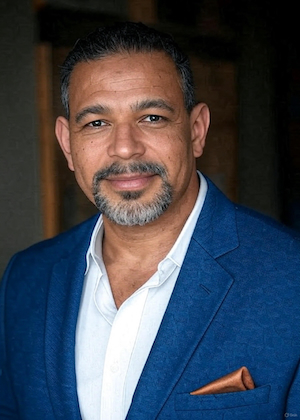
President and CEO of 2A News Corporation and spokesman for the California Republican Assembly, Project 21 member
Craig DeLuz is not a sidelines commentator. He is a battle-tested conservative voice with nearly three decades in media, political advocacy, policy analysis, grassroots activism, and public service.
A Project 21 member and founder of the Uncommon Sense Media Group, DeLuz serves as President and CEO of 2A News Corporation and spokesman for the California Republican Assembly, the Golden State’s largest and fastest-growing Republican volunteer organization.
In a state where conservative conviction is often treated like an act of rebellion, DeLuz has made it his mission to speak plainly, organize boldly, and challenge the political narratives that keep families, communities, and voters trapped in failure.
His record stretches far beyond commentary. DeLuz has served as spokesman and senior legislative advocate for the Firearms Policy Coalition, CEO of the Frederick Douglass Foundation of California, interim executive director of the Women’s Civic Improvement Club of Sacramento, editor of Red County-Sacramento, and publisher of Voice of North Sacramento. He also served on the legislative staff of California Assemblymen Kevin Jeffries and Tim Leslie.
For nearly 20 years, DeLuz has served on the Robla School District Board of Trustees, including as board president, bringing his fight for accountability, parental empowerment, and educational excellence directly into the arena where policy meets children’s lives.
A graduate of California State University, Chico, DeLuz made history as the university’s first Black president of the Associated… Read More