

 iHeartRadio
 Apple Podcasts
 Spotify
 TuneIn
 Podchaser
 Castro
 Amazon Music
 PlayerFM
 RSS Feed
 Cancer, Control, and Broken Trust

Broken Trust sits at the center of this hard-hitting broadcast as Peter Vazquez speaks with Dr. David Rasnick about cancer, medical protocols, dissent, and public-health credibility before turning to Rochester’s $706.8 million city budget, RCSD’s $1.157 billion estimate, pharmacy crime, downtown decay, early voting, Attorney General and Comptroller races, STAR tax relief checks, and caller concerns over fraud, fines, and government accountability. The hour exposes the cost of institutions that demand trust while delivering disorder.
Broken Trust. Cancer entered the room first.
Not as a campaign slogan. Not as another medical headline wrapped in sterile language. Not as an abstraction floating above real families. Cancer came in as the word that stops dinner cold, changes the calendar, drains the account, tests the marriage, sharpens the prayer, and forces people to ask questions they never wanted to ask.
In 2026, the American Cancer Society projects more than 2.1 million new cancer cases in the United States and more than 626,000 cancer deaths. Those are not just numbers. Those are chairs left empty, paychecks stretched thin, children watching parents suffer, and families learning that the medical system is not always as human as the people walking into it.
Peter Vazquez began there because the deeper issue was never only cancer. It was trust.
Dr. David Rasnick, Ph.D. in chemistry from Georgia Tech, longtime biochemical researcher, former colleague of Peter Duesberg at the University of California, Berkeley, and author of The Outsider’s Advantage: A Personal Odyssey into the Essence of Cancer, entered the conversation as a scientific outsider with a message built to disturb comfortable institutions.
He challenged the dominant cancer narrative. He argued that chromosomal imbalance deserves far more attention. He warned against medical protocols that remove human judgment from the doctor-patient relationship. His claims are controversial, and listeners will weigh them carefully, but the question underneath them cannot be dismissed with a smirk from the expert class.
- What happens when healing becomes a marketplace?
- What happens when the patient becomes a revenue stream?
- What happens when medicine becomes so large, so protocol-driven, and so institutional that the individual human being begins to disappear under the machinery?
The conversation carried the old wound of COVID with it. The pandemic did not merely leave behind sickness and grief. It left behind a public trust crisis. People watched guidance shift, dissent get punished, hospitals follow rigid rules, and public officials speak with certainty one month and revision the next.
In 2026, that wound reopened again when former NIAID official David Morens was indicted over allegations that he concealed or destroyed federal records tied to COVID-era research communications. Allegations are not convictions, and that distinction still matters, because civilization collapses fast when accusation becomes proof.
But the existence of such charges reinforces the central question: when public health loses credibility, who pays the price?
The people do.
Then the hour turned from the medical body to the civic body.
Rochester adopted a $706.8 million city budget for 2026–27. That budget includes a $7.5 million property tax levy increase and depends on $35 million in additional state aid. At nearly the same time, the Rochester City School District amended its budget estimate from $1.161 billion to $1.157 billion after state aid came in lower than expected.
City Council’s vote against the RCSD budget was symbolic, but the symbolism mattered. A city is spending more. A school district is still under pressure. Taxpayers are told to understand, to adjust, to absorb, to trust.
But trust is not a tax bill. It cannot simply be assessed and collected.
If government keeps costing more, why does life keep feeling less stable?
That question found its way into the streets. In Irondequoit, masked suspects broke into a local pharmacy and stole money, drugs, and a computer server. Owner Dave Seelman said, “My heart sank.” That one sentence carried more weight than most official statements on public safety. It was not theory. It was a man looking at the damage done to what he built.
Then downtown Rochester took its own hit. The Wyndham Rochester Downtown was shut down after the city cited 13 fire code violations and 10 open building code violations. A city cannot talk about revival while basic public confidence is being tested by broken doors, closed hotels, unsafe buildings, and business owners wondering whether order is still being defended.
Bob Savage joined the hour with the plainspoken edge that live radio still does better than scripted politics ever will. Together, Peter and Bob pressed the same theme from different angles: budgets do not equal competence, rebates do not equal reform, and public safety is not proven by a chart when families, businesses, and taxpayers still feel the instability.
Then the callers brought the conversation down to street level, where all grand theories eventually have to answer for themselves.
Gary called about fraud, media control, and the systems that profit from managing problems instead of solving them. Lorraine called with gratitude for Rasnick’s appearance and urgency about medical dissent. Ronnie called with a story about a school bus camera ticket, a $250 fine, a short hearing, and the fear that local government is becoming less interested in justice than revenue.
That call mattered because broken trust rarely arrives dressed as scandal. Sometimes it arrives in an envelope. Sometimes it looks like a fine, a hearing, a form, a camera, a process, a budget amendment, a program, a rebate, a regulation, or a public official explaining why the citizen should stop complaining and pay.
New York’s STAR relief checks became the closing symbol. Nearly 3 million New Yorkers are set to receive more than $2 billion in property tax relief. Many homeowners are expected to receive hundreds of dollars. Qualifying seniors may receive more. That money matters. Nobody serious should mock relief for families and seniors trying to survive in one of the most expensive states in the nation.
But relief is not reform.
A state cannot tax, regulate, spend, mandate, squeeze, and then ask to be applauded because it returned a slice of what families needed all along. A check may help the household. It does not fix the system. It does not answer why New York remains so expensive. It does not explain why families feel managed instead of served.
That is the Vanbōōlzalness Crisis in its plainest form.
It is not one headline. It is a pattern.
Medicine speaks healing while systems protect protocols. Government speaks service while costs rise. Schools speak children while budgets swell and confidence falls. Public safety is discussed in statistics while business owners stare at broken glass. Albany speaks relief while preserving the machine that made relief necessary. Citizens are told to trust, but too often they are given process instead of proof.
This hour was about the cost of broken trust.
Trust in medicine. Trust in public health. Trust in government. Trust in schools. Trust in courts. Trust in elections. Trust in whether authority still remembers that it must answer to truth.
The answer is not panic. Panic is cheap. The answer is not blind rebellion. That only trades one sickness for another.
The answer is disciplined citizenship.
Ask the question. Follow the money. Read the budget. Defend the family. Protect the honest business owner. Respect the honest doctor, the honest officer, the honest teacher, the honest worker, and the honest voter. Demand medicine that remembers the patient. Demand government that remembers the taxpayer.
Demand schools that remember the child. Demand leaders who remember that public office is not ownership. Truth still has work to do. So do we!
Promote your brand on the Next Steps Show, airing on WYSL1040.com's AM 1040, FM 92.1, and FM 95.5 West stations. Discover more at nextstepsroc.com/advertise-with-us or dial (585) 346-3000 to get in touch with the WYSL team.
Have you ever dreamt of sharing your unique voice, stories, or expertise with the world through a podcast? Perhaps you're bubbling with ideas but uncertain about where to begin? The journey from idea to launch can be daunting, but that's where we come in. Dive Into the World of Podcasting with Next Steps Radio PODCAST Network! Visit NextStepsRoc.com or call Peter at (585) 880-7580.

Peter Vazquez:
In a world that seems to change daily, what will you do next? Welcome to The Next Steps Show with Peter Vazquez, a starting point for discussion and a little direction.
Ladies and gentlemen, another beautiful Wednesday. It is gorgeous outside. God, country, and family are in the air. And remember, we are close to July 4, the official 250th birthday of the United States of America.
The color of your skin, the color of the clothes you wear, or even whether you are bald does not matter. Apparently not.
But check this out, ladies and gentlemen. When medicine becomes a marketplace and government becomes a manager of decline, truth becomes the first casualty. Trust becomes the bill the people are forced to pay.
When we look at sickness and treatment, we wonder why we cannot find solutions to at least some of this. Let us look at cancer for a second, because cancer is not an abstraction. It is a diagnosis that stops the room cold. It changes calendars, bank accounts, marriages, and prayers. People sometimes become more God-focused when it enters the room.
The American Cancer Society projects more than 2.1 million new cancer cases in the United States and more than 626,000 deaths. That is not just a statistic. That is a national wound.
Joining me today to have this discussion about what we should be looking for and what we should be paying attention to is Dr. David Rasnick, Ph.D.
Dr. Rasnick, welcome to The Next Steps Show.
Dr. David Rasnick:
Hi, Peter. Thank you very much. It is good to be with you.
Peter:
The pleasure is ours. I am glad we were finally able to make this connection and get you on the air.
Dr. Rasnick:
I am too.
Peter:
Tell me real quick, how is everything in the medical world these days, especially in the United States? It has to be a little crazy.
Dr. Rasnick:
It is worse than crazy. It is totally undependable, it is broken, and it cannot be fixed. It is a trillion-dollar healthcare industry that keeps growing and growing, while the beneficial results keep going down, especially in the field of cancer.
Peter:
It appears, and I am not a doctor, Ph.D. or otherwise, so I am not going to pretend to know the technical answers here, but does it not seem like whenever somebody gets some kind of disease, cancer always seems to be one of the outcomes?
Dr. Rasnick:
Since COVID started, especially when the injections started in 2021, cancer went from being the third leading cause of death in the United States to the second leading cause of death. Those COVID injections are carcinogenic, on top of many other things. But it is not just those injections. That is just the most outstanding and disgusting example of the direction of healthcare in the United States.
Calling it healthcare is a misnomer. We spend trillions of dollars on this, yet mortality, illness, and incurable diseases keep going up. Incurable disease is where money is made, and that has destroyed the whole idea of healthcare.
Peter:
You studied chemistry. You are a longtime biochemical researcher. You were a former colleague of Peter Duesberg at the University of California. Who is he, and why is that relevant in your bio?
Dr. Rasnick:
Peter Duesberg had the Outstanding Investigator Grant from the NIH back in the 1980s. He was also a member of the National Academy of Sciences, and he would have gotten the Nobel Prize eventually, except the 1980s were the period of AIDS.
Peter was the world authority on retroviruses, and HIV is a retrovirus. He published an invited article in Cancer Research in 1987, almost like a legal document, point by point, explaining how retroviruses in general, and HIV in particular, cannot cause disease.
Anthony Fauci’s HIV position could not allow that, so they cut Peter’s grant funding. After that, Peter had to get independent money. I joined up with Peter in 1996, and that is where we took off. We fought the AIDS battle for decades.
That gave us the opportunity to reinvestigate Theodor Boveri’s hundred-year-old theory that unbalanced chromosomes, called aneuploidy, actually cause cancer. Peter proved it experimentally, and I proved it theoretically.
Peter:
That is a lot to say, but it is important for people to hear. I believe people listening are saying, “I know what he is talking about, and I agree.”
Dr. David Rasnick, you wrote a book called The Outsider’s Advantage: A Personal Odyssey into the Essence of Cancer. Tell us about it.
Dr. Rasnick:
That book tells the story for the layperson. I do not hold back. I tell it as clearly and precisely as I can in language that is understandable to anyone who can read English, except for one appendix that is a bit mathematical, but people can skip that if they want.
It tells the same story I put in my first book, The Chromosomal Imbalance Theory of Cancer, which I published in 2012 for cancer researchers. The difference is that this new book is much more understandable for laypeople.
It also tells the history of Peter, me, and others who went against the mainstream, how you get torpedoed, my biotech companies, Peter with his federal grants, and yet we persisted. We survived. We did what needed to be done. We need more people to become outsiders, and they are growing. I am happy to see what has been happening in society since COVID woke people up.
Peter:
Your core message, as I understand it, is that understanding cancer causation is half the battle and that it receives insufficient attention. When we talk about cancer causation, is that not what doctors usually say, such as do not smoke, do not use weed killer, things like that? Is there more to it?
Dr. Rasnick:
That is carcinogens. The main thing is that the current belief, and that is all it is, a belief, is that gene mutations cause cancer. They call them cancer genes. There are no such things as cancer genes.
The mainstream establishment has known that for at least 10 years, and many for 20 years. They say it in the scientific literature, but it does not become public.
It is all wrong. There is no such thing as a cancer gene, but that is where all the money is because they can make drugs for this gene and that gene, but none of them work.
We are right about the imbalance in chromosomes causing cancer.
Peter:
But during COVID, people were dying because the government refused to allow doctors to give out ivermectin. Is that something?
There was an article I read, Cancer Cartels: When Cure Meets Commerce. One drug they were discussing was daraxonrasib. Mainstream media is saying it helps people live longer somehow. What is your take?
Dr. Rasnick:
I looked it up. It is a molecule, an inhibitor of certain proteins in your body. People think these are gene products and that mutations in the RAS genes cause cancer. They do not.
This drug is another expensive, focused thing. Do not take it. It is probably toxic. The media saying it helps people live longer is a lie.
Peter:
Ladies and gentlemen, Dr. David Rasnick, Ph.D.
Sir, where can people find your book and your writings?
Dr. Rasnick:
My website is DavidRasnick.com. I have 40 years of information there. My book, The Outsider’s Advantage, is on the cover. People can buy it through TrineDay, Amazon, or other places. There is information on AIDS, cancer, Peter Duesberg’s work, and many other things.
Peter:
DavidRasnick.com. Ladies and gentlemen, you can find his work there.
Sir, we have about 10 or 15 seconds left. Do you have anything you want to share with our listeners?
Dr. Rasnick:
You cannot trust the healthcare industry. You can trust individuals, individual doctors and healthcare people who make their own decisions. You cannot trust protocols. These major healthcare institutions are protocol-driven. They are like computers. Stay away from those things. They are deadly.
Peter:
Stay away from computers and stay away from politicians who work like computers. Even more so, I would say.
Dr. Rasnick:
I would use it as a metaphor. Those protocols are like computers. They take the human equation out of it. You follow the rules, but there is no judgment on the individual patient. Physicians cannot even make their own decisions anymore. That is why so many people are dying.
Peter:
Was COVID something that was organized, in your opinion?
Dr. Rasnick:
Totally. COVID was Fauci’s latest and biggest thing. AIDS was the first one. There is no such thing as HIV and no such thing as SARS-CoV-2. Fewer people died in the United States in 2020 than in the previous five years. We did not start dying rapidly until the COVID injections came out in 2021.
Peter:
Ladies and gentlemen, I appreciate your time today, sir. I truly do.
Dr. David Rasnick, may God continue to bless the work you do.
We will be right back here on The Next Steps Show. Do not go anywhere.
Commercial Break
Peter:
Since this is the place where everybody plugs their books, apparently, stay tuned. We will be giving you the places where you can get a copy of favorite baked goods for your radio personality friends.
Bob Savage:
There has got to be a section in that book about how to deliver it.
Peter:
Delivery is the easy part.
Ladies and gentlemen, Bob, I just realized I have had a lot of authors on.
What gets me is that people are taking the time to expose truth. Yesterday, Bob, you said there seems to be a tide turning against all this craziness. I think we are seeing that with people putting things in writing. Some of these authors are retired intelligence officers, retired military, people who were once bound by the inability to speak freely without going to jail.
A lot of that has expired, or they survived the assassination. I am joking. He is wacky today, folks.
I asked the doctor about COVID, and he confirmed what we have said. PBS and AP had an article saying the Justice Department accused a former Fauci adviser of concealing communications related to COVID research. That was April 28 of this year. The article said the allegations represented a profound abuse of trust at a time when the American people needed it most. That was PBS.
Even the left is realizing this was something.
Bob:
That is an easy thing to do now because consequences have been removed. They are no longer required to tow the official line, so they can come out and tell the truth.
Peter:
Gary is on the line. Gary, what is up today?
Gary:
Hi, Bob. Hi, Peter. I wondered if you heard anything about the symposium going on in Las Vegas right now called the Fraud Fighters Summit.
Peter:
No, I have not heard about it.
Gary:
It started yesterday. It was organized by Juan O’Savin, who is a mysterious figure who has been around for years. The stuff coming out of this summit is fascinating.
Peter Ticktin spoke. He was Tina Peters’ lead attorney fighting Colorado corruption in the court system. There have been a whole host of well-known people speaking. I found it by accident this morning. They are replaying yesterday’s lineup today. It is about 10 hours long, but you can skip through it and pick different speakers.
I recommend everyone find it, the Fraud Fighters Summit, because the truth is coming out. These are people who have been on the forefront of a lot of things I have been dropping hints about for the last couple of years. Today is supposed to be the big reveal on voter fraud.
If you are interested in learning what is really going on in the world, not what you are being told by corporate-owned media, tune in. The gentleman who was just on talking about COVID is the tip of the iceberg with election and medical fraud.
The pharmaceutical industry is not made to fix us. It is made to maintain diseases.
Peter:
That is very much like homelessness, immigration, racism, and everything else. There is no money in solutions.
Gary:
The late Bill Nojay once responded to my question about why it is so hard to get anything done through government. Why are there always obstacles, studies, forms, approvals, this and that? He said, “Because there is no money in yes.” There is no money and no power in yes.
Bob:
Is it not discouraging that this Fraud Fighters forum is not being covered by the media? Americans are fed up with fraud and waste.
Gary:
The media is part of it. They are all part of it. One speaker talked about how you cannot really call them leftist, Marxist, or communist alone. They are Marxist-Leninists. Marx had the theory, and Lenin put it into practice.
They lie to you. They tell you they are for the little guy and that they will fix all your problems. Once you elect them and they get into office, you find out who they really are.
This administration has spent time letting these people reveal who they really are.
Peter:
Gary, I think that is the best strategy the White House can use. Let them go out there and show their own colors.
Listen, check out the guest I had on yesterday, Ian Trottier. He was one of the speakers at the summit. I will try to have him on again so we can talk about what he saw there.
Thanks for the call, Gary.
Lorraine is on the line. Lorraine, what is up?
Lorraine:
I just want to say I am so grateful that I heard part of David Rasnick. I am going to tell all my friends about his book and about him. Please have him on again.
Also, he was for ivermectin. Trump favored that to a degree, and that became part of Trump syndrome, where people cannot accept anything Trump likes. So many people went against it.
Peter:
I almost lost one of my good friends, and if it had not been for judicial intervention locally, the hospital would not have given her ivermectin. They even refused to have their doctors do it, so they had to hire an outside doctor after a court order.
They told the family to make peace with her. Within 72 hours after they gave her ivermectin, she was back home.
Bob:
I had a similar experience with hydroxychloroquine. I was not at death’s door, but I was pretty sick in April 2020. We were all told not to put that stuff in our bodies. Our friend Gary and his sister, who is an RN, had concocted a citrus mixture, and I kicked the symptoms within 20 minutes.
Peter:
Lorraine, we appreciate the call.
Bob, I want an evil genius, but one of the little ones I can stick in my pocket.
Bob:
Do they have to be evil?
Peter:
Ladies and gentlemen, we will be right back.
Commercial Break
Peter:
We are back. Thanks so much for joining us here on Next Steps with Peter Vazquez.
Bob, we have a family in Groveland that needs help with medical bills.
Bob:
Yes. The Jerome family needs a hand with medical bills. Next Saturday, the 27th, from 2 p.m. until sold out, the Groveland Fire Department on Groveland Station Road is holding a chicken barbecue. Half chicken, baked beans, salt potatoes, roll, and butter. Eat in or take out, $15, and it benefits the Jerome family.
Peter:
People need help, ladies and gentlemen. If we call ourselves God, country, and family people, conservatives, then write that check. That is in our DNA. We help people get on their feet so they can continue making a difference in the lives of others.
We also see Homeland Security doing its job, keeping us safe and keeping order in our country.
Let us talk about Rochester. The city just adopted a $706.8 million city budget for the 2026–27 fiscal year, including a $7.5 million property tax levy increase. The kicker is that it depends on $35 million in additional state aid to avoid what Mayor Malik Evans described as an extremely difficult year ahead.
At the same time, Rochester City Council declined to support the Rochester City School District budget estimate of about $1.157 billion, cutting about $4 million because state aid came in lower than expected.
What are we getting in return?
The mayor says gun-related violence is down. Is that the return on investment? When I drive through the city, I look around and think that if I were paying taxes in this city, I would be pretty mad, except for their garbage situation. In the city, you can put almost anything out and they will pick it up, while in the suburbs it costs us a fortune.
Bob:
Dead bodies in Penfield, have you priced those out lately?
Peter:
Rochester City Council said of the school district budget that while they were sitting in chambers, RCSD was amending its budget again. The budget in front of them, for the fourth time, was not the budget planned to go into effect.
The city is failing. The school district is failing. Bob, should they even have a budget?
Bob:
Yes, absolutely. But the fact that they are constantly revising it proves that it is not really a budget. It is like raising the debt ceiling. If it is a ceiling, how can you raise it?
Peter:
I have a question for callers. How many times can government raise the cost before you and I demand proof of competence? How do we do that practically? Is there a competence exam we can give before someone runs for office?
Bob:
They seem to think everyone else should take some kind of test, but then they got rid of all that. No need to measure. No accountability.
Peter:
Accountability has become a joke. Public safety has almost become a joke for some of these so-called leaders.
In Irondequoit, a pharmacy was broken into. The owner said, “My heart sank.”
Bob:
They took precautions. They had an armored front door with special glass that was supposedly burglar-proof. These people were professionals. They got through the glass quickly, got inside, got money out of the safe, took drugs, and stole a computer server.
These are people trying to make a living, and this happens.
Peter:
They were described as three guys wearing masks and gloves. These are people who have decided our system has no consequences, so why not? If they got caught, I doubt they would be prosecuted anyway.
Bob:
Given what has gone on with criminal justice reform, maybe they are teenagers subject to Raise the Age and all kinds of special treatment from the criminal justice system. But that is speculation. These were obviously professionals.
Peter:
Let us talk about downtown Rochester and the Wyndham Rochester Downtown hotel, formerly the Rochester Americana on State Street. During the time when immigrants were being brought here, that hotel played a significant role. Owners were getting paid significant money for housing illegal immigrants, hundreds of dollars a night.
Now it is shut down. The only resolve is to shut it down, and that will probably end up costing more taxpayer dollars.
Bob:
Mayor Evans said there were code violations and zero tolerance. But it is Jazz Festival weekend. People booked blocks of rooms. Entrepreneurs arranged tours and accommodations, then the place is closed.
Peter:
What irritates me most is that the deficiencies did not seem to matter when illegal immigrants were being housed there and people were making money.
Bob:
Those customers will never be back. Thank you, Malik Evans.
Commercial Break
Peter:
Thanks so much for joining us here on Next Steps with Peter Vazquez. We would love to hear from you.
This afternoon at about 3 p.m. at the Keating Federal Building, 100 State Street, there will be a press conference with Saritha Komatireddy, the GOP candidate for New York State Attorney General. She will be discussing crime and public safety.
Early voting is underway. Spectrum reported that more than 4,400 votes were cast in the first four days. Primary Day is set for June 23. There are contested races for Congress and state offices.
There is also a Comptroller race. Some people may say Tom DiNapoli seems to be doing whatever he is doing, but is he really doing what is best for you? I am not in the state retirement system, so I cannot tell you.
Saritha’s campaign message is, “If New York is not safe, nothing else matters.”
Bob:
That makes sense.
Peter:
It makes very much sense. New York has not been safe for a long time. I saw the decline. I am 54 years old. I grew up on Clinton Avenue. I saw this city turn to garbage.
We have to fire Tish James. One hundred percent.
I want to talk to Saritha. I really want to get her on the show.
We also have a Comptroller candidate, Joseph Hernandez. This Saturday morning, I have the opportunity to attend an event in Victor and meet him. Joseph is Hispanic.
Bob:
Hernandez, really?
Peter:
Do not let the last name give it away, because that would be stereotyping, and Democrats would say you are a bigot for even considering that Spanish.
If you want to meet him Saturday morning between 10 and noon in Victor, give me a call. I will hook you up. This matters, especially when people say Hispanics are all Democrats. Joseph Hernandez is running for Comptroller, and he appears to be doing well enough to run this race.
Ronnie is on the line. Ronnie, where are you calling from?
Ronnie:
I was listening to you talk about the school budget and city budget. My girlfriend got a ticket back in March from the school bus cameras. She requested a hearing. She had to wait an hour and a half to go in for two or three minutes. She got to explain why she thought she was innocent, and they said they would send the verdict in the mail.
They asked if she had evidence. Evidence of what? These school bus cameras are a joke. I have seen bus drivers pull over and then activate the stop signs as someone passes. If it is really about child safety, should it not depend on the school bus driver and parents knowing the route and giving people a heads-up?
She may get hit with a $250 fine she cannot disprove. How many people are recording every time they pass a school bus?
Bob:
Are there cameras associated with those stop arms?
Ronnie:
Yes. They have cameras installed on the side of the bus. When they first sent the ticket, they had pictures of her going by, front and back, but they never told her there was video she could have looked at before the hearing.
At the hearing, the prosecuting attorney said they had video. She got to look at it for maybe 30 seconds or a minute, then they asked why she thought she was innocent.
Bob:
The burden of proof is on the prosecution. If they allege she broke the law, they have to provide evidence. It is not her job to disprove the evidence. They have to prove she broke the law.
Ronnie:
It seems like a complete money grab for the city. I did some quick numbers. If 20 people a day got hit with the ticket and had to pay it throughout the year, that is $1.2 million the city is getting paid. Where is that money going?
Bob:
Remember red-light cameras? Fifty percent of that money went to Australia, and studies showed they did not improve safety.
Ronnie:
The mayor at the time got rid of red-light cameras, but from what I understand, she was caught by a few of them herself.
Being a politician nowadays is like the new mafia.
Peter:
Mafia bosses. There you go.
Bob:
In Russia, nobody drives without a dash cam because police are so corrupt. They pull people over and claim they did things, so people have to prove they did not commit infractions. I think we are headed there.
Peter:
I always wondered if government decided to become like every other third-world nation, issuing orders to suppress people, how many police officers would follow that? That concerns me because in every movie about those governments, the arm of the government is always the military or police.
Bob:
I do not want to beat up on police. They are doing yeoman service. Obviously, there are bad apples. The history of the Greece Police Department comes to mind.
Peter:
They had a bad leader for a long time.
Bob:
Fish rots from the head down, but we cannot blame it all on the cops. I think they will be the last guys standing with us.
Peter:
Kathy Hochul announced that about 3 million New Yorkers will receive STAR tax relief checks. That is a hard fight to come up against sometimes.
Ladies and gentlemen, be a leader. God bless you. Do not let a second go by where you are not a voice for liberty.
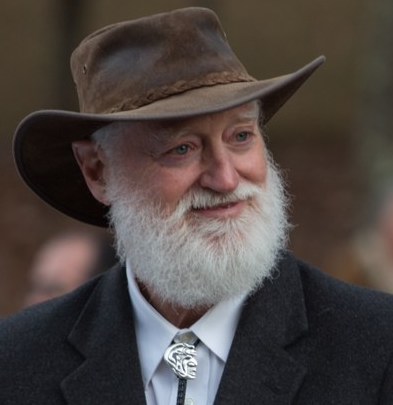
David Rasnick holds bachelor’s degrees in biology and chemistry and a Ph.D. in chemistry from the Georgia Institute of Technology. In 1978, he was one of two Ph.D. scientists hired by Abbott Laboratories to help establish the chemistry group in its Diagnostics Division in North Chicago, Illinois.
After leaving Abbott in 1980, Rasnick founded four biotech startups. For nearly two decades, he developed enzyme inhibitors related to tissue destruction caused by arthritis, emphysema, parasites, and cancer.
In 1996, he left the pharmaceutical and biotech industry to work with Professor Peter Duesberg at the University of California, Berkeley, focusing on cancer research and AIDS. Duesberg and Rasnick published extensively on both subjects and advanced Theodor Boveri’s century-old chromosomal imbalance theory of cancer.
In 2012, Rasnick published The Chromosomal Imbalance Theory of Cancer: Autocatalyzed Progression of Aneuploidy is Carcinogenesis for cancer researchers. His new book, The Outsider’s Advantage: A Personal Odyssey into the Essence of Cancer, tells the same story in plain language while tracing Rasnick’s decades-long journey as a scientific outsider.
More of his work can be found at www.davidrasnick.com.