
 iHeartRadio

 Apple Podcasts

 Spotify

 TuneIn

 Podchaser

 Castro

 Amazon Music

 PlayerFM

 RSS Feed
Brandon Brice: Workers, Promises and Accountability
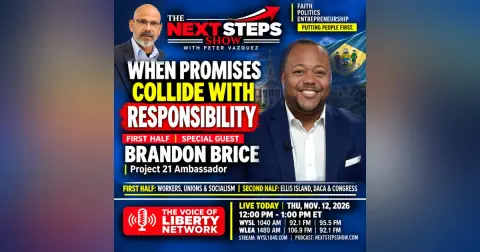
Project 21 Ambassador Brandon Brice joins Peter Vazquez to examine who represents working Americans, the relationship between Republicans and labor unions, and economic opportunity. Later, Peter and Bob Savage discuss Rochester's democratic socialist movement, how a union once helped Peter's father, the Ellis Island anniversary, DACA and immigration enforcement, and accountability after a November 10 House procedural vote.
Key Takeaways
- Brandon Brice argues that Republicans should compete for the trust of rank-and-file union members, rather than assume union leaders speak for every worker.
- Peter Vazquez recalls how a labor union helped protect his father's job while questioning unions' political alliances and influence over public contracting.
- The hosts discuss democratic socialism in Rochester, including labor organizing, public safety policy and a proposal for public ownership of RG&E.
- The 72nd anniversary of Ellis Island's closure frames a discussion of DACA, immigration enforcement and Hakeem Jeffries's remarks about remedies for removals.
- Peter and Bob Savage examine missed votes by members of both parties during a House procedural referral involving an impeachment resolution against Pete Hegseth.
Today, Project 21 Ambassador and conservative political commentator Brandon Brice joins Peter Vazquez to ask who truly represents the American worker. Brice discusses his argument for Republicans to engage organized labor, the divide between union leaders and rank-and-file workers, and why meaningful jobs and economic opportunity matter more than party loyalty.
After the interview, Peter and Bob Savage examine Rochester labor politics, democratic socialism, government contracts, and proposals for public ownership of RG&E. Peter shares how a union once protected his father's livelihood, illustrating why defending workers and questioning union political power are not necessarily opposing positions.
The conversation turns to the 72nd anniversary of the closing of Ellis Island, Deferred Action for Childhood Arrivals (DACA), and a PBS NewsHour interview in which House Democratic Leader Hakeem Jeffries discussed remedies for people removed under federal immigration enforcement. Peter and Bob debate the rule of law, the distinction between deferred action and citizenship, and what due process requires.
Finally, the hosts address a November 10 House vote to refer an impeachment resolution concerning Defense Secretary Pete Hegseth to committee. They discuss legislators who missed the procedural vote and the obligations of public office. A caller also raises concerns about immigration and election outcomes.
Original broadcast: November 12, 2026, at 1:00 PM EST (America/New_York). The Next Steps Show with Peter Vazquez on WYSL/WLEA, Voice of Liberty Network. Putting People First.
Keep the conversation going: More episodes · Watch videos · Read commentary · Send a voice message. Live weekdays at noon Eastern on WYSL and WLEA.
Advertising and sponsorship opportunities.
Frequently Asked Questions
Who is Brandon Brice, and what did he discuss?
Brandon Brice is a Project 21 Ambassador and conservative political commentator. He joined Peter Vazquez to discuss Republicans, labor unions, worker representation, and economic opportunity.
What Rochester issues does this episode cover?
Peter Vazquez and Bob Savage discuss the local democratic socialist movement, unions and government contracts, public safety proposals, and the campaign for a publicly owned RG&E.
What immigration and congressional issues are examined?
The hosts connect the 72nd anniversary of Ellis Island's closing with DACA and immigration enforcement, then discuss members of Congress who missed a November 10 procedural vote on referring an impeachment resolution concerning Pete Hegseth.
Brandon Brice: Workers, Promises and Accountability
The Next Steps Show | Episode 741 | November 12, 2026
Edited reading copy prepared from the supplied November 12 broadcast transcript. Commercials, music and station-break announcements are omitted. Source speech recognition may contain errors, incomplete words, and run-together exchanges. Speaker names are assigned only when reasonably clear; shared speaker labels identify passages that cannot be reliably separated. The source contains broad time markers, not timestamps for individual turns; displayed times identify the beginning of the corresponding source block and may differ from the edited podcast audio.
Opening and Veterans Day Reflections
Source time marker [00:00:11]
Program introduction: Mira la izquierda, mira la derecha, ¿qué ves? In a world that seems to change daily, what will you do next? Welcome to the Next Steps Show with Peter Vazquez, a starting point for discussion and a little bit.
Peter Vazquez: Yep, yep. Ladies and gentlemen, it is the next step show competer Vasquez. Thank you for listening. Como siempre see, it's my honor. I truly hope that you enjoyed yesterday's show, cause I'll tell you those guys put together a veteran day program that I was proud to listen to at the noon hour, Bob. Thank you for organizing that, sir.
Bob Savage: our pleasure.
Peter Vazquez: You know, to have a and the thing is this, remember I was an E five, I was a sergeant in the military by choice really, because I was an E five promotable, but working for a general, you don't really you don't really want to give up
Peter Vazquez: those jobs sometimes and and I can say that the work that officers put into the well into the what they do, I mean it's just it's it's something astonishing to see these
Peter Vazquez: Bob, real quick before we get to our guest, I watched an officer work and w it was a training program for three days without sleep because her job was to coordinate the war, basically, and she was like, I am not leaving this to somebody else. I was given a task and I'll tell ya I was impressed. Not that non commissioned officers don't do that, obviously we do, but officers with a college education and a lot of the experience that they have have options and it doesn't have to be the military. So kudos to them. Thank you, Pa. Thank you, Stephen.
Peter Vazquez: Bob you're awesome.
Brandon Brice: Organized Labor, Republicans and Working Americans
Source time marker [00:01:44]
Bob Savage: shucks.
Peter Vazquez: We have a great guest today, ladies and gentlemen, right? Another Project 21 Ambassador. This guy's a a conservative political commentator, right? But check this out though, see, because we're gonna be talking something that we haven't talked about in a while and I haven't really heard many people talk about, right? And it has to do with unions and it has to do with Republicans, right? So let's see what our what our guest says today. Ladies and gentlemen, joining me is Project 21 Ambassador Brandon Brice. Sir, thank you for your time today.
Brandon Brice: Thank you for having me on.
Peter Vazquez: the the pleasure is ours. I'll tell you, the work that you guys are doing over at the National Center and that's nationalcenter.org, the work that you do, sir. as a as a conservative political commentator, the work that you've done on Capitol Hill. I mean I'm honored to have you on. It's my privilege. thank you for coming or excuse me, thank you for having me.
Brandon Brice: And you know, it's interesting given the state of affairs, you know, we saw where
Brandon Brice: you know, Republicans across the country, even Texas, went blue, which was shocking. But it speaks really to what I'm gonna talk to you and your listeners about tonight, which is really about getting back to what I call the common man. I recently in the Delaware Business Times wrote an article about, you know, saying it's time for the Republicans
Brandon Brice: to, you know, really be embraced by organized labor. I won't get into, you know, the the building trades and the you know the non labor and non union. I won't get into that. But I will get into the fact that, you know, the guy that gets up, goes to work, puts his, you know, puts his pants on to go work in construction. Where's the representation for that guy? And I'm not talking about the fat cats that
Brandon Brice: run the labor unions. I'm talking about the guys with the grud in their fingernails and the guys that work hard and the guys that make sure that the bridges stay built, that make sure homes get built, that make sure the pipe fitters and all of the, you know, the the labor intensive work is done. Who's representing their best interest? And so I I wrote the article to really shine some light on why it's important for those folks
Source time marker [00:04:08]
Brandon Brice: to really have representation. And unfortunately, we're not seeing that representation in or on we you know on the on the Democratic side, even though they claim they're fighting for workers. Well, last time I checked, that wasn't quite accurate. And so I think this creates an opportunity where it it will open people's eyes to say, you know, why isn't Labor giving, you know, the Republicans a chance, give them a choice.
Peter Vazquez: Isn't there historical where where the Republican parties and the unions, I mean, it's kind of like a love hate relationship.
Brandon Brice: Well, here's the thing here's the deal. You know, when there's work, there's opportunity for labor. If there's no work, then no one's working. And I think you know, the the party of business and the party of labor by default automatically kind of
Brandon Brice: go together. They gel. And so again, we what we're doing is we're creating, you know, that opportunity where we're saying, hey, there's an opportunity to work together and there's an opportunity to, you know, really create some synergy that should already exist anyway. We saw that, you know, where with the last election, where, you know, it was unions and labor that put Trump in office.
Brandon Brice: And so the question is, why aren't they investing back into you know, why isn't the party really going after that audience? You know, these are the people, and again, let me be very clear. I'm not talking about the fat cats, the union leaders. I'm talking about the membership. where's their advocacy on Capitol Hill or in my case in Dover? and I think that's literally why why the article was written.
Peter Vazquez: Brandon Brice, ladies and gentlemen, Project 21 Ambassador. Sir, I I I I I I want to challenge you a little bit though, because you know, I think that a unions, at least from our perspectives here in New York State, especially locally in Rochester, has been tied to the a political party, specifically the Democrat Party, and and even now r aligning really close with the DSA, the Democrat Socialist of America Party. I mean, organized labor
Source time marker [00:06:31]
Peter Vazquez: I mean they form a powerful component of the Democrat Party here in New York and very like California, Colorado, Maine. So so how do we align in places like that, do you think? Or is it possible?
Brandon Brice: Well well first of all, just because I come to your house doesn't mean I'm gonna stay and eat your food. and I I equate that to, you know, they're there, but they're there because the question is, are we there? And then the question is who's actually doing more for the common man
Brandon Brice: when it comes to these folks. And let me be very clear. You're right. The leadership is there. But when you look at the membership, where are they? And I think that's where we've got to you know, there are more members than there are big shot leaders. And so I think when you look at organized labor, you gotta say, okay, well where are their issues being addressed? And who's really the champion for their issues? And let me be clear, when I say that I'm not talking about rhetoric. I'm talking about
Brandon Brice: in the halls of Albany and Dover and Printon, are their voices truly being heard and are their bills actually getting passed or is it just lip surface?
Peter Vazquez: Well I I I think the the party association with labor is like I said, especially in places like New York, kinda answers that question directly, seeing where we are in New York with the highest taxes and affordability crises that are just out of control. L let me share some numbers if I can for everyone.
Peter Vazquez: Gallup in September said seventy one percent of Americans approve of of labor unions tying the highest approval Gallup has recorded since nineteen sixties. in that same study, fifty two percent Republicans approve of unions compared with eighty nine percent of Democrats and seventy percent of independents. The labor statistics bureau in February of this year said union re union membership and this is I think to your answer, sir.
Peter Vazquez: Union membership represented ten percent of wage and salary workers in twenty twenty five compared to twenty point one percent in nineteen eighty three, and in twenty twenty four the appearance of Teamster President Sean O'Brien at the Republican National convention. I mean I I think that does show significant development and relationship between organized labor and Republican source. But to your question, is it the membership or is it Fat Cats that are saying, wait a minute, we're gonna get
Source time marker [00:08:55]
Peter Vazquez: Something more here.
Brandon Brice: The question is, and again, I'm not gonna say that they are or they're not, but I was talking about workers. I'm talking about the common man that gets up, has a family, you know, can can work, whether it's pipe fitter, electrici electrical, what do you call longshoremen. The workers need to be represented. Their interests.
Brandon Brice: should come first. And if it's not coming first, I don't care if it's a Democrat or Republican, there's a problem there and there's an opportunity. And so if you read my article, it's really talking about how do we begin to empower workers and really push their policies through and not just again give them lip surface.
Bob Savage: As a s sidekick Bob Savage here, if you don't mind my jumping in here and just pose this question. I I can't cite what the source is, but I have read from you know more than
Bob Savage: one source in a more than one occasion that there's a developing gaposis, you know, between the the the preferences of the rank and file, the members of the union and the union leadership in the in many cases. Is that not the case?
Brandon Brice: Well again, you know, I think there's clearly a difference between the leadership and the membership. You know, in fact I would say a lot of your members, especially when you start talking about, you know, some of the building traders, the
Brandon Brice: electrical electric electric union workers, the the longshoremen, some of the what do you call it, the boiler makers, the membership, they're actually supporting Republicans. So the question is why are I I think the party as we're starting to rebrand ourselves and starting to look at different you know electorates
Source time marker [00:10:51]
Brandon Brice: You know, really we are the party of work. Whether that's working a nine to five, whether that's working a union or trades job, we believe in hard work. The other folks, they I can't necessarily say that I that they do. And so I think this is an opportunity. Again, if you read my article on the Delaware Business Times, give us a chance and we'll give you a choice.
Peter Vazquez: You know, I love that, and I did read the article, and it's an excellent article. And I will tell you, I'm I'm I'm not challenging you because I disagree with you. I'm challenging you because I want our listeners to say, Well, wait a minute, we gave this an honest review and I want people to go read it. So where can they read your article, Brandon? Delaware Business Times. Delaware Business Times. And you also have a website yourself because you do a lot of great work, sir. Excuse me, is it Delaware Business Times dot com? Yep, that's it. Okay, thanks. I do.
Brandon Brice: So so, you know, and again I talk about news of the day. but you know, I'm from originally from Michigan, the home of labor. I believe in labor. I think that again, I believe in hard work and more importantly, I believe in maintaining the middle class. unions and and labor and and and whether it's non labo non union labor or or union labor, they had been a part of creating and making and making sure that America's middle class stayed intact.
Brandon Brice: But we have to protect our workers. We've got to put workers first. And so again, I always say give us a chance and we'll give you a choice.
Peter Vazquez: One last question for you, sir, and and this is, you know, something that I want all our listeners locally to hear your response because recently on the Janelle King show, sir, you had said the best social program is still a job. I just I'd like you to expound on that.
Peter Vazquez: And and and how does that resonate with people that have given up on the workforce saying, No, I don't think so. I think government because again, this seems to be a trend that that's growing in our state. you know, what would you say to them?
Brandon Brice: Well, first of all, government doesn't create how do I say this? Government doesn't create. Governments don't create jobs. They create the atmosphere so jobs can flourish. That's those are two very different things. Also, you know, when you look at
Source time marker [00:13:07]
Brandon Brice: when I said that the best social program is still a job, I mean i be honest, a Democrat said that. that was JFK. And what it means is you gotta get up, you gotta go to work every morning, you gotta learn how to deal with people, deal with customer service, you gotta be able to manage your time, you've got to be able to deliver a product. That brings dignity. And again, it doesn't matter if you're a guy on the you know, in the trades or if you're a guy that's putting in the telephone pole at the end of the day
Brandon Brice: People who are at work makes for a civil society. And again, everybody deserves to have dignity and have a little more dollars in their pocket. And that's the definition of living in a country with values that focus on God, country, and family.
Peter Vazquez: Ladies and gentlemen, the honorable C Brandon Brice, right? Project 21 Ambassador.
Peter Vazquez: Conservative political commentator, me the a guy who gets it. Brandon, thank you for your time and may God continue to bless you and the work that you do, sir.
Brandon Brice: Thank you so much, sir.
Peter Vazquez: Absolutely. Project 21.org, ladies and gentlemen, nationalcenter.org. That organization is doing great things, see? From Project 21 to the free enterprise. We'll be right back right here on the Voice of Liberty Network on the next step show con Peter Vazquez.
Peter Vazquez: Y el señor Roberto Savaji Babidi, no te vayas. W I S L W L E
Rochester Labor Politics and the Appeal of Socialism
Source time marker [00:14:39]
Peter Vazquez: You know, YouthForChrist, Rochester.org, YFCrochester.org, you know, where they understand that there are actions, right? You know, cause and effect when you don't have
Peter Vazquez: Consequences for well actions, guess what happens? Well, people get lost. People get get get get lost. Hey, by the way, lines are open. Five eight five three four six three thousand eight six six five five two one zero zero nine. I'd love your reaction to that comment because or to our guest and his article. I don't know if you've had a chance to read it super. If not, I can talk to you about it because I did read it. But you see, I I I wonder sometimes though
Source time marker [00:16:37]
Peter Vazquez: When we start making those kind of associations with organizations or ideologies, right? Especially in places like New York that have a long standing record of saying, Mida, yeah, no, we don't really like capitalism. We don't really like the American God country and family way. I mean, really think about that for a second. Because I can tell you that I mean, even right here in the city of Rochester, check this out, right on one of your local PBS stations, I think it's something like
Peter Vazquez: I don't know, XXI or something like that, you know, something goofy, right? Where they sat there, right? One of their and they interviewed the DSA, the local chapter, because guess what? Rochester has one, and guess who's signing up for it? Over five hundred people in this great st city of ours, including people with influence, ladies and gentlemen. You wonder where your policies are coming from? Now tell me something. And maybe, Bob, maybe I'm just on left field here. But but where is it?
Peter Vazquez: Based on just what we know here in New York State, that there would ever be a Kumbaya moment that that that defines or can align with a Republican philosophy that equals fair work for people, an opportunity to access and growth, right? And liberty. Because I haven't seen many unions locally and I ran for office. Remember, I met with all of them, or at least all that were willing to meet with me, 'cause the other ones like, No, you're you're you're just a white guy in a Hispanic body.
Bob Savage: We're talking labor unions in Rochester, aren't we really talking about SEIU?
Peter Vazquez: I mean pretty much, but I didn't want to be critical because there are some other ones. I d I I know there's smaller unions like electrical workers and auto there's there's Teamsters.
Bob Savage: but I mean the dominant category I would say for union representation is in healthcare.
Peter Vazquez: Yes, yes, yes, yes. Wh which many of us, at least through my decade plus dabbling in politics, right?
Peter Vazquez: ha have have tried to get some local unions endorsement, but they don't. It almost goes to the Democrat. I mean, even the police union in my race, and not that they haven't endorsed Republicans, God bless them, I know they do great work. But they've aligned with Democrats like Harry Bronson and others. So again I start to wonder, and we've wondered, we've asked this question in my years. If a Republican in this area or in this state gets a union endorsement, it makes me scratch my head. I don't know if that's good or bad. So
Source time marker [00:19:00]
Peter Vazquez: Ladies and gentlemen again, lines are open. What say you? Because we've got to reconcile. We've got to represent the worker. But then if the union bosses are the ones that are representing the worker per se, and our union dues and remember our guests didn't want to talk about non union people because, you know, that's a whole nother topic that that we gotta discuss someday, Bob.
Bob Savage: Because talking about non union people. What do you mean?
Peter Vazquez: Well, you know, like like most of U.S. municipalities, everything other government contracts, if you're a non union company, you can't bid on none of that stuff.
Bob Savage: Well, i i you know, government is is suffused with union representation.
Peter Vazquez: Well that's political affiliation. And and by the way, that's that needs to be that needs to end. And that that is a that's an abuse of the taxpayers. And to pick Brandon, a little bit, that
Peter Vazquez: T to to say that we're not gonna have that discussion in the context of saying we have to align conservative values with well with what what what has proven at least in New York State, California and other blue states like that, right? And and even some red states. where they align with a political affiliation. I mean the union, SCIU, that equals Democrat Party. I think they even shared the same building for a while, if I'm not mistaken here, Lowe.
Bob Savage: Yeah, exactly. And that's why until relatively recent in American history, it was illegal for government employees to unionize.
Peter Vazquez: Yeah, it was.
Bob Savage: Because when you w think about the collective bargaining process, you've y there there's nobody representing the people at the bargaining table.
Peter Vazquez: There never is, though. But the people seem to be the ones out on the street
Peter Vazquez: 'Cause remember I saw and you know, I I was hoping to get more info before it came in but it couldn't because it was still unfolding but apparently or still coming out. But even in Monroe County, the whole DSA is already in there the the the the Republicans were smart enough to get up and just walk out 'cause they realize okay, we're wasting taxpayer dollars just sitting in here listening to this nonsense. Even a few of the DSA you know, free everything that the Democrats were applauding.
Source time marker [00:21:03]
Peter Vazquez: had to be escorted up by police. So this stuff is is not at our front door anymore. It came in the door. We're we're dealing with a union, we're dealing with a political faction that has decided that government is the answer and that people that believe in individualism like, well, you know, capitalism growth, the American dream are bad. And that's what we have now governing. And we're gonna show that in clips in the next half hour, Bob. But check let me run these numbers for you if I may.
Bob Savage: Sure. Yeah.
Peter Vazquez: Fifty two percent of Republicans approve
Peter Vazquez: labor unions, while only nineteen percent want unions to have greater influence and forty-nine percent want way less influence that unions have today.
Bob Savage: Well when you have a bunch of when you have a poll result like that that is internally you know conflicted and doesn't seem to make any sense, that's evidence for the proposition that the questions that are posed by the poll takers are l extremely leading or possibly misleading
Bob Savage: And so it it just doesn't make any sense. How can the majority of Republicans approve of labor unions and and then by a vast majority not want to see them perpetuated or or increased in influence?
Peter Vazquez: This is a bill that that's in the US House of Reputed representatives. It's called the Faster Labor Contracts Act. I'm still looking into it.
Peter Vazquez: because it's you I I like to read the bills this is a crazy thing I mean.
Bob Savage: Faster label labor contracts? What's that?
Peter Vazquez: Well that's a bill that passed recently in June.
Bob Savage: You mean the negotiations for contracts have to should go
Peter Vazquez: the legislation seeks to accelerate first contact negotiations between newly n un between cheapers, newly unionized workers and employers.
Bob Savage: Sounds interesting.
Peter Vazquez: I I have not been I listen, I've read
Peter Vazquez: Like all the summaries 'cause these bills are huge and it takes time to read through them. So so I decided that this is one of the ones we're gonna have to go through and I'm printing and I'm reading. I mean they just got a brand new contract or my
Source time marker [00:23:12]
Peter Vazquez: Misinterpreting this. Listen, th this is the kind of confusing thing that the American people look at and say, What the heck all is going on? But see, if it's confusing us that we look at this stuff on a semi regular basis, who has time to read through an entire bill? That's
Bob Savage: Well there you go.
Peter Vazquez: Has to do with labor contracts that we can look at today 'cause I figured this administration's making it better.
Bob Savage: The font of common sense and and order.
Peter Vazquez: the U.S. House of Representatives, you got it. The U, it's gonna get better, isn't it? That's what our that's what we're being told.
Bob Savage: Well, Peter, you know, I don't think we have enough time left in the show for me to help you with that misapprehension.
Peter Vazquez: Hey, the Rochester Democrat Socialist of America here locally, that platform, and just so everybody knows, you know, in case you're interested, and if you are meet up, don't bother calling my show because you're not gonna be happy with my response. But you should. A and tell me why you think this makes sense. But they oppose city budgets that increase sworn police officers and police funding.
Peter Vazquez: Isn't that something? They also support workplace unionization and Metro Justice Rochester for energy democrats, activists replacing RG&E with publicly owned. See the affiliation with unions and policy, ladies and gentlemen? Maybe I'm just a nutcase.
Minimum Wage, Entrepreneurship and a Family Experience with a Union
Source time marker [00:25:34]
Peter Vazquez: You know, I'll tell ya, we hear promises year over year, really month over month, from all the different politicians, from Protonics to some other stuff. I remember AI, then now it's no AI. Protonics didn't work. I mean it just on and on and on. Promises about jobs, about economic delivery, you know, we got organized labor that's sitting there. You know, Bob, and I'm gonna drop the labor thing 'cause there's more, you there's other things to talk to just as important to tie into the all this same
Peter Vazquez: Craziness. But I I remember when I was running for office, I was invited to the to the AFL CIO meeting where I guess all the labor people come together. And it was this big hall. And Bob, before I even sat in the chair, right, because I had this hot seat in front of us, it's good little I mean, it's interesting. And and d they asked me, do you stand with raising the minimum wage to fifteen dollars? This was back then.
Peter Vazquez: And I said, you know, that's interesting, but I can tell you that, you know, raising the minimum wage for fi to fifteen dollars may have unintended consequences, especially for that business owner or their startup company that's starting up or the nonprofit that is, you know, bounded by well, by grants or by donations. I said, I'm not saying people shouldn't get a paid a fair wage, but is fifteen dollars truly something that makes sense across the board. The response that I got from the leader in that group or one of the one of the union leaders said
Peter Vazquez: said to me, Well, you know what? A small business that can't afford to pay fifteen dollars an hour should be shut down.
Source time marker [00:27:11]
Bob Savage: Well, you know, that's just a a dumb statement b from somebody who hasn't even thought this out because as has been proven, it was predicted at the time, you're turning the clock back here to probably fifteen, twenty years ago, when the the whole notion of a fifteen dollar minimum wage was derided as ridiculous. and what's happened? employment, you know, th these are supposed to be entry level jobs. You know, working in fast food or whatever, for example. That's the example they always hold up.
Bob Savage: employment's dropped dr drastically as they have replaced people that they can't afford with automation.
Peter Vazquez: Well that goes back to the deeper cultural issue. You know, the the the whole concept of of why nonprofits exist in my humble opinion and why the ones that run without government doll government dollars do even much better. But you know the cultural infliction of this whole
Peter Vazquez: Well, you know, government knows best. This is why okay, let me back up one quick second. I I said I was gonna drop unions. Unions aren't bad. I'll tell you something, Bob. If it weren't for the CSCA union that my father was involved with, I don't know if I would be here today. I would probably be the statistic over on Clinton Avenue because my father wouldn't be able to well, I I I keep saying he wouldn't be able to, so that's an unfair assessment because my father was pretty dynamic. Right? But when he worked for the state
Peter Vazquez: the the the C SCA came to his aid at a time that was pretty critical. Check this out. My father started a a school of driving. Okay, mind you, my father only had a a third grade education in in from Puerto Rico, but he was forced to leave because back in his era, you know, once you can read and write
Peter Vazquez: Well, that was secondary. Once you can walk and talk and you became useful, you had to work to sugar canes back in the thirties and forties and fifties back in Puerto Rico. So anyways, he was a entrepreneur, started his first store, called El Jivarito by the time he was twenty, brought wouldn't marry my mother till she came up to you know till he had something established, moved up here, went to New York City for a while, things were nuts, wanted stability, came to Rochester.
Source time marker [00:29:18]
Peter Vazquez: Right. Things were doing fine, opened up a driving school, was doing great. And then one day, and remember this was before and my father tried learning English. He did, he did everything, but he was focused on working, making money, and he needed to feed a family, and and he did speak English. He wasn't like ignorant to it, but he tried. Hard to read, right? Hey, my father didn't come here till he was older, so again, and it just you put all that together, but he did try.
Peter Vazquez: He's had a driving school successfully for a long time. New York State decided they were gonna change the rules one day to you couldn't teach to drive for money unless you had a high school diploma. Overnight my father's business went in the garbage. So
Peter Vazquez: My father said, Okay, I'll comply, I'll do what I can. He did. He tried everything he could to pass the G D test. Couldn't get beyond it. They didn't have bilingual stuff back then. Agreed, disagree, whatever. He did everything he could. He said I'm gonna hire somebody. He put a very basic ad in the paper. The the within a week he was arrested by New York State for promoting a business. That all it said was driver instructor needed a thousand hours of experience and a phone number. That's all it said. They accused him of advertising a business that he wasn't authorized, and that's where the union came in.
Peter Vazquez: 'Cause my father otherwise didn't have enough you he couldn't afford an attorney. We weren't we didn't have any money. We're we're pretty, you know, paycheck to paycheck. The union stepped in though and and saved his job and and 'cause he was gonna you know, there were the management at the state was looking to fire him because he got arrested. because he had a state job. They arrested him at work and he had a state job, yeah. But he didn't do anything wrong. It was all cleared, it all went away. But I'll say they stepped in to help him out and I seen that in a few cases. So I'm not beating up on all unions and saying that unions are bad.
Peter Vazquez: I'm just saying that their political affiliation and when you deviate from that has a significant consequence. My father didn't say much. He didn't get involved political. And when I got involved politically he said, Peter, be careful, that has major consequences. And it surely does.
Ellis Island, Puerto Rico, DACA and Immigration
Source time marker [00:31:10]
Peter Vazquez: Anyways, talk about major consequences. I do want to play a couple cli cuts that I sent today, Bob, because you know, immigration is still an issue. A and and the thing is this though, some people from Puerto Rico would say, Yeah, we immigr immigrate, not not the IMM,
Bob Savage: the Immigration you mean?
Peter Vazquez: Emigration, right? Where they they didn't really change their country to a new country because Puerto Rico's America. They just kinda shifted where they were here.
Peter Vazquez: But Puerto Rico has an interesting culture. Some of my Puerto Rican friends may say, Well, Peter, that's not the case, but believe it or not, a good portion of Puerto Rico still agrees with the Democrat philosophy. But yet when you've got a a a territory, right, that doesn't really pay federal income tax, they can't vote in the federal or the the the presidential for a president basically, but they get a lot of money down there.
Peter Vazquez: A lot of social security. you notice actually the rule of thumb is when you visit Puerto Rico, especially someone who's well probably as light as you and I, because I fall into this category. No jury.
Peter Vazquez: No fancy glasses, no fancy clothes, and stick yourself to San Juan. Now I venture out and I go into these deep little places and believe it or not, it's a little different and when you go and it's safer. When you go inside Puerto Rico, people are like, Yeah, spend your money here, they love ya. But in those tourist areas, the politically run areas, forget about it. You're not safe. But we're not safe, especially when we have you know, people here in the United States that claim to align with people, right? You know, from Puerto Rico, people like me.
Peter Vazquez: And and say that, you know, if you're brown because remember the leader of the of the of the leading Hispanic organization here in Rochester a few months ago was out there saying, They're hunting us, they're hunting us, she's about equal hunting who we're like ninety percent or plus Puerto Rican here. But then, right, this election happens and then the Democrats say, Well, wait a minute, we are gonna make a change. Now, see, Bob, I believe that this nation
Source time marker [00:33:10]
Peter Vazquez / Bob Savage: Is a nation that was built on a rule of laws. As a matter of fact, I want to pause for a second and acknowledge that today that today, right now, this day is the seventy second year since El Ellis Island closed its doors. More than twelve million immigrants went through there, Bob. Right? They paid their dues. They went through the background checks. You know what DACA is?
Peter Vazquez / Bob Savage: Do you remember DACA? Yeah. Yeah. Y y do you wanna can you explain it better than it's it's it's the dreamers. It's the dreamers, right? So they have US
Peter Vazquez / Bob Savage: Wait a minute. Have I got this right? I don't think I have this right. No no no, but you're close though. They were they were not born here. They were not th these are people basically the ones that are here illegally. Right, got it. Okay, but through no fault of their own. That's that's the rubric that constantly gets peddled to us. But it's not citizenship. It's not a permanent residency. But you know, we just again we just had an election. Elections have consequences. And remember how Keem Jeffries is going to be most likely the speaker coming up soon, am I correct?
Peter Vazquez / Bob Savage: Yeah, it looks that way.
Peter Vazquez: Let's see what he has to say here about when 'cause he was asked a question on on the PBS News hour by A N A Amna Nawaz when she was interviewing him. This was on November tenth. This is what he says when she asked him, Hey, are you gonna bring these illegals back that what broke the law?
PBS NewsHour excerpt — Amna Nawaz: Dozens of DACA recipients are among those already deported under this administration's immigration crackdown. Would you support efforts to bring them back into the US?
PBS NewsHour excerpt — Hakeem Jeffries: Certainly anyone, whether they are a citizen, whether they were here
Source time marker [00:34:49]
PBS NewsHour excerpt — Hakeem Jeffries: lawfully, whether they're DACA recipients who've been treated unfairly and unjustly by the administration, we need to provide remedial assistance to them and undo the damage that's been done to the country, to law abiding immigrant families and to the American people over this last twenty months or so.
Peter Vazquez: Wait a minute, wait a minute, wait a minute. Didn't he say two different things in there?
Bob Savage: Internal inconsistency? there's quite a bit.
Peter Vazquez: Yeah, well let's do it again. It's it's only
Peter Vazquez: Yeah, it's only thirty seconds. Let's play it again.
PBS NewsHour replay — Amna Nawaz: Dozens of DACA recipients are among those already deported on this administration's immigration crackdown. Would you support efforts to bring them back into the US?
PBS NewsHour replay — Hakeem Jeffries: Certainly.
PBS NewsHour replay — Hakeem Jeffries: Who's been treated unfairly and unjustly by the administration, we need to provide remedial assistance to them and undo the damage that's been done to the country, to law abiding immigrant families, and to the American people over this last twenty months or so.
Peter Vazquez / Bob Savage: A monumentally confusing answer because he says, What are they whether I don't know what he means by this. Whether they were a citizen or whether they were legally well, if they're a citizen and if they're legal, they can just come back.
Peter Vazquez / Bob Savage: Yeah. What's stopping them? Well that's the bamboozanist. That's the lie. That's the book the Democrats are using. Why would they have been thrown out if they're here illegally? And there's not one person. Now now hang on though. Let's let's go back to the fact that Ellis Island closed, right? It processed more than twelve million immigrants, right? A very small amount of people were returned. But check it out. Those people came here to assimilate. I don't believe that's the same.
Peter Vazquez / Bob Savage: Kind of well immigrant we're referring to today either that he wants to bring back
Source time marker [00:37:05]
Peter Vazquez: Absolutely, ladies and gentlemen. And Mira, don't ever let one second go by too that you don't realize that. See, being conservativo, understanding God, country, and family, right? Understanding what it means to honor a veteran. Check this out.
Peter Vazquez: Don't let people go hungry. You don't go to heaven by acts. You go to heaven, see, by having a relationship on Jesus Christ, that's a fact. And the thing is you have to have discernment because sometimes that relationship is going to require you to stand up and be firm on what is right. Now let me share something with you here. DACA was established in twenty twelve through executive branch under President Barack Obama.
Peter Vazquez: The USCIS states that deferred action it doesn't confer a a lawful immigration status or provide a d a direct pass to citizenship. None of it. So what is this guy talking about? And and you know what gets me, Bob, is that and I'm gonna I'm I'm gonna pick on the left.
The Hegseth Referral Vote, Congressional Absences and Caller Reaction
Source time marker [00:39:13]
Peter Vazquez / Bob Savage: You know, but I I believe the right suffers from this as well. Well, they really don't know what the heck they're talking about and sometimes it seems like they say things, right? Kinda like when Mandani was running, it was like all right, man, you do you, you say you a and when you produce a result, maybe we'll come and stand behind you 'cause that's what we've seen in politics. I mean I call that van business, some of us call it crapola, in Espanolo Jamo mierda, right? Because that's all that is, ladies and gentlemen.
Peter Vazquez / Bob Savage: One hundred percent without a doubt, if you disagree with me, Jama, right, three six three thousand area code five eight five and tell me that I'm wrong. Right? 'Cause I know many of you are listening saying, Well Peter, I live here in Rochester and I've seen ICE take people. I want you to tell me exactly who they took.
Peter Vazquez / Bob Savage: No no no no now tell me, see, if there were consistency in the mielda that's coming out of these politicians' mouth, then maybe I would say, okay, well you know what? Maybe I'll look at it.
Peter Vazquez / Bob Savage: I may may maybe I'll at least listen a little bit sometimes. But this is politics 'cause the lo I I know the right does too. Bob, you know that they're trying to impeach and this is a Republican Massey that started this, the Secretary of War? You know that they're doing that, right? They already started it. That's over with. That that is over with. But you know what I find interesting though? That you know, aside from the fact that there were But there's a a bitter showboating soon to be ex member of Congress who's
Peter Vazquez / Bob Savage: I you know, just it's a it's a desperate last attempt for attention. Yes. He needs to go along with many others in that side of Six more weeks he's history. But but what I find really interesting too is that eleven Democrats didn't vote, Bob. Do you know why they didn't vote? their excuses? Because they're sane?
Source time marker [00:41:08]
Peter Vazquez / Bob Savage: Because they're sain did you say a sane democrat? Sane, saint. Yeah, I know. there there's gotta be some. It seems like an oxymoron, but maybe. Again, listen, they say let I I will judge you by those people that you associate with that's such a true statement. That's why when they say, Peter, run in the Democrat line, you may have a better chance of winning. I'm like, but caramba, you know what? I'd rather be judged by God than be judged by this earth because of aligning with a party that believes and just things like killing babies or or or
Peter Vazquez / Bob Savage: Or really just the whole concept against God, country, and family. Or believes that men can have babies? Believes that you know, Bob, I was trying not to go there. I was trying to be nice. Eleven Democrats didn't vote. Let me tell you why they didn't vote. All right, check this out. Traffic and police escort. That was one of the reasons.
Peter Vazquez / Bob Savage: what do you mean? I'm gonna tell ya. Malene Stansbury, Laura Gilli Gillian, G I L L E N Gillian, Jonathan Jackson, Marilyn Strickland reported delays getting to the Capitol. Other Democrats also reported traffic problems. They just simply couldn't get there on time because traffic was too crazy. But you know where they were coming from? Nevada. you'd think, right? They were coming from a fundraiser that was a few miles away.
Peter Vazquez / Bob Savage: A fundraiser a few miles away. A few miles away. And but see the thing this, some people would say, Peter, you know these guys live a very tight schedule. You gotta cut some breaks. And I'm like, Okay, but maybe, but if this was so important, so critical, wouldn't you make sure that you were there, Bob?
Peter Vazquez / Bob Savage: Well I would allow enough travel time. I mean listen Washington DC is notorious for traffic problems, so you gotta make some allowances. I'm gonna go to the guest here in two seconds, but first I want to say Nancy Pelosi had a Veterans Day engagement in San Francisco, not Nevada, medical procedure for Lou, personal emergency for Steve Hansford, and other absences just didn't give anything. And the thing is there were eight Republicans that didn't show up either. Was the was w was Pelosi at the annual meeting of the members of Congress with
Source time marker [00:43:17]
Peter Vazquez / Bob Savage: Gay husbands? probably. In in San Francisco, that would make pretty much sense. The mic, thank you for calling the next step show, Bub.
Caller Mike: Hey gentlemen, I just turned on the radio a little on late side, didn't realize what time it was. Have you guys mentioned you I I've heard you're mentioning about immigration. Have you heard about the the new caravan that is now making its way up through Mexico?
Peter Vazquez / Bob Savage: Yep, it's coming. Head it head it to the border.
Caller Mike: Now that's gonna put Trump in that's gonna put Trump in a dilemma. Okay. Do we shoot before they climb the wall? Or do we leave them climb the wall?
Peter Vazquez: We're we're gonna have real leadership. I'll predict this. They're gonna be either stopped with the tariff that Trump just issued to Mexico and said me to stop this nonsense at your border, or we're gonna put up well, law enforcement
Peter Vazquez: And arrest these jokers and send them right back.
Caller Mike: And you know where they're going to head straight to? The state of Texas. Right. And also, too, don't don't you guys think it's a little funny that every county in Texas turned color.
Peter Vazquez / Bob Savage: Well every every c every single county and two million more voters were
Peter Vazquez / Bob Savage: Seriously added in there. California is anything. Well, it's that that happened in a lot of s counties, Mike. It was the Mike. I believe it's thirty three hundred counties in the United States. I think twenty two hundred of them went blue.
Caller Mike / hosts: Yeah, that is bizarre. I don't smell a little funny to you. What do you think? well just just a little bit. Man, I I w I you know what? I know I should have betted on one of those, you know, online betting sites.
Caller Mike / hosts: You I I I could've probably made a bunch of money on that. You know? Hindsight's twenty twenty, buddy. That it is. The money Well, I I I'm not gonna have to worry about money anymore because as soon as all these illegals hit here and our our Democrat friend give out Medicare to everybody, you know, ain't gonna have any money left, you know. I mean hopefully I'll have enough to bury myself because
Source time marker [00:45:37]
Caller Mike / hosts: I'm not gonna be able to get any medical attention because all the illegals are gonna get into the hospitals first. So yeah, I don't know. By then most of our land may be consumed by another ideology. Yeah, by by solar panels in New York.
Peter Vazquez: I I appreciate your call, Mike. Do we have time for this last cut? 'Cause cut that you're gonna hear now, ladies and gentlemen, right? This is what influential democrats and you should recognize most of these voices, see, are telling those eleven Democrats.
Peter Vazquez: That didn't show up, right, to well to fire the d the well, the Department of Warhead Hagsteth. Ha heg did I say that right? Pete Hagsath. Pete Hagseth, yep.
Recorded news montage — voices not individually identified: cut to having a vote like that on attendance is hard. That hurts. What do you say to those eleven Democrats who didn't show up to vote tonight? You should show up and do your job. That's a sad commentary. I I don't I don't I don't make excuses for colleagues who don't show up on such an important vote.
Recorded news montage — voices not individually identified: that is regrettable. If you all get the pass once, we're telling you. You can we we'll we'll accept this. But not again. If there is a vote, you need to have your there.
Peter Vazquez: you know, I wish we could, but I think that the question instead, right? Let's not dock let's just ask him. Listen, I get everything, every reason, every excuse, even the let the eight Republicans, because
Peter Vazquez: Again, Senor Republican, Signora Republican, you need to be there to vote too. But you see, I can't accept that they got stuck in traffic. I can't accept that they got stuck at a conference of of gay men or whatever that was in in in San Francisco. I I can't accept the five Republicans that said that they reached the floor too late as in they walked in the door when it was too late to cast a vote. even though one of them did say that they would have voted for the
Peter Vazquez: You they would voted with with Massey on that had this had it been explained to him better or some nonsense like that. Bob the again goes back. If you're going to make a claim, Bob, if I tell you I'm on a mission and I want you to do something for me, I I'm gonna make darn sure that that I'm there or I'm gonna make sure that you can be there. Isn't that the way it works? not in Congress, not in Washington D C.
Source time marker [00:47:58]
Peter Vazquez / Bob Savage: But that's not representation. It's an alternate reality. An alternate reality. It's like Star Trek. They're like hit a button and they're there or No, Star Trek was entertaining. S Star Trek was entertaining. However, Star Trek was an interesting show because it shows what happens when i i it it's an implied socialist type of environment with a very military presence there in space.
Peter Vazquez / Bob Savage: Which which triits me up, but you know what that does too? Only the new episodes, not the old ones, they completely cut out the concept of God. Isn't that something? Typical. Mida be a leader, be a leader, be a leader. God bless these United States of America, and don't ever let a second go by where you are not a voice for liberty.
End of supplied on-air discussion. Closing station audio and background music omitted.
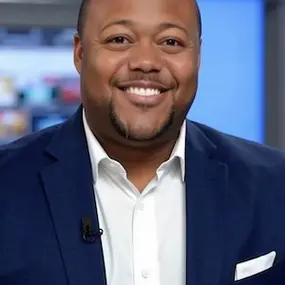
Project 21 Ambassador & Conservative Political Commentator
Brandon Brice is a conservative political commentator, columnist, and Project 21 Ambassador who serves as a mentor to the Project 21 Freedom Fellows at the National Center for Public Policy Research.
Originally from Detroit, Michigan, Brice has built a career spanning Capitol Hill, state government, grassroots political movements, and national media. He earned a bachelor's degree in Business Administration from Howard University and a master's degree in Global Affairs from Rutgers University.
His public service includes working under former U.S. House Speaker J. Dennis Hastert and serving as Director of Education and African-American Affairs under New Jersey Governor Chris Christie. In 2021, he was appointed to Delaware's State Magistrate Screening Process.
A strong advocate for education reform, school choice, economic empowerment, and individual liberty, Brice has appeared on Fox News, Newsmax, MSNBC, C-SPAN, NPR, and other national media platforms. He has also contributed political commentary to prominent publications, including The Detroit News and The Washington Times.
Through his writing, public appearances, and policy advocacy, Brice encourages Americans to look beyond traditional political loyalties and examine how government policies affect working families, educational opportunity, economic independence, and the future of American communities.