


The Black Republican Club reopens forgotten history and rejects modern victimhood as policy. Peter Vazquez and Lavelle Lewis trace a line from Douglass and Booker T. to today: faith, family, property, and self-government. They argue prosperity follows discipline, not dependency, and that communities rise when truth replaces manipulation.


In a city that keeps quoting Frederick Douglass while forgetting Frederick Douglass, Peter Vazquez turns up the truth and turns down the excuses. Lavelle Lewis, founder of the Black Republican Club of Rochester, walks in with receipts: the old black Republican tradition was not victimhood, it was ownership. Property. Family. Faith. Education as liberation. Self-government instead of supervised living.
They laugh, they spar, they name names, and then they land the punch: the modern machine runs on confusion. White progressive “leaders” write the diagnosis, black and brown bodies get used as the protest fuel, and the people who benefit most from division call it compassion. Meanwhile, the history that could free minds gets buried under slogans, statues, and selective memory.
Numbers do not lie, but they do expose. Poverty fell, family collapse rose. The culture says dependency is destiny, but the record says discipline built communities and faith anchored them. The question hanging in the studio is not partisan. It is personal: do you want to be managed, or do you want to be free?
Lavelle makes the invitation plain: join the work, learn the history, rebuild the foundation. Peter closes the way he always does, like a warning and a dare: be a leader, verify everything, and do not let your liberty become someone else’s talking point.
Promote your brand on the Next Steps Show, airing on WYSL1040.com's AM 1040, FM 92.1, and FM 95.5 West stations. Discover more at nextstepsroc.com/advertise-with-us or dial (585) 346-3000 to get in touch with the WYSL team.
Have you ever dreamt of sharing your unique voice, stories, or expertise with the world through a podcast? Perhaps you're bubbling with ideas but uncertain about where to begin? The journey from idea to launch can be daunting, but that's where we come in. Dive Into the World of Podcasting with Next Steps Radio PODCAST Network! Visit NextStepsRoc.com or call Peter at (585) 880-7580.

Peter Vazquez:
This podcast is brought to you by Open Door Mission, restoring hope and changing lives. OpenDoorMission.com.
Peter Vazquez:
Mira la izquierda, mira la derecha, ¿qué ves? ¿Dónde estás? In a world that seems to change daily, what will you do next? Welcome to The Next Steps Show with Peter Vazquez, a starting point for discussion y un poco de dirección.
Peter Vazquez:
Aha, sí, soy yo, ladies and gentlemen. It is Peter Vazquez here on The Next Steps Show, the Voice of Liberty, for another end-of-the-week episode. Ladies and gentlemen, we will let you keep coming in here. Just make sure you check in with your parole officer regularly. Every morning when I wake up, I look over and I say, is it okay for me to get out of bed? That is the best move anyone in a good marriage makes. So I rolled out. I hope I do not hear that voice for another seven or eight decades.
We are going to talk about something that has caused so many people to live in pain that some of them probably wish they woke up hearing a voice that said, welcome home, you are pain-free.
Science exists to pursue truth, not to protect institutions. Today we are going to have a conversation with a man who writes facts, not detached theory. He is a Lyme disease survivor whose health collapse forced him into years of independent study. What began as an effort to understand his own illness led him into a hidden history of Cold War biological research and the life of Dr. Erich Traub.
Ladies and gentlemen, Señor Adam Finnegan. Adam, thank you for joining me. Bienvenido.
Adam Finnegan:
Thank you very much for having me.
Peter Vazquez:
The pleasure is mine, sir. And for our listeners, I also have another gentleman with us in studio. I call him the honorable Lavelle Lewis. You may hear his voice throughout. Lavelle, say hello.
Lavelle Lewis:
I do not know about honorable. I am just a regular guy. Peter calls everybody honorable. But I will take it.
Peter Vazquez:
Great to meet you all. Adam, tell us who you are and what led you to write your book. Give us the name.
Adam Finnegan:
The book is The Sleeper Agent: The Rise of Lyme Disease, Chronic Illness, and the Great Imitator Antigen of Biological Warfare. The Sleeper Agent for short.
I got sick myself. My mother was sick. Years ago, I read a book called Lab 257 about Plum Island and the idea that Lyme disease may have come from there, connected to a Nazi scientist brought over after World War II named Erich Traub. I began to find key pieces of the puzzle.
When I tried to get help, doctors were gaslighting me, telling me I was not sick. Meanwhile I had unbelievable headaches, joint and body pain, and I was hurting all over. That led me deep into research.
I met a former Nazi hunter, John Loftus, who had the highest security clearance and worked for the Department of Justice. His job was to hunt down Nazi war criminals hiding in America. He found the Department was protecting many of them. He wrote America’s Nazi Secret, and in it he discussed Lyme disease as biological warfare in nature.
I also met a former Pfizer biochemist who had Lyme disease. She taught me how complex the disease is and how other agents can create similar illness. I came to believe a biological war has been playing out for a long time, stealth bioweapons that cause slow chronic diseases.
These are long term economic weapons. Agents that cause immediate fatal disease are more containable and less successful. Economic bioweapons keep people alive but incapacitated, overwhelming the healthcare system.
Peter Vazquez:
Author Adam Finnegan, ladies and gentlemen. Your book centers on immune tolerance. Explain that and why it matters.
Adam Finnegan:
Erich Traub discovered immune tolerance, a state of unresponsiveness to a specific antigen or group of antigens that a person would normally respond to.
Immune tolerance is achieved under conditions that suppress immune reaction. It is not just the absence of response. Your body tolerates harmful pathogens that it should otherwise keep out. That allows them into the central nervous system and brain. Then you can have brain infections, neurological and neuropsychiatric disease. He also observed a rise in cancer.
It was devious, but it became his focus. He developed biological agents that could cause this. He hid much research under animal disease, adapting animal diseases into human diseases. Before modern genetic engineering, this was done with animal passaging, running pathogens through specific animals to produce mutations.
Peter Vazquez:
That sounds technical, and a great reason to read your book. Where can people get it?
Adam Finnegan:
Amazon or TrineDay.com. The audiobook is at TheSleeperAgent.com, which is my website.
Peter Vazquez:
There you go. The Sleeper Agent, author Adam Finnegan. Thank you for your time. God bless you, your work, and your health.
We will be right back. The lines will be open. WISL, WLEA. Phone number 585 346 3000.
Peter Vazquez:
We are back. Jeremiah 12:5 says, If you have raced with men on foot and they have worn you out, how can you compete with horses?
Lavelle Lewis, it has been a while. What is new? You have a Republican club I am going to beat up on, half kidding, but I want people to understand what you are doing and why.
There is a myth that if you are Black or Hispanic you need government control, you cannot handle yourself, and you must vote Democrat. That is not true.
Lavelle Lewis:
It is not true. The Latino community is now a target because traditionally it has been more conservative in family structure. The nuclear family is central, along with faith and family values. That infrastructure is under attack, like the Black community was attacked over time.
Peter Vazquez:
Your club says it aims to represent, educate, and articulate answers to cultural, civic, and economic problems impacting inner city neighborhoods, through small gatherings, meetings, community events, entrepreneurship, and free market principles.
What does representation mean if it does not produce measurable improvements in schools?
Lavelle Lewis:
The Black Republican Club represents traditional Black Republicans, Booker T. Washington, Frederick Douglass, John W. Thompson, organized civically, focused on education, entrepreneurship, and rejecting victimhood. They wanted equal protection under the 13th, 14th, and 15th Amendments, not handouts, just equal rights under law.
Peter Vazquez:
National groups have recruited voters for years. Yet representation remains lopsided. In Congress, minority representatives are overwhelmingly Democrat. Nationwide, out of thousands of state lawmakers, less than 10 percent are Black, and only a small fraction are Black Republicans.
So tell me, is this futile?
Lavelle Lewis:
No. It matters because traditional Black Republican values are the foundation. Self ownership, property ownership, work, trades, entrepreneurship, education as liberation, nuclear family, faith and moral law. Republicanism equals self government and law and order.
That was eroded over time. Leaders like W. E. B. Du Bois pushed victimhood and blamed infrastructure rather than rebuilding self governance. Those who proved success were attacked.
Peter Vazquez:
Interesting that as Du Bois rose, Marxism rose too. Relationship?
Lavelle Lewis:
Yes. Du Bois was an open communist. That history gets suppressed. The goal is to keep people from reconnecting to proven success, bootstraps, family, ownership, discipline.
Peter Vazquez:
Lines are open. 585 346 3000. Why should this matter to listeners in areas with few Black residents?
Lavelle Lewis:
Because this history is not only urban. Upstate communities had emancipation ceremonies. The Underground Railroad ran through the Erie Canal. There are deep ties in places like Geneva and Auburn. This history needs to be unearthed and told.
Peter Vazquez:
What would you say to critics?
Lavelle Lewis:
Keep hating. It only proves the value of truth. My family roots are deep here. I can show documents. Rochester was a model for integration.
Peter Vazquez:
Caller from Allegany County. Welcome.
Caller (Joe):
After the American Revolution, thousands of Black people went north. Many to Nova Scotia to catch ships to England. That is history in the Encyclopedia Americana.
Lavelle Lewis:
There is a lot to say about that and the Atlantic slave trade. There are challenges to mainstream narratives. There are artifacts and history that are suppressed to keep people confused.
Peter Vazquez:
How is everything in Allegany County?
Caller (Joe):
Snow yesterday. And yes, slammed by Democrats, and Republicans.
Caller (Joe):
Alexis de Tocqueville said nobody would settle in New York if they had to trade one form of feudal serfdom for another. He referenced land contracts and property rights. Private property lifted people out of the dark ages.
Peter Vazquez:
Thank you for the call.
Peter Vazquez:
Lavelle, people quote Frederick Douglass but skip his core values. You said a Black Republican organized the original Douglass statue.
Lavelle Lewis:
Yes. John W. Thompson raised money and erected the first statue of a Black man in the country after slavery. Now politicians pose by replicas and omit the message. There are many Douglass statues, but none emphasize God, country, and family.
Peter Vazquez:
You must be excited Rochester has a Black mayor and Black council.
Lavelle Lewis:
I felt that way about Obama until I learned the agenda. Malik Evans does not represent conservative ideology. He saw an opportunity to get elected. I met him. He told me his father was Republican, but switched parties to vote for him. That tells you something.
Peter Vazquez:
Douglass would have rejected the idea that discipline is oppression and excellence is elitist.
Lavelle Lewis:
Correct. And civil rights history has layers. When you peel them back you see Marxist and communist influence. America was a target. Victimhood is used as leverage.
Peter Vazquez:
Why do white liberals run surveys and set narratives while Black and brown people become the fodder during riots?
Lavelle Lewis:
That is manipulation, Leninism. Lenin viewed Black Americans as key to destabilizing America through victimhood politics.
Peter Vazquez:
1959: Black poverty was high, but most Black children were born into married families. 2023: poverty lower, but non marital birth dramatically higher. Yet the narrative remains, Black and brown families are helpless and need government.
Lavelle Lewis:
Thomas Sowell explained that post slavery literacy rose dramatically, largely through community learning rooted in Christianity and family structure. That success was attacked. History is not taught because truth produces self respect, and self respect resists control.
Peter Vazquez:
Ten seconds. Tell the world what you want.
Lavelle Lewis:
Find the Black Republican Club of Rochester on Facebook. You do not have to be Black or white. We educate and bring common people together to change what is happening in communities.
Peter Vazquez:
Lavelle Lewis, ladies and gentlemen. Be a leader, be a leader, be a leader. God bless these United States of America, and do not let a second go by where you are not a voice for liberty.
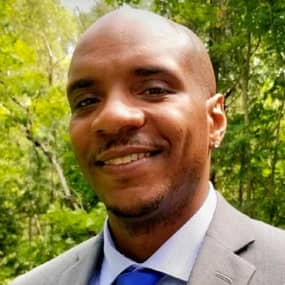
Lavelle Lewis is a familiar presence in Rochester, New York, a man whose life moves easily between memory and momentum. A historian at heart, he carries the city’s past with him, tracing its forgotten stories and overlooked voices, then bringing them forward with care and purpose. Through podcasting and radio, Lewis opens the airwaves to thoughtful conversation, where history, politics, and civic life meet in honest dialogue. His commentary is not performative but rooted in a genuine desire to understand where Rochester has been and where it is going.
Beyond the microphone and the archive, Lewis is also a real estate professional, engaged in the tangible work of shaping neighborhoods and investing in the city’s future. Yet his most enduring role unfolds away from public platforms. As a devoted father of four, he builds legacy not only through stories told and debates held, but through daily example. In both public life and private moments, Lavelle Lewis contributes to Rochester’s ongoing story, preserving its past, challenging its present, and helping to shape what comes next.