

 iHeartRadio

 Apple Podcasts

 Spotify

 TuneIn

 Podchaser

 Castro

 Amazon Music

 PlayerFM

 RSS Feed
Bill Smith: Pittsford’s Vote of Trust, Test of Power

Pittsford Town Supervisor Bill Smith joins Peter Vazquez and Bob Savage to discuss local leadership across party lines, farmland preservation, housing, the 2027 town budget, municipal employees, refuse collection, cannabis dispensaries and short-term rentals.
Key Takeaways
- Bill Smith explains how he works with an all-Democratic Pittsford Town Board by focusing on residents' priorities rather than party labels.
- Pittsford's Greenprint protected more than 2,000 acres of farmland, while new housing options and changes to the Monroe Avenue corridor remain part of the town's discussion.
- The 2027 town property-tax rate remains $3.13 per $1,000 of assessed value. Smith explains town services and responds to a caller's concerns about municipal employees.
- Neighborhood-initiated refuse districts can reduce collection costs but limit individual choice of hauler; the interview also covers cannabis dispensaries and short-term rental regulation.
Today, William A. "Bill" Smith Jr., supervisor of the Town of Pittsford, joins Peter Vazquez and Bob Savage on The Next Steps Show to examine what it means to earn public trust when the electorate is changing and the local government is divided by party. A Republican supervisor working with four Democratic council members, Smith argues that residents judge their leaders by results close to home, not simply by the party line on a ballot.
Smith recalls the changing landscape of his New Jersey childhood and the Greenprint initiative that permanently protected much of Pittsford's remaining farmland. The discussion explores how open-space preservation, housing choices and plans for the Monroe Avenue corridor can coexist without sacrificing the character that draws families to the community.
The conversation moves to Pittsford's adopted 2027 budget, the town property-tax rate of $3.13 per $1,000 of assessed value, and the services that tax dollars support, from sidewalks and roadway maintenance to the community center and library. A caller challenges Smith about municipal workers' compensation and contract negotiations, while the hosts ask what fiscal discipline means in practice.
Peter presses Smith on the tradeoff between consumer choice and lower garbage-collection costs. Smith explains that neighborhoods initiate Pittsford's refuse districts and that the town then selects a hauler through competitive bidding. They also discuss the town's decision to opt out of marijuana dispensaries and the ongoing debate over regulating short-term rentals, weighing property rights against the expectations of neighbors.
The central question reaches beyond Pittsford: Can local government still put residents first when national politics encourages people to divide into opposing camps?
Guest: William A. "Bill" Smith Jr., Pittsford Town Supervisor. Original broadcast: November 23, 2026, at 1:00 PM EST (America/New_York). The Next Steps Show with Peter Vazquez on WYSL/WLEA, Voice of Liberty Network. Putting People First.
Keep the conversation going: More episodes · Watch videos · Read commentary · Send a voice message. Live weekdays at noon Eastern on WYSL and WLEA.
Advertising and sponsorship opportunities.
Frequently Asked Questions
Who is Bill Smith?
William A. “Bill” Smith Jr. is the Town Supervisor of Pittsford, New York. He joined Peter Vazquez and Bob Savage on The Next Steps Show on November 23, 2026.
How does Bill Smith govern with a Democratic Pittsford Town Board?
Smith says local officials can work across party lines by concentrating on residents' priorities, public services and the character of their community.
What is Pittsford's 2027 town property-tax rate?
The adopted town rate is $3.13 per $1,000 of assessed value, unchanged from 2026. The town rate does not include separate county, school, village or applicable special-district charges.
How do Pittsford refuse districts work?
Residents petition to form a neighborhood refuse district, and the town then selects a waste hauler through competitive bidding. Households within an established district generally cannot choose a different hauler individually.
Has Pittsford banned short-term rentals?
No town-wide short-term rental ban had been adopted at the time of the November 23, 2026 interview. Smith said the town was considering possible rules to address neighborhood concerns.
Episode 746 — Full Transcript
Original broadcast: November 23, 2026 | Guest: William A. “Bill” Smith Jr., Town of Pittsford Supervisor
Transcript prepared from the original episode transcription. Timestamps are relative to the recording. Automated transcription may contain recognition or speaker-identification errors; station breaks and advertisements are retained.
[00:00:02] Show introduction: In a world that seems to change daily, what will you do next? Welcome to the next steps show with Peter Vasquez, a starting point for discussion.
[00:00:16] Peter Vazquez: Yeah. And, is where we're headed once again, ladies and gentlemen. See, it's me, Peter Vasquez.
[00:00:22] Peter Vazquez: Welcome to another beautiful day, ladies and gentlemen. Bueno. Bueno. You know, ladies and gentlemen in studio, we have a, we have a town supervisor. Isn't that something?
[00:00:33] Peter Vazquez: I love that. I I love that title, town supervisor. Ladies and gentlemen, the honorable William a Smith junior. Right? We call him Bill.
[00:00:42] Peter Vazquez: Bill. Bienvenido to the next step show, and thanks for joining us today.
[00:00:45] William A. “Bill” Smith Jr.: Thank you, Peter. Glad to be with you.
[00:00:47] Peter Vazquez: The pleasures are... As you know, I'll tell you, I I I love Pittford. It's a beautiful town. It's always been a beautiful town, and I have not met anybody in Pittford that says, you know, I hate this town or I don't like being here. And I think that speaks a lot to your leadership and to the stuff that you have done in that town.
[00:01:06] William A. “Bill” Smith Jr.: Well, I, I hope so. I hope, a lot of that is a result of my, leadership. I think, sort of, fundamentally, I think I'm very much in sync with most of the people in the town as to the kind of town we want it to be and the kind of town we want it to continue to be. You grew up
[00:01:21] Peter Vazquez: there if I read your history correctly.
[00:01:23] William A. “Bill” Smith Jr.: Actually, I did not. No. I, I lived in Pittsford for over thirty years now, but I moved up here from New York City, back in 1992.
[00:01:31] Peter Vazquez: How about part of New York City?
[00:01:33] William A. “Bill” Smith Jr.: I lived in the Upper East Side Of Manhattan on, 88th In New York Avenue.
[00:01:36] Peter Vazquez: It's a different town these days.
[00:01:38] William A. “Bill” Smith Jr.: Very very different. New York's very different. I still like it, though.
[00:01:41] Peter Vazquez: Yale University, graduate, University of Virginia School of Law. You're an attorney as well. You're an attorney in practice? I used... I mean, I'm assuming No.
[00:01:49] William A. “Bill” Smith Jr.: No. No. I, I retired, from law practice before I became the town supervisor. That's what made it possible for me to be the supervisor.
[00:01:56] Peter Vazquez: You, you said recently or in 2025, sir, you were reflecting in your youth of the countryside, and you had said it left the lasting impression, that there had to be a better way. Do you remember saying that?
[00:02:10] William A. “Bill” Smith Jr.: Oh, I do. And, it, you know, as as I... I've often said, you never forget where you're from, and your upbringing is always with you. And, I grew up in Central New Jersey, and I remember, vividly from the time I was a boy until the time I was, you know, graduated from law school that an area that had been predominantly rural with a really good mix of rural, suburban, and urban, by the time I was, you know, my late twenties have become almost completely paved over. And I thought there has to be a better way.
[00:02:42] William A. “Bill” Smith Jr.: Then fast forward a number of years, I moved to Pittsford. Mhmm. And I discovered there were people working on that better way, and that was really our... What is now our signature policy called the green crip plan where the town was able to preserve from development permanently two thirds of the then remaining farmland in the town of Pittsford.
[00:03:01] Peter Vazquez: It's like 2,000 acres or something Yes.
[00:03:03] Speaker 3: It is. From what I read.
[00:03:04] Bob Savage: And,
[00:03:04] William A. “Bill” Smith Jr.: you know, we called it the time the green print for the future. And, of course, today, we're living in that future that the green print promised.
[00:03:10] Peter Vazquez: Now now we... This state has a big push on housing housing development. I worked, I did housing. I ran the the housing council out in Yates County rural area. And land or space seems to be one of the things that the state is saying that they're lacking for new development and so forth.
[00:03:27] Peter Vazquez: How does the 200 acres, you know, of open space being preserved? Does that cause any friction with the state in regards to housing development?
[00:03:34] William A. “Bill” Smith Jr.: No. So, certainly so far. And and, I mean, the green print's been in place for what? It's thirty years this year. And, it has not created any friction with the state whatsoever.
[00:03:45] Peter Vazquez: And you guys are developing. It's not like you guys are not building any kind
[00:03:48] William A. “Bill” Smith Jr.: of house. That's right. Yeah. We are, in fact, we, amended our zoning code a couple of years ago.
[00:03:54] Peter Vazquez: You're a pro housing community. You elected to be a pro housing community.
[00:03:57] William A. “Bill” Smith Jr.: We... I... I mean, pro housing community is a concept under state law. We are not a pro housing community in that way. Gotcha.
[00:04:03] William A. “Bill” Smith Jr.: We are a pro housing community in the sense that we have taken affirmative steps Mhmm. To try and make different options available for housing choices in Pittsburgh that wouldn't have been available before. For example, it's more than just single family homes, but also we have more apartments coming in now as one, example.
[00:04:21] Bob Savage: You know, Bill, I I never lived in Pittsburgh. I grew up out here. I've lived in a lot of different places. New Jersey, one of them. And, it's very interesting.
[00:04:30] Bob Savage: My dad, of course, worked in Pittsburgh for many years. He worked at former Graflex Uh-huh. At 37 Monroe Ave... 3750 Monroe Avenue. He used to walk up over the Canal Bridge into Pittsburgh and have lunch at Hicks and McCarthy and then go back to work.
[00:04:44] Bob Savage: So, yeah, a lot of experience, and there's been tremendous development in Pittsburgh. I mean, notwithstanding, you know, the the focus that you've had on preserving farmland, how do you... How did you, manage to keep the balance to preserve the quality of life in Pittsburgh?
[00:05:01] William A. “Bill” Smith Jr.: Well, it's, more than just the green print, under which we purchased... Actually purchased the development rights to these farms. The entire philosophy of our, zoning code insofar as preserving open space and, the approach that our planning board has taken is always with a view to seeing, okay, something's going to be built here. Something is allowed to be built here. What can we do to maximize the amount of open space that remains?
[00:05:27] William A. “Bill” Smith Jr.: So for example, we have, we have certain kinds of zoning where in... The developer can get greater density for the number of houses, the number of units that the developer wants to build in exchange for leaving more of the space open.
[00:05:42] Bob Savage: Yeah. And and, also, I mean, with the... There's been tremendous residential development in particular in Pittsburgh, and that, of course, has contributed to the traffic situation. And and and we have to give you a big thumbs up here for the fact that, you know, you haven't had, you know, four lane divided highways plowing through, you know, downtown Main Street, Pittsburgh, and, and, Jefferson Road and so forth.
[00:06:06] William A. “Bill” Smith Jr.: Well, yes. That... You know, there was a time... And this goes back about, twenty five, thirty years, really before I came on board as town supervisor that, you know, the state who wanted to build a bypass and the other... There were proposals to widen South Main Street.
[00:06:20] William A. “Bill” Smith Jr.: And, to their great credit, the leaders of both the village government, because we have an independent village government and the town government, understood how that can destroy a village environment and the central environment of a town. So, you know, there are places... Penfield once had a village that was similar in many ways to the village of Pittsford. Now it's a four lane highway with a few houses on either side. Yeah.
[00:06:43] William A. “Bill” Smith Jr.: Exactly. Pittsford took care to make sure that didn't happen. At the same time, the Pittsford was taking care to preserve its architectural heritage. So in the fifties and sixties, when communities around the country were bulldozing and paving over their architectural heritage, Pittsford started preserving it. Yeah.
[00:07:00] William A. “Bill” Smith Jr.: And talk
[00:07:00] Bob Savage: a little bit if you would. You have a unique feature in Pittsford, which, of course, is the canal. Talk about the, you know, the role that that plays in quality of life and, in a vision for the future because, you know, the Erie Canal solidly, anchored in 1817. Mhmm. And, there's been some debate, of course, in recent decades about, does this...
[00:07:23] Bob Savage: Is this really worthwhile preserving? Tell us what your philosophy is on the canal.
[00:07:28] William A. “Bill” Smith Jr.: Oh, very definitely it's worth preserving. I mean, it's unthinkable of, the canal not being there. The the canal is one of the features that makes Pittsford a destination, a desirable destination for people to want to visit. If they're just coming in to, you know, to go to a restaurant or go to the pub, a desirable destination for people to want to move to. Any attractive waterside, community is going to be perceived as desirable.
[00:07:52] William A. “Bill” Smith Jr.: People are gonna wanna move there. And, again, to the credit of our village administration as well as the town administration over the years, pains have been taken to make sure that it is... Our Canal Side is accessible, it's walkable, and that we have successful businesses along it.
[00:08:09] Peter Vazquez: And and and to successful businesses you do have, I love all the restaurants. I mean, my wife and I make it a point to go there several times regardless of what the weather is looking like. I wanna kinda backtrack a little bit to the pro housing, if
[00:08:20] Speaker 5: I may.
[00:08:20] Peter Vazquez: You said you're not designated as a pro housing community, which is a designation that the state's putting out there. Yeah. That's tied to grants, or to the ability to apply for grants, to compete for grants in the state for, like, capital projects and so forth in downtown development. But you said Pittsford came up with its own plan that's doing, because it is, doing great things in your town. Can you go a little bit deeper into what you did that's, you know, that's making development there for residential so good without having the depend on state?
[00:08:48] William A. “Bill” Smith Jr.: Yes. One of the, one of the thing... We we we did a comprehensive plan, which is an undertaking for the, to engage the community and just saying, okay. What kind of town do we wanna in? What kind of town do we wanna be living in fifteen and twenty years from now?
[00:09:05] William A. “Bill” Smith Jr.: And, therefore, what do we need to be doing now to bring about that vision? And that in turn is the basis... Actually, the legal basis for any zoning code that you adopt. So on the basis of the new comprehensive plan, we revised the zoning code, and there were a number of things that kind of stood out as being useful and necessary for us. So we we do not...
[00:09:26] William A. “Bill” Smith Jr.: In Pittsford, we do not have to give any particular incentives for builders who wanna come in and build single family houses, and we have... Thank goodness we have many... So many successful single family home neighborhoods. But especially in recent years, there has also been a demand for some different kinds of housing. For example, folks who live in Pittsburgh, their kids are grown up, they've...
[00:09:44] William A. “Bill” Smith Jr.: They're moved away or they moved to their own houses. They wanna downsize. What can they downsize to in Pittsburgh? We, realized there was a need for more apartments in the right areas that that would support apartment complexes and apartment, projects. And, indeed, we have a new one being built right now on the corner of Jefferson And Clover, the Pittsford Oaks, which is gonna be a major, new housing, addition to the town.
[00:10:08] William A. “Bill” Smith Jr.: But, also, the planners talk about something called the missing middle. There are the starter homes, and there are the very, very expensive houses, but there's kind of a missing middle. So one of the things we did in putting together the new zoning code was to make provision four in in new construction, not in existing neighborhoods. Not... We don't wanna change the character of the neighborhoods.
[00:10:30] William A. “Bill” Smith Jr.: But, for, for, for, row houses, as many as four along. That would be new in Pittsford. For, multiuse for the Monroe Avenue commercial corridor. So right now, it's all commercial. It's all retail.
[00:10:44] William A. “Bill” Smith Jr.: Mhmm. Now it's possible to go in there and do something like have, shops at ground level and have, apartments or condos above them, something very similar to what you see in villages that people find very attractive. It brings the storefronts up to the roadside. It promotes walkability and provides a more human scale. So those are a couple of examples.
[00:11:06] Bob Savage: What's the, what's the parking, component of that?
[00:11:08] William A. “Bill” Smith Jr.: How does that work?
[00:11:09] Bob Savage: Because, you know, you think of the villages, you just have, you know, either diagonal or parallel parking out in front of the stores. Yeah. Pretty inadequate probably for what you would hope to achieve with,
[00:11:19] William A. “Bill” Smith Jr.: with, commercial traffic. Yeah. Well, parking is always an issue. Now if you... If you're talking about what we envision for the, redevelopment of Monroe Avenue corridor over time, those vast expanses of parking lots that you now see between the road and the stores, it would be the other way around.
[00:11:35] William A. “Bill” Smith Jr.: You would have the shops and the, the residential by the roadside, and the parking would be behind them.
[00:11:40] Bob Savage: There are
[00:11:40] William A. “Bill” Smith Jr.: a number of communities around the country, I mean, a lot that have done this. It's been very successful. Not in every case, but, if it's done right, it is a very successful approach.
[00:11:51] Peter Vazquez: Man, I'll tell you. That's... See, Bob, this is what I talk about when I say that when you bring good leadership together, leadership that understands that it's not that the political affiliation that governs the neighborhood. Right?
[00:12:03] William A. “Bill” Smith Jr.: That's right. The leadership
[00:12:04] Peter Vazquez: that we put there and... Should you brought people together? And and and and that many people in good big higher positions can't seem to do.
[00:12:13] William A. “Bill” Smith Jr.: We're gonna talk about them when we get
[00:12:14] Peter Vazquez: back, Bill. Ladies and gentlemen, at game studio, I have the honorable c, Bill Smith junior, supervisor of the town of Pittsburgh, Concona where it's me, Peter Vasquez. And check it out. Lines are open. (585) 346-3000 or catch me on social media.
[00:12:30] Peter Vazquez: WYSL.
[00:12:31] Bob Savage: WYSL. WYSL.
[00:12:37] Speaker 6: Need a roof? Quality work, competitive pricing, and no pressure, and maybe some flexible financing too. Call Simply Roofs. That's all we do. Roofs.
[00:12:47] Speaker 6: Quality work, competitive pricing, no pressure, flexible financing, Simply Roofs. (585) 270-1135. Simplyroofs.com. Simplyroofs.com. (585) 270-1135.
[00:13:03] Speaker 6: (585) 270-1135. Call today.
[00:13:07] Speaker 3: The youth of our city are in a new crisis. Criminal justice reform has created the consequences of no consequences and generated a whole new generation of 12 to 17 kids committing serious crimes. Never before have we had this level of useful offenders, but 90% of these kids are just trying to do the right thing and need a safe sanctuary to retreat to. That's Rochester Youth for Christ.
[00:13:30] Bob Savage: You can be a part of
[00:13:31] Speaker 3: this solution by giving generously and regularly at yfcrochester.org/donate. Peter Vasquez and Next Step Show
[00:13:39] Speaker 5: on the voice of liberty.
[00:13:41] Bob Savage: And as we come back from break, I I do think it's only appropriate that I point out that I'm actually wearing in the WYSL studios here, a a Henley from Top Notch Monogramming and Showing Place, you know, quality of Pittsburgh product. Recommend that you go see, those guys. Yeah.
[00:13:58] Peter Vazquez: Hey. He did all the next step shirts as well. I got YSL on one side, WLIA on the other, and and next step show, phenomenal guy, phenomenal store. And, again, just that little strip and show in place and the coffee shop just next door and the walk that you can take after you get your coffee.
[00:14:14] William A. “Bill” Smith Jr.: Oh, yeah.
[00:14:15] Peter Vazquez: But but but the really cool part that I also like is the other side of that bridge. You have a memorial there commemorating the fallen, veterans Well, the veterans coming from. Yes. From Pittsburgh. That's so exciting to me.
[00:14:28] Peter Vazquez: I think every town should have one.
[00:14:29] William A. “Bill” Smith Jr.: Yeah. That was another accomplishment of my predecessor supervisor, Bill Carpenter, who is the guy who really conceived of and got the green print through.
[00:14:37] Peter Vazquez: Another phenomenal guy. Absolutely. Super tall. I stand next to him, and I'm, like, cheapers in this show. Mhmm.
[00:14:45] Peter Vazquez: Check this out. In 2025, the Pew Research Center did a report that they found that 80% of Americans believe, right, that Republican and Democrat voters cannot agree on basic facts, right, and, surrounding important issues, especially important national issues. But but but like I said before break, you have been in office for thirteen years, and your board, right now, the newly elected board here, are all are all Democrats.
[00:15:12] Speaker 6: Right.
[00:15:12] Peter Vazquez: Right? Some would say, well, you know, based on these statistics or based on what we know about the differences between the two parties, there's no way Bill can be effective without, compromising liberties or or values that you would have as a a conservative, I guess, and so forth. Tell us how you're working with that because I think your leadership style speaks beyond any political affiliation you may have. And you're well known for not being this, hey. I'm just gonna play party politics because, you know, it gives me something.
[00:15:40] Peter Vazquez: You'd stand with your community.
[00:15:42] Speaker 6: Well, yes. Look. I think,
[00:15:44] William A. “Bill” Smith Jr.: I think you... To to understand this, you have to understand that, you know, we we are so trained and so accustomed to thinking in these partisan terms about political dynamics, Republican and Democratic. And to to a large extent, you know, with issues on the national level and even the state level, that that holds true in many ways. However, one of the things I've learned over the years is that people, no matter what party they are registered in, if they're registered in any party at all, People think differently about the things closest to home. Mhmm.
[00:16:19] William A. “Bill” Smith Jr.: And that provides a common basis. The reality is this. The the political dynamic in Pittsburgh is not between Republicans and Democrats. I mean, the the numbers have basically flipped over the course of ten years in terms of the percentage of each party. It is between, I'm gonna say, 80 to 85% of the community who really loves living in Pittsford.
[00:16:42] William A. “Bill” Smith Jr.: They love the kind of place it is. One of the most frequent comments I have gotten in the thirteen years that I've been a supervisor is people come to me and they say, don't change Pittsford. Well, they don't wanna change Pittsford. I can't understand why they keep electing me because we've been doing nothing but changing things since I got in the office with our new community center and our new dog park and our expanded sidewalks, and I could go on and on and on, our new athletic field.
[00:17:05] Bob Savage: But but you've, but you've preserved the character. I think they... You know, when people say don't change Pittsford, don't you think that that's what the concern is?
[00:17:12] William A. “Bill” Smith Jr.: That is exactly what they're talking about. They are talking about... It's difficult to put into words. I would call it that bundle of characteristics, that collection of characteristics that collectively make Pittsford identifiable to people as the place that they chose to move to and the place that they chose to call home. And the overwhelming majority of people in Pittsford like that.
[00:17:32] William A. “Bill” Smith Jr.: There are some folks who think that either they live there and don't like the place or live there and want it to be a very different kind of place, but most of the people in town have an idea that they think it's great, and they wanna keep it the way it is.
[00:17:46] Bob Savage: You know, we, we have a radio station in Spencerport. One of our frequencies is out there. And when I think of Pittsford, twenty five, thirty years ago, Spencerport pops into my head. Oh, really? Because it's it's kinda...
[00:17:57] Bob Savage: It's kind of that same sort of look. And, of course, it's a canal town. Uh-huh. It's suburban. Little farther out, I think, from, Center City Rochester than than Pittsburgh is.
[00:18:07] Bob Savage: But it's still... It... It's still got that same that same look, and I think that they've been very careful about development in Spencerport. Compare Spencerport and Pittsford. I mean, both canal towns and the Rochester area.
[00:18:19] William A. “Bill” Smith Jr.: Well, I can't, I can't, profess to be, closely familiar with Spencerport. I visited out there a number of times. But, of course, yeah, there are similarities there in the both are canal towns. Both have, villages that have been reasonably well preserved, and, both seem to have leadership or at least have had over the years that value what they have there and want to preserve what's good and make better those things that, that need improvement.
[00:18:43] Bob Savage: Do you know, would you say it's a fair criticism to, to point to, Democrats who have, become more dominant in town leadership in Monroe County over the last, few decades that they're more change agents than Republicans are?
[00:18:58] William A. “Bill” Smith Jr.: I don't know if that's true or not. I really don't. I think that, the the more local you get, the more the more local basis you get, and it... This harks back to my earlier comment about what what I think see is a real dynamic in Pittsburgh about what people want and keeping the kind of community it is. I think if you have people in local government office, like a town board, who focus on two things.
[00:19:20] William A. “Bill” Smith Jr.: One is simply doing the right thing for the people of the town. And secondly, respecting the wishes of the clearly expressed majority of the town, the overwhelming majority of the town. I can do business with anybody who has that attitude in mind, and that's basically... That's... That...
[00:19:37] William A. “Bill” Smith Jr.: That's that's the town board that we have, and I'm very I'm very pleased with that. That's how... In in answer to your earlier question, Peter, that's why we get along. That's why we're able to accomplish things together because they may they may run-in a different party line. I may run-in a different party line.
[00:19:51] William A. “Bill” Smith Jr.: When we focus on what's needed and what's the right thing for the town and respecting what the... Our residents want, We're on the same page.
[00:19:58] Peter Vazquez: And when we get back, I wanna... From break later, we gotta... You know, the next half hour, definitely wanna talk on some of those things because you have, a garbage, proposals that go in for different blocks. You have, a flat tax rate. I wanna address all those things.
[00:20:12] Peter Vazquez: Right? But check this out, though. You won by 1,256 votes this last election. There was about a 60% turnout. And I know we've been talking about the board and stuff like that, sir, but on the voter side, when when when you have an electorate that, is predominantly one party, I mean, because they they...
[00:20:31] Peter Vazquez: The Democrats, I think the advantage is, like, 3,100 vote, by registration. It's about
[00:20:35] William A. “Bill” Smith Jr.: that. Yeah.
[00:20:36] Peter Vazquez: Around 3,000, 3,100 or so. So let me ask you. When they come out and vote, and that many people, 60% is pretty good. I think that's consistent, though, in preferred. Are they endorsing a conservative government or conservative values, right, voting for the man that they know?
[00:20:51] Peter Vazquez: Or is this, like, an exception that they're doing? Because I know Bill Smith, And and and they... Even though they don't really trust the Republican brand, talk to us the dynamics and how that works out as far as the voter goes.
[00:21:03] William A. “Bill” Smith Jr.: Well, my perception is that, a great many, voters and residents of Pittsford, have confidence in my running of the town government and have confidence in the policies that I have supported as town supervisor. And I'll give you a good example of this. So, you know, politics at the town level, this is retail politics. I am out of my bicycle going door to door all doing during election season from May through November, and I go to the door of every registered voter.
[00:21:33] Bob Savage: You know,
[00:21:33] William A. “Bill” Smith Jr.: I have the list of registered voters in the board of elections. And, you know, unless they have my opponent signed in their lawn, I go up and I knock on the door. And I cannot tell you how many times, at least every single time I went up, I hear this at least once. Somebody will... I'll knock on the door.
[00:21:46] William A. “Bill” Smith Jr.: Somebody will say, we're Democrats in this house. We're never voting for any Republican except for you. We think you run the town the right way. We really love it here, and we're grateful for what you've done. And if people had...
[00:21:57] William A. “Bill” Smith Jr.: Didn't have that attitude, I wouldn't have been reelected last year or this year.
[00:22:01] Peter Vazquez: I think it's because it's close to home. Joe Robock was the only other person that I know of that was able to accomplish, that same outreach, that same connection that you have. And I I have a lot of respect for Joe Robock. So for somebody to say, oh, well, Bill, he's, you know, he's a squishy, republican. No.
[00:22:18] Peter Vazquez: I don't think so. He just understands his role. Of course, Joe was
[00:22:21] Bob Savage: a democrat. Official. I switched switched parties. But, you you weren't a democrat at one time, weren't you?
[00:22:29] William A. “Bill” Smith Jr.: No. No. No. Yeah. But I I don't think I don't think voters in Pittsburgh think of it in terms of voting for a conservative or voting for a Swiss republican or a democrat.
[00:22:37] William A. “Bill” Smith Jr.: When it comes to the town government, I think that, they they they see what's happening around them. Good politics is downstream from good government. 100%. And, what I have really tried to focus on is good government and responsive government, being responsive to requests coming in from residents. My my philosophy is that there's...
[00:22:57] William A. “Bill” Smith Jr.: You know, some... Somebody will call with a problem or an issue, and there's enough stuff that comes in the door that way that we are limited in what we can do. We don't have jurisdiction, or we have to get the approval of the state, or it's a big budgetary issue, and we can't do it in that year's budget. That... That's all true.
[00:23:10] William A. “Bill” Smith Jr.: Therefore, in my view, when something comes in the door that we can get done right away, to me, it's important that we hop to it and get it done.
[00:23:18] Peter Vazquez: 585346, 3000. Ladies and gentlemen, give us a call. What say you? What questions might you have if you live in Pittford or anywhere else? This is a town supervisor who can help answer some of those questions or give some guidance.
[00:23:30] Peter Vazquez: Real quick before we put the political stuff aside Sure. For the most part. Explain to us the the the governance or the difference in governance between the village and the, and the town because the village has its own elections. They have a mayor. They have their own budget.
[00:23:45] Peter Vazquez: Mhmm. They have to take care, I'm assuming, of some of their own infrastructure as you do for the town. And does that get confusing?
[00:23:52] William A. “Bill” Smith Jr.: Well, it's... To to me, it's not confusing. And, to the town board, it's not confusing because by definition, we have to be... We are very much aware of the structure of local government, and the same thing is true for the the village mayor and the village board. Yes.
[00:24:06] William A. “Bill” Smith Jr.: The village is an independent municipal government with its own elections and its own government. So, there's an elected village mayor and an elected village board. And, of course, we cooperate in so many different ways. The mayor and I meet together regularly. I did the same thing with her predecessor.
[00:24:23] William A. “Bill” Smith Jr.: It's necessary if, either one of us were going to be able to, do the things that we're supposed to be doing in our respective positions.
[00:24:29] Peter Vazquez: And you're Democrats as well. I think the entire village board leadership
[00:24:33] William A. “Bill” Smith Jr.: is I think one, I think one, trustee is a conservative party member.
[00:24:37] Peter Vazquez: The honorable William a Smith junior, supervisor of the town of Pittford. Lines are open. (585) 346-3000. We'll be right back right here in the voice of liberty
[00:24:50] Bob Savage: with the next step. W y S l WL e a (585) 346-3000. Be right back.
[00:25:14] Speaker 5: The voice of liberty. WYSN. On Rochester, WLEA, WLEA FM, Hornell, New York.
[00:25:23] Speaker 3: FM talk.
[00:25:25] Speaker 5: Southern tier update.
[00:25:26] News update — Speaker 7: The Julia Groff trial will start one week from today in Allegheny County. Julia Groff is the Bolivar woman accused of allegedly stabbing two state troopers in the head at a gas station in Bolivar on 05/17/2025. According to New York State Police, the two injured police officers have not yet been able to return to work. In other Allegheny County news, there's gonna be a public hearing on the Allegheny County budget, Tuesday, December 1 at 7PM. The final budget will be voted on December 9.
[00:25:56] News update — Speaker 7: They're voting on the county budget today in Subban County. Also, county spokesman Eddie VanStein says five kids ages three through six were adopted by five Subban County families. That was last Friday. The judge presiding over the adoption ceremony was Chauncey Watches. Brian O'Neil for the voice of liberty.
[00:26:16] Speaker 5: More local news, weather, and sports. The voice of liberty, WYSLWLEA. Southern tier weather brought to you by Jones Memorial Hospital.
[00:26:27] Speaker 6: Scattered showers of rain and wet snow tonight. Temperatures in the low thirties on Tuesday. Couple of flurries around Sunday and clouds in the thirties on Wednesday. Mostly cloudy in the low forties. Some rain arriving on Thanksgiving.
[00:26:43] Speaker 6: I'm Rich Gudelia for the voice of liberty.
[00:26:46] Speaker 5: Every day can be
[00:26:47] Speaker 2 (station break): a holiday in your
[00:26:48] Speaker 5: new ride from Gainesville, Chrysler, Dodge, Jeep, or Anne Franklin Street near the airport, where you can lease a 2027 Jeep Grand Cherokee limited four by four SUV for just $4.59 a month for forty two months, or check a dealer demo 2026 Jeep Compass limited SUV for only $2.59 a month for 36 months. A 2026 Jeep Wrangler sport convertible, just $2.99 a month for forty two months. Tackle work and fun in a dealer demo 2026 Ram 1,500 Bighorn night edition crew cab pickup, just $4.49 a month for thirty nine months. Use two Ram coupons while supplies last. Cherokee Ram pickup encompass require lease loyalty.
[00:27:26] Speaker 5: Must own or lease the Lantus for Cherokee. $2,500 cash or trade down first payment, DMV taxes, and fees due at signing 7,500 miles per year. Other conditions may apply. See dealer for details. We welcome Chrysler, Dodge, Jeep, and Ram customers in Hornell, Wellsville, Angelica, Arkford, and Canastillo.
[00:27:41] Speaker 5: Visit Dansville, Chrysler, Dodge, Jeep, Ram, Franklin Street near the airport.
[00:27:46] Speaker 8: Hello. I'm Wendy Disgrove, CEO of St. James Hospital. As another year ends, I want to extend my heartfelt appreciation to the St. James Hospital team.
[00:27:55] Speaker 8: The holiday season offers an opportunity to reflect on our accomplishments, celebrate our connections, and look ahead with renewed hope and optimism. As we welcome 2027, I am grateful for all our team has achieved and confident in what we can continue to accomplish. I wish you, your families, and our community a wonderful holiday season filled with peace, joy, and good health.
[00:28:16] Speaker 6: Need football wear and your gear personalized? Top notch monogramming. Need towels, blankets, bags, hats, hoodies, jackets personalized.
[00:28:22] Speaker 9: Top notch monogramming.
[00:28:23] Speaker 6: Need bridesmaid, groomsmen gifts personalized. Top notch monogramming. Need corporate wear, staff wear custom logoed, and personalized?
[00:28:29] Speaker 9: Top notch monogramming.
[00:28:31] Speaker 6: Need Rochester, Buffalo, New York wear?
[00:28:33] Speaker 9: Top notch monogramming.
[00:28:34] Speaker 6: Need Grateful Dead, Bob Marley swag?
[00:28:36] Speaker 9: Top notch monogramming.
[00:28:37] Speaker 6: No minimums. Customer supplied items welcome. Quick turnaround.
[00:28:40] Speaker 9: Top notch monogramming could help.
[00:28:41] Speaker 6: Owner operated, seven shown place, Pittsburgh.
[00:28:43] Speaker 9: Peace and love since 1992. Long agency insurance in Mount Morris encourages all to support local, shop local, and insure local. From fair and honest rate comparisons to answering your questions and claims in a timely manner, the folks at Long Agency Insurance take pride in providing excellent customer service. That's why they were voted the best insurance agency in the GLOW region by the daily news. Call 658-3342 or visit longagency.com to get a quote today.
[00:29:12] Speaker 9: Long Agency Insurance, insurance worth having. Proudly representing Erie Insurance.
[00:29:18] Speaker 3: The youth of our city are in a new crisis. Criminal justice reform has created the consequences of no consequences and generated a whole new generation of 12 to 17 year old kids committing serious crimes. Never before have we had this level of youthful offenders, but ninety percent of these kids are just trying to do the right thing and need a safe sanctuary to retreat to. That's Rochester Youth for Christ.
[00:29:40] Bob Savage: You can be a part of
[00:29:41] Speaker 3: this solution by giving generously and regularly at yfcrochester.org/donate.
[00:29:48] Bob Savage: Bob Savage here for Avon Gun. Avon Gun's your locally owned and operated gun shop specializing in pre owned firearms and repairs. It's Christmas Time to get your favorite sportsman or woman something very special. Avon Gun in the village of Avon 259 East Main Street.
[00:30:02] Speaker 10: The Robert Swenson basketball team plays their only home game for the rest of 2026 tonight as the Red Hawks host Lock Haven. Pregame at 05:40 and tip at six. Pitch all the exciting action of Robert Swenstein basketball all season long on the voice of liberty.
[00:30:17] Speaker 3: Peter Vasquez, the next step show
[00:30:19] Speaker 5: on the voice of liberty.
[00:30:22] Bob Savage: We are back. It's next steps. It's Peter Vasquez, Tez, and our in studio guest is Pittsburgh supervisor Bill Smith. Real quick, as we get back into the conversation here, Bill, turn the clock back, twenty, twenty five years. 18 of 19 towns in Monroe County were led by Republicans.
[00:30:41] Bob Savage: Mhmm. Now that number is down to about half of that. What do you think that portends for, you know, for life in Monroe County and for... Why why do you think that's happening, and do you think that trend will continue?
[00:30:57] William A. “Bill” Smith Jr.: Well, I think the reason it's happening is simply because of the change in voter registration over time. We saw this. I remember when the Republican chairman, Steven Eric, told us back around 2007, 2008 that here is what the trend ended. Here... Here's what it's gonna be like ten and fifteen years from now.
[00:31:14] William A. “Bill” Smith Jr.: And he was he was right. And there are many reasons for this. You know? There are, the, people moving in from other states that have more of a democratic, democratic registration, and they carry their registration with them. And, again, I think that in in congressional and national elections and things like that, it can often make a difference.
[00:31:36] William A. “Bill” Smith Jr.: I think the more local you get, the more people care about, okay, what's going on in my town? What's going on in my community? So in terms of quality of life at the town level, my prediction is that regardless of the affiliation or nominal affiliation of the people who happen to be in charge of the town governments from moment to moment, that, they are going to have an incentive to wanna maintain and improve the quality of life because that's what their residents want. And do
[00:32:05] Bob Savage: you think that, that electing more Democrats leads to that?
[00:32:08] William A. “Bill” Smith Jr.: I don't think it necessarily detracts from that. I think that, I do think two party competition is a good thing, and probably that's the best scenario of all because then the participants in local government who represent each party are, have an incentive to wanna do their very best to, satisfy the, legitimate desires to people who live there.
[00:32:29] Bob Savage: And if you want to reverse that and you were giving... You're sitting down with Peter Elder, and you were giving him advice as the Pittsford town supervisor, how can we, you know, reverse this trend? Maybe, you know, improve the registration of GOP and, that kinda claw our way back. What would you tell them?
[00:32:47] William A. “Bill” Smith Jr.: To, forget about talking about Democrats and Republicans. And from town to town, a, have a clear idea of what the issues are in that town, and, b, have a clear idea of how you and your candidates are going to address those issues in a way that the public will respond positively.
[00:33:07] Peter Vazquez: (585) 346-3000, ladies and gentlemen. (866) 552-1009. Yep. That voice is Bill Smith junior. You know what?
[00:33:15] Peter Vazquez: I I... You know, Bobby and I ask a question, and then it prompts another one. That's one of these organic conversations. But you've been in for thirteen years. You know?
[00:33:24] Peter Vazquez: As Bob mentioned, the towns have been, you know, pretty much one-sided for a while or at least predominantly conservative or Republican. But but but Pittsburgh has changed like many of the other towns, and you have been consistent. So has there been any compromises and and negotiations that you've had to do, that maybe at one point were nonnegotiables? Or do you have nonnegotiables as a town supervisor? Because you are, you know, you're dealing with two distinct perspectives here.
[00:33:52] Peter Vazquez: And
[00:33:52] William A. “Bill” Smith Jr.: The the only, again, I think the perspectives are perhaps less distinct when you are talking about what's needed at the local level and whether you you are focusing and doing the right thing for the people of the town and whether you are respecting the wishes of the people of the town. If if there is anything that to me I would say is likely to be nonnegotiable, it would be to take a step, to take a policy decision, to take an action that I know to be opposed by most of the people in the town. There are, you you can't always discern, where public opinion is on certain, issues. Try, though. You might.
[00:34:34] William A. “Bill” Smith Jr.: But then there are other instances in which you can through community surveys or, public hearings and things of this nature. And, I believe very firmly in this idea of respecting the wishes of the people of the town. But just think about this for a moment. If you're an elected official and you're not gonna respect the wishes of the people of the town on some of the important policy points that help to define the quality of life in the town, then you're not acting as an elected representative. Then you are acting like...
[00:35:00] William A. “Bill” Smith Jr.: More like a a colonial administrator imposing unwanted policies on an ongoing population. That I won't do.
[00:35:07] Peter Vazquez: You know, I was always of the belief that, if you're honest during your elections and once you're elected and when you're working with policies, right, then you can confidently say, listen. 51% of the people in this district voted for me because they agreed with the policies that I was proposing, and I was honest, and I continue to be honest. And I... I'm I'm assuming it's apparent you're doing that because, again, you keep getting reelected.
[00:35:31] William A. “Bill” Smith Jr.: Yeah. Well, it's, it's that, and it... It's it's it's looking at... It's looking at the expression of the public's interest beyond individual elections. It's looking at what the public's attitude is on certain specific policies Yeah.
[00:35:46] William A. “Bill” Smith Jr.: That go directly to issues of quality of life. Because what I have found over time is that on so many of the key issues... Yeah. We may have we may have, 60% Republicans and 40% Democrats, but on many of the key issues, we have, like, 80, 85% focus on wanting one thing and maybe 15 or 20% wanting another.
[00:36:07] Peter Vazquez: So so in November, was it November 3, I think it was. Mhmm. November 4, excuse me, the town voted five zero, for your twenty twenty seven budget. Right. Right?
[00:36:18] Peter Vazquez: You're looking at a total appropriation of approximately 24 or more like 25,000,000 rounded off. I think it's, like, $24.08 or something like that. Property tax levy of 10,005. So the total tax rate is about 3.3, $3.13 per thousand. That's right.
[00:36:34] Peter Vazquez: Question simple. What does that $3.13 per thousand get a resident in picture?
[00:36:41] William A. “Bill” Smith Jr.: Well, it provides all of the services that people rely on, road paving, brush collection, leaf collection. We're in the peak of leaf season right now. A lot of people in Pittsburgh don't realize that most other towns do not provide services of these... Of this kind at the level Pittsburgh does. So we have regular, every few weeks, leaf collection.
[00:37:03] William A. “Bill” Smith Jr.: There's sometimes that have no leaf collection. They do it maybe once a year or twice a year. That's just one example. It gets people our, our community library, which is a town finance library. Some libraries are school district finance.
[00:37:17] William A. “Bill” Smith Jr.: This is a town finance library. It gets them our renovated community center. There were... We had to make a decision shortly after I came into office. Are we going to renovate the community center, or are we going to build a new one?
[00:37:29] William A. “Bill” Smith Jr.: And, we have a a a lovely renovated community center now that people enjoy so much that incorporates our senior citizen center. All of those are, services and amenities that people rely on in Pittsburgh, road paving or sidewalk program. One of the things that was very important to me coming into office was to build more sidewalks in Pittsburgh. There are a lot of reasons for this. One is because it, it is more conducive to a pleasant community or to a community being pleasant to make it more walkable.
[00:38:00] William A. “Bill” Smith Jr.: The other is one of the, you know, one of the problems that we have, I mean, especially in the village, but all around the town and every town is facing this problem is, worse behavior from drivers. Speeding, blowing through stop signs, blowing through red lights. Are there things that we as a town government can do? Yes. There are some things that we can do.
[00:38:19] William A. “Bill” Smith Jr.: Many of them only have a longer term effect. And, certainly, we get good support from the, county sheriff's department in doing this. But one of the ways to make things safer for people is to get them off the road and get them off to a sidewalk that's a separate... A separated pathway. So, that's what the tax pays for.
[00:38:38] William A. “Bill” Smith Jr.: The tax pays for our community events, our Canal Side concerts, for, our athletic fields. We renovated all the town athletic fields. I could go on and on, but you get the idea. I think people get full value for what they are paying for town tax in the town of Pittsford. And, of course, what many people don't realize is because they they pay their...
[00:38:57] William A. “Bill” Smith Jr.: All pay their taxes at the same place at town hall. But if every dollar a Pittsford resident pays in property tax, 7¢ of that dollar is Town Of Pittsburgh tax.
[00:39:07] Bob Savage: I gather that that there... That rate is down. Has that been reduced?
[00:39:12] William A. “Bill” Smith Jr.: The rate has been... I have been able to keep the rate flat for the last six years, including the budget I just presented and was just approved for 2027. In the four years previous to that, I had, reduced the tax rate to its current to its current level.
[00:39:27] Bob Savage: Was it that was down from what level was it before?
[00:39:29] William A. “Bill” Smith Jr.: Do you remember? Gosh. I I should remember this night, don't we? Okay.
[00:39:33] Bob Savage: So we need to place you on
[00:39:33] William A. “Bill” Smith Jr.: the spot. Maybe three twenty six, three twenty nine, something like that.
[00:39:36] Bob Savage: So so, but, in the meantime, assessments, of course, have gone up. Right?
[00:39:41] William A. “Bill” Smith Jr.: Assess... We have not had a general assessment in, Pittsburgh during the time that I've been able to keep the property taxes flat. Now if sooner or later, an assessment will come.
[00:39:49] Bob Savage: Sure.
[00:39:50] William A. “Bill” Smith Jr.: The only assessments that have... That take place short of a general assessment are if, a new house is built. Well, then then that's assessed. Or, if someone puts a wing... A new wing under their home that changes the value, increases the property value.
[00:40:04] William A. “Bill” Smith Jr.: So the assessor's office does that. But beyond that, when the day comes and the general assessment is done, what I will propose to our town board is to reduce the tax rate so that as a result of higher assessments, people aren't suddenly whacked with an entire tax.
[00:40:22] Bob Savage: Yeah. Affordability issue. Keith. Oh, hey. We got Keith on the line.
[00:40:26] Bob Savage: Keith's, shooting score, buddy. What's going on?
[00:40:30] Caller Keith: To the supervisor, I've done blue collar work a lot. A couple of months ago, it was said, that your maintenance people there in the town were in contract negotiations that might be stalled. So without me being petty to this very day, is there a cash system in Pittsburgh where, you have the old old rich money and then, the people who really do the heavy lifting in your own words, keeping the community clean? Are they not adequately paid? And I'd also like to know if your maintenance people actually have to live in the town of Pittsburgh or if they're allowed to live outside Pittsburgh.
[00:41:09] William A. “Bill” Smith Jr.: No. Our, except for a few positions, it's more senior levels, and some required by law, like the supervisor, for example. Our employees are not required to live in the town of Pittsburgh, and there's no caste system like this. I mean, for the most part, if our employees, we we wanna make sure that we are paying our employees adequately because if we don't, they will leave us and go to other places, and it can be difficult to replace employees.
[00:41:33] Bob Savage: Hiring people is a nightmare. Thanks, Keith. Appreciate the call. And, let's see. His line's open, actually.
[00:41:39] Bob Savage: (585) 346-3000. Peter, take us off.
[00:41:42] Peter Vazquez: Our supervisors, the town hiring?
[00:41:44] William A. “Bill” Smith Jr.: The town is hiring. Yes. We have second position checking the town of Pittsford website.
[00:41:48] Peter Vazquez: Oh, do you know the website of? Is it townofpittsford.org?
[00:41:50] William A. “Bill” Smith Jr.: Yeah. .Townofpitfordny.gov.
[00:41:52] Peter Vazquez: There you go, ladies and gentlemen. We'll be right to take right here in the next step show. Lines are open. (585) 346-3000. It's gonna be Peter Vasquez, Northevaya, and
[00:42:01] Bob Savage: we have
[00:42:02] Peter Vazquez: the Pittsford Town Super Bass right here next
[00:42:04] Bob Savage: to me. Tell me why it sounds. Tell me why
[00:42:13] Peter Vazquez: it sounds.
[00:42:24] Speaker 3: I've pressed your perfect burger.
[00:42:26] Speaker 8: I've crafted the root beer in
[00:42:27] Speaker 9: your delicious root beer float. I swirled your masterpiece ice cream cone. I piled your hot crispy fries sky high.
[00:42:34] Speaker 8: We're your Tom Walsz crew, and we're here to make you smile.
[00:42:39] Speaker 9: Tom Waltz since 1955, still not cutting corners.
[00:42:50] Speaker 3: Used for Christ Rochester is creating a safe sanctuary and a Christ culture for at risk city kids. Our basketball programs provides a strict code of conduct, discipline, and mentoring to give our kids boundaries they need and crave. Our God's Girls middle school program is so popular. We're now in three city schools and growing. Our performing arts academy explores and identifies untapped gifts, all while delivering the gospel of Jesus Christ.
[00:43:16] Speaker 3: Give a monthly or one time gift at yfcrochester.org/donate. Peter Vasquez and Next Step Show
[00:43:23] Speaker 5: on the voice of liberty.
[00:43:26] Bob Savage: Hey. We're back in here, Peter.
[00:43:27] Peter Vazquez: Hi, mucho gracias. You know, guys, this week is National Family Week, and I wanna point this out here real quick because, you know, family to me is foundation. And I think one of the things that makes, Pittsburgh so... Well, so unique and so attractive, it's it's your family environment that you've had in, in the town of Pittford for a really long time or at least the way it's been described to me. Parent involvement in schools are high.
[00:43:54] William A. “Bill” Smith Jr.: Oh, yes.
[00:43:54] Peter Vazquez: Parent participation and activities at the YMCA. I mean, sometimes when I go work out, I'm scratching my head thinking, go play more with your kids so I can get on that. But but check this out. 71% of American children live with two parents compared to 80% in 1976. Mhmm.
[00:44:11] Peter Vazquez: 40,500,000 Americans live alone representing 30% of US households compared with 21, a percent 50 ago. It seems that more and more, our families are kinda shrinking. Yes. And I don't mean just in size. I mean, with the absence of one of the parents in there.
[00:44:28] Peter Vazquez: I mean, Rochester has, like, a 74, over a 70% fatherless home rate. That makes a difference, and you can see it in the communities. But I wanna talk. I'm gonna I'm gonna pose a question to you, but I I mean, it's gonna sound ridiculous. Right?
[00:44:42] Peter Vazquez: But but but I think it's appropriate. And this is the question. Right? How much individual freedom should a homeowner surrender to save money on garbage collection, sir?
[00:44:52] William A. “Bill” Smith Jr.: Well, that is, you know, that is not a decision that I should make. It's a decision that, people who live in town make. And, you're talking, of course, about our refuse district program.
[00:45:04] Peter Vazquez: I am.
[00:45:05] William A. “Bill” Smith Jr.: And let me talk a bit about that. So I instituted a program in Pittsburgh called the refuse district program. It it is not an original idea, so the ability to do it has always been there. So the the never had any particular reason to do it. So before we did this, people contracted individually with, trash haulers that have their trash taken away and their recycling.
[00:45:24] William A. “Bill” Smith Jr.: Maybe eight years ago or so, there was a, and there still is a, an out of state waste company that started buying up a lot of these smaller waste haulers, around the Rochester area. So many of them disappeared, and they were consolidated into one. And it began to exhibit certain characteristics traditional of a monopoly or a quasi monopoly in that the price goes up and the service goes down. So the refuge district program permits people to, adopt a new model for doing this that when neighborhoods adopt it, it reduces their... The individual householder's cost of garbage collection by one half to two thirds depending upon, what they were paying before.
[00:46:06] William A. “Bill” Smith Jr.: So the way it works is this. Neighbors get together, and they think we would like to form a refuse district. And we think the refuse district should consist of these streets. And then they come to the town. And what we do, we don't tell them to do it or not to do it.
[00:46:24] William A. “Bill” Smith Jr.: What we tell them is, okay. You tell us what you wanna accomplish, and we will, provide the the paperwork, the formalities. There are certain kinds of petitions under state law that have to be signed by each homeowner to do it. We'll do that for you. And if you get enough petitions, then, you can form a refuse district.
[00:46:43] William A. “Bill” Smith Jr.: And every place that has formed a refuse district so far, like I said, all of a sudden, people are paying one third of what they used to pay for their trash collection. And, so that's not a direct answer to your question, which is, what should the trade off be bet... Between your, your, individual, ability to choose a trash collector and your cost. I think to most people, what's more important to them is, a, that the trash be collected, not who collects it, and b, that they're happy that it costs a whole lot less than it used to.
[00:47:12] Peter Vazquez: Well, you did answer my question, and that was... And and I'm I'm glad you did because, see, you know, the way... If you just read it online, it's like, oh, okay. That's just another town board or village board, whatever, putting more mandates out there. It's another law because I know some other towns at Kenwood have had considered Mhmm.
[00:47:29] Peter Vazquez: Similar options. But you're saying that this is an individual, housing track or housing area neighborhood by neighborhood. They make their decisions. They present the town with, you know, what? Now what happens if the garbage...
[00:47:42] Peter Vazquez: If that company that they selected doesn't work out? Do they go to you and complain, or do they go to
[00:47:46] William A. “Bill” Smith Jr.: Oh, but they they don't select the company. The way it works is they choose to form the refuse district, and then the town, through competitive bidding, chooses a waste hauler for all of the refuse districts.
[00:47:55] Peter Vazquez: Oh, nice.
[00:47:55] William A. “Bill” Smith Jr.: One of the reasons that it costs the homeowner less is because of economies of scale. Right.
[00:48:01] Peter Vazquez: So what what are they
[00:48:02] Bob Savage: just go out... They can't just decide that I'm... You know what? I think I'd I'd like to go with Dependable or Morgan or they can't just hire anybody they want.
[00:48:09] William A. “Bill” Smith Jr.: No. If they're in part of a refuse district, they can't. And among the reasons they can't because of the, the state bidding laws that, if we bid out a contract like this, then under state procurement law, we are obligated to choose the lowest responsible bidder.
[00:48:23] Peter Vazquez: Well, the the fact that it's resident led, then I can say, okay. That makes a little bit more sense to me. If it was something that the town was like, nope. We're doing this for everybody. I would argue because, you know, I saw over the years that I've lived in Henrietta, garbage prices skyrocket, and then another company comes in and I'm paying, you know, dirt cheap and so on and so forth.
[00:48:41] Peter Vazquez: On on garbage, though, let's compare that to Rochester a little bit, though, because there's, there's about a $12 more per month in Pittford, right, just an average, to Rochester, like, a $144 more per year, basically, is what it boils down to. But but in Rochester, you can throw everything out, even a baby, apparently. I'm just kidding. But Pittford, do do they have that same type of ability to be able to, you know, is the fee they're paying the fee that they're paying for everything that they throw out, or is this like, hey. You're gonna pay whatever the rate is, and then you gotta pay extra for when you throw out the cupboard and stuff?
[00:49:17] William A. “Bill” Smith Jr.: If you were in a Pittsford refuse district currently, you pay, I think it's $261 a year
[00:49:23] Peter Vazquez: Yeah.
[00:49:23] William A. “Bill” Smith Jr.: For all your trash and all your recycling. And the people who are paying that now, you know, right before they were in a refuse district, they were paying between 6 and $800 a year Wow. For their trash collection. And, if... That includes larger items.
[00:49:37] William A. “Bill” Smith Jr.: There are some items if they are large enough, like a big couch or something like that, you will have to pay an extra fee, maybe 20 or $25.
[00:49:45] Peter Vazquez: Alright, sir. I know we're running short on time here, but I wanna ask you about dispensaries. They they seem to be popping up in every single corner, and it was back in... Was it 2021 or so that you stood against that? Has that decision changed for you?
[00:50:00] William A. “Bill” Smith Jr.: Can you... What what
[00:50:01] Peter Vazquez: is that you're talking about? Dispensaries in the town
[00:50:04] William A. “Bill” Smith Jr.: of, Pittsford. Marijuana dispensaries. Yeah. Yeah. Well, here here is a classic example of what I've been, talking about about where you are able to discern a very clear and very strong public preference for one choice or another.
[00:50:20] William A. “Bill” Smith Jr.: So I will tell you that, when it became possible to... When the state changed the law that allowed, municipalities to permit marijuana lounges and marijuana dispensaries, I did not have much of a sense of what people in Pittsford... What they were gonna think about this. I really didn't. I wasn't something I really talked to people about much.
[00:50:40] William A. “Bill” Smith Jr.: I didn't have much of an idea. So we held, I think we held two separate public hearings. And overwhelmingly, like, 75% at one, 80% of the other, they said no. We don't want this. Now the village of Pittsford, which is a separate municipality and had to make its own decision about this, they did a public referendum.
[00:51:01] William A. “Bill” Smith Jr.: And one of the quirks of New York state law, villages can do a referendum on an issue like that. A town cannot. Town only do referendum when it comes to buying or selling property or engaging in debt financing for certain projects. But villages can do a referendum and an issue. It was a two to one against marijuana lounges and marijuana dispensaries in the village.
[00:51:21] William A. “Bill” Smith Jr.: So I felt between the two, we had a pretty good indication that most people in Pittsford did not wanna see this in Pittsford, and so we chose to opt out.
[00:51:30] Peter Vazquez: You know, you're so consistent in the things that you have been saying today. Again, I do a lot of research coming into interviews. And in December 2021 in regards to this issue, you're discussing the cabinet side. Right? Mhmm.
[00:51:40] Peter Vazquez: You said, for me, the most important consideration was to have confidence that our decision has the the substantial support of Pittford residents. So you're standing by the decision based on the fact that you guys believe that the town doesn't want.
[00:51:55] William A. “Bill” Smith Jr.: That's right. That's right. And, you know, we have, we have not seen anything since then to cause us to think that the public opinion has changed on that.
[00:52:05] Peter Vazquez: I don't think so either. Although, you know, I've come to realize and I learned that some people that smoke about it, I look at them and, like, I never would have ever known that you smoke. It's, like, interesting to me. I know I said that was the last. I do have one more, and that's your Airbnbs or vacation or short term rentals that's near and dear to me.
[00:52:20] Peter Vazquez: You know, I believe that homeownership offers an opportunity out of poverty. It offers an opportunity for economic growth, for everybody across the board. It's the equalizer, in my opinion. Your own property, that can't be taken away from you, and you should be able to do what you can. What what...
[00:52:36] Peter Vazquez: Where do you guys stand today now on short term rentals like Airbnb, verbals? I know there's been discussion on the board going back and forth, but I haven't seen the
[00:52:45] William A. “Bill” Smith Jr.: final decision. That's because there hasn't been a final decision. Right now in, the law in Pittsford, permits it permits Airbnb, at least to the extent that the town has no ability or jurisdiction to go to go against them. We are looking at the possibility of doing some regulation because, there are various issues to come up with them that we can handle through the zoning code, noise, trash, things like that. But when someone comes into the office and says, I am afraid to let my children play in my own backyard because from day to day, we don't know who's next door.
[00:53:16] William A. “Bill” Smith Jr.: That is that is a, a concern that warrants our attention.
[00:53:20] Peter Vazquez: Bill Smith, ladies and gentlemen. Pittsford Town supervisor, sir. Thank you. May god continue to bless you and the work that you do.
[00:53:27] William A. “Bill” Smith Jr.: My pleasure to be here. Thank you, Peter.
[00:53:29] Peter Vazquez: Be a leader. Be a leader. Be a leader. God bless these United States Of America. I never let a second, one second go by where you are not a voice for liberty.
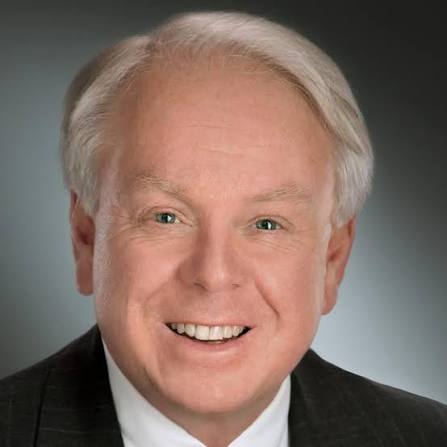
Town of Pittsford Supervisor
William A. “Bill” Smith Jr. has served as Town Supervisor of Pittsford, New York, since January 2014, bringing decades of experience in law, public administration, and local government.
A graduate of Yale University and the University of Virginia School of Law, Smith practiced corporate and securities law for 29 years before becoming Town Supervisor.
His public service career began with his election to the Pittsford Town Board in 1995, where he helped advance the landmark Greenprint for Pittsford's Future, an initiative that permanently protected more than 2,000 acres of farmland and open space. He subsequently represented Pittsford and East Rochester in the Monroe County Legislature, serving as Majority Leader from 2001 to 2007. He later served as Pittsford Town Justice before his election as Supervisor in 2013.
Throughout his tenure, Smith has emphasized responsible fiscal management, infrastructure improvements, preservation of community character, and responsive local government. His leadership reflects a commitment to balancing economic development, property rights, and the needs of residents while navigating an increasingly diverse political landscape.
Smith advocates for a practical approach to municipal leadership that places community interests above partisan divisions and measures effective government by the services, opportunities, and quality of life it delivers to residents.