

 iHeartRadio
 Apple Podcasts
 Spotify
 TuneIn
 Podchaser
 Castro
 Amazon Music
 PlayerFM
 RSS Feed
Ballot and Ledger captures a hard hour on the sacred privacy of the vote, allegations involving Legislator Rose Bonnick at a Monroe County polling site, and the call for Cooney, Monroe County Democrats, and the County Legislature to answer with accountability.
Peter Vazquez connects election integrity, voter-assistance law, Mark Johns on ballot trust, Mercedes Vazquez on possible abuse of power, and Joseph Hernandez’s warning as a Cuban refugee and NYS Comptroller candidate about pensions, audits, taxpayer protection, capitalism, and Albany’s fiscal crisis.
Ballot and Ledger. A republic is not defended first in marble buildings. It is defended behind a curtain.
It is defended in the small, private space where a citizen stands alone with conscience, ballot, and God. That space is supposed to be sacred because the vote is supposed to belong to the voter, not to a party, not to an elected official, not to a campaign worker, not to a political machine that has grown too comfortable walking where it does not belong.
This conversation began there, at the line between assistance and influence.
The allegation was serious: Monroe County Legislator Rose Bonnick, while appearing on the primary ballot and while connected professionally to Senator Jeremy Cooney’s office, was accused of bringing voters into the polling place at Staybridge Suites and accompanying them behind the curtain under the banner of voter assistance.
The issue was not treated as rumor for sport. It was treated as a civic alarm. Mercedes Vazquez called in and sharpened the matter into a demand for accountability, calling on Senator Cooney’s office and Monroe County Democrats to denounce the conduct and urging investigation into what she described as possible abuse of power.
The law matters here because the curtain matters. New York Election Law allows voter assistance under narrow circumstances, including blindness, disability, or inability to read or write. The assister is not free to persuade, steer, induce, or reveal what happens inside the booth.
New York law also bars electioneering inside polling places and within the protected distance outside them. In plain language, helping a voter is one thing. Turning assistance into influence is another. When the person allegedly assisting is also on the ballot, the public has every right to demand answers.
That was the first wound of the hour: election integrity is not merely about machines, rolls, mail ballots, citizenship checks, or lawsuits. It is about whether the voter remains sovereign at the precise moment power wants access to the hand holding the pen.
Mark Johns entered the discussion from the Assembly District 130 race and widened the lens. His focus on term limits and election trust pointed to a deeper disease: systems that protect incumbency, discourage competition, and reward political machinery over citizen energy.
He warned that voters cannot trust elections if they believe influence is happening before, during, or after the vote. His argument was blunt: election integrity starts before the ballot is cast and does not end until the people believe the process was clean.
Then the conversation moved from the booth to the books.
Joseph Hernandez, candidate for New York State Comptroller, brought a different but connected warning. Born in Cuba, the son of a political prisoner, he left communist rule at seven years old and arrived in America through the hard mercy of exile. His story carried the weight of a man who does not romanticize government power. He understands that when power is not watched, it grows. When money is not guarded, it is used. When institutions lose moral discipline, they begin speaking the language of public good while quietly serving political control.
That is why the Comptroller’s race belongs in the same hour as election integrity. One protects the ballot. The other protects the ledger. Both ask the same question: who is watching the people who claim to be watching out for us?
The New York State Comptroller is not merely a bookkeeper with a title. The office audits government, reviews contracts, monitors public spending, and serves as sole trustee of one of the largest public pension funds in America. The New York State Common Retirement Fund closed the 2025–26 fiscal year at an estimated $295.4 billion after an 11.94% annual return.
That fund represents promises made to public workers, retirees, and beneficiaries. It also represents obligations backed by taxpayers. If politics corrupts investment discipline, retirees and taxpayers both stand in the blast radius.
Hernandez framed the office through fiduciary duty, not ideology. Pension money, in his view, should chase performance, not political fashion. Audits should not be polite paperwork after the damage is done. They should be alarms. Contracts should not be rubber-stamped through a maze of friendly insiders and bureaucratic fog. Public money should never be treated as government property. It was earned first by citizens.
That is where the moral thread tightened.
A polling booth can be abused by influence. A pension fund can be abused by ideology. A campaign-finance system can be abused by insiders who understand how to turn small-dollar rules into public money. A state can talk about compassion while creating dependency. A party can talk about democracy while resisting scrutiny. A government can say “trust us” while citizens keep finding reasons not to.
New York’s public campaign-finance system became part of the same discussion. The program allows eligible small-dollar contributions to help candidates qualify for public matching funds. For a Comptroller race, small contributions matter because the system was designed to magnify them. Hernandez made the case that he needs citizen participation to compete against a deeply funded incumbent structure.
That raised another uncomfortable truth: the people who complain about the machine cannot remain spectators while the machine organizes, funds, knocks, files, trains, and wins.
Even the callers carried the hour’s human pulse. One caller mourned an older America, the America of Eisenhower, Gene Kelly, and a cultural confidence that feels distant now. Another moment turned into a pointed exchange about race, immigration, capitalism, and what it means to be truly American.
The answer that emerged was not complicated: America is not supposed to be an ethnic club. It is supposed to be a covenant of liberty, work, law, faith, family, and opportunity. A Cuban refugee who built companies, rang stock exchange bells, defended capitalism, and ran for statewide office is not a side note to that story. He is evidence that the American promise still breathes when government gets out of the way long enough for people to build.
The hour was not about one allegation, one candidate, one race, or one law.
It was about trust. Trust at the polling place. Trust in the law. Trust in the pension promise. Trust in public money. Trust in whether elected officials still understand restraint. Trust in whether citizens still understand their duty.
The Vanbōōlzalness Crisis lives in the collapse of those restraints. It is what happens when broken systems demand more power, failed leaders demand more trust, and political actors hide behind procedure after crossing moral lines. It is what happens when public offices become shields, when slogans become camouflage, and when ordinary citizens are expected to shut up, pay up, vote when told, and accept the official explanation.
But this hour refused that arrangement. It said the curtain still matters. The oath still matters. The ledger still matters. The taxpayer still matters. The pensioner still matters. The caller still matters. The citizen still matters.
Broken systems do not fear angry citizens. They have learned to survive noise. They fear awake citizens who know the law, know the numbers, guard the ballot, question the money, and refuse to let power dress failure up as progress.
Promote your brand on the Next Steps Show, airing on WYSL1040.com's AM 1040, FM 92.1, and FM 95.5 West stations. Discover more at nextstepsroc.com/advertise-with-us or dial (585) 346-3000 to get in touch with the WYSL team.
Have you ever dreamt of sharing your unique voice, stories, or expertise with the world through a podcast? Perhaps you're bubbling with ideas but uncertain about where to begin? The journey from idea to launch can be daunting, but that's where we come in. Dive Into the World of Podcasting with Next Steps Radio PODCAST Network! Visit NextStepsRoc.com or call Peter at (585) 880-7580.

Peter Vazquez:
Mira la izquierda, mira la derecha. Where are you standing in a world that seems to change daily, and what will you do next?
Welcome to The Next Steps Show with Peter Vazquez, a starting point for discussion and a beacon of direction.
I can tell you what I am going to do next. Broken systems do not fear angry citizens. The louder you yell, that does not effectuate change. I will tell you what they do fear. They fear awake citizens who know the numbers, guard the ballots, question the money, and refuse to let power dress failure up as progress, like we keep seeing here in Rochester.
So what are we going to do next? We are going to bring it to your attention. We are going to talk about it. Lines are open.
Bob, I have a question for you.
Bob:
I have an answer for you.
Peter Vazquez:
Is there any situation in your mind, and you are pretty experienced, where paying twenty dollars for a cheap cheeseburger at an amusement park would make sense?
Bob:
A cheap cheeseburger at an amusement park? You are a heck of a salesman. No, I would not pay twenty dollars. First of all, you have a contradiction in terms there. Twenty dollars and cheap cheeseburger? I do not think that is a cheap cheeseburger.
Peter Vazquez:
I would have said inexpensive, but it is cheap in the sense that it is something you would find at the bottom of a freezer at a place like Tops.
For Father’s Day, we went camping with the kids at Darien Lake. Fortunately, we were camping, so we had our own food. But the kids got hungry, so we went to one of the food kiosks. Listen, it is a free country. They can charge what they want to charge.
But with all this talk about an affordability crisis, I was looking around and talking to people. Some were saying, “This is what we do for fun because it is all we can afford.” Then I looked at the prices: $19.99 for a cheeseburger. I almost wanted to buy one because I figured it must be really good.
Bob:
No. No. No.
Peter Vazquez:
That is something you would see a Democrat do in an election cycle here in Rochester. How about that?
Bob:
I like the metaphor very much.
Peter Vazquez:
I am out camping, and I get a text message. Someone says, “Check this out. You may want to address this.” Of course, I did. We notified the appropriate people.
What I came to realize is that election integrity is not just an issue we see in voter rolls or with phantom registrations. What we found over the weekend was something different.
People on the left, and I am not saying people on the right do not do wrong, I just do not know of any specific example at this moment, but we saw a sitting county legislator, someone on the ballot, someone who works for State Senator Jeremy Cooney, apparently thinking it was appropriate to bring voters in under the voter assistance clause and go in with them while they voted.
That is a little too much assistance.
Let us look at the assistance law. New York Election Law §8-306 allows voter assistance only under specific conditions, including when a voter states under oath that assistance is needed because of blindness, disability, or inability to read and write. The law also requires the name of the person assisting to be recorded.
This is a very narrowly designed form of assistance.
Bob:
Blindness, disability, inability to read and write. What does disability mean?
Peter Vazquez:
It does not specify.
Bob:
That is a little bit of a problem.
Peter Vazquez:
It is. But do we not already have assistance available at polling places? Assistive devices, bilingual staff, and other accommodations? The Board of Elections generally does a good job making sure those places are staffed as best as possible.
But let me go further into the law. The person assisting a voter must swear not to persuade or induce the voter to support any candidate, ticket, or proposal, and must not reveal anything that happens inside the booth.
Bob:
Let us stop for a second. What kind of assistance are we talking about? Are we talking about the private area, the little cardboard privacy booth?
Peter Vazquez:
Correct.
Bob:
What form does that assistance take?
Peter Vazquez:
I have helped my mom and dad in the past when they lived with us. My mom wanted to vote. I would explain who was on the ballot. I did not influence her. I believe strongly in integrity when we are doing these things.
You are allowed to go behind the curtain and walk that individual through each candidate, but it must be nonbiased and nonpersuasive.
Bob:
So you might say, “Bob Smith is on the Democratic line, Gretchen Duda is on the Republican line, Xavier Undersara is on the independent line. Which one do you want?”
Peter Vazquez:
Pretty much. Someone may say, “What if the individual asks for your opinion?” That is where the kicker comes in. The person assisting a voter must swear not to persuade or induce the voter to support any candidate or ticket. The law does not say, “unless it is your family member or friend.”
Under New York Election Law §8-104, electioneering is barred inside a polling place and within one hundred feet of the entrance.
So if you are having a conversation with someone at home, that is one thing. But once you go behind that curtain, you are no longer just the son. You are the assister in her voting, and you should not be persuading.
So County Legislator Rose Bonnick, who also works for Jeremy Cooney, allegedly brought a voter to the polling site at Staybridge Suites in Rochester on the west side of the city. She allegedly told people there that she was going to be bringing people in throughout the day.
This is not just Aunt Madge. This is an elected official, on the ballot, allegedly using voter assistance in a way that raises serious concerns.
Bob:
What is the source of the information?
Peter Vazquez:
The source is a poll watcher at the site who reported it while it was happening. Concerns were raised. Legislator Mercedes Vazquez called the Board of Elections because she said, “This does not seem right.”
She called the Democratic side and was told it was legal. Then the Republican side was called, and Peter Elder said, “No, that is absolutely a problem.”
Mercedes called her attorney, and now complaints have been filed, as they should be.
I invited Rose Bonnick to come in and explain. We do not want to beat anyone up. We want to understand. But she is the county legislator who allegedly brought these voters in to render assistance, and she is also the paid community outreach person for Senator Cooney’s office.
Bob:
How is she not disqualified from being an assister?
Peter Vazquez:
That is the question.
We do not say that any crimes have been committed yet, but the allegations are concerning. If you see something, say something. I do not care who they are voting for. If Republicans are doing it, they need to be busted as well.
More to come.
Peter Vazquez:
We have Mark Johns on the line, candidate for the 130th Assembly District. Mark, welcome.
Mark Johns:
Thank you. My family comes from a little different place than Hyannisport, on the other side of the tracks. I am running for the 130th Assembly District, which includes all of Wayne County and all of Webster, and I am asking people to come out and vote tomorrow.
We do not have referendum in this state. If we did, we could put many things on the ballot. We could even put legislation that they author in Albany, since ninety percent never comes up for a vote. I guarantee the first thing people would put on the ballot is term limits.
I am the only candidate in this race, and as far as I know one of the only candidates in New York State, taking a term-limits pledge.
Bob:
The traditional argument against term limits is that elections are the term-limit mechanism. What is your response?
Mark Johns:
People vote for who they know. There is a very high reelection rate. You have gerrymandered districts. Big money goes to incumbents in the majority party. In New York State, that means Democrats.
If you think elections alone are enough, tell me how you unseat the Democratic power base in New York City. You cannot. You may get to vote for or against me, but you do not get to vote against the people in other districts who control your future.
Peter Vazquez:
Where does election integrity fit in your view? Do you think it is ever appropriate for you to walk a voter in your district behind the curtain to help them vote?
Mark Johns:
There is influence there, and there is influence before they get there. But the bigger problem is mail-in ballots. Who knows who is filling out those ballots? When a political machine goes around and knows who requested mail-in ballots, they go to houses and say, “We will take care of it for you.” Are they doing a civil service, or are they influencing voters?
If people do not trust election results, we have big problems in this country.
Peter Vazquez:
Mark, I am going to ask you to pay close attention to today’s show and what is going on with election integrity in Monroe County. You may have an opportunity to say we are not going to put up with candidates using influence to affect votes.
Mark Johns:
I agree. Election integrity starts with making sure people who sign up to vote are actually citizens. There are people on voter rolls who are not citizens. Tag that with mail-in ballots, and you have a real problem.
Peter Vazquez:
Thank you, Mark.
We invited every other candidate in the race. Mark was the only one who made time to come and talk to the listeners.
Now we have Mercedes Vazquez, County Legislator and Assembly candidate for the 137th District. Mercedes, thank you for calling.
Mercedes Vazquez:
You cannot make this up. What makes it more disappointing is that it is happening within my party and it is being tolerated and allowed. I have zero tolerance for this type of injustice. To me, it is a crime. This is a punishable crime.
When we talk about election integrity and democracy, that should be upheld, especially by elected officials. I am calling for Senator Cooney’s office and the Monroe County Democrats to stand up and denounce this at the very least.
Peter Vazquez:
This appears to raise concerns under New York Election Law §8-306 and §8-104. Of course, these are allegations.
Mercedes Vazquez:
Rose is an elected official. There are oaths she took to uphold democracy. She violated that. What I have asked the Board of Elections is that every single ballot that was cast during early voting be reviewed. In more than one instance, she has reportedly been seen going to different poll sites. Helping someone get to the polls is one thing. Crossing the line and going into the booth is where the problem exists.
She is not only an elected official. She is a candidate on the ballot, and she works for Senator Cooney, who is also on the ballot.
Bob:
These are allegations. Nobody has been convicted of a crime or arrested. But they are worthy of attention and investigation.
Mercedes Vazquez:
Absolutely. I filed a complaint with the State Attorney General’s office. I also filed a complaint with the State Department of Ethics. My attorney has submitted a FOIL request for all of the voter-assist forms that she signed.
We want answers, and we want action. Everyone needs to be retrained before Tuesday on what is allowed and what is not allowed.
The city has had low voter turnout for years, and this happens because voters have lost confidence. When you see instances like this, it amplifies why they do not want to vote. I have knocked on over five thousand doors. I want to build trust. Every vote matters, especially in a low-turnout election.
This should not be tolerated. We should be stewards of democracy. To see this alleged abuse of power, as if she could do whatever she wants and no one will question it, that stops today.
Peter Vazquez:
You called the Board of Elections and your own party side of the house. They told you this was okay?
Mercedes Vazquez:
I did not hear back from the commissioner until today. I heard from an operations manager who said it was okay, and that the only people who cannot go in are union representatives or the person’s employer. I said, “No, that is not right.”
Peter Vazquez:
Election Law §8-306 is clear. The person assisting must swear not to persuade or induce the voter to support any candidate. If she is on the ballot, the concern is obvious.
Would you support the SAVE Act now?
Mercedes Vazquez:
After what I experienced, absolutely.
Peter Vazquez:
Mercedes Vazquez, thank you for calling.
Coming up, New York State Comptroller candidate Joseph Hernandez.
Peter Vazquez:
This next guest fled communist rule at the age of seven, arriving in the United States with nothing but hope and determination to build a better life. Proverbs 29:2 says, “When the righteous are in authority, the people rejoice: but when the wicked beareth rule, the people mourn.”
God, country, and family. That is what it is about. It is my honor to welcome Joseph Hernandez, candidate for New York State Comptroller.
Joseph Hernandez:
Thank you so much for having me. What a pleasure to be here.
Peter Vazquez:
Before we get too far into who you are and your candidacy, I want to ask one quick question. We have been talking election integrity and seeing crazy issues locally. I believe election integrity is just as important to the finances of our state as it is to what happens in the State House. Would you agree?
Joseph Hernandez:
I think having a moral compass in anything you do is the basis of one’s life. It defines who you are as an individual. That is not only political. It applies in business as well. If you do not have a moral compass, then your word is not of value. I think these are universally applicable things.
Peter Vazquez:
You said New Yorkers deserve a Comptroller who protects their retirement, their tax dollars, and their future. Tell our listeners who you are, what you are doing, and why.
Joseph Hernandez:
I am a very lucky human being. I had the opportunity, by God’s will, to leave a communist country. I was born in Cuba, and my family and I were able to leave when I was seven years old. My father was a political prisoner. He had been imprisoned in Cuba with a seven-year sentence.
As life would have it, he acquired encephalitis in prison and went into a coma. That coma effectively got him out of Cuba. Around the same time, the Mariel boatlift was happening, and Fidel Castro was trying to clear prisons of dissidents. They allowed my father and our family to leave Cuba.
We left Cuba in a fishing boat and landed at the naval station there as legal immigrants. We started our life like many immigrants have throughout American history, with nothing but hope and a desire to create a better life.
Peter Vazquez:
Your dad and my dad share some of that story. We are from Puerto Rico, but when you come to the United States, you understand that we are here together. These labels do not really matter.
Joseph Hernandez:
They do not. America is the only society in history where you can come from nothing and achieve something in your generation. That is why so many people around the world want to be part of this great experiment that has been going on for 250 years.
If you look at the American experiment, we have generated so much value for humanity. Advances in science and technology, putting a man on the moon, sequencing the human genome, leading the artificial intelligence revolution. We have also brought a billion people out of poverty because of capitalism, because of the invisible hand of the market.
Unfortunately, our enemies do not want us to be proud of that. They certainly do not want our kids to be proud of being Americans. This is a cultural war we need to win.
When you look at America and what we have achieved versus socialism, socialism has killed a hundred million people. Capitalism has elevated a billion people out of poverty. I think we are winning in terms of humanity.
Peter Vazquez:
Many people in New York, even Republicans I have talked to, say Tom DiNapoli seems to be doing okay. But you pointed out something recently about woke ideology pushing how our money gets invested. Can you expand on that?
Joseph Hernandez:
The Comptroller role is not very well understood, but effectively the Comptroller is the CFO of the state. The Comptroller has two very important functions, both incredibly powerful.
One is the power of the audit. The role was established in 1847 by the founders of the New York Constitution. They realized we needed a third-party elected official to keep an eye on the books. Who would have thought politicians, if not being watched, might do erroneous things? It has been happening since the time of Caesar.
This role was intended to keep an eye on the money and make sure funds were not used violently or in violation of the original intent.
The second role is the management of the pension fund. The pension fund is one of the largest pools of capital in America, about $300 billion. The Comptroller, as sole trustee, manages and deploys that capital.
The fiduciary duty, which is the most principled responsibility of the role, is to deploy that capital in a way that generates the highest level of returns for pensioners. That money belongs to the people who work for the state and local governments.
By generating good returns, pensioners have resources to retire and live out their lives. It also impacts taxpayers because if we do not meet the obligations of the pension, taxpayers have to make up the difference. So it behooves us to have good returns and sound investments.
Unfortunately, what has been happening, and DiNapoli has been leading this, is that the pension fund has been used for political purposes. They have been using political filters to make investments at the cost of pensioners and taxpayers. Things like DEI filters, board diversity requirements, things that have nothing to do with the fundamentals of investment.
My perspective is that investments should be made with only one filter: getting the best possible return for pensioners. That has not been done, and it is a reason why we have had poor performance on the portfolio.
Peter Vazquez:
You rang the bell in New York City. Help me with the technical terms because you have done it more than once.
Joseph Hernandez:
I joke that my life’s destiny was supposed to be a sugarcane worker had I stayed in Cuba. My life would have been incredibly different.
Today, I have had the honor of being highly educated. I went to the University of Florida, Yale, and Oxford. I have five degrees. I built companies. I worked in Silicon Valley and on Wall Street. This is only the American Dream. This is the only place where you are allowed to dream and achieve greatness with that kind of beginning.
I had the honor of ringing the NASDAQ bell twice for two IPOs, and last month we did an IPO on the New York Stock Exchange, where I also had the honor of ringing the bell. I am probably the only Cuban refugee who has been able to ring the stock exchange bell three times. I hope that inspires young people.
Peter Vazquez:
I am coming toward the end of the interview, and there are more questions online. One listener asked about the looming bond crisis and potential effects on public pensions. Please answer that online if you can.
I want to spend the last few minutes on getting you over the hump. You are close to matching funds, and your opponent is loaded with money. Tell us about that.
Joseph Hernandez:
Any help matters. I have maxed out my personal capability, what I am allowed to give. I would love to fund the whole campaign, but we need matching funds, and I am limited by what I can personally donate.
We need help from the public. I encourage listeners to go to HernandezForNY.com, learn about me and my motivation. I am a businessperson. I am doing this because I believe in America, the American Dream, and service to the country.
I am too old to serve in the military. They would not let me in. But this is my service. I want to give back to the society that gave me and my family so much.
Any help you can give, whether five dollars, ten dollars, fifteen dollars, all goes toward the matching fund, which is six-to-one. It allows me to compete against DiNapoli or whoever wins the primary. It allows us to have a voice in this very important role, which I think will define the course of New York for the foreseeable future.
The truth is New York is in a fiscal crisis. People do not want to talk about it, but New York is in a very bad financial situation. We need to straighten it out, or we are all going to be in trouble.
Peter Vazquez:
Joseph Hernandez, candidate for New York State Comptroller. Joseph, next time you are in town, I want you on the show in person to talk to our listeners. WYSL and WLEA are among the largest AM stations in New York State.
Joseph Hernandez:
I would love that. Thank you so much for the opportunity. God bless you.
Peter Vazquez:
God bless you and the work you continue to do.
Peter Vazquez:
We have breaking news. Bob D’Angelo just stuck his head in the studio during the break. WYSL and WLEA have hit 200,000 podcast downloads.
That means people are listening. NextStepShow.com is also receiving over 300,000 downloads or subscriptions from our show platform. If you are a business owner, if you have a mission, if you are a candidate, visit NextStepShow.com or call Bob and say you want to sponsor The Next Steps Show.
Caller Keith:
In the context of elections, those two rain songs you played are from an America I am afraid we may have lost. “Singin’ in the Rain” from 1952, when America elected World War II General Eisenhower. Then the other rain song, from around 1964. We still have the greatest country, the United States of America, but those years remind me of something we may have lost.
Peter Vazquez:
Keith, I have you on the line, and I have only a couple of minutes left. I have to ask you this question. New York currently has a Cuban-born candidate, an Indian candidate, and a Jewish candidate running near the top of statewide tickets. What do you say to that?
Caller Keith:
I want everyone to be capitalist. I do not care who they are, as long as they are truly American.
Peter Vazquez:
How about this: a rich immigrant in the United States of America who handled his business and did it without a government handout. What do you say to that?
Caller Keith:
More power to him. He is an American.
Peter Vazquez:
Keith, whether you believe it or not, I have a soft spot in my heart for you. Thank you for calling.
That ends up primary election day tomorrow, Tuesday, June 23, from 6 a.m. to 9 p.m. Republicans, do not let us down.
Be a leader. Be a voice for liberty. God bless these United States of America.
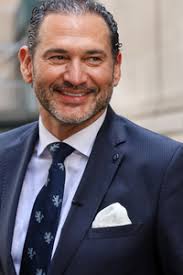
Candidate for New York State Comptroller
Joseph Hernandez is an American entrepreneur, investor, philanthropist, and leader in biotechnology, healthcare, and advanced technology. A Cuban refugee and the son of a political prisoner, Joseph fled communist rule at the age of seven and arrived in the United States with hope, determination, and a deep gratitude for the promise of America.
A proud product of Florida public schools, Joseph earned a Bachelor of Science in Neuroscience, a Master of Science in Molecular Genetics and Microbiology, and an MBA in Finance and Entrepreneurship from the University of Florida. He later earned a Master of Science in Chronic Disease Epidemiology and Biostatistics from Yale University and is currently pursuing a Master’s in Global Healthcare Leadership at the University of Oxford.
Throughout his career, Joseph has founded, invested in, and led more than a dozen biotechnology, healthcare, and technology companies. He has taken multiple companies public on NASDAQ and has rung both the opening and closing bells, reflecting a proven record of building organizations, advancing innovation, and delivering results.
Joseph currently serves as Founder and Senior Managing Partner of Blue Water Venture Partners LLC, where he invests in technologies and companies focused on improving public health, accelerating scientific discovery, and addressing critical human diseases.
His professional journey began at Merck & Co. and continued at Affymetrix in Silicon Valley, where he helped oversee the launch of groundbreaking diagnostic technologies. At Digene Corp, J… Read More