

 iHeartRadio
 Apple Podcasts
 Spotify
 TuneIn
 Podchaser
 Castro
 Amazon Music
 PlayerFM
 RSS Feed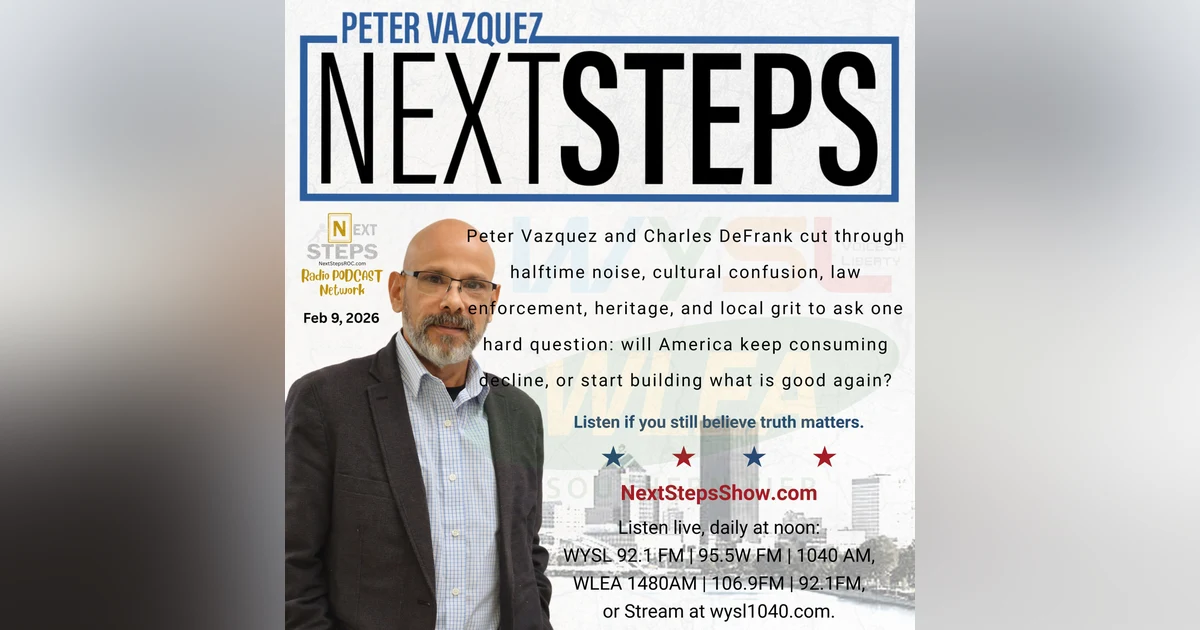

American culture is not only shaped in elections, courtrooms, or cable news studios. It is shaped in living rooms, stadiums, family conversations, local businesses, and the quiet choices parents make about what their children are allowed to consume.
Peter Vazquez welcomes Charles DeFrank, founder of True Blue New York and Hectic Foods, for a wide-ranging conversation that begins with the Super Bowl halftime controversy surrounding Bad Bunny and moves into something much deeper: identity, heritage, vulgarity in entertainment, parental responsibility, law enforcement, politics, faith, and the meaning of American unity.
The discussion does not stay neat, because real conversations rarely do. Callers challenge Peter and Charles on Puerto Rican pride, Hispanic voting patterns, race, football protests, cultural division, and whether America can still live up to the promise of e pluribus unum. Peter pushes back with a simple but necessary distinction: being proud of Puerto Rican heritage does not make someone less American. In fact, properly understood, heritage should deepen gratitude for the country, not divide it into tribal corners like some badly organized political potluck.
Charles brings his own story into the conversation, explaining how frustration over anti-police sentiment led him to create True Blue New York, a movement built to support law enforcement during a time when many officers felt abandoned. That same spirit of work, grit, and practical service led him into entrepreneurship through Hectic Foods, a local brand built around organic sauces, ketchup, honey, and the everyday chaos of family life.
American culture does not fall apart all at once. It rarely collapses in one dramatic moment, with sirens in the distance and the whole house shaking.
More often, it loosens quietly. It frays at the edges. It slips through the living room screen while the family is tired. It hums through the speakers while children learn words before they understand meaning. It hides in jokes that used to be warnings, in spectacles that used to be celebrations, in the slow surrender of parents who stop asking what is being placed in front of their sons and daughters.
A country can survive bad elections. It can endure foolish leaders, reckless trends, and seasons of confusion. America has taken more than a few punches and still found a way to stand upright, bruised but breathing. But no nation survives forever if it loses the ability to tell the difference between what is good and what is merely loud. No people remain free if they trade discernment for entertainment, conviction for applause, and virtue for whatever happens to be trending under the stadium lights.
That is where this conversation begins, though it does not stay there. Peter Vazquez sits across from Charles DeFrank, founder of True Blue New York and Hectic Foods, and what begins as a reaction to a Super Bowl halftime show becomes something much larger than football, music, Spanish, English, or one celebrity standing on a national stage.
The spectacle opens the door, but the real conversation walks through carrying heavier things: family, faith, heritage, law enforcement, politics, work, fatherhood, pride, responsibility, and the country our children are inheriting whether we prepare them for it or not.
There is something revealing about what a nation chooses to place at the center of its biggest shared moments. The halftime show is not just background noise. It is not just lights, choreography, and a performer collecting another check. It is a mirror, and sometimes mirrors are rude enough to show us what we have become. Millions of families gather around the screen, children nearby, food on the table, phones in hand, and suddenly the question is not simply, “Was it entertaining?” The question becomes, “What are we normalizing?” What are we clapping for? What are we calling art because we no longer have the courage to call it vulgar?
Peter does not come to this as a man ashamed of his heritage. That matters. He speaks as a Puerto Rican, as an American, as a father, as a host, as a believer, and as someone who understands that identity is not supposed to be a weapon.
There is beauty in heritage. There is beauty in language, in memory, in food, in music, in family stories, in the stubborn resilience of people who carried their culture through hardship and still taught their children to stand tall. To honor Puerto Rican roots is not to reject America. Properly ordered, it should deepen gratitude for America, because the American promise has always been that many streams could flow into one river without losing their source.
But pride can turn poisonous when it stops being gratitude and becomes division. Heritage is meant to add color to the American fabric, not rip the fabric apart. That is the line Peter keeps pressing toward. The issue is not whether a Puerto Rican artist can stand at center stage. The issue is what is being done with that stage. Representation alone is not righteousness. A familiar flag does not sanctify a bad message. A shared ethnicity does not require silence. A people are not honored when their name is used to sell confusion back to their own children.
This is where the conversation becomes sharper, because America has grown clumsy at making distinctions. We confuse criticism with hatred. We confuse disagreement with bigotry. We confuse pride with resentment, compassion with surrender, entertainment with moral permission. A healthy culture can say, “I honor your background, but I reject this message.” A mature people can say, “I respect your freedom, but I will not pretend this is good for my children.” A free society can criticize a performance without declaring war on an entire people. That kind of honesty used to be called adulthood. Now it often requires a legal defense team and a tolerance for online mobs, because apparently civilization needed more paperwork.
The callers bring that tension to life. They do not arrive polished, rehearsed, or neatly packaged for polite society. They come with heat. They come with frustration. They come with assumptions, concerns, blunt words, and hard questions. Some press on Puerto Rican pride.
Some press on American unity. Some press on football, politics, protests, race, and the feeling that ordinary citizens are being mocked by the institutions they once trusted. It is messy because real conversations are messy. Real people do not speak in press releases. They interrupt, stumble, sharpen, overreach, pull back, and sometimes reveal the ache beneath the argument.
And beneath much of that ache is one old question: can we still be one people?
Not one color. Not one accent. Not one surname. Not one history. One people. E pluribus unum was never meant to erase where people came from. It was meant to call them into something higher than the smallness of permanent grievance. Out of many, one. Not out of many, tribes. Not out of many, factions. Not out of many, endless suspicion.
One nation with many roots, many stories, many scars, and one shared duty to preserve the house we have been given.
That house is not preserved by slogans. It is not preserved by celebrities, consultants, algorithms, or politicians who can smell a camera from three counties away. It is preserved by people who still know how to build. That is why Charles DeFrank matters in this conversation. He is not presented as a man who merely complains about decline from a safe distance. He saw police officers being maligned, abandoned, and treated as enemies in the very communities they were sworn to protect, and he decided to do something. True Blue New York was born not from a committee or a campaign machine, but from a citizen’s refusal to watch good people be crushed beneath a fashionable lie.
Supporting law enforcement is not blind worship of power. It is not pretending that every badge is above accountability or that every institution is beyond reform. No serious person should want unchecked authority.
But a serious person also knows that civilization cannot survive without order, and order does not maintain itself by magic. Someone answers the call. Someone walks toward the danger. Someone stands between the innocent and the violent. Someone absorbs the contempt of people who still expect help when chaos reaches their own doorstep.
A community that cannot honor those who hold the line eventually learns what fear tastes like. It tastes like empty storefronts, anxious mothers, locked doors, delayed response times, quiet streets after sunset, and young people growing up believing that consequences are a myth invented by adults who lost their nerve.
When law enforcement is treated as the enemy, the true enemies do not become kinder. They become bolder.
That is why True Blue New York is not merely a cause. It is a warning flare. It is a reminder that gratitude and accountability can stand in the same room. We can support police and still demand integrity. We can value justice and still reject lawlessness. We can call for reform without burning down respect. The grown-up world, exhausting as it is, requires more than slogans shouted from opposite sidewalks.
Then the conversation turns, almost surprisingly, toward Hectic Foods. Ketchup. Hot sauce. Honey. Barbecue sauce. A local brand born from ordinary chaos. At first, it seems like a lighter turn, a break from the heavy weather of culture and politics. But it may be the most American part of the whole exchange. Because after the arguments are made and the frustrations are aired, the question remains: what are we building?
It is easy to criticize decay. It is harder to create something good in the middle of it. It is easy to say the culture is collapsing. It is harder to open the store, refine the recipe, pay the bills, serve the customer, support the family, and keep going in a state that often makes honest work feel like a punishment. Entrepreneurship is not merely economic activity. At its best, it is moral testimony. It says, “I still believe effort matters. I still believe quality matters. I still believe people will respond to something made with care.”
Hectic Foods carries that spirit. Even the name feels honest. Life is hectic. Families are hectic. Work is hectic. America is certainly hectic, as if someone spilled hot sauce on a constitutional debate and then charged admission. But inside that chaos, there is still room to make something with flavor, pride, humor, and grit. There is still room for a local business to become a small act of defiance against the blandness of mass-produced culture and the suffocating weight of government overreach.
That is the deeper movement of this conversation. It begins with what is being consumed and ends with what is being built. It begins with a national spectacle and lands in a local shop. It begins with frustration over the screen and lands at the kitchen table. And maybe that is where American renewal has always had to begin.
Some conversations are not polished. They are alive. They sound like neighbors arguing across a table because they still believe the house is worth saving. They carry laughter, interruption, correction, conviction, affection, and the kind of bluntness that polite society often fears because polite society has grown very skilled at avoiding truth. But truth does not disappear because people avoid it. It simply waits, gathering interest.
Peter brings conviction. Charles brings service, grit, and the story of a man who chose to act. The callers bring pressure. The topics collide because that is how life works. Culture, family, faith, politics, policing, race, work, and heritage are not separate boxes. They bleed into one another.
They shape the same children, the same neighborhoods, the same future.
The real next step is not to sit back and consume decline as if it were just another program in the feed. The real next step is to build what is good. Protect children. Honor family. Support law enforcement with accountability.
Celebrate heritage without dividing the nation. Speak truth without hatred. Refuse vulgarity dressed up as courage. Refuse cowardice dressed up as compassion. Refuse to let celebrity noise drown out the steady voices of fathers, mothers, builders, officers, entrepreneurs, neighbors, and citizens.
America is only as strong as the people willing to defend decency when it becomes inconvenient. Not when it is popular. Not when the room applauds. Not when the cost is low. The test comes when the names start flying, when the culture pushes back, when silence would be easier, and when telling the truth makes the table uncomfortable.
That is where nations are lost. That is also where they are rebuilt.
Promote your brand on the Next Steps Show, airing on WYSL1040.com's AM 1040, FM 92.1, and FM 95.5 West stations. Discover more at nextstepsroc.com/advertise-with-us or dial (585) 346-3000 to get in touch with the WYSL team.
Have you ever dreamt of sharing your unique voice, stories, or expertise with the world through a podcast? Perhaps you're bubbling with ideas but uncertain about where to begin? The journey from idea to launch can be daunting, but that's where we come in. Dive Into the World of Podcasting with Next Steps Radio PODCAST Network! Visit NextStepsRoc.com or call Peter at (585) 880-7580.

Peter Vazquez:
Good afternoon, ladies and gentlemen.
Okay, Mr. DeFrank, repeat after me. Are you ready?
Charles DeFrank:
I am ready.
Peter:
Hang on, hang on. Ladies and gentlemen, welcome back to The Next Steps Show.
See, big warning sign when you are a guest on The Next Steps Show: be prepared to start the show with a little dance and a little song.
Charles:
I thought I was listening to the halftime show last year.
Peter:
A little too much Bad Bunny there.
Charles:
A little too much.
Peter:
I have to say, guys, I did not catch the full halftime show. I realized I do not have regular TV, and I could not see the regular football game. Is that not sad? A poor person like me, who cannot afford cable or regular TV, could not watch the all-American football game.
Charles:
That is pretty bad.
Peter:
It is pretty bad. And then they say, “We are all for the poor folks.” A Latino did not get to see a fellow Latino on center stage. See, everything is racist. I will tell you.
Let me say who is here. We have the honorable C. Charles DeFrank, ladies and gentlemen. This is the guy who has organized more support for Back the Blue than anybody I know, sir. Not just here in Rochester or Monroe County, but throughout the states. Tell everybody hello.
Charles:
Thanks for having me, Peter. I have known you for what, five years?
Peter:
I think it has been a little more than that.
Charles:
Has it?
Peter:
Probably about seven years, because I was already pretty deep into political work at the time.
Charles:
Time goes by way too fast. The older you get, the faster it goes. But yes, we talk about True Blue New York, when I started True Blue New York.
Peter:
Yes, True Blue. You did a whole bunch of things to support police, support our community, and support the movement.
Charles:
I tried helping people. I was never in politics, first of all. Then Chief VanBrederode ran for Senate, and I told him I would do whatever I could to help support him. I started having him on True Blue New York, doing lives and trying to promote him. That is how I got into politics.
But I do not care for politics. I really do not. Truth be told, who really does? I am not a Republican or a Democrat. My voting registration has nothing on it. I did not put anything on it, because 15 years ago, you could not trust either one of them.
Peter:
You mean nothing has changed in the last 15 or 20 years?
Charles:
I am not going to be registered as anything either. I would rather think on my own.
Peter:
I considered that once. I really did. I thought maybe hanging up party affiliation was important to me. But then I figured this: we have to stand somewhere. First thing, we have to stand.
I believe that. I believe we have to stand and be clear about it, especially for someone like me who has run in politics. I want people to know what I stand for. If I am going to start lying to the Hispanic community and say, “Mira, this and that is okay,” just so they elect me, or if I try to pull the whole “elect me just because I am Puerto Rican” thing, then we are bamboozling people.
The best phrase I ever heard was from Andrew Giuliani, when he said politics is so dirty he could not even clean it off in the shower.
Charles:
From being a young guy, I think all of them have experienced bad politics, especially because of their association with Donald Trump. It is bizarre to me how they destroy lives. Him and his father, Rudy.
Peter:
How is his father doing? I know you have talked to them.
Charles:
I met Rudy, but I never really talked to him. I have Andrew’s telephone number. Every once in a while, I text him if I have something going on.
Peter:
Bring him on the show. We have to get Andrew in here.
Charles:
I gave you his number, did I not?
Peter:
You did. I am going to send him a text and get him on here.
So you watched the football game. You are a football guy, right? Do you like sports?
Charles:
I do, but I do not really trust football anymore as much as I used to.
Peter:
Explain “trust.”
Charles:
Ever since betting and gambling came in, I do not trust the play calling from the refs. It feels like they can control games. I might be off on it, but I do not trust it as much. You start watching games and you see funny calls. Why are they calling that? Why are they not calling this? I think the whole thing has gone bad.
But I still watch it for entertainment. It is like watching wrestling when I was younger. I used to watch wrestling.
Peter:
Which was not real.
Charles:
I did not know that then.
Peter:
Too late for you. Boston, Seattle, who cares? The teams were not exciting.
Charles:
I agree. Snoozerama. And it was a blowout anyway.
Peter:
As a Bills fan, that gets my stamp of approval. No question about it. But I had absolutely zero interest in the halftime show. Am I treading on sacred ground here?
Charles:
No, but I think it is important that it gets discussed, because a lot of people are trying to say the only reason there was an issue with Bad Bunny was because he was Puerto Rican and spoke Spanish. That is the furthest thing from the truth. I am having discussions with family members. That is not my concern at all.
First of all, the entire segment was in Spanish, which leaves out, I do not know the exact stats, probably 80 percent of the American population. The other problem I have is, from what I heard, the content was bad. I do not speak Spanish. You watched it, right, Peter?
Peter:
No, I only caught clips of the halftime show. Like I said, I realized I did not have TV yet. Literally, we did not know it until last night.
Maybe we can get some callers on this today at 585-346-3000. If you speak Spanish, how would you feel about that halftime show being exposed to your kids?
I am glad you brought that up, because last year’s halftime show was equally as bad or worse, in my opinion. People claimed that last year’s performer spoke English, but even today people are saying they did not understand last year’s show either.
Someone said to me, “Sure, they wait until the Puerto Rican is doing the halftime show to come up with an alternate show, when last year you could not even understand the English guy speaking.”
Charles:
Actually, from what I heard this morning, it would have been a plus if we could not understand what was being said, because it was pornographic.
Peter:
It definitely was what it was. It was typical music. That is why I do not listen to his music. I just do not like it.
Charles:
Why do we want this in our culture? Parents, do you not pay attention to what your kids are consuming in media?
Peter:
I assume that is rhetorical, because we know that in many cases parents are not. That is part of the problem we are having.
Charles:
I do not like sitting here being a scold, but come on. Do we not want to elevate our culture?
Peter:
Another response I got was, “I cannot believe you are Hispanic and not standing with Bad Bunny.”
I said, if the issue with Bad Bunny on stage was the fact that he was Puerto Rican, then yes, I would be standing with him. I am proud to see a Puerto Rican at center stage. I really am. But when you use that center stage to promote an ideology that is not in line with what you are claiming to represent, that is different.
Show me in Hispanic culture where things like homosexuality or big government are good for our community or wanted. It is not even in Puerto Rico.
Charles:
I had it on, but I was not listening to it. I was listening to the TPUSA live. That was a show. Kid Rock at the end was amazing.
I had the halftime show on, but I turned the volume down because I could not understand what he was saying. For the last five to ten years, ever since they stopped having the rock and roll people on there, it changed. Now it is more like satanic-type stuff and ritual-type stuff in the halftime shows.
Peter:
Bad Bunny last night was graphically sexual. Graphically sexual.
More than 213 million U.S. adults were estimated to watch last night’s big game. That is what makes this relevant. What these people do at the halftime show matters.
Someone said, “They wait for the Puerto Rican guy to be up there.” No. This year and going forward, it appears someone grew the cojones and said, enough is enough.
The American football game and halftime show are American icons. That does not mean there is no room for Spanish or culture. I built a show on being a little bilingual, a little Spanish, and introducing culture. That is very different from me saying, “Charles, you want to come on my show? You had better learn Spanish.”
There is also a difference between me saying, “Mira, I disagree on policy with Donald Trump or Kathy Hochul,” and me saying, “Donald Trump is racist.” How about this: Kathy Hochul is racist because, as a conservative Latino, she continues to defecate on me. I used the right word.
Charles:
Let me ask you this quickly. Why did he not do some songs in English if he knew Americans were watching?
Peter:
That is a great question, ladies and gentlemen. 585-346-3000. What is your opinion? Mira, yo sé que ustedes están escuchando. Let me know what you think. Toll free, 866-552-1009.
We will be right back, right here on WYSL and WLEA.
Music break.
Ad Read:
Picture this. A mother of three finally turning the key to her first real home. A struggling neighbor no longer sleeping in their car. A child with a warm bed and a full night’s sleep. That is the impact of your support.
At Keuka Housing Council, we are not asking for charity. We are building change. Whether you can give $5 or $5,000, every gift drives real results.
Go to KeukaHousingCouncil.org or call me, Peter Vazquez, at 315-536-8707. Together, we are taking a step toward independence, one family at a time.
Ad Read:
The Rochester Auto Show, Friday, February 27 through Sunday, March 1, at the Convention Center. Discount tickets at Tops Markets. For details, visit TheRochesterAutoShow.com. Driving tomorrow, the future starts here.
Ad Read:
The youth of our city are in a new crisis. Criminal justice reform has created the consequences of no consequences and generated a whole new generation of 12 to 17-year-old kids committing serious crimes.
Never before have we had this level of youthful offenders, but 90 percent of these kids are just trying to do the right thing and need a safe sanctuary to retreat to.
That is Rochester Youth for Christ. You can be a part of this solution by giving generously and regularly at YFCRochester.org/donate.
Station ID:
Peter Vazquez and The Next Steps Show on the Voice of Liberty. Brought to you every weekday by Youth for Christ Rochester, YFCRochester.org. Once again, here is Peter.
Peter:
Lost because society said to them they are victims. Is that not crazy?
Charles:
Yes. I realized that society really dictates. You have the people on top who create a society to go in certain directions, and then society just does it without thinking on its own. They go along with it.
Peter:
You said before the show, or during a break, that you have been paying attention but have not really been involved because you have been so busy creating, growing, and building something great in our community.
I think that is phenomenal. Entrepreneurship should be foundational. But you must see, as you sit back and watch the news, how politics seems to be shaping a narrative. It is almost geographical in some places. Would you agree with that? It really emphasizes how important local politics is.
Charles:
Yes. It is all driven to have people go in a certain direction. It goes back to the sheep thing, “sheeple” and everything else.
Peter:
What? You do not think so?
Charles:
No, I just find it funny.
Peter:
That is a great word, sheeple. It describes almost, well, the Republican Party in Monroe County almost.
We have Keith on the line. Keith, thanks for calling, brother. I did not forget about you.
Keith:
Peter, you made a broad statement about the negatives associated with Bad Bunny within Hispanic culture. You do know that your precious Puerto Rico is controlled by Democrats, and they have fraudulently stolen tens of billions of dollars there.
Heading down to South America and Latin America, the concern, for those of us who are really conservative, is that many Hispanics lean left, socialist down there, where liberation theology comes up into our country in large numbers and stays socialist.
Hispanics are known for family values, but politically they are like Black Americans. They are liberal, left, and socialist in their outlook.
My second point is that perception-wise, whites and others feel they cannot criticize the negatives in Black and Hispanic culture simply because white people do not want to be hit with the R-word, racist.
I know there are a number of whites, and I will count myself in there, who have concerns about Black and Hispanic culture, that the lives you lead are different from us Caucasians and gringos.
In closing, I am going to jab you here. I do not know why you are so proud of your Puerto Rican background. Israel, small Israel, has contributed more to the world than Puerto Rico by example. I do not understand why you keep coming on every day with this Puerto Rican thing.
Peter:
Keith, what are you proud of, brother, when it comes to heritage? What are you proud of?
Keith:
What now?
Peter:
When it comes to your heritage, your background, what are you proud of?
Keith:
I am American.
Peter:
That is the difference, right? But what makes you think that I am not?
Keith, we are proud of the same things then. If you are proud of what is American, then you are proud of me too, white and brown here.
Keith:
Yes, but I do not hyphenate. That is the difference between me and many Hispanics. Tony is 100 percent Sicilian-American. He loves being Sicilian and Italian. I do not ever hyphenate. I am American. I have different ethnicities in me, but I do not bring them up because there is no need to.
Peter:
Check this out. I have one ethnicity. You guys complicate things with these hard words.
Listen, I am proud of the history of Puerto Rico. Do you know why? Because Puerto Rico has overcome and has become and sustained itself as an American territory with American values.
What you are referring to, in my humble opinion, is the politics governing the island, which is destroying it. That liberal ideology. Believe it or not, there are a lot of Puerto Ricans fighting it. Unfortunately, free stuff tends to offset the call to work and work the fields.
There may be some tinkering with elections going on, which might explain the political vectors driving Puerto Rico. I do not have a black-and-white answer. Every blue area, New York, California, Illinois, has problems.
But I am investigating. We are looking. We are trying to find paper trails that can dictate. I had a cousin down the line who was a governor of Puerto Rico and is in prison for fraud or corruption, apparently. I would not put that past any of it.
But I do not think your description of the typical Puerto Rican is accurate, especially when about 30 percent of Puerto Ricans on the island support Donald Trump.
Charles:
I would agree with that. Having been in Puerto Rico several times in recent years, I cannot believe those people vote for the existing conditions. It is like New York.
Peter:
They do not have much of a choice sometimes. Keith, let us give you the last word.
Keith:
I would say Puerto Ricans as a group face racism, like a lot of groups, including in the past. Your people have had to work from outside just to be accepted, and I am sure there is resentment there.
I think that is what Bad Bunny was doing. He was trying to say, “We are proud of being Spanish.” The doctor brought this up. The point is, he was exclusive. He left out all of us gringos. I think that is what he was paid for.
Peter:
Keith, whether it is Bad Bunny or anybody else, those guys are there to make money. That is what entertainers do. He is entertaining. Somehow society or fans have grouped these entertainers as people whose opinions have any more validity than yours and mine. That is really what it has boiled down to.
Keith:
I wish the exclusivity would be kicked out and we could all be e pluribus unum. Wherever we come from on the planet, we all come together to be one, the American people. That is what I would love.
Peter:
Great thought. Thanks, Keith. I appreciate that.
Charles:
You hear this punchline all the time about every ill that besets society: “Well, it is because people have to get rich.” Bad Bunny got rich by being disgusting last night in front of tens of millions of people, to the detriment of young people watching.
A bunch of people had to get rich with COVID, with the pandemic. The governor of New York is getting rich every day just by being the governor.
Peter:
Exactly. What is she doing? She is killing people.
Charles:
Minnesota is a toilet because a bunch of Somalis had to get rich. It is time for us to attain a higher purpose and elect better people.
I always say this: hang out with the best people you can find. Hang out with the ones who lift you up.
Peter:
The Bible is clear. What I see happening right now, and I have brought this up several times, is bigger than politics.
Charles, do you go by Charles or do you have a nickname?
Charles:
I get called Charles, Chuck, Charlie. I get called all of them.
Peter:
As long as they do not call you late for dinner.
Charles:
They do not call me that, because I am usually on time.
Peter:
How do you feel right now? You are a white guy living here. You do not do politics. We are sitting here talking about politics. People are saying that if you are white and you did not watch the Super Bowl halftime show, you are racist.
How does that make you feel as a typical American business owner, just trying to make a buck and leave something for your kids?
Charles:
I do not care what people think about me.
Peter:
Does race matter in the grand scheme of what you are doing to try to make your family, your life, and your hope better?
You started a business, Hectic Foods. You are cooking every Thursday and Friday.
Charles:
Every Thursday at the Rochester Commissary. When it comes to race, I do not really think about it.
Peter:
It does not matter.
Charles:
It does not.
Peter:
You have received dollar bills, correct? Twenties, fifties, from various people who look different in various ways. Did any of that money look different to you?
We will talk about Hectic Foods in just a little bit. We will be right back on WYSL and WLEA.
Music break.
Station ID:
Peter Vazquez and The Next Steps Show on The Voice of Liberty.
Peter:
Mira, check this out. A community that cannot honor the people who hold the line eventually learns what fear tastes like.
Support for law enforcement is not blind worship. It is gratitude paired con accountability, basic decency, and realism.
Sir, the sir I am talking about is the honorable Charles DeFrank, founder of True Blue New York and Hectic Foods. We mentioned that a little bit. You are a non-political guy who said, “I am tired of what I am seeing. I am going to support our police.”
Tell us about that.
Charles:
About True Blue New York?
Peter:
Yes, about True Blue.
Charles:
I started that back in 2020. When I first started it, people were messaging me thinking it was a hoax. I had to explain, no, it is not a hoax. I got tired of what I saw happening to the police.
I figured maybe we could do something simple, like wristbands, just to let them know we support them. Then a lot of people started signing up.
I got a phone call from Lindsay. She said a girl wanted to talk to me about doing rallies. On Father’s Day of 2020, I talked to her for about two hours that morning. She said she had held a couple of small rallies, so I started promoting the Back the Blue rallies. Then it got a really big following.
Peter:
Yes, it did.
Charles:
We got up to well over 17,000 people.
Peter:
Mike, thank you for calling The Next Steps Show.
Mike:
Hey, gentlemen. I just caught on when Keith was on, and I wanted to throw my two cents in. I also support our men and women in blue.
As far as Bad Bunny, I do not know why you guys keep watching football. I protested it. I will not watch another football game ever. Ever since they started kneeling, with the Black national anthem, and then Bad Bunny last night. Bad Bunny is a straight-up communist.
His record label is owned by the vice president of Venezuela. Why do you guys watch this? Why do you let the NFL spit in your face and tell you it is holy water?
Charles:
There have been donations coming from Maduro’s regime to this individual’s music career.
Mike:
They had Green Day on before the game even started. Years ago, I watched the singer talk badly about the United States. Why do they have him on if he does not like the United States? None of them are pro-police.
Peter:
Mike, I appreciate your call. Thank you very much, gentlemen.
Charles:
He has a great point. Why do we watch the NFL? All the propaganda in the end zone, on the helmets, and everything else.
Peter:
Jamie, what is up?
Jamie:
Peter, how are you doing?
Peter:
I am doing phenomenal, papa. How are you?
Jamie:
Brother, I love your show.
Peter:
We love you.
Jamie:
The whole football thing, I stopped watching football when they started kneeling. I was raised God and country. My kid is now into JV football, so that is why we watched the game last night. I had not watched a football game in probably three years. We decided to watch it, but I was not going to watch Bad Bunny. No way.
Peter:
Jamie, let me ask you. What about those football players who truly believe in God, country, and family? What about the sponsors who still believe in it? Should we ignore them?
Jamie:
No, you should not. I do not know. Like I said, I was raised God and country.
Peter:
Did you decide not to watch Bad Bunny because he speaks Spanish and it was in Spanish, or because of his ideology?
Jamie:
Because it was Spanish. That is why I did not watch it. My sister-in-law was Puerto Rican. I grew up with a bunch of Puerto Ricans. But when he came out and said it was not going to be in English...
Peter:
He did not say it was not going to be in English. He said people had two months, or however many months it was, to learn Spanish. As a guy who knows Spanish and is on the radio, I found that insulting. Why would you tell people that? People are paying hundreds of dollars to see him, but he cannot do a little translation?
Not to mention, what he represents does not, in my humble opinion, represent what true machismo means in a good way for the man. A Puerto Rican man does not need to show up in dresses, and I do not want my Puerto Rican kids to think that is okay. You do not want your white kids to think that is okay. I am assuming you are white.
Jamie:
I am white. I do not want that in my household.
Peter:
I think the majority of Americans think that way. But the news makes you think the other people are the majority.
Jamie:
Correct.
Peter:
Jamie, real quick before I let you go. Was it not crazy how once upon a time Italians were Italians before they became white? I am just saying, it is true. I am wondering how long before Puerto Ricans become white.
Jamie:
Sicilian Italians were considered the Black Italians, but they are white now. My father was Sicilian. My kids are half Sicilian, and they are all white.
Peter:
Jamie, I appreciate you. What part of the world are you calling from?
Jamie:
Henrietta.
Peter:
Henrietta. You are in my neck of the woods. What do you think about Henrietta and what you see? I will leave it there.
Jamie:
I moved here 12 years ago from the city, and over here in Henrietta, it has gotten just as bad as the city.
Peter:
The city has become the extension of Henrietta. I am saying that correctly, by the way. I did not reverse that.
Jamie, I appreciate your call. Thank you for listening. God bless you.
Keith, Mike, Jamie, thank you.
Sir, tell us all about Hectic Foods.
Charles:
I started with ketchup. I love ketchup, but I did not like the idea that other countries only have a few ingredients while we have a bunch of ingredients in our ketchup. So I made ketchup with about four ingredients, and people liked it.
Peter:
Can you share the recipe?
Charles:
I cannot tell you.
Peter:
He would have to kill you.
Charles:
No, no. It is basic. The ingredients are tomato puree, tomato paste, organic sugar, organic vinegar. Everything is organic. I do not have “organic” on the front because it costs a couple thousand dollars to get the stamp, but it says it on the back under the nutrition area.
Peter:
They are unionized, are they not? So I am counting myself two thousand dollars a bottle.
This right here, Kickin’ Ketchup, is going pretty good. If you look at the bottle logo, you see the guy there. It started with ketchup and then barbecue sauce. I was thinking grilling. The guy is grilling, and I made it so he is saying life is good because he has the most important job in the world. He has to make sure the ribs are perfect.
Meanwhile, the wife is doing all the work inside the kitchen and chasing the crazy kids around outside. It is a hectic day.
Real quick, what is the website?
Charles:
HecticFoods.com.
Peter:
HecticFoods.com. Check it out. We will go to break and be right back right here with the honorable Charles DeFrank, founder of True Blue New York and Hectic Foods in East Rochester. No te vayas. WYSL and WLEA, Voice of Liberty.
Station break.
Ad Read:
At Keuka Housing Council, we offer real help when it matters most. Whether you are facing foreclosure, stuck in an unsafe mobile home, need rental counseling, or critical repairs, we guide families through stability and home ownership.
Visit KeukaHousingCouncil.org and take your step forward toward independence.
Ad Read:
Cornhole at a pickleball tournament? Yes. Register for Youth for Christ’s Picklepalooza 2026, Saturday, April 25, 3 to 7 p.m. at Dinkers in East Rochester.
Beginners and all levels are welcome. Not a pickleballer? Join our cornhole tourney. Fabulous pizza and treats from Proietti’s.
Pickleball is $95 for individuals, $125 for a team. Cornhole is $40 for individuals, $75 for a team.
Saturday, April 25, 3 to 7 p.m. at Dinkers in East Rochester. Register today at YFCRochester.org/pickle.
Station ID:
Peter Vazquez and The Next Steps Show on the Voice of Liberty. Proudly brought to you every weekday by Youth for Christ Rochester, YFCRochester.org. Check them out and see what they are up to with the God Girls and all the other great programs. They are making a difference in the city of Rochester, which God knows we need. Here is Peter.
Peter:
I love politics. You know that, Charles? I love politics because it is like a chess game.
My cousin Mercedes Vazquez is a sitting legislator in the county legislature. She is a Democrat, but mira, Mom will forgive her for the moment until she starts getting goofy. She is actually doing great stuff in the legislature.
But here is the thing. We have an individual running for governor of New York State, and it is not Bruce Blakeman. It is Larry Sharpe.
Charles:
Sharpe.
Peter:
He is a fellow show host. He is a Libertarian.
Charles:
Right after this show today, by the way.
Peter:
He is right after me. What are your thoughts on the honorable Larry Sharpe running?
Charles:
I have been following him for about ten years. I think the guy is smart. I think he has good ideas. But I always thought he did not have the support.
Peter:
Let me stop you there because I am going to challenge you on something. Larry Sharpe is going to have to answer these kinds of questions.
He has spent almost a decade exemplifying the misconceptions, the misappropriations, and the wrong decisions the Republican Party has made. But now he is running in the Republican Party. How do you, as a voter, bring all that together, synthesize it, and say, “Okay, I am going to vote for this guy”? People are going to ask that question.
Charles:
He is not going to get anywhere as a Libertarian. If he goes Republican, he can get on stage and have a debate.
Peter:
So is he using the Republican Party, or does he truly believe in it?
Charles:
I think he is using the Republican Party to get recognized and to have people know who he is. I think he did it so he can get on and have a debate with the guy running for the Republican Party.
Peter:
That makes perfect sense, and I can respect that. But as a conservative, as a person who truly believes in our values, I have a question. I am going to reach out to him, obviously, and have him on the show so we can talk more about that.
But as a voter, as an independent thinker, that is what you see. That is what you want him to know, because he has to address it. It is still early. Your advice is helpful.
Charles:
I think this is his third time running. A lot of people do not even know that. He has done very well, and it keeps going up every year.
The biggest thing is the polls. Who trusts the polls anymore? They can throw up a chart on TV, but that does not mean anything was actually done.
Peter:
Let us focus on the food. We talked politics. We talked True Blue. We have about seven minutes left. I want listeners to know everything about Hectic Foods and how a patriot created it, and why people should buy your hot sauce. You are a patriot.
Charles:
First of all, I made it all organic.
Peter:
We have a caller. Let me finish this thought.
Gary, thank you for calling The Next Steps Show. Gary?
Gary, did you pay your phone bill?
No, I am just kidding. He commented against Bad Bunny and they canceled him. Or are you hiding, Keith? Are you Hispanic and you did not tell us, and are you hiding from ICE?
Keith:
I am always undercover, Peter. You know that. I just wanted to go out and...
Peter:
Your audio is breaking up. Call back, because the connection is barking. We are missing you. I apologize for missing the first several seconds. Our talkback is not working again. The cold weather affects it, so we are getting our lineup by text.
Hectic Foods, where can we find you?
Charles:
It is 101 Main Street in East Rochester, across from Prince George’s and right next to Dog Educated.
I am also offering something to law enforcement. Any East Rochester police, any law enforcement, any ICE agents, come into the store and I will give you a free bottle of your choice.
Peter:
What about veterans? Are you offering any discounts there?
Charles:
Maybe I should. I will.
Peter:
I am a veteran. I want to go. Give me a reason to go. I know Sarge Mitchell will be listening. Give him a reason to tell his veterans to go.
Charles:
I cannot give everything away for free. I am going to go broke. I want to start with law enforcement: East Rochester Police Department, sheriffs, troopers, ICE, Department of Homeland Security. Come in, and if you are not in uniform, show me ID, and I will give you a free bottle of your choice after you have a sample.
Peter:
May 9, Saturday, 11 a.m. to 3 p.m., you are doing something spectacular.
Charles, I want you to talk about how your patriotism to the United States of America, to the Constitution, and the work you do with True Blue all translate into Hectic Day on May 9 from 11 to 3.
Charles:
Everybody has hectic days. The way I came up with the name was this: I would go to stores, and people would say, “Have a good day.” I would say, “Have a hectic day,” and I would watch how they reacted to it.
Then I looked at my mother’s fridge and saw Heinz, and I thought, Hectic. There we go.
I am just trying to get the name out there.
Peter:
Absolutely. What people are going to remember is how Kickin’ Ketchup with no junk is going to make their day better. Tell them.
Charles:
It is all organic. I was trying to figure out whether I should call it MAHA.
Peter:
MAHA? That sounds Hawaiian.
Charles:
Make America Healthy Again.
Peter:
Or Make America Hectic Again. Wait a minute. That sounds like a commercial you should put here on The Next Steps Show. Talk to Bob Savage. He will work it all out for you. Make America Hectic Again without being a Democrat.
Charles:
What happened was True Blue New York blew up and took off with 17,000 members. People love America. I was hoping that would happen with this.
Peter:
It is working.
Charles:
It is working, but I want it to really blow up.
Peter:
Show me all your products.
Charles:
We have Hectic Ketchup. That is the first one I started with. Then we have Hectic Hot Sauce.
Peter:
Is it hot?
Charles:
It is hot. It is almost like Frank’s.
Peter:
Is it Democrat hot or Republican hot?
Charles:
It is for everybody.
This right here, the Kickin’ Ketchup and the Hectic Gold, which is almost like a Carolina Gold wing sauce, those are the ones that are doing well.
I also have Hectic Honey.
Peter:
That is hot honey, I assume?
Charles:
Not hot honey, but I am going to start. My sister is making a whipped honey, almost like butter.
Peter:
Does she own her own bees?
Charles:
No. My kid’s uncle is a beekeeper locally in Rochester. PJK Honey.
Peter:
Why should people buy it from you?
Charles:
My price is reasonable, and everyone who tries it loves the honey.
Peter:
Where can people buy these products?
Charles:
They cannot buy them online yet, because I have been looking for the best shipping rates.
Peter:
You need somebody who can handle fulfillment for you. I think I know someone.
Charles:
I think you know somebody too.
Peter:
Paul Guglielmo. He is going to help you.
Charles:
Hopefully. He does not know yet.
Peter:
Ladies and gentlemen, if you have ideas that change America for the good, God, country, and family, call Paul. Would you agree?
Charles:
Absolutely.
Peter:
And we will send him a bill.
What is your website?
Charles:
HecticFoods.com. My Facebook page is Hectic Foods Public Group. I throw all my information there. I also do videos and talk about what I am doing.
Peter:
Why should we buy your Hectic product? Give me one line.
Charles:
It is local, and it tastes good.
Peter:
There is more going for it than that.
Charles:
The taste. Everyone has a favorite. People come back and buy more.
Peter:
If I am Puerto Rican and Bad Bunny is telling me to forget about American products, why should I buy your American product?
Charles:
Because they are spicy. Two of them are, yes. The hot sauce and the Kickin’ Ketchup have a little kick. It tastes like ketchup, and after a couple seconds you get the kick.
Peter:
God, country, and family.
I believe entrepreneurship defines the soul of an individual, and government is either going to allow that soul to persevere and grow, or it is not.
Charles:
Being in New York, it might be a little tough.
Peter:
Being in New York will be a little tough.
Last 10 seconds. What can you share with New Yorkers? I call it Next Steps advice. Why should they look into Hectic products?
Charles:
Because it is good. That is it. It is good. Even the barbecue sauce, I wasted pots trying to make it. Finally, I came up with this. It is good, and it does not fall off your food. The barbecue sauce does not fall off your food.
Peter:
Stuck to an American.
Ladies and gentlemen, remember this. It is all about this: be Americano. Be a leader. Do not let a second go by where you are not a voice for libertad.
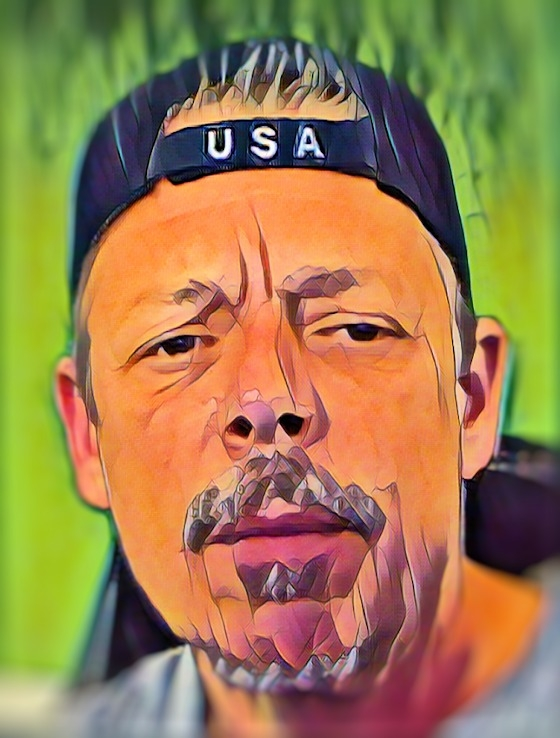
Founder of TrueBlue-NY. TB-NY is a group on facebook that promoted and was involved with the huge back the blue rallies in 2020. Also started Save NY page and group where I was doing live videos of what was happening here in NY. Now I started a business called Hectic Foods and have a store in East Rochester where I sell Ketchup, Kickin' Ketchup, BBQ sauces, etc..